
Standing Hand to Big Toe A combines a one-legged balance with a forward leg extension. Use a wall and strap, keep the lifted knee bent, and do not pull the leg higher than balance and comfort allow.
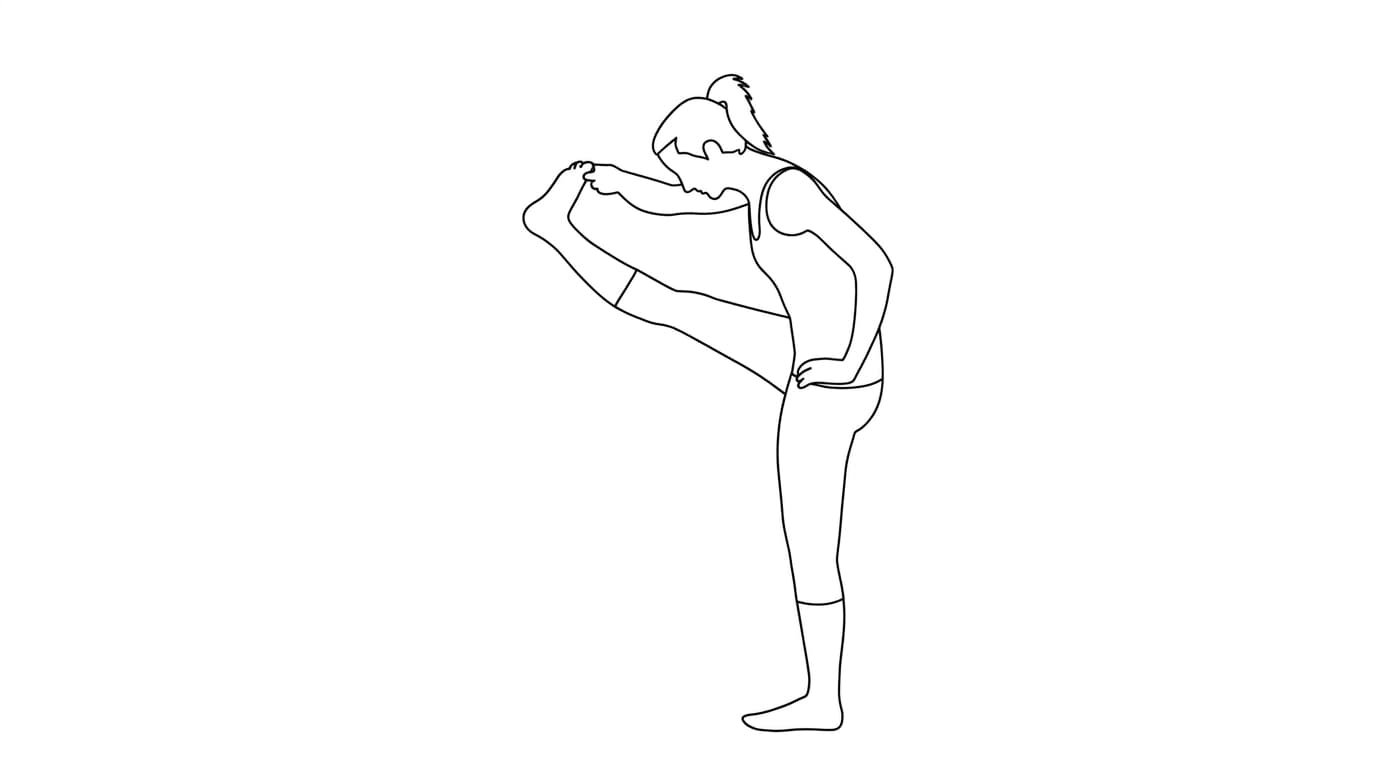
What is Standing Hand to Big Toe A?
Utthita Hasta Padangushthasana A is a standing balance in which one leg is held forward, often with a toe grip or strap. The grip and leg height are optional.
How do you explore a supported version?
Stand beside a wall and use a strap around the lifted foot.
- Hold the wall with one hand and stand with both feet grounded.
- Bend one knee and lift it only as high as comfortable.
- Place a strap around the foot while keeping the knee bent; do not pull the leg toward the face.
- Keep the standing knee soft and the torso upright for a brief moment.
- Lower the foot carefully before changing sides.
How can you modify the balance?
Keep the lifted toes on the floor, hold behind the thigh, or practice seated with a strap. Use both hands on support if needed.
When should you stop or modify?
Stop for pain, dizziness, or instability. Avoid unsupported practice near hazards. This draft awaits teacher review.
Common question: Does the leg need to be straight?
No. A bent knee and low lift are useful ways to adapt the pose.
参考文献与扩展阅读
这些参考文献提供一般背景信息。它们并不验证本页中的每一项要领,也不能替代合格教师的指导。
- Yoga: Effectiveness and Safety National Center for Complementary and Integrative Health (NCCIH). General context on yoga safety and balance adaptations; not pose-specific instruction.