
Vatayanasana is catalogued as Horse Pose and may involve a half-lotus leg position with a standing or kneeling balance. The name and form need source verification; do not force the knee or attempt the full balance without qualified instruction.
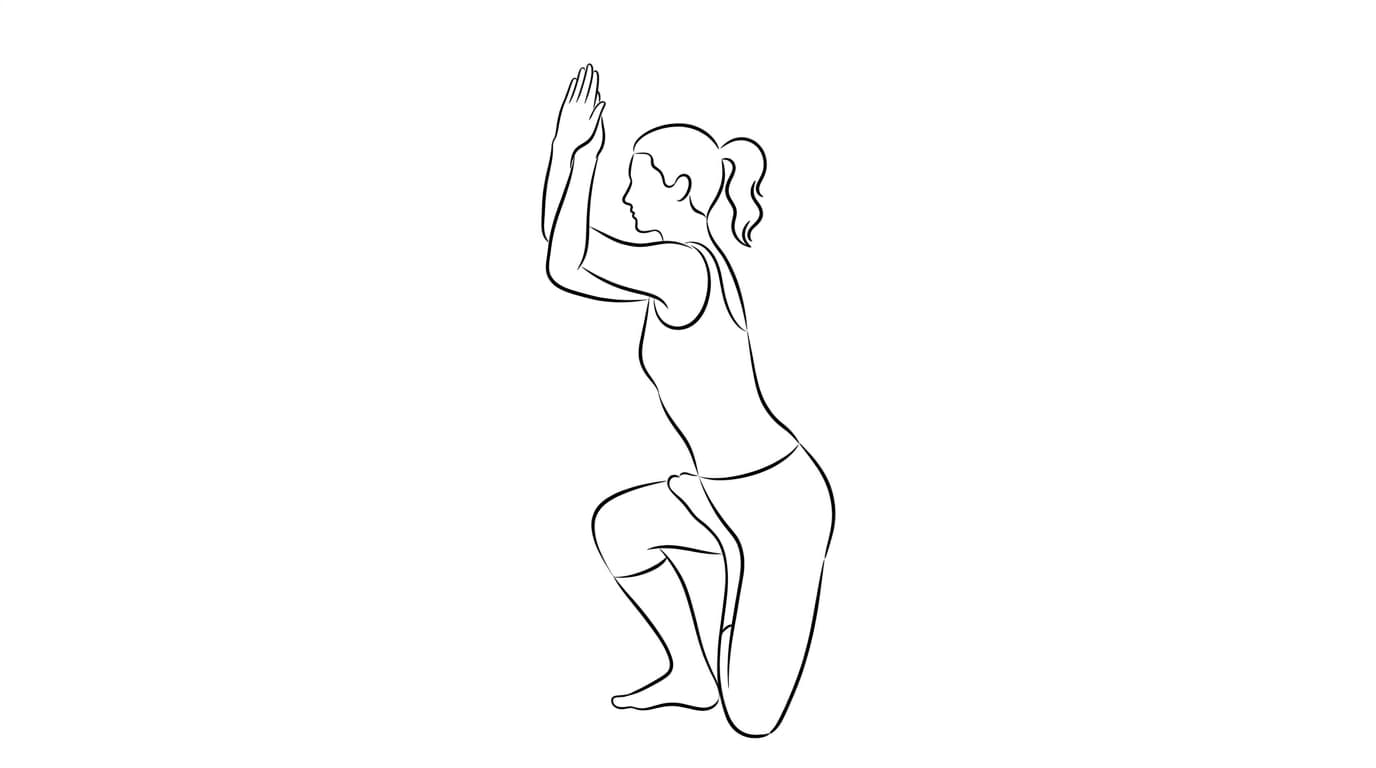
What does Horse Pose refer to?
Vatayanasana is a name used for a challenging balance, with descriptions that may include a half-lotus leg arrangement. The intended source form should be confirmed before detailed instruction is provided.
How should the pose be approached?
Do not force a lotus-style position through the knee or attempt an unsupported balance from this page.
- Verify the version with a qualified teacher.
- Use stable support for any supervised preparation.
- Stop for knee, hip, ankle, or balance symptoms.
- Choose a simple two-foot standing posture instead if uncertain.
What is a lower-demand alternative?
Practice Mountain Pose or a supported standing balance with the lifted foot kept below the knee.
Common question: Is the knee meant to rotate to create the pose?
No. Do not twist the knee; the pose requires source-specific instruction and individual assessment.
参考文献与扩展阅读
这些参考文献提供一般背景信息。它们并不验证本页中的每一项要领,也不能替代合格教师的指导。
- Yoga: Effectiveness and Safety National Center for Complementary and Integrative Health (NCCIH). General context on yoga safety; not pose-specific instruction or endorsement.