
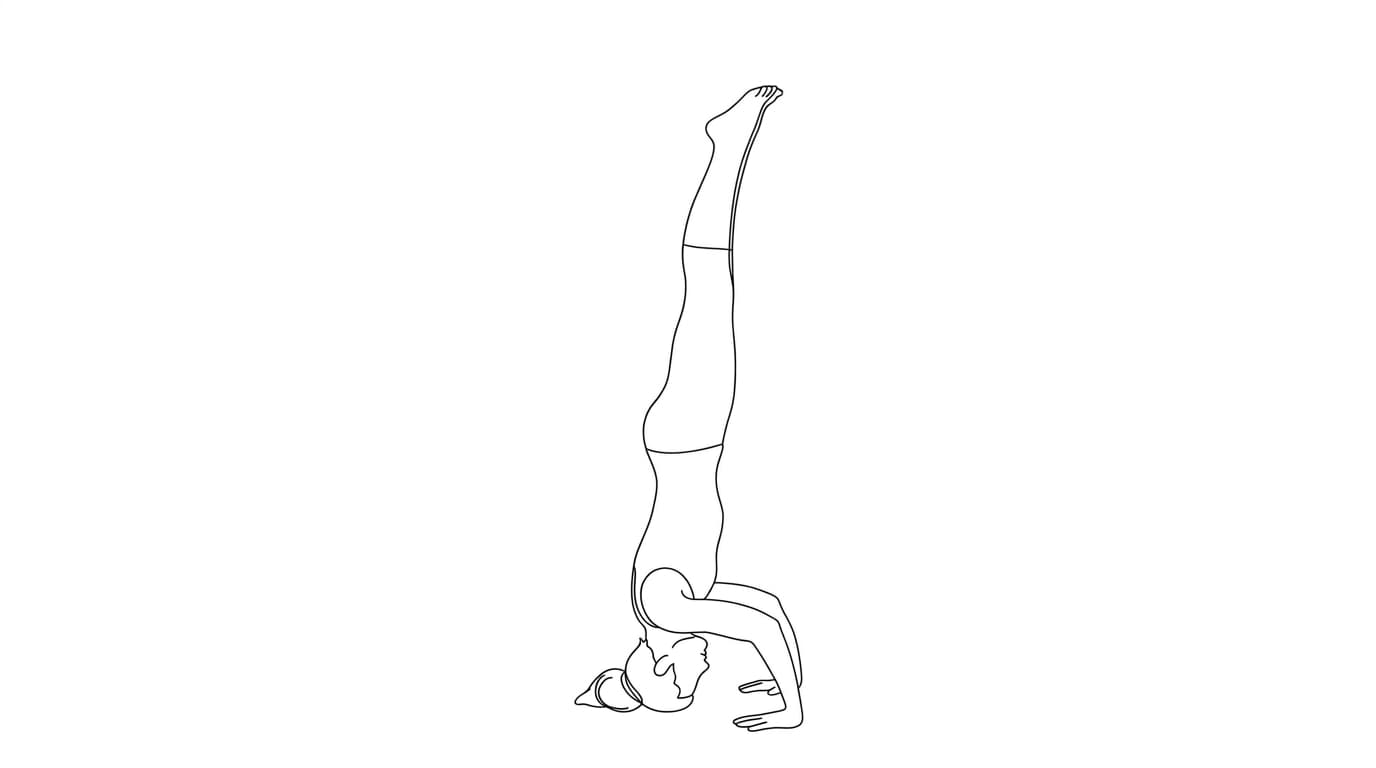
Tripod Headstand is an inversion with the head and hands forming a support base. It can load the neck and carries fall risk; do not attempt the full posture from text or place uncontrolled body weight on the head.
What is Tripod Headstand?
Mukta Hasta Sirsasana A is a head-supported inversion using the hands as part of the base. The neck may be vulnerable to compression, so it is not appropriate to learn from written steps alone.
How should this posture be approached?
Do not attempt the full inversion without direct qualified instruction and a clear exit plan.
- Never kick up alone or near hard surfaces.
- Do not place uncontrolled weight on the head or neck.
- Stop for neck pressure, pain, numbness, dizziness, or visual symptoms.
- Choose a non-inverted balance or supported rest instead.
What is a lower-demand alternative?
Practice a stable hands-and-knees position or supported Dolphin with the head clear of the floor.
Common question: Does the head form a harmless third contact point?
No. Head and neck loading can be significant; the posture needs individual instruction.
References and further reading
These references provide general context. They do not validate every cue on this page or replace instruction from a qualified teacher.
- Yoga: Effectiveness and Safety National Center for Complementary and Integrative Health (NCCIH). General context on yoga safety; not pose-specific instruction or endorsement.