
Tree Pose is a standing balance in which one foot rests on the other leg at a comfortable height. Use a wall or chair for support, and keep the lifted foot away from the knee joint.
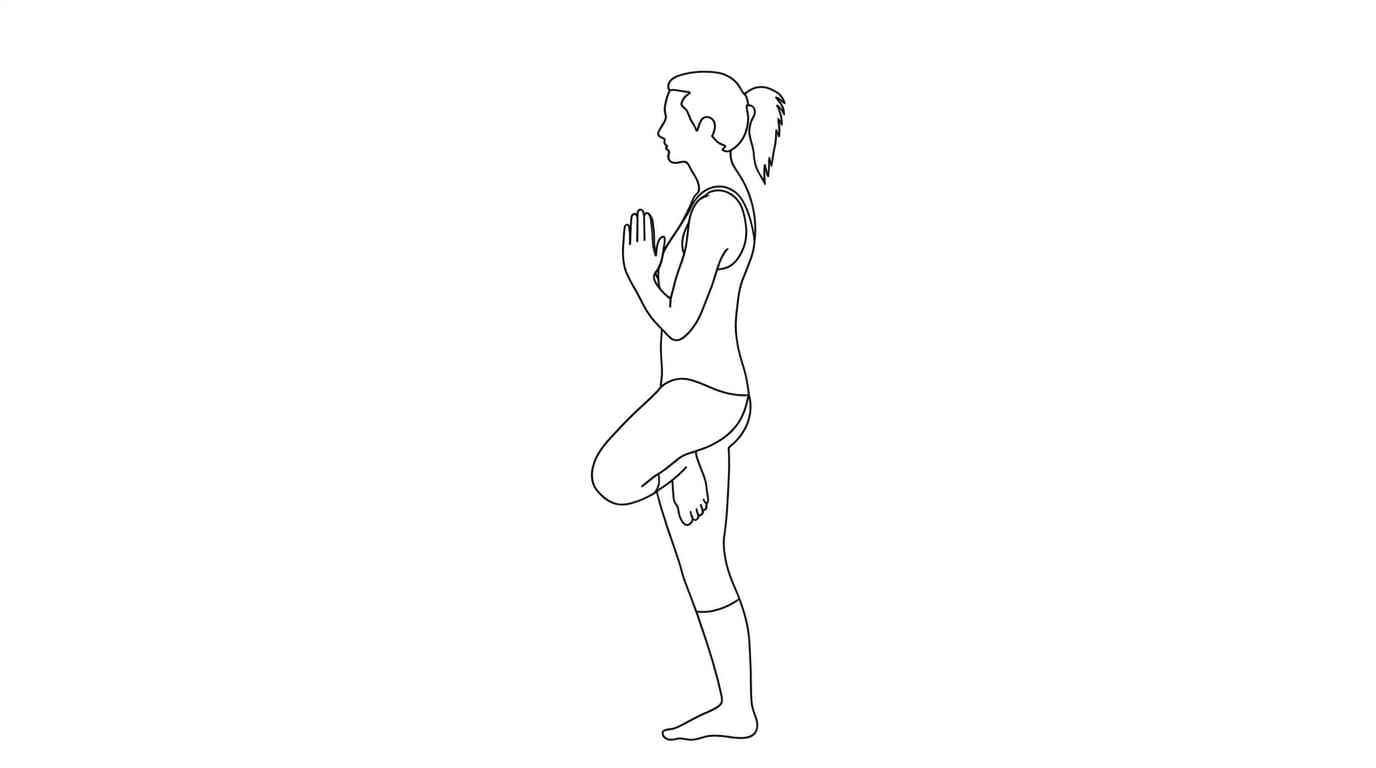
What is Tree Pose?
Vrikshasana, commonly called Tree Pose, is a standing balance. The lifted foot can rest at the ankle or calf; it does not need to reach the thigh.
How do you practice Tree Pose?
Stand near a wall or stable chair so support is easy to reach.
- Begin in Mountain Pose and look at a steady point ahead.
- Shift weight into one foot without locking the standing knee.
- Place the other foot at the ankle or calf, keeping it away from the knee. Rest the toes on the floor if needed.
- Keep the hands on the hips or bring the palms together only if balance remains easy.
- Step down slowly and change sides.
What helps with balance?
- Keep the standing foot grounded across the heel and forefoot.
- Use a wall, chair, or wider stance for support.
- Let the gaze stay level and the breath remain natural.
How can you modify Tree Pose?
- Keep the lifted toes touching the floor like a kickstand.
- Place the lifted foot against the inside of the ankle or calf.
- Practice seated if standing balance is not appropriate.
When should you stop or modify?
Use support if balance is uncertain. Stop for pain, dizziness, or a near fall. People with balance concerns should seek individualized guidance; this draft has not received named teacher review.
Common question: Can my foot rest on my knee?
Avoid pressing directly into the side of the knee. Choose the ankle, calf, or a supported toe-touch instead.
Références et lectures complémentaires
Ces références fournissent un contexte général. Elles ne valident pas chaque indication de cette page et ne remplacent pas les conseils d’un enseignant qualifié.
- Yoga: Effectiveness and Safety National Center for Complementary and Integrative Health (NCCIH). General context on yoga safety and balance modifications; not pose-specific instruction.