
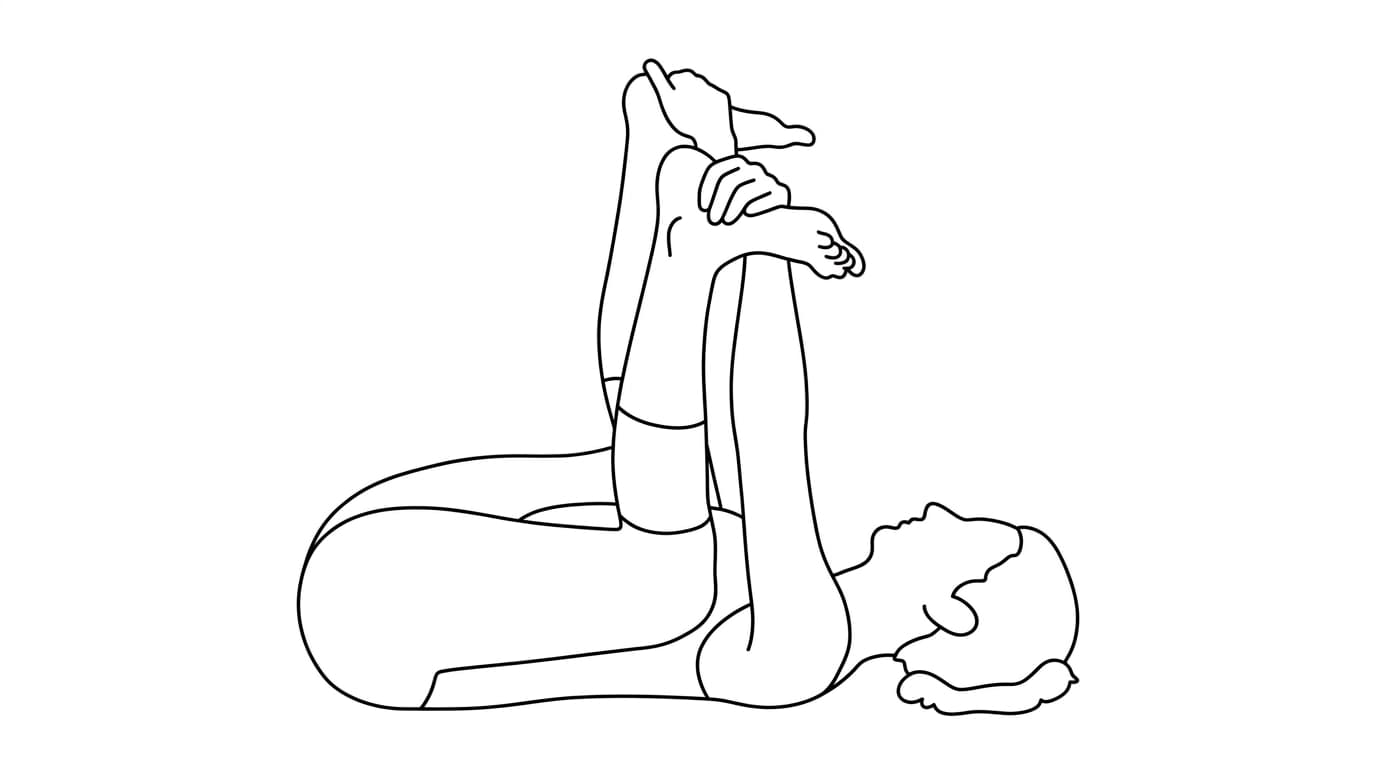
Happy Baby is a supine posture in which the knees bend toward the sides of the torso. Hold behind the thighs or shins if reaching the feet is uncomfortable, and keep the head and shoulders resting without pulling the knees down.
What is Happy Baby?
Ananda Balasana is a supine posture with bent knees and the soles of the feet facing upward. The knees do not need to approach the floor, and the feet do not need to be held.
How do you explore a relaxed version?
Lie on a comfortable surface with the head supported if useful.
- Bend the knees and bring them toward the sides of the torso only as far as comfortable.
- Hold behind the thighs or at the shins; holding the feet is optional.
- Keep the shoulders and back of the head relaxed on the floor.
- Breathe normally and let the legs remain still or move gently only if that feels pleasant.
- Release the legs and place the feet down before rolling to one side to sit up.
How can you modify Happy Baby?
Keep the feet on the floor, hold behind the thighs, or use a bolster beneath the head. Reduce the knee bend if the hips feel pinched.
When should you stop or modify?
Stop for sharp hip, knee, or back pain, numbness, or restricted breathing. This draft is general education and awaits named teacher review.
Common question: Do my feet need to reach my hands?
No. Holding the thighs or shins is a complete option.
Referências e leituras adicionais
Estas referências fornecem contexto geral. Elas não validam todas as orientações desta página nem substituem a instrução de um professor qualificado.
- Yoga: Effectiveness and Safety National Center for Complementary and Integrative Health (NCCIH). General context on yoga safety and adapting postures; not pose-specific instruction.