
Wheel Pose is a deep backbend supported by the hands and feet. It requires preparation and controlled entry; do not push into it from text alone, and stop for back, wrist, shoulder, or neck pain.
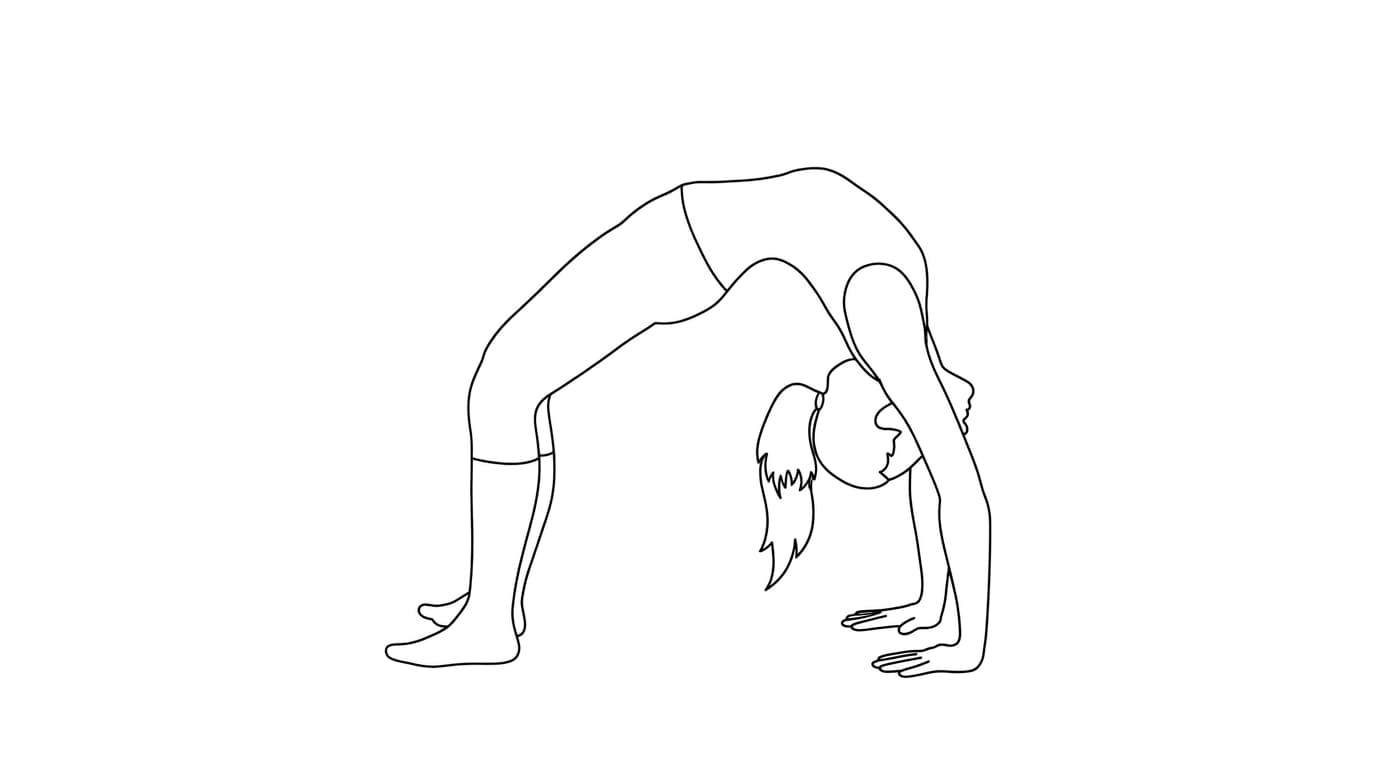
What is Wheel Pose?
Urdhva Dhanurasana is a demanding backbend that lifts the body onto the hands and feet. The full posture should be learned directly from a qualified teacher, not from a written entry sequence.
How should this posture be approached?
Do not attempt the full pose without appropriate preparation and in-person guidance.
- Use a teacher-approved warm-up and exit plan.
- Do not push through the hands or feet if the wrists, shoulders, or back are strained.
- Avoid forcing the neck to turn while weight-bearing.
- Rest immediately for pain, numbness, dizziness, or breathing difficulty.
What is a gentler alternative?
Use a low supported Bridge Pose or a small, comfortable chest-opening movement while lying down.
Common question: Should I press up into Wheel if Bridge feels easy?
Not automatically. Readiness and technique require qualified assessment.
Referências e leituras adicionais
Estas referências fornecem contexto geral. Elas não validam todas as orientações desta página nem substituem a instrução de um professor qualificado.
- Yoga: Effectiveness and Safety National Center for Complementary and Integrative Health (NCCIH). General context on yoga safety; not pose-specific instruction or endorsement.