
Seated Half Bound Lotus Forward Bend combines a half-lotus leg position, a bind, and a forward fold. It can strain the knee and hip; never force the foot into Lotus, and learn the specific variation from a qualified teacher.
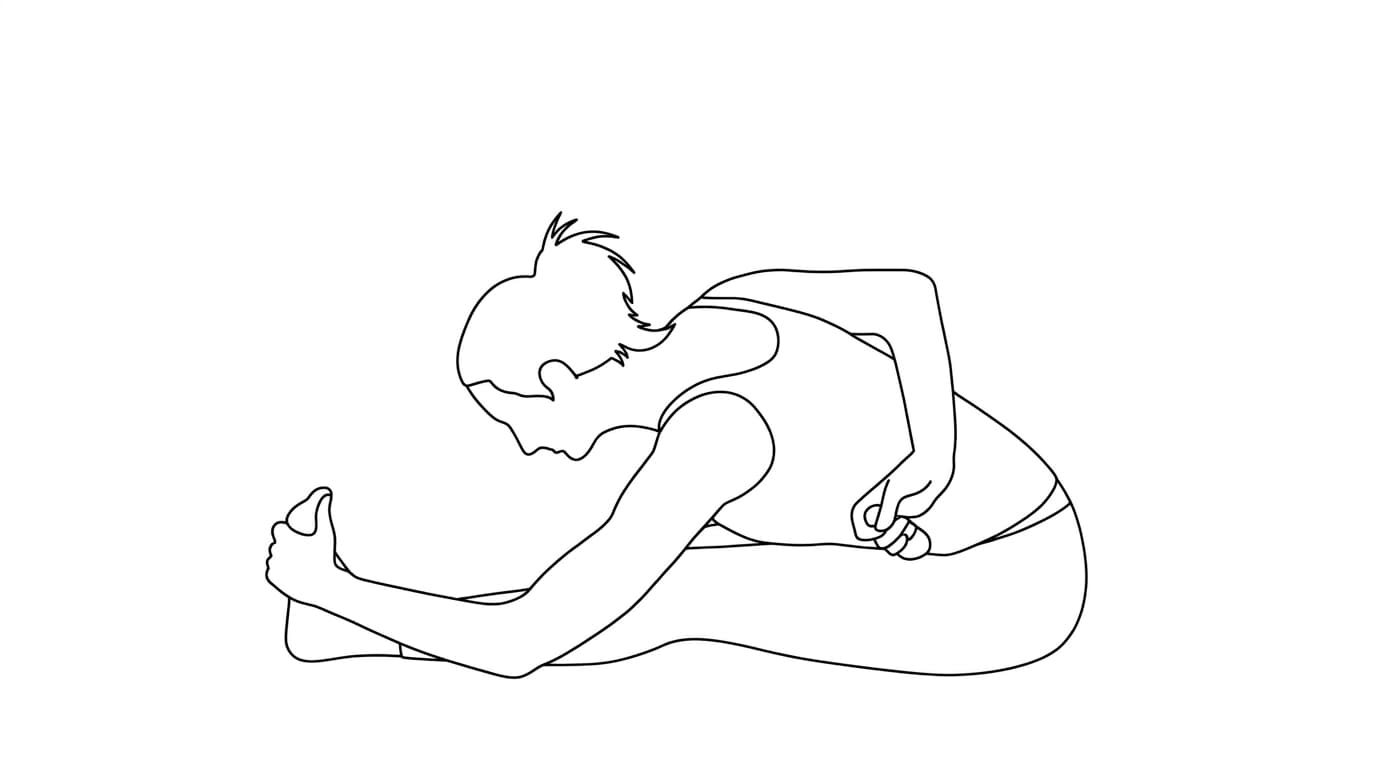
What is Seated Half Bound Lotus Forward Bend?
Ardha Baddha Padma Paschimottanasana is an advanced seated posture combining a half-lotus position, arm bind, and forward fold. These elements should not be forced together.
How should this posture be approached?
Learn the setup directly with a qualified teacher. This page intentionally omits entry steps for the half-lotus bind.
- Do not pull the foot into Lotus or twist the knee.
- Keep the extended leg and torso supported as needed.
- Stop for knee, hip, or ankle pain, numbness, or tingling.
- Do not use a strap to force the bind.
What is a lower-demand alternative?
Use a supported seated forward fold with both legs extended or bent, without a lotus position or arm bind.
Common question: Is the bind required?
It appears in the full form, but it is not appropriate to force. Choose an unbound variation when needed.
参考文献与扩展阅读
这些参考文献提供一般背景信息。它们并不验证本页中的每一项要领,也不能替代合格教师的指导。
- Yoga: Effectiveness and Safety National Center for Complementary and Integrative Health (NCCIH). General context on yoga safety; not pose-specific instruction or endorsement.