
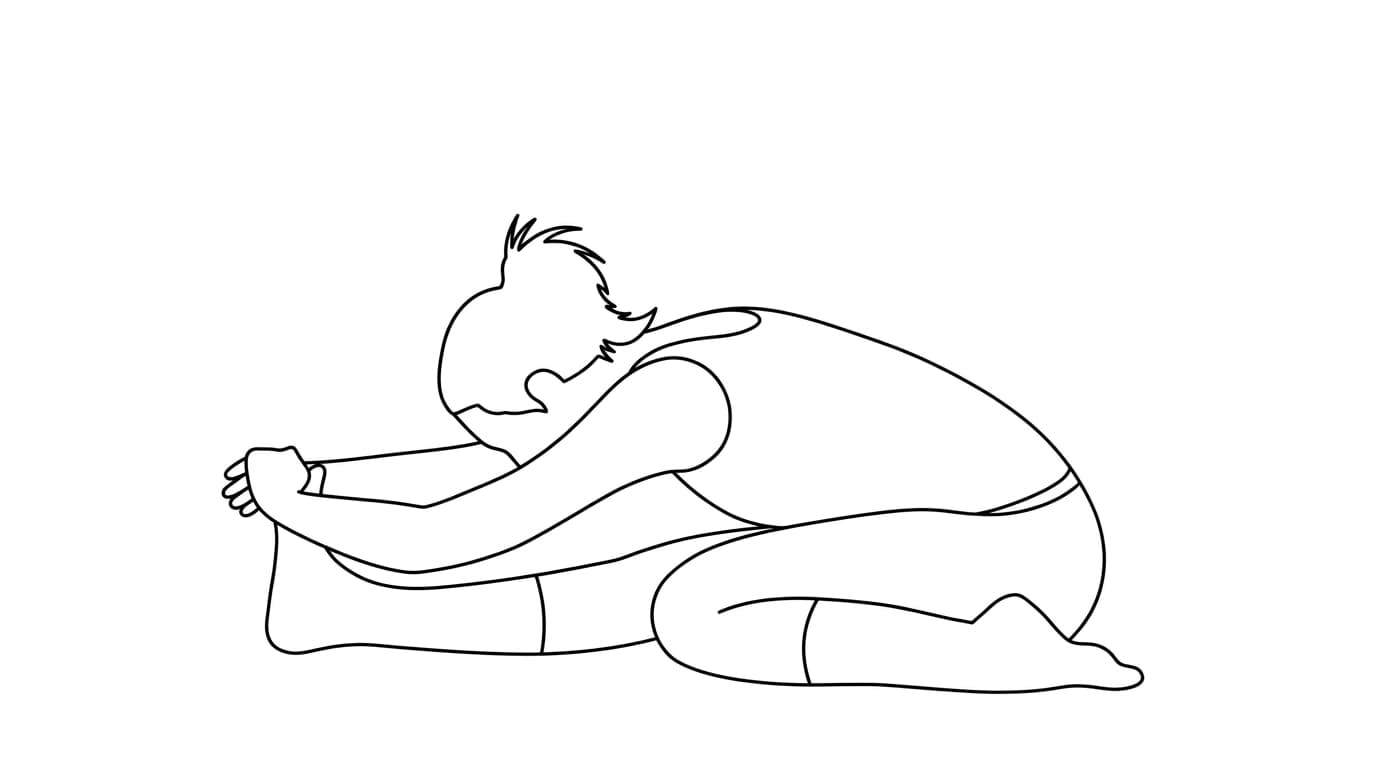
Seated Three-Limbed Forward Bend combines one extended leg with the other leg folded beside the hip. Pad the folded ankle and knee, sit higher if needed, and keep the torso upright rather than forcing a forward fold.
What is Seated Three-Limbed Forward Bend?
Trianga Mukha Eka Pada Paschimottanasana is an asymmetric seated posture with one leg extended and the other folded beside the pelvis. The folded-leg position can be demanding for the knee and ankle.
How do you explore an adapted seat?
Use a folded blanket under the pelvis and padding around the folded ankle.
- Sit with one leg extended and the other knee bent only if the joint feels comfortable.
- Place support beneath the folded ankle or thigh; do not push the foot into place.
- Keep the torso upright and hands on the floor or blocks for balance.
- If the seat remains comfortable, hinge forward only a small amount over the extended leg.
- Return upright slowly and change sides.
How can you modify the posture?
Keep the folded knee less deeply bent, sit on a chair, or use Head to Knee I with a more comfortable leg arrangement.
When should you stop or modify?
Stop for knee, ankle, or hip pain, numbness, or tingling. This draft awaits qualified instruction review.
Common question: Must I fold over the extended leg?
No. The seated leg arrangement can be explored upright; folding is optional.
参考文献与扩展阅读
这些参考文献提供一般背景信息。它们并不验证本页中的每一项要领,也不能替代合格教师的指导。
- Yoga: Effectiveness and Safety National Center for Complementary and Integrative Health (NCCIH). General context on yoga safety and adapting postures; not pose-specific instruction.