
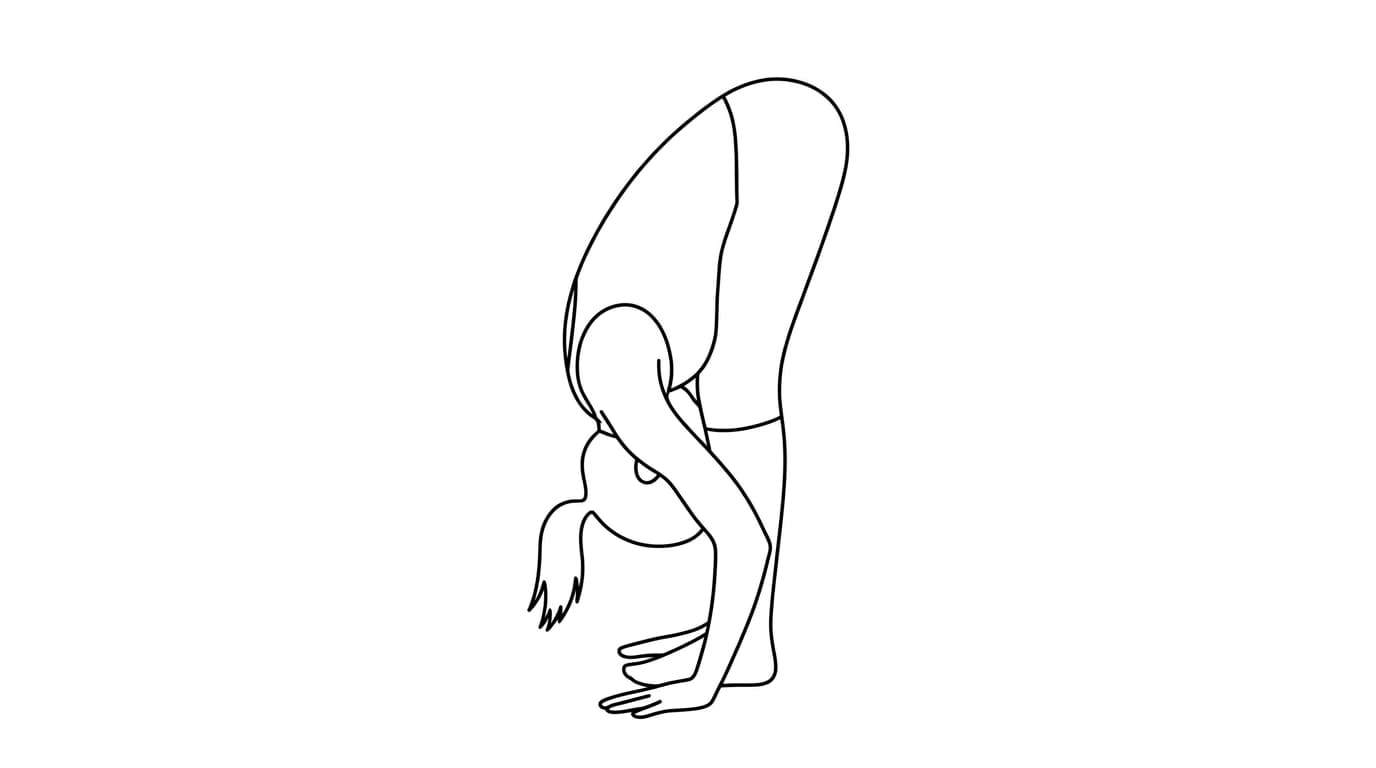
Uttanasana is a standing forward fold with the torso inclining toward the legs. Bend the knees generously and let the head hang only if comfortable; touching the floor or straightening the legs is not required.
What is Standing Forward Bend?
Uttanasana is a standing forward fold. Modern classes use different arm and leg positions; the knees may bend and the hands can rest on blocks, shins, or a chair.
How do you practice a supported forward fold?
Stand with the feet comfortably apart and use blocks or a chair if useful.
- Soften both knees and hinge forward a small amount from the hips.
- Rest the hands on the thighs, shins, blocks, or chair seat.
- Allow the head and neck to stay relaxed only if that feels comfortable; the gaze may remain forward.
- Keep the breath easy and avoid pulling yourself lower.
- Bend the knees more before slowly returning upright.
How can you modify Uttanasana?
Bend the knees deeply, widen the stance, rest the hands on a chair, or practice with the back supported by a wall. A small hinge is a complete variation.
When should you stop or modify?
Stop for dizziness, sharp back or leg pain, numbness, or pressure that increases. People with balance concerns should use a stable support. This draft awaits teacher review.
Common question: Do my hands need to touch the floor?
No. Use a height that lets you fold without strain.
参考文献与扩展阅读
这些参考文献提供一般背景信息。它们并不验证本页中的每一项要领,也不能替代合格教师的指导。
- Yoga: Effectiveness and Safety National Center for Complementary and Integrative Health (NCCIH). General context on yoga safety and adapting postures; not pose-specific instruction.