
Eight-Angle Pose is an advanced arm balance combining a twist, leg position, and weight through the hands. Do not hop into the balance or force the legs around the arms; learn the setup and exit with qualified instruction.
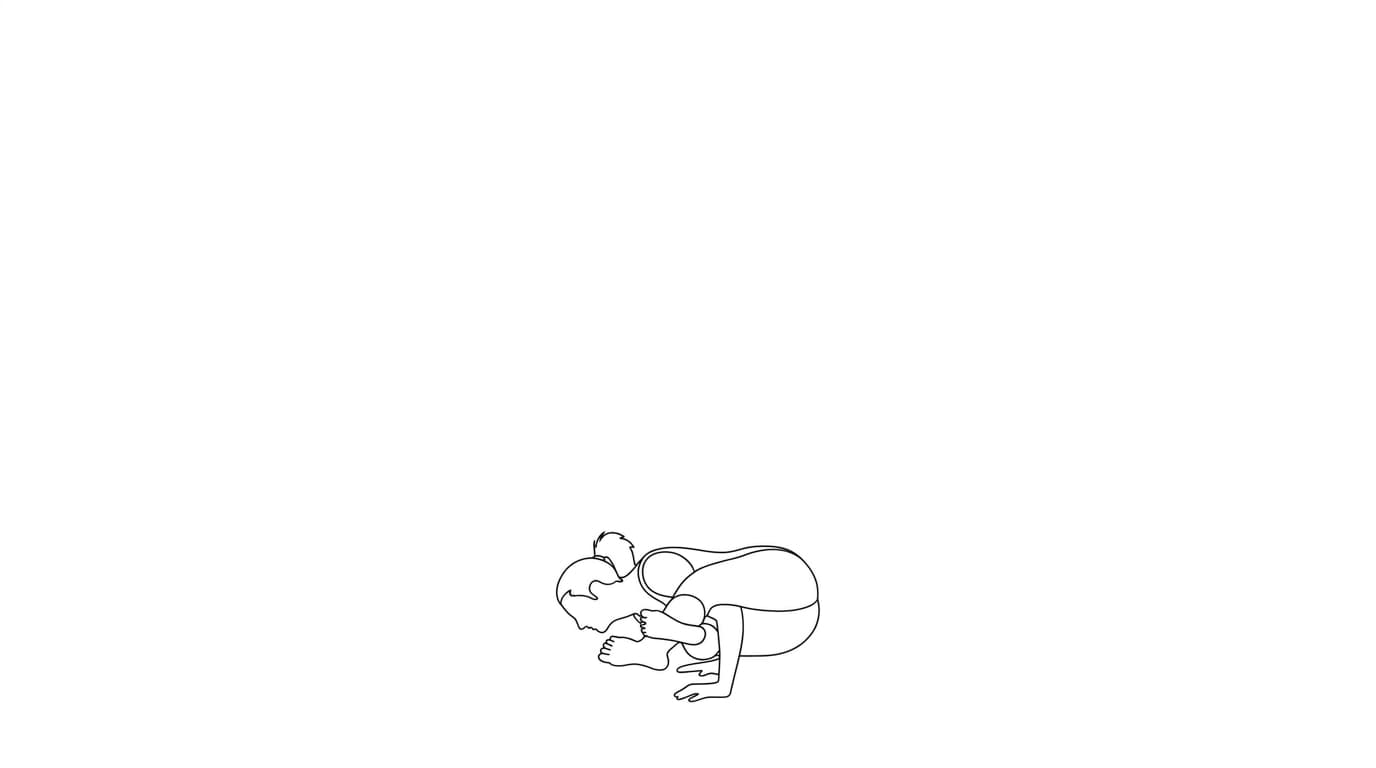
What is Eight-Angle Pose?
Ashtavakrasana is a twisting arm balance named for the sage Ashtavakra. It requires coordinated support through the hands, shoulders, and trunk.
How should the posture be approached?
Learn the specific form with a qualified teacher. This page intentionally does not provide lift-off instructions.
- Do not jump or throw the legs around the arms.
- Use a clear padded area and keep the face away from hard surfaces.
- Stop for wrist, elbow, shoulder, or back pain, numbness, or loss of control.
- Return both feet to the floor before releasing hand support.
What is a lower-demand alternative?
Practice a supported seated twist or a stable squat with hands on blocks and both feet grounded.
Common question: Should I straighten both legs in the balance?
Do not force the full shape. A qualified teacher should determine an appropriate variation.
Referencias y lecturas adicionales
Estas referencias proporcionan un contexto general. No validan cada indicación de esta página ni reemplazan la instrucción de un maestro calificado.
- Yoga: Effectiveness and Safety National Center for Complementary and Integrative Health (NCCIH). General context on yoga safety; not pose-specific instruction or endorsement.