
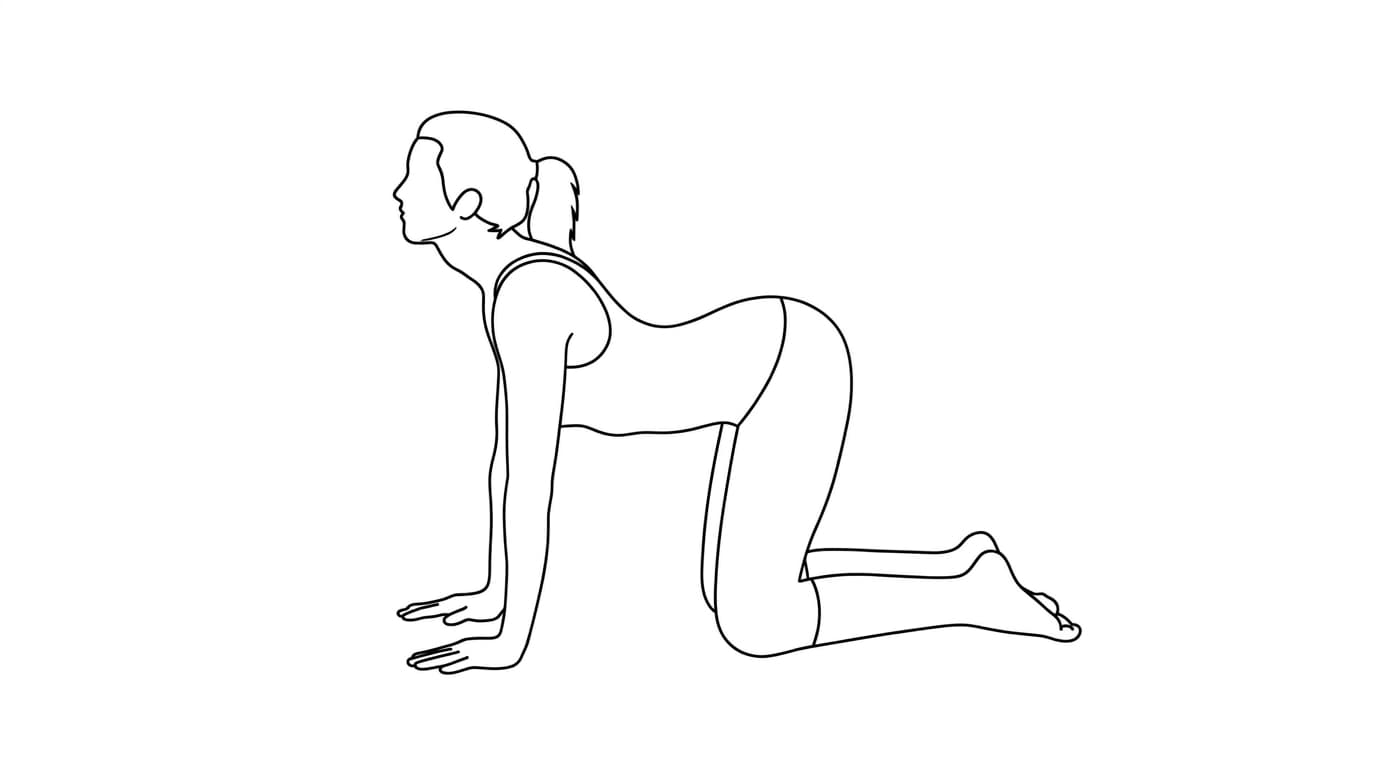
Cow Pose is a hands-and-knees movement that gently opens the front of the torso while the spine moves toward a mild arch. Keep the range small, avoid throwing the head back, and use chair support if kneeling or wrists are uncomfortable.
What is Cow Pose?
Bitilasana is commonly used for a gentle spinal extension from hands and knees. It is often alternated with Cat Pose, but the neck should remain easy rather than being forced upward.
How do you practice a small Cow movement?
Begin in a comfortable hands-and-knees base with a blanket under the knees.
- Place the hands and knees in a stable position and keep the gaze down.
- As you inhale or breathe comfortably, let the chest move slightly forward and the front of the torso lengthen.
- Allow a mild curve through the back without compressing the lower back.
- Keep the neck long and eyes forward or down rather than lifting the chin sharply.
- Return to neutral and repeat gently if comfortable.
How can you modify Cow Pose?
Use a smaller movement, place hands on a chair, or practice a seated chest-opening movement with hands on the thighs.
When should you stop or modify?
Stop for sharp neck or back pain, wrist or knee discomfort, numbness, or dizziness. This draft awaits qualified teacher review.
Common question: Should I look up toward the ceiling?
No. Keep the neck in a comfortable line; a neutral gaze is enough.
Referencias y lecturas adicionales
Estas referencias proporcionan un contexto general. No validan cada indicación de esta página ni reemplazan la instrucción de un maestro calificado.
- Yoga: Effectiveness and Safety National Center for Complementary and Integrative Health (NCCIH). General context on yoga safety and adapting postures; not pose-specific instruction.