
Lunge Pose is a general label for several forward and low-lunge shapes. Use padding under a kneeling knee, keep the front foot stable, and choose a hand support; confirm which lunge variation a class or source intends.
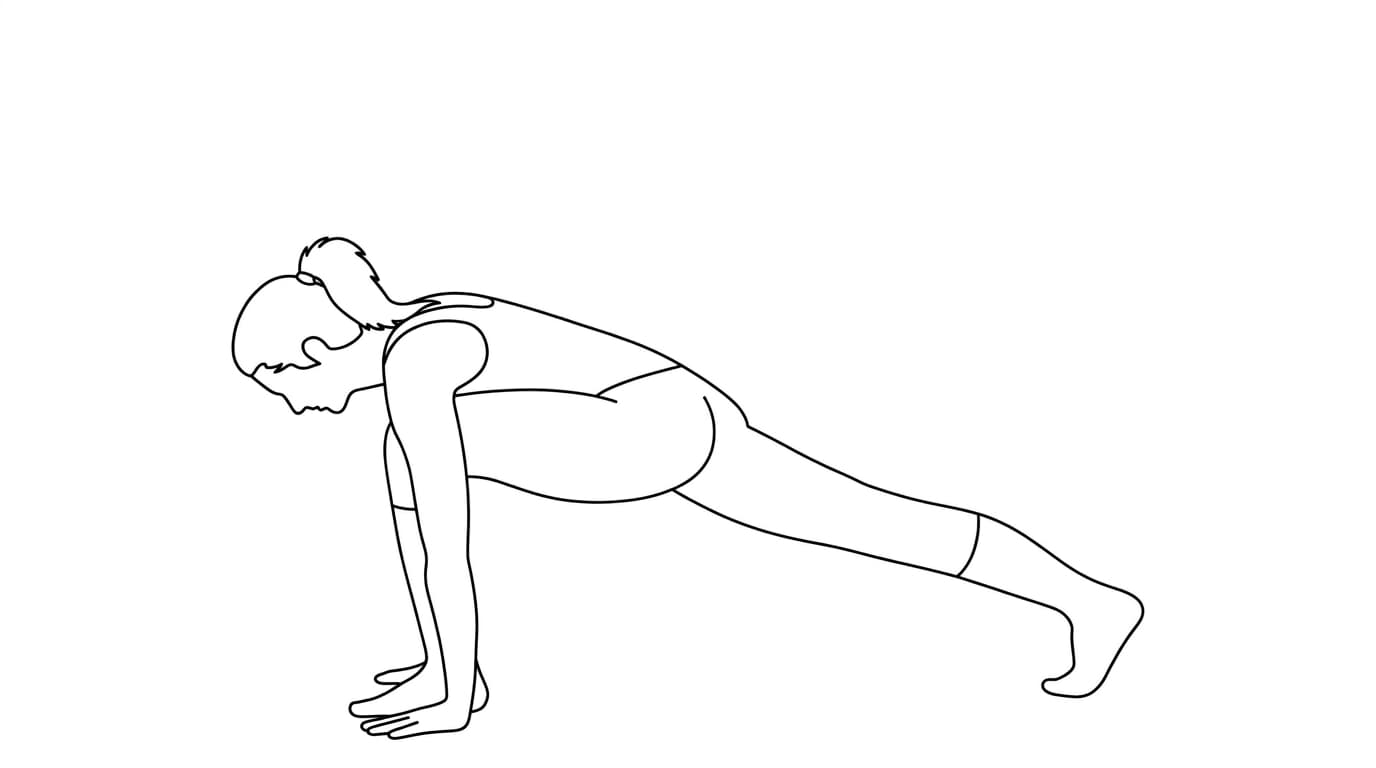
What does Lunge Pose refer to?
“Lunge Pose” is a broad English label that may refer to a high lunge, low kneeling lunge, or other stance. This guide offers a general supported setup rather than defining one universal form.
How do you explore a basic supported lunge?
Use a stable chair or blocks and pad the back knee if it rests on the floor.
- From hands and knees, step one foot forward between the hands.
- Check that the front foot is grounded and the front knee bends comfortably.
- Keep the back knee down with padding or leave it lifted only if balance is easy.
- Rest the hands on blocks, a chair, or the front thigh.
- Return to hands and knees carefully and change sides.
How can you modify a lunge?
Shorten the stance, reduce the bend, keep the back knee padded, or practice holding a chair while standing.
When should you stop or modify?
Stop for knee, hip, or back pain, numbness, or balance difficulty. This draft awaits teacher review.
Common question: Is every lunge the same pose?
No. Check the intended version and adapt the stance to your body.
Referencias y lecturas adicionales
Estas referencias proporcionan un contexto general. No validan cada indicación de esta página ni reemplazan la instrucción de un maestro calificado.
- Yoga: Effectiveness and Safety National Center for Complementary and Integrative Health (NCCIH). General context on yoga safety and adapting postures; not pose-specific instruction.