
Big Toe Pose is a standing forward fold in which the hands traditionally hold the big toes. Keep the knees bent and use a strap or blocks if reaching the toes pulls on the back or legs; the grip is optional.
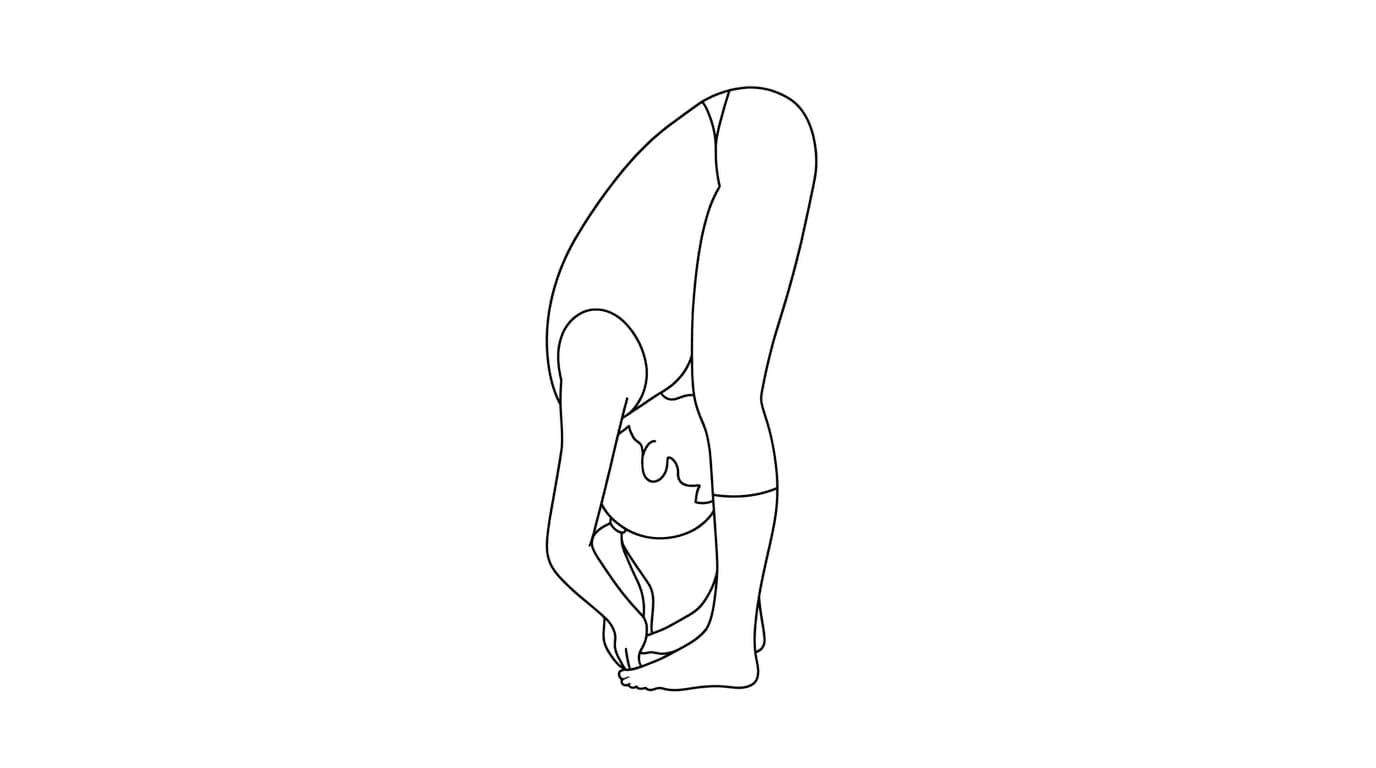
What is Big Toe Pose?
Padangushthasana is a standing forward fold traditionally named for holding the big toes. A toe grip is not necessary; keep the fold small enough to avoid pulling on the spine or backs of the legs.
How do you explore the posture?
Stand with the feet comfortably apart and blocks or a strap nearby.
- Soften the knees and hinge forward from the hips a small amount.
- Rest the hands on the thighs, shins, blocks, or hold a strap looped around the feet.
- Keep the grip light and allow the knees to bend as much as needed.
- Breathe naturally without tugging yourself deeper.
- Bend the knees more before slowly returning upright.
How can you modify Big Toe Pose?
Use blocks under the hands, keep the knees bent, widen the feet slightly, or use a chair for hand support. Skip the toe grip if it causes strain.
When should you stop or modify?
Stop for dizziness, sharp back or leg pain, numbness, or balance loss. This draft is general education and awaits teacher review.
Common question: Must I hold my big toes?
No. The name does not make the grip mandatory; use a comfortable support.
Referencias y lecturas adicionales
Estas referencias proporcionan un contexto general. No validan cada indicación de esta página ni reemplazan la instrucción de un maestro calificado.
- Yoga: Effectiveness and Safety National Center for Complementary and Integrative Health (NCCIH). General context on yoga safety and adapting postures; not pose-specific instruction.