
Lizard Pose is a low-lunge variation with the front foot outside the hands. Keep the back knee padded and use blocks or a chair; the front knee need not open widely and the forearms do not need to reach the floor.
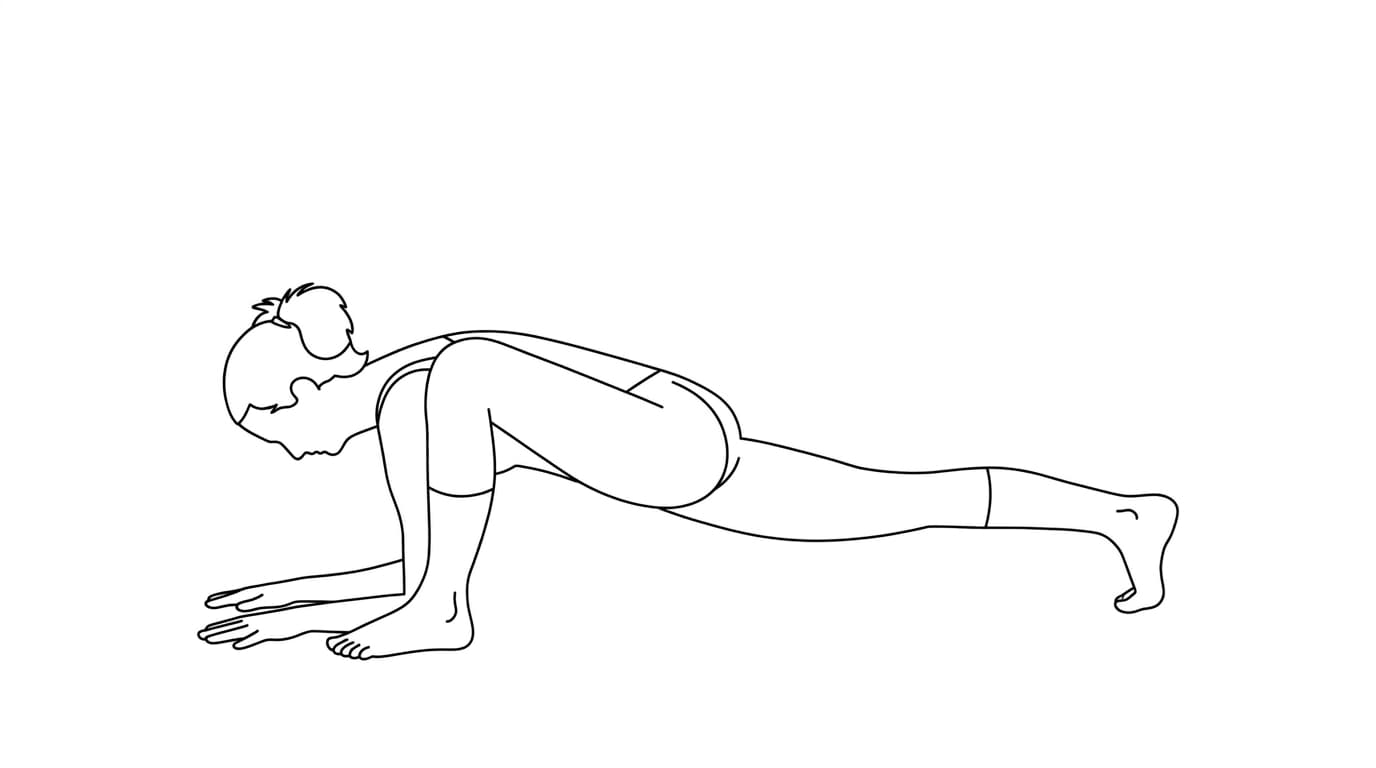
What is Lizard Pose?
Uttana Pristhasana is commonly taught as a low lunge with the front foot outside the hands. The stance can be high and supported; deep hip range is not necessary.
How do you practice a supported version?
Place a folded blanket under the back knee and blocks or a chair under the hands.
- Begin on hands and knees and step one foot forward to the outside of the same-side hand.
- Keep the front foot flat or adjust the toes to a comfortable angle.
- Lower the back knee onto padding and keep both hands elevated on support.
- Stay upright or lean forward slightly only if the front knee and hip remain comfortable.
- Return to hands and knees slowly and switch sides.
How can you modify Lizard Pose?
Keep the front foot between the hands, shorten the stance, raise the hands, or choose a kneeling lunge with the hands on a chair.
When should you stop or modify?
Stop for sharp knee, hip, groin, or back pain, numbness, or dizziness. This draft awaits teacher review.
Common question: Do the forearms need to touch the floor?
No. Blocks or a chair provide a useful height.
Referencias y lecturas adicionales
Estas referencias proporcionan un contexto general. No validan cada indicación de esta página ni reemplazan la instrucción de un maestro calificado.
- Yoga: Effectiveness and Safety National Center for Complementary and Integrative Health (NCCIH). General context on yoga safety and adapting postures; not pose-specific instruction.