
Wide-Legged Forward Bend II is a variation in the Prasarita Padottanasana family, often taught with the hands at the waist during a wide-stance fold. Keep the knees soft and use blocks or a chair if lowering the torso is uncomfortable.
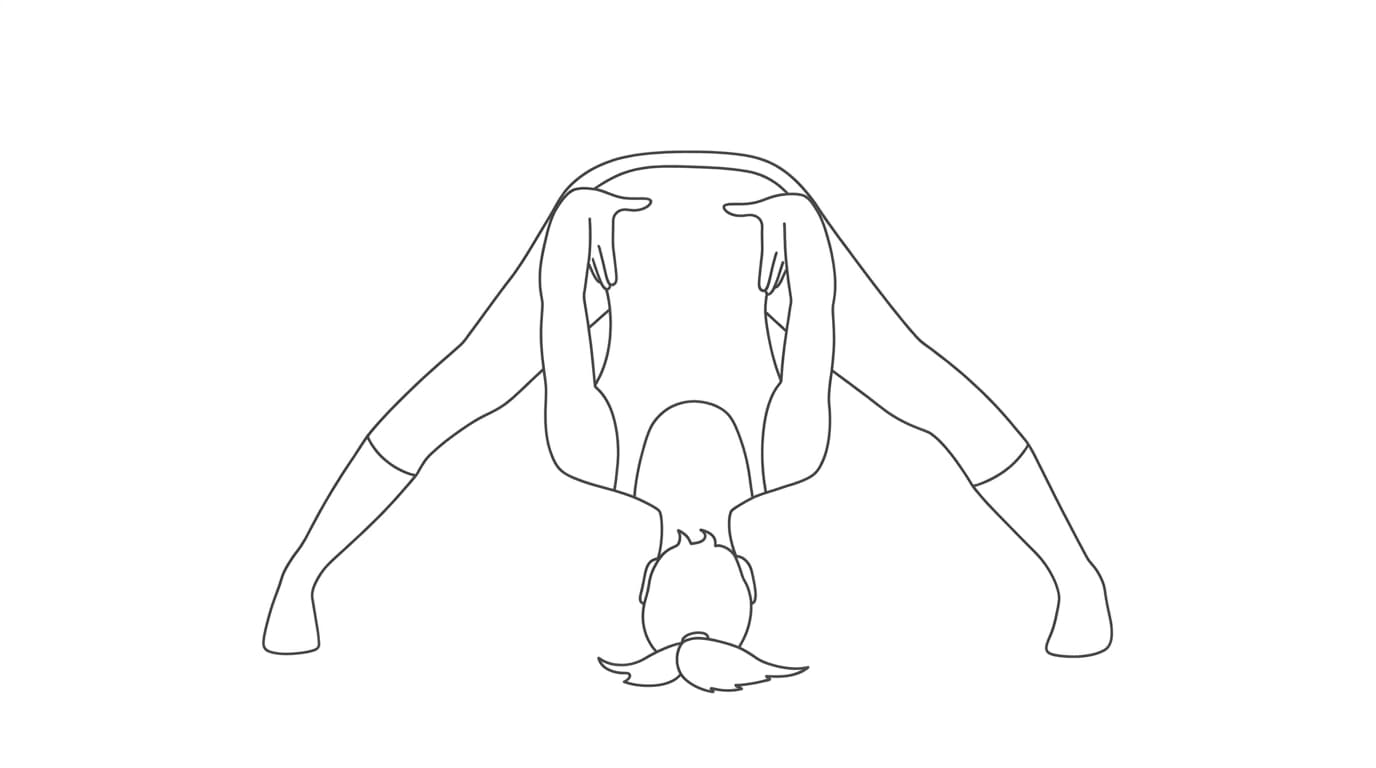
What is Wide-Legged Forward Bend II?
Prasarita Padottanasana B is a named variation whose arm position may differ by teaching method. The wide-stance fold can be practiced without placing the head near the floor.
How do you explore a supported fold?
Use a non-slip surface and a chair or blocks for hand support.
- Step the feet apart at a stable width and keep the knees unlocked.
- Rest the hands at the waist, then hinge forward only a small amount.
- Place the hands on blocks or a chair if they need support.
- Keep the torso length comfortable and breathe normally.
- Return upright slowly with hands at the waist.
How can you modify the variation?
Narrow the stance, bend the knees, or keep the torso upright. Confirm lineage-specific arm details with a qualified teacher before treating them as definitive.
When should you stop or modify?
Stop for back or leg pain, dizziness, or numbness. This draft awaits source verification and teacher review.
Common question: Must the hands stay on the waist?
No. Use a support that keeps the fold easy and stable.
संदर्भ और आगे पढ़ने के लिए
ये संदर्भ सामान्य पृष्ठभूमि देते हैं। ये इस पृष्ठ के हर निर्देश की पुष्टि नहीं करते और किसी योग्य शिक्षक के मार्गदर्शन का विकल्प नहीं हैं।
- Yoga: Effectiveness and Safety National Center for Complementary and Integrative Health (NCCIH). General context on yoga safety and adapting postures; not pose-specific instruction.