
Padmasana, or Lotus Pose, is an advanced cross-legged seated posture that requires substantial hip rotation. Do not pull the feet into place or force the knees. NCCIH advises beginners to avoid Lotus; meditation can instead use a chair or another comfortable, stable position.
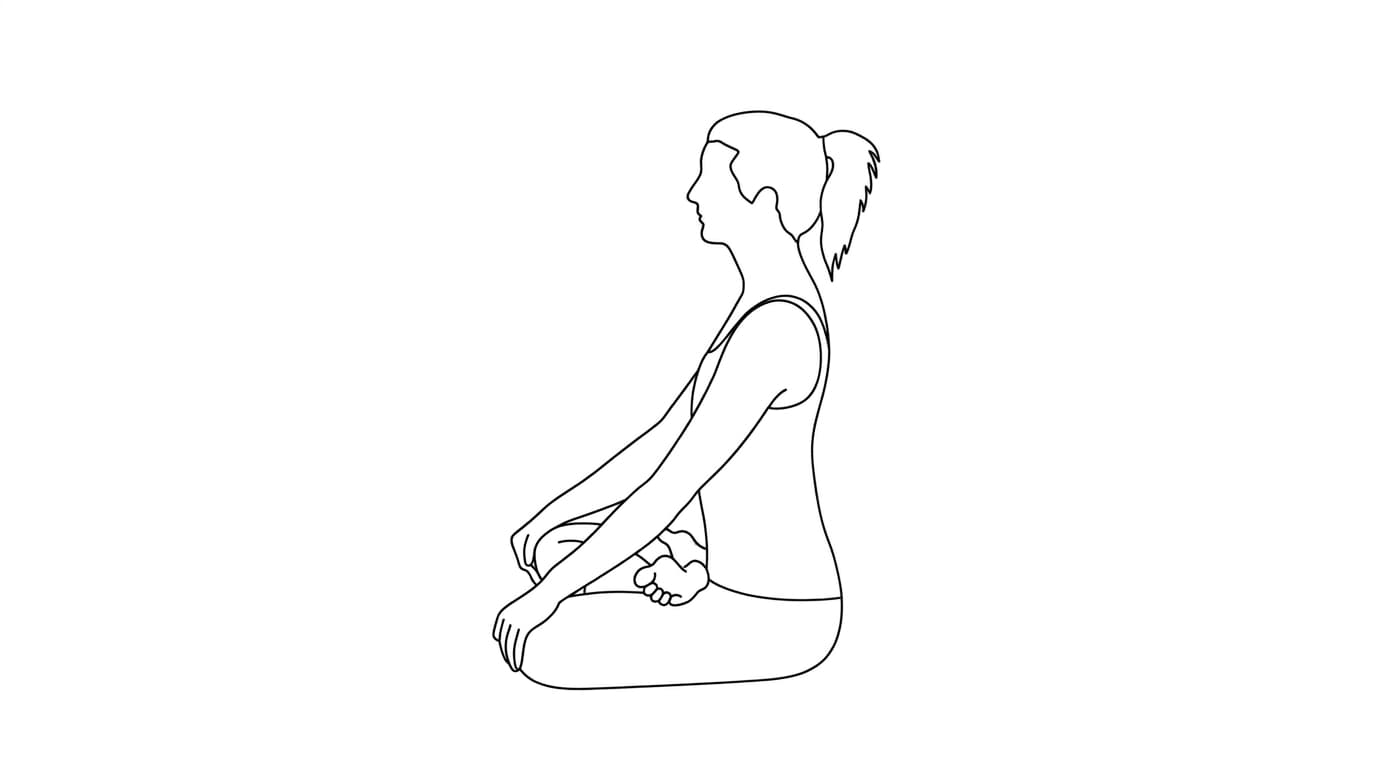
What is Lotus Pose?
Padmasana is a traditional cross-legged seat used in some yoga and meditation traditions. The knees and ankles should not be pulled into position; comfortable hip rotation is essential.
How should this posture be approached?
Do not use force or leverage to place the feet on the thighs. If you have not learned the position with an experienced teacher, choose a comfortable alternative.
NCCIH lists Lotus among the extreme practices beginners should avoid. A cross-legged position is not a prerequisite for meditation, and a chair is a legitimate option.
- Keep the pelvis supported and the spine easy.
- Leave the posture immediately for knee, ankle, or hip pain, tingling, or numbness.
- Do not use Lotus Pose as a requirement for meditation.
- Seek direct instruction before exploring any half- or full-lotus position.
What is a suitable alternative?
Sit in Easy Pose on a cushion, kneel with support if comfortable, or use a chair with both feet on the floor.
Common question: Do I need Lotus Pose to meditate?
No. Any stable, comfortable seat can support meditation.
References and further reading
These references provide general context. They do not validate every cue on this page or replace instruction from a qualified teacher.
- Yoga: Effectiveness and Safety National Center for Complementary and Integrative Health (NCCIH). General context on yoga safety and adapting postures; not pose-specific instruction.