
Bhekasana is a prone posture that may involve bending the knees and reaching for the feet. Because it can strongly load the knees and shoulders, use a small range, avoid pulling the feet forcefully, and practice only with suitable instruction.
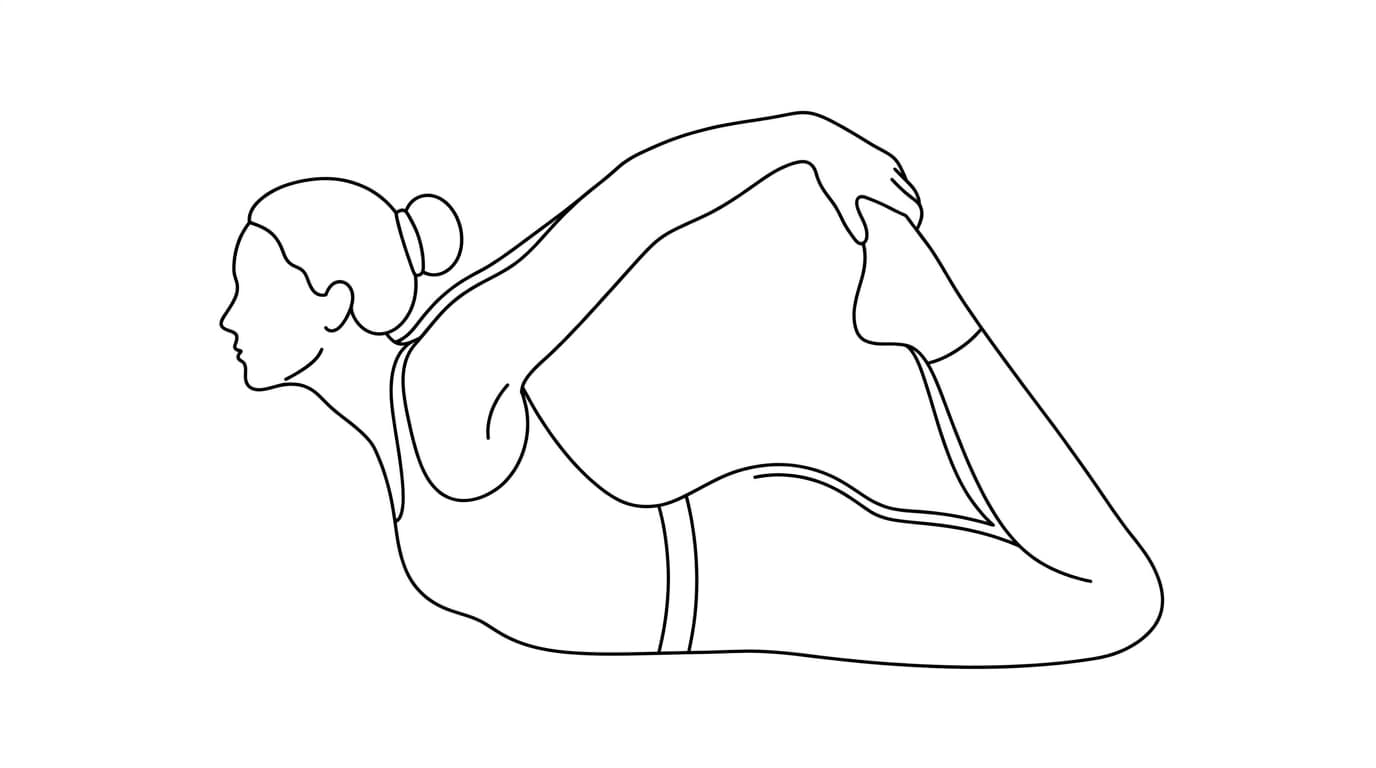
What is Frog Pose?
Bhekasana is a prone backbend variation commonly associated with bending the knees and reaching toward the feet. Several versions exist, and the full shape is not appropriate for every knee or shoulder.
How should this pose be approached?
This is not a first backbend to learn from text alone. Work with a qualified teacher who can verify the version and adapt it to your mobility.
- Begin with a comfortable prone rest and keep the neck neutral.
- Do not force the knees into a wide position or pull the feet toward the floor.
- Use a reduced range and stop before the knees, shoulders, or lower back feel compressed.
- If a teacher has shown you a suitable variation, follow that teacher's setup and exit cues.
- Release the feet gently and rest before turning to the side.
How can you modify Frog Pose?
Use a simpler prone rest or a low, supported backbend without grasping the feet. Do not use straps to pull the heels closer unless directly guided by a qualified teacher.
When should you stop or modify?
Avoid the posture when it causes knee, shoulder, or back pain, numbness, or breathing restriction. People with relevant joint concerns should seek individualized advice. This draft awaits subject-matter review.
Common question: Should I pull my heels toward the floor?
No. Forcing the feet can increase stress; a qualified teacher should determine whether and how to practice the pose.
Referências e leituras adicionais
Estas referências fornecem contexto geral. Elas não validam todas as orientações desta página nem substituem a instrução de um professor qualificado.
- Yoga: Effectiveness and Safety National Center for Complementary and Integrative Health (NCCIH). General context on yoga safety and adapting postures; not pose-specific instruction.