
Sphinx Pose is a low prone backbend with the forearms resting on the floor. Keep the elbows where the shoulders feel comfortable and the front of the pelvis grounded; lift the chest only as far as the lower back remains comfortable.
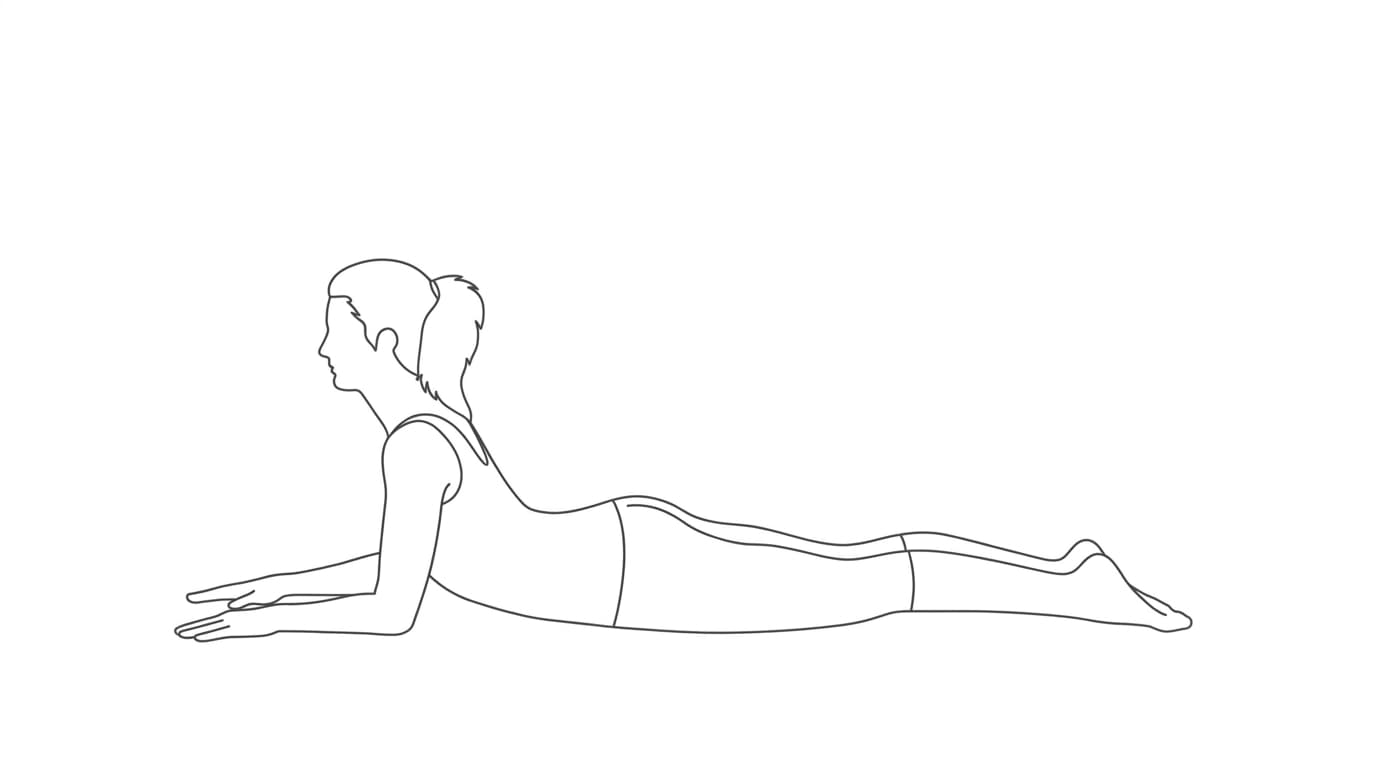
What is Sphinx Pose?
Salamba Bhujangasana is commonly called Sphinx Pose. It is a supported, low backbend and can be explored without trying to straighten the arms or reach a particular height.
How do you practice a gentle Sphinx Pose?
Use a padded surface and keep the neck relaxed.
- Lie face down with the legs resting comfortably.
- Place the forearms on the floor and set the elbows under or slightly ahead of the shoulders, whichever feels easier.
- Press the forearms down gently and allow the chest to lift a small amount.
- Keep the pelvis and legs relaxed and breathe normally for a few breaths.
- Lower the chest and rest on the forearms or turn the head to one side.
How can you modify Sphinx Pose?
Move the elbows farther forward to reduce the backbend, place a folded blanket under the pelvis, or keep the chest down and rest prone.
When should you stop or modify?
Stop for sharp lower-back, neck, or shoulder pain, numbness, or breath restriction. This draft is general education and awaits qualified review.
Common question: Should I press the chest as high as possible?
No. A lower position is appropriate if it keeps the back comfortable.
Referências e leituras adicionais
Estas referências fornecem contexto geral. Elas não validam todas as orientações desta página nem substituem a instrução de um professor qualificado.
- Yoga: Effectiveness and Safety National Center for Complementary and Integrative Health (NCCIH). General context on yoga safety and adapting postures; not pose-specific instruction.