
Locust III is a named variation in the Shalabhasana family, whose arm and leg arrangements differ among teaching sources. Treat this as a catalog identification rather than a definitive technique; keep any exploration low and stop if the back or neck is strained.
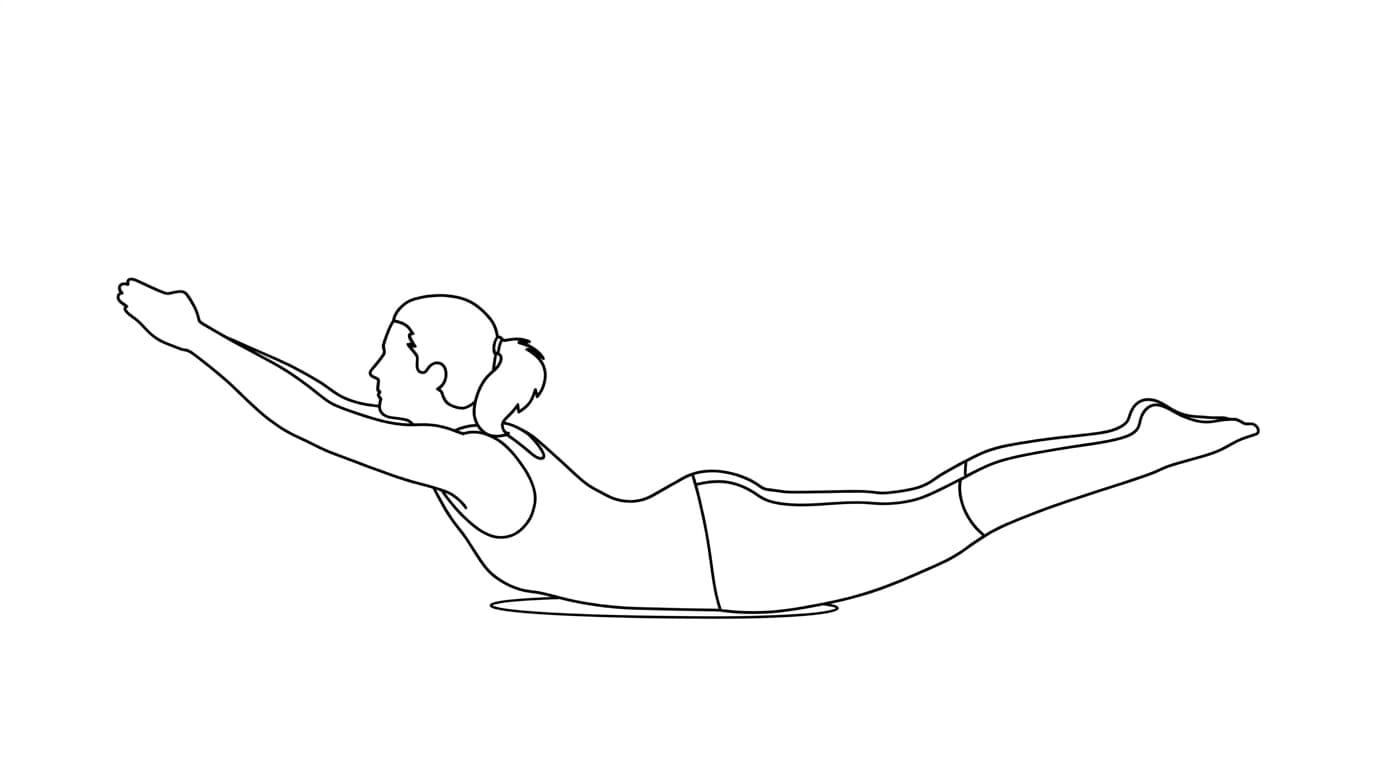
What is Locust III?
Shalabhasana C is a label used for one variation of Locust Pose. The catalog name alone does not establish a single standardized arrangement, so this draft avoids presenting a lineage-specific sequence as universal.
How can you explore the Locust family safely?
If you already practice prone back-body postures, use a small, controlled range and a qualified teacher's cues.
- Lie face down on a comfortable surface with the neck in a neutral position.
- Keep the arms and legs resting unless a teacher has shown you a suitable variation.
- If appropriate for you, try a very small single-limb lift and lower with control.
- Keep breathing freely; do not hold the breath or force a high backbend.
- Rest between attempts and leave the posture slowly.
How can you modify the posture?
Keep all limbs grounded, place a blanket beneath the pelvis, or choose a neutral resting position. Detailed arm/leg placement awaits verified pose-specific instruction.
When should you stop or modify?
Stop for sharp back or neck pain, numbness, tingling, or breathing difficulty. This content is a draft and has not been approved by a yoga teacher.
Common question: Are Locust III cues identical in every yoga school?
No. Confirm the specific variation and its setup with a qualified teacher.
Referências e leituras adicionais
Estas referências fornecem contexto geral. Elas não validam todas as orientações desta página nem substituem a instrução de um professor qualificado.
- Yoga: Effectiveness and Safety National Center for Complementary and Integrative Health (NCCIH). General context on yoga safety and adapting postures; not pose-specific instruction.