
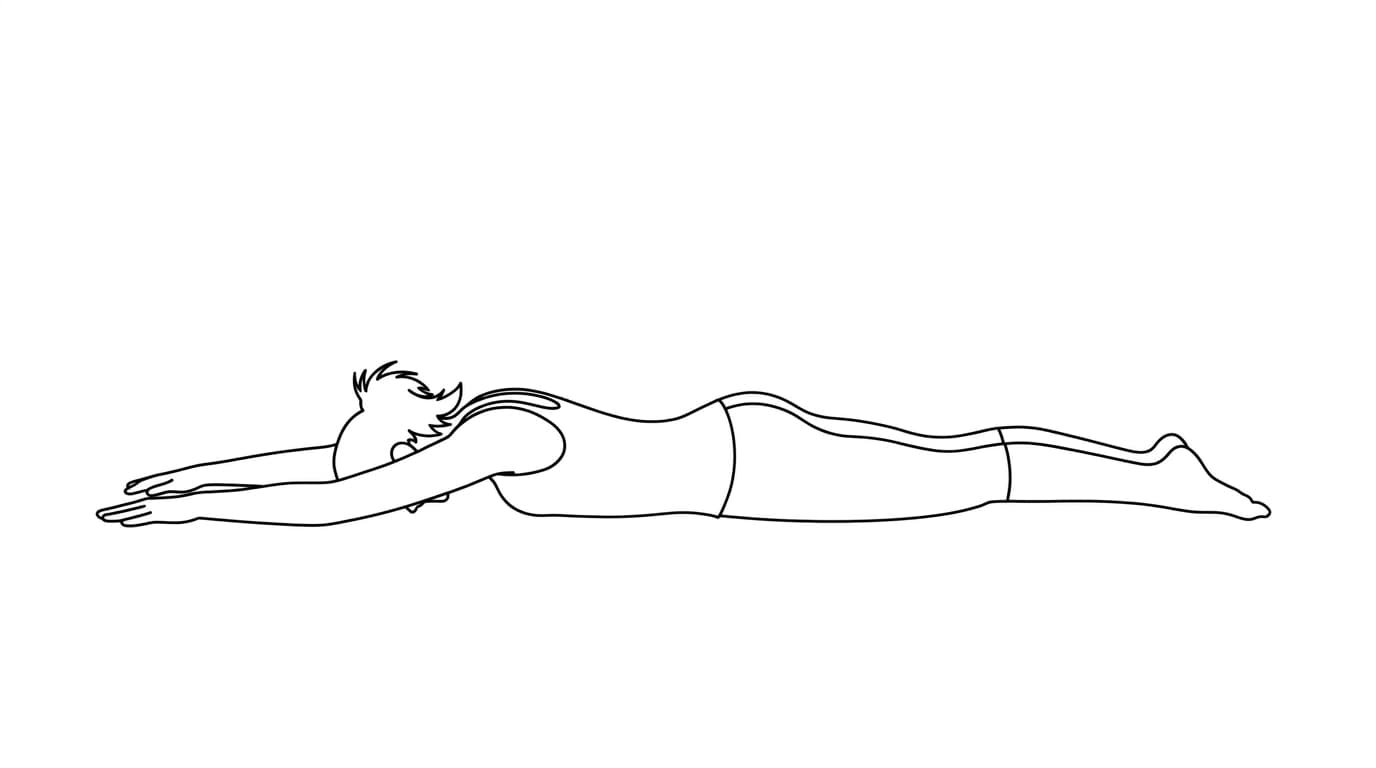
Advasana is a prone resting posture, sometimes called Reverse Corpse. Support the forehead or turn the head to one side, and change position if pressure on the face, chest, or lower back is uncomfortable.
What is Reverse Corpse?
Advasana is a prone rest used in some yoga practices. Unlike a supine resting pose, the body lies face down, so comfort and easy breathing determine whether it is suitable.
How do you set up a comfortable prone rest?
Use a padded surface and keep the head and breathing unobstructed.
- Lie on the stomach with the legs resting naturally.
- Place the forehead on a folded blanket or turn the head to one side without straining the neck.
- Let the arms rest beside the body or in another comfortable position.
- Breathe normally and leave the posture if the front of the body feels compressed.
- Turn onto one side before sitting up.
How can you modify Reverse Corpse?
Rest on the side or back instead, or place a thin cushion beneath the abdomen if that is comfortable and does not restrict breathing.
When should you stop or modify?
Change position for neck strain, pressure, numbness, or any breathing discomfort. This draft has not been reviewed by a named yoga teacher.
Common question: Must I keep my face down?
No. Use a head position that keeps the neck comfortable and breathing easy, or choose another resting posture.
参考文献与扩展阅读
这些参考文献提供一般背景信息。它们并不验证本页中的每一项要领,也不能替代合格教师的指导。
- Yoga: Effectiveness and Safety National Center for Complementary and Integrative Health (NCCIH). General context on yoga safety and adapting postures; not pose-specific instruction.