
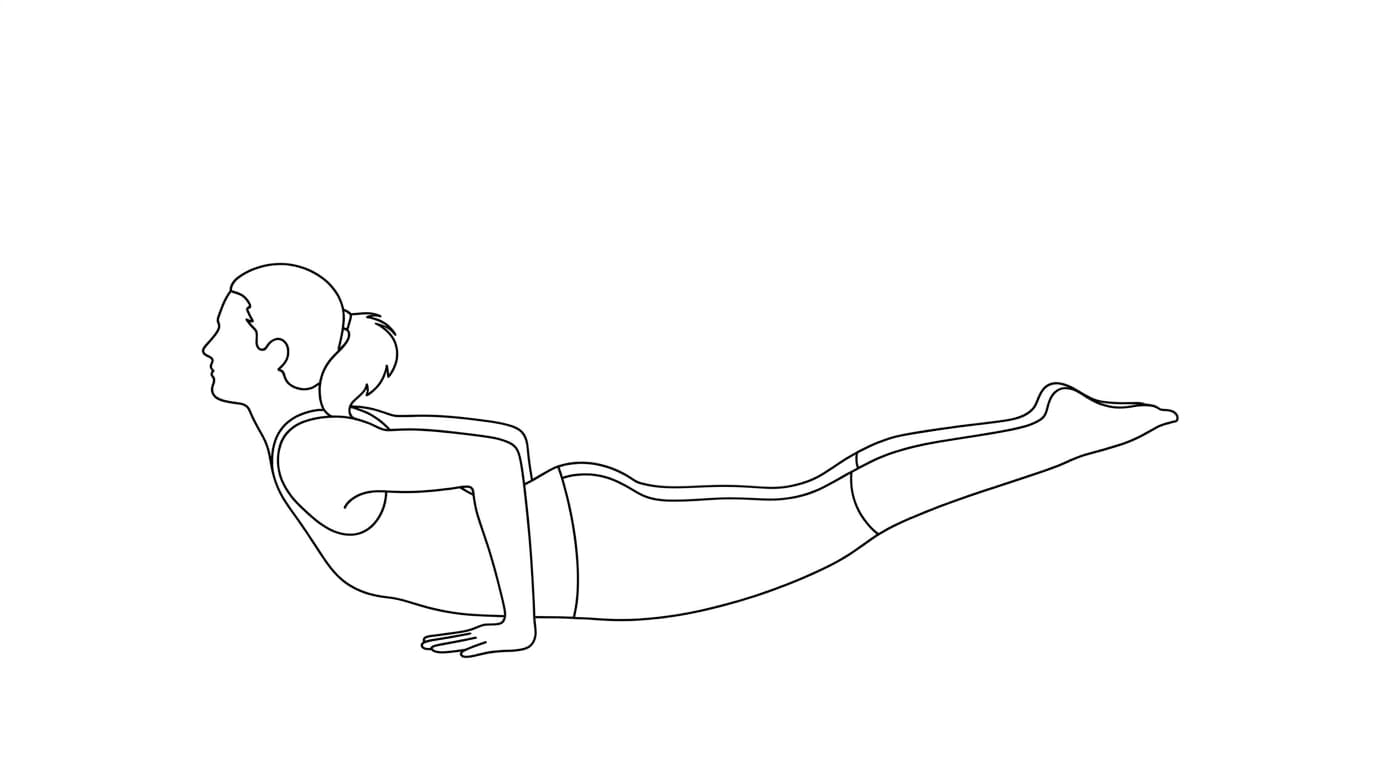
Locust II is one variation in the Shalabhasana family, commonly practiced lying face down with some combination of arm or leg lift. The variations differ by school; use a small lift and avoid compressing the lower back or straining the neck.
What is Locust II?
Shalabhasana B is a named variation of Locust Pose, but the exact arm and leg arrangement is not consistent across all teaching sources. This page offers only a low-range exploratory version, not a definitive lineage-specific form.
How do you explore a small-range prone lift?
Lie on a padded surface with the neck neutral and the legs resting.
- Place the forehead or one cheek on the mat and let the arms rest beside the body.
- Gently lengthen through the legs and lift one leg a small amount without turning the pelvis.
- Lower it, pause, and try the other side; lifting both legs or adding the arms is optional and should be teacher-guided.
- Keep the breath easy and avoid forcing the lift higher.
- Rest prone or turn to one side to come out.
How can you modify the posture?
Keep both legs down and gently engage the back of the body, or practice a low single-leg lift. Use a folded blanket under the pelvis if pressure is uncomfortable.
When should you stop or modify?
Stop for back, neck, or shoulder pain, numbness, or breath restriction. Exact Shalabhasana B technique needs qualified-source verification before detailed instruction.
Common question: Is there one universally agreed Locust II shape?
Variations are taught differently. Follow a qualified teacher from the tradition or method you practice.
参考文献与扩展阅读
这些参考文献提供一般背景信息。它们并不验证本页中的每一项要领,也不能替代合格教师的指导。
- Yoga: Effectiveness and Safety National Center for Complementary and Integrative Health (NCCIH). General context on yoga safety and adapting postures; not pose-specific instruction.