
Dvi Pada Sirsasana A is an advanced seated posture involving both legs behind the head or shoulders. It can strongly load the hips, knees, and neck; this page intentionally provides no entry steps and recommends qualified in-person instruction.
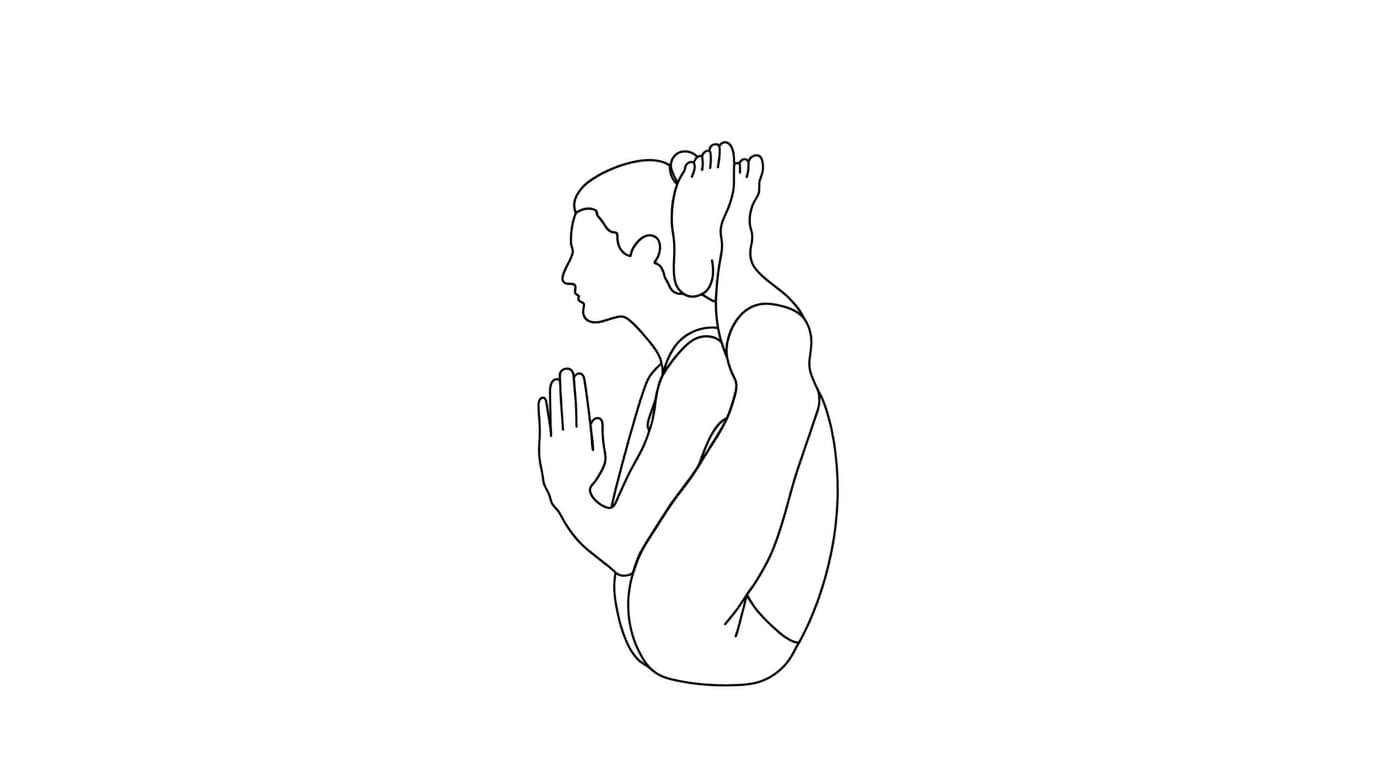
What is Two Legs Behind the Head I?
Dvi Pada Sirsasana A is an advanced seated leg-behind-head posture. The exact variation and preparation depend on the lineage; it is not suitable for self-teaching from a text page.
How should this posture be approached?
Do not attempt the full form without direct guidance from a qualified teacher. This article intentionally omits the entry and exit mechanics.
- Never force either leg behind the head or pull on the foot.
- Do not use the neck to hold the legs in place.
- Stop for pain, numbness, tingling, or breathing restriction.
- Choose a neutral seated position if the setup is uncertain.
What is a lower-demand alternative?
Practice Staff Pose, a supported seated forward fold, or a teacher-approved single-leg mobility variation that does not place a leg behind the head.
Common question: Can I practice the pose by pulling one leg at a time?
No. Readiness and safe technique require in-person assessment, not forceful stretching.
Referencias y lecturas adicionales
Estas referencias proporcionan un contexto general. No validan cada indicación de esta página ni reemplazan la instrucción de un maestro calificado.
- Yoga: Effectiveness and Safety National Center for Complementary and Integrative Health (NCCIH). General context on yoga safety; not pose-specific instruction or endorsement.