
Plank Pose is a supported posture with the hands and feet on the floor and the body held in a long line. Begin with knees down or hands on a wall; keep the breath moving and stop before the shoulders, wrists, or back become strained.
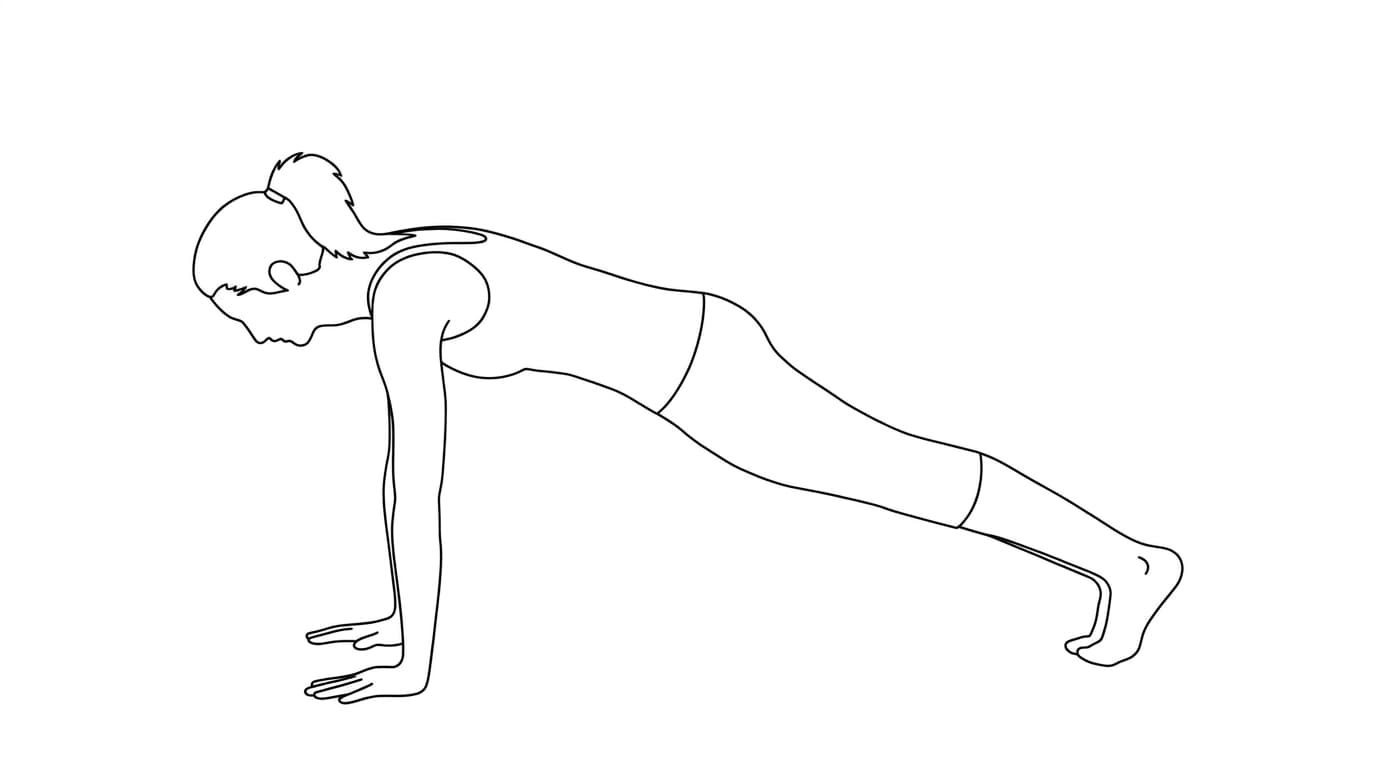
What is Plank Pose?
Phalakasana is a weight-bearing posture often used in yoga sequences. The knees-down and wall-supported versions are useful variations, not lesser forms.
How do you practice a supported Plank?
Use a non-slip surface and keep the body away from hard edges.
- Begin on hands and knees with the hands under or slightly ahead of the shoulders.
- Step one foot back and then the other, or keep both knees down.
- Press the floor away gently and keep the torso steady without holding the breath.
- Maintain only a short, comfortable hold.
- Lower the knees first and rest before repeating.
How can you modify Plank Pose?
Keep the knees grounded, place the hands on a wall or sturdy counter, or use forearms only if comfortable. Shorten the hold.
When should you stop or modify?
Stop for wrist, shoulder, or back pain, breath-holding, numbness, or dizziness. This draft has not received named teacher review.
Common question: Do I need to keep my knees off the floor?
No. A knees-down plank is a common supported variation.
Referencias y lecturas adicionales
Estas referencias proporcionan un contexto general. No validan cada indicación de esta página ni reemplazan la instrucción de un maestro calificado.
- Yoga: Effectiveness and Safety National Center for Complementary and Integrative Health (NCCIH). General context on yoga safety and adapting postures; not pose-specific instruction.