
Plank Pose is a supported posture with the hands and feet on the floor and the body held in a long line. Begin with knees down or hands on a wall; keep the breath moving and stop before the shoulders, wrists, or back become strained.
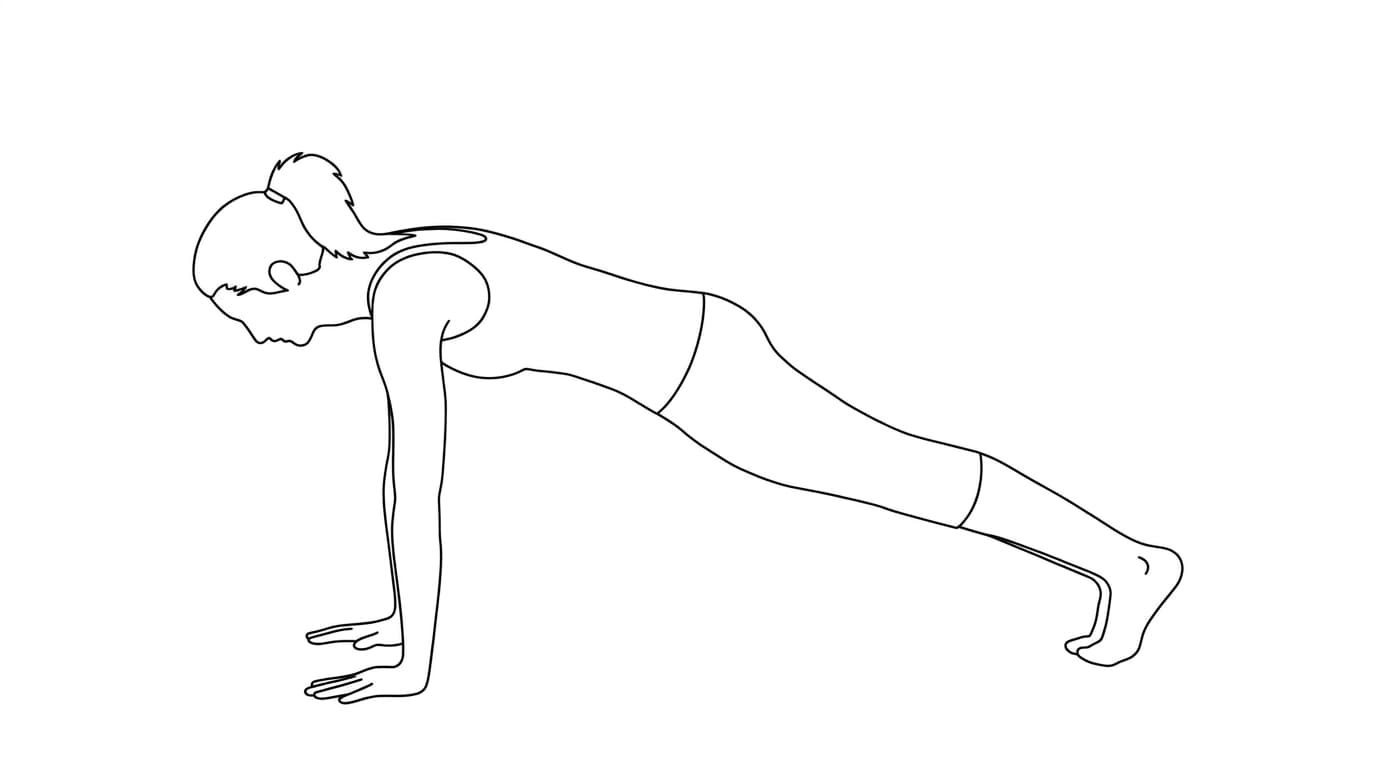
What is Plank Pose?
Phalakasana is a weight-bearing posture often used in yoga sequences. The knees-down and wall-supported versions are useful variations, not lesser forms.
How do you practice a supported Plank?
Use a non-slip surface and keep the body away from hard edges.
- Begin on hands and knees with the hands under or slightly ahead of the shoulders.
- Step one foot back and then the other, or keep both knees down.
- Press the floor away gently and keep the torso steady without holding the breath.
- Maintain only a short, comfortable hold.
- Lower the knees first and rest before repeating.
How can you modify Plank Pose?
Keep the knees grounded, place the hands on a wall or sturdy counter, or use forearms only if comfortable. Shorten the hold.
When should you stop or modify?
Stop for wrist, shoulder, or back pain, breath-holding, numbness, or dizziness. This draft has not received named teacher review.
Common question: Do I need to keep my knees off the floor?
No. A knees-down plank is a common supported variation.
संदर्भ और आगे पढ़ने के लिए
ये संदर्भ सामान्य पृष्ठभूमि देते हैं। ये इस पृष्ठ के हर निर्देश की पुष्टि नहीं करते और किसी योग्य शिक्षक के मार्गदर्शन का विकल्प नहीं हैं।
- Yoga: Effectiveness and Safety National Center for Complementary and Integrative Health (NCCIH). General context on yoga safety and adapting postures; not pose-specific instruction.