
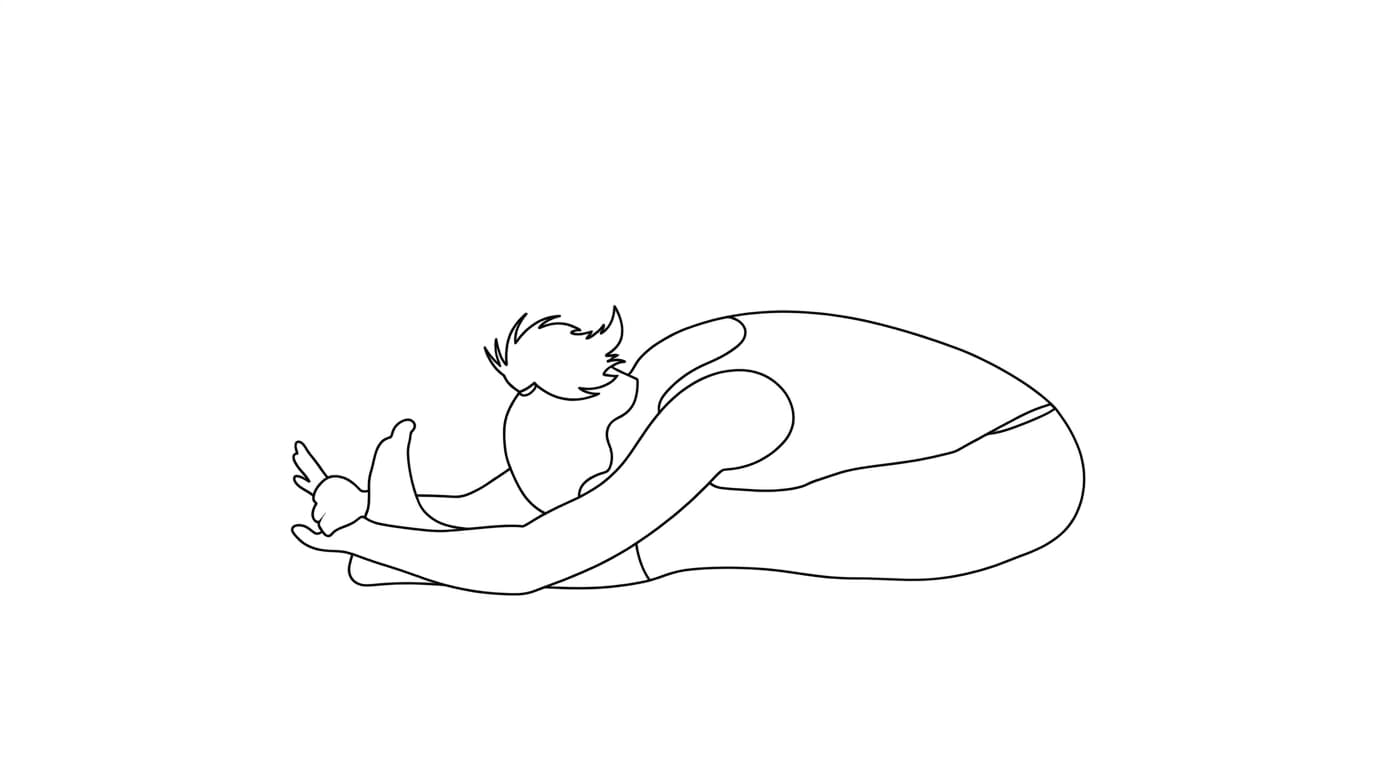
Head to Knee I is an asymmetric seated forward bend with one leg extended and the other bent. The torso can remain upright; a strap and a bent extended-leg knee can reduce strain, and touching the head to the knee is not required.
What is Head to Knee I?
Janu Sirsasana A combines one extended leg with the other leg bent. The traditional name does not mean that the head must reach the knee; the posture can be a small, upright stretch.
How do you practice a gentle version?
Sit on a folded blanket if that helps the pelvis move comfortably.
- Extend one leg and bend the other, placing its foot near the inner thigh without pressing the knee down.
- Support the bent knee with a cushion if it hangs or feels strained.
- Turn the torso toward the extended leg only as far as comfortable.
- Keep the spine long and hinge forward slightly, or remain upright. Rest the hands on the leg or use a strap around the foot.
- Return upright slowly and change sides.
How can you modify the forward bend?
Bend the extended-leg knee, sit higher, or place a bolster across the leg as a resting point. The hands do not need to reach the foot.
When should you stop or modify?
Ease out for sharp knee, hip, or back pain, numbness, or tingling. Avoid pulling yourself deeper with a strap. This draft awaits teacher review.
Common question: Should my forehead touch my knee?
No. The name describes the posture, not a required range of motion.
References and further reading
These references provide general context. They do not validate every cue on this page or replace instruction from a qualified teacher.
- Yoga: Effectiveness and Safety National Center for Complementary and Integrative Health (NCCIH). General context on yoga safety and adapting postures; not pose-specific instruction.