
Extended Side Angle is a standing lunge with the torso reaching over the bent front leg. Rest the lower hand on the thigh, a block, or a chair; keep the stance stable and avoid compressing the neck or lower back.
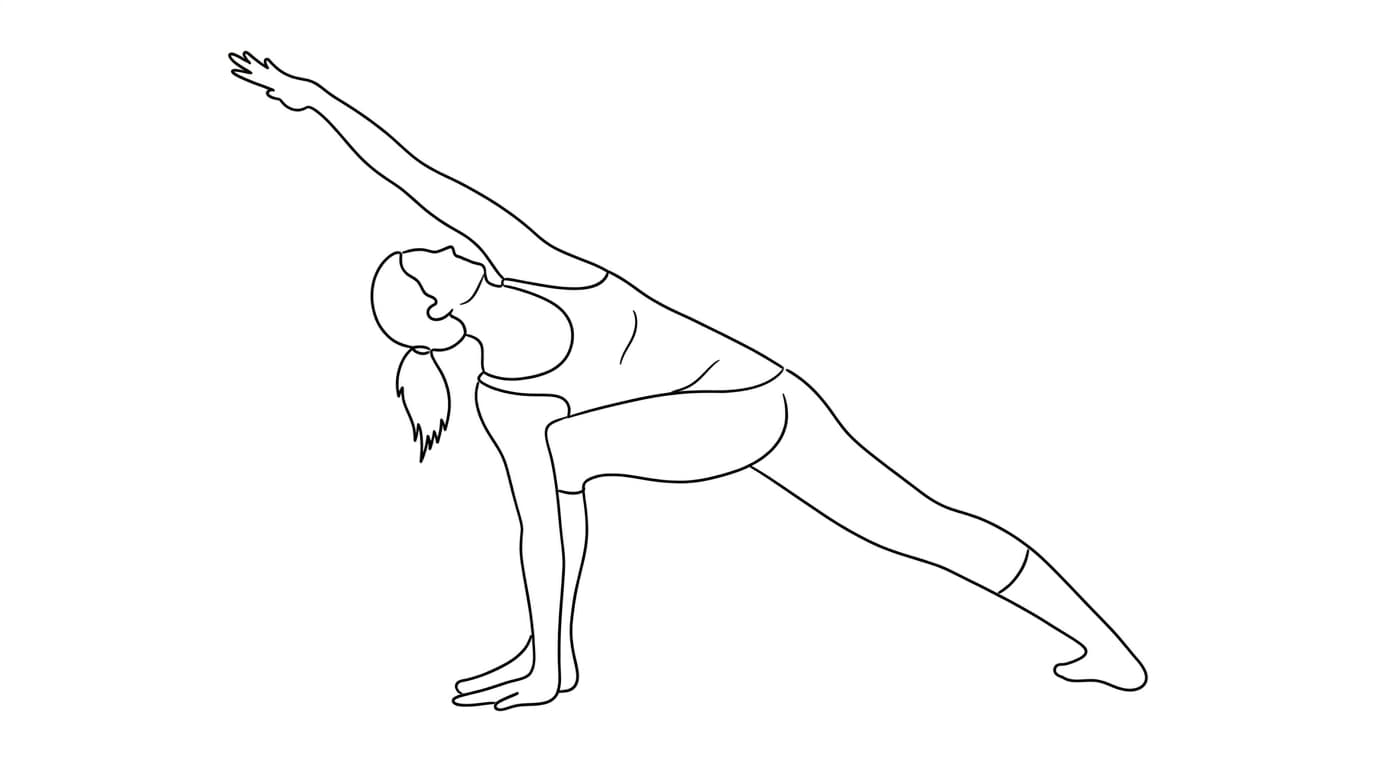
What is Extended Side Angle?
Utthita Parshvakonasana combines a wide stance, a bent front knee, and a side reach. The lower arm does not need to reach the floor, and the upper arm can remain on the hip.
How do you practice a supported variation?
Use a stable surface and keep the stance shorter if balance is uncertain.
- Step the feet apart and turn one foot outward to a comfortable angle.
- Bend the front knee slightly, keeping it generally pointed toward the toes.
- Rest the forearm lightly on the front thigh or place the hand on a block or chair.
- Lengthen the side of the torso only as far as the breath remains easy; keep the gaze neutral.
- Straighten the front leg, step the feet closer, and change sides.
How can you modify Extended Side Angle?
Shorten the stance, reduce the bend, keep the upper hand on the hip, and raise the lower support. A chair can replace the floor block.
When should you stop or modify?
Stop for sharp knee, hip, back, or shoulder pain, dizziness, or breathing restriction. This draft awaits qualified teacher review.
Common question: Must the lower hand reach the floor?
No. A block, chair, or forearm-on-thigh version is valid.
Referencias y lecturas adicionales
Estas referencias proporcionan un contexto general. No validan cada indicación de esta página ni reemplazan la instrucción de un maestro calificado.
- Yoga: Effectiveness and Safety National Center for Complementary and Integrative Health (NCCIH). General context on yoga safety and adapting postures; not pose-specific instruction.