
Kapotasana is catalogued as Pigeon Pose and may refer to a deep kneeling backbend, unlike the supported Half Pigeon hip stretch. Confirm the intended version and do not attempt a deep backbend from text alone.
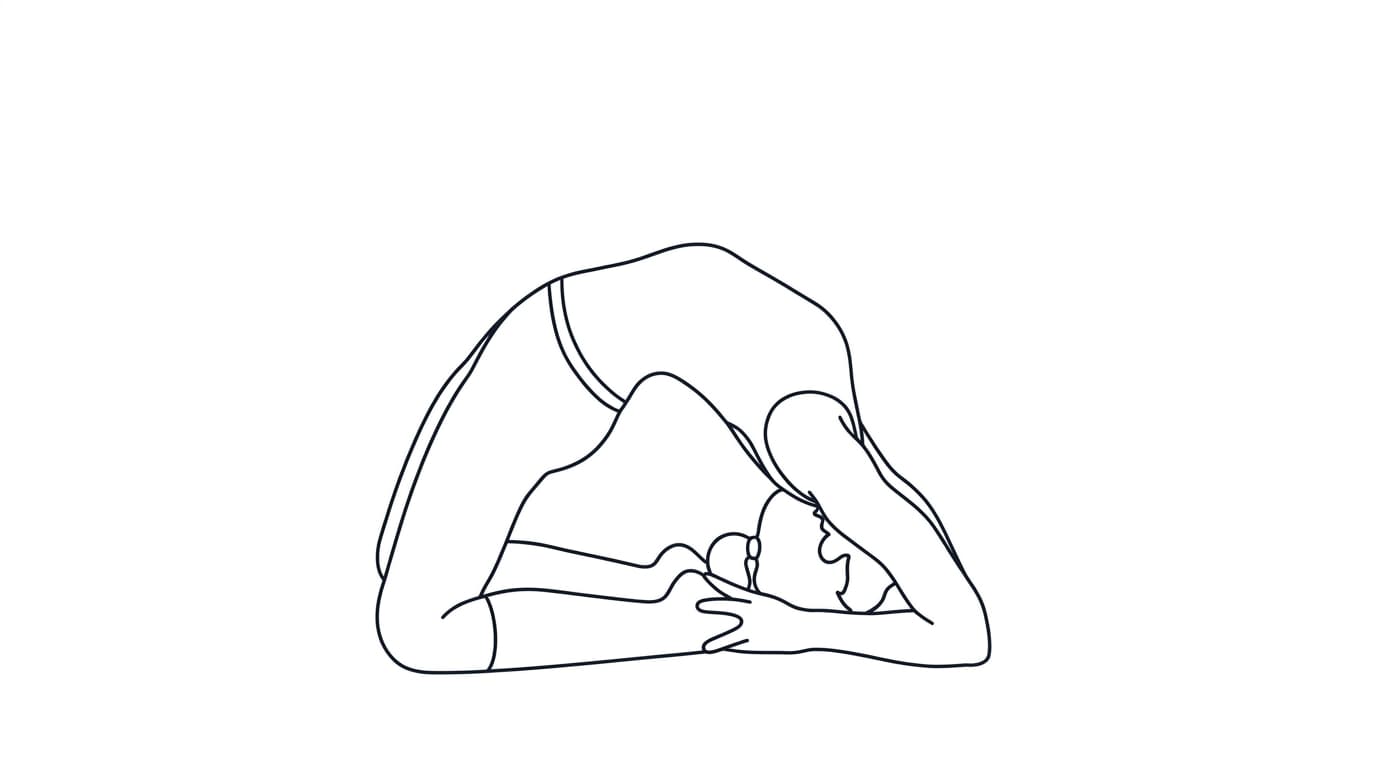
What does Pigeon Pose mean here?
Kapotasana is used for an advanced kneeling backbend in some traditions, while “Pigeon” is also used informally for the distinct Half Pigeon hip posture. This catalog entry needs that distinction kept clear.
How should the advanced backbend be approached?
Do not attempt the full backbend from written directions. Learn the exact setup, preparation, and exit from a qualified teacher.
- Do not drop the head or force the spine backward.
- Stop for knee, hip, neck, or back pain, numbness, or dizziness.
- Use an easier supported chest-opening movement only under appropriate instruction.
What is a gentler alternative?
Use the separately described supported Half Pigeon variation, or choose a low-range Camel Pose only if previously taught.
Common question: Is Kapotasana the same as Half Pigeon?
No. The names are sometimes conflated, but the advanced backbend is a different posture.
මූලාශ්ර සහ වැඩිදුර කියවීම්
මෙම මූලාශ්ර සාමාන්ය පසුබිම සපයයි. ඒවා මෙම පිටුවේ ඇති සෑම උපදෙසක්ම තහවුරු කිරීමක් හෝ සුදුසුකම් ලත් ගුරුවරයෙකුගේ මඟපෙන්වීම වෙනුවට ආදේශකයක් නොවේ.
- Yoga: Effectiveness and Safety National Center for Complementary and Integrative Health (NCCIH). General context on yoga safety; not pose-specific instruction or endorsement.