
ශරීරය
යෝග ඉරියව්, පැහැදිලිව විස්තර කර ඇත
ඔබට උනන්දුවක් දක්වන ඉරියව්වෙන් ආරම්භ කරන්න. සෑම මඟපෙන්වීමකටම ප්රවේශම් සහගත ප්රවේශයක්, ප්රායෝගික ඉඟි, වෙනස් කිරීම් සහ නැවැත්විය යුතු හේතු ඇතුළත් වේ.
යෝග ඉරියව් මඟපෙන්වීමක් මඟින් ඉරියව්වකට ඇතුළු වන්නේ කෙසේද, එහි සිටින විට අවධානය යොමු කළ යුත්තේ කුමක් ද, සහ අවශ්ය විට එය සකස් කරන්නේ හෝ නවත්වන්නේ කෙසේද යන්න තේරුම් ගැනීමට ඔබට උපකාරී විය යුතුය. මෙම මඟපෙන්වීම් සාමාන්ය අධ්යාපනික තොරතුරු සපයන අතර, තනි උපදෙස් සඳහා ආදේශකයක් නොවේ.
ඉරියව් මඟපෙන්වීම් 169 ක් සිංහල සංස්කරණය
මඟපෙන්වීම් 169 ක් පෙන්වයි
අත් සහ පාද ආධාරක
ඉරියව් 26 ක්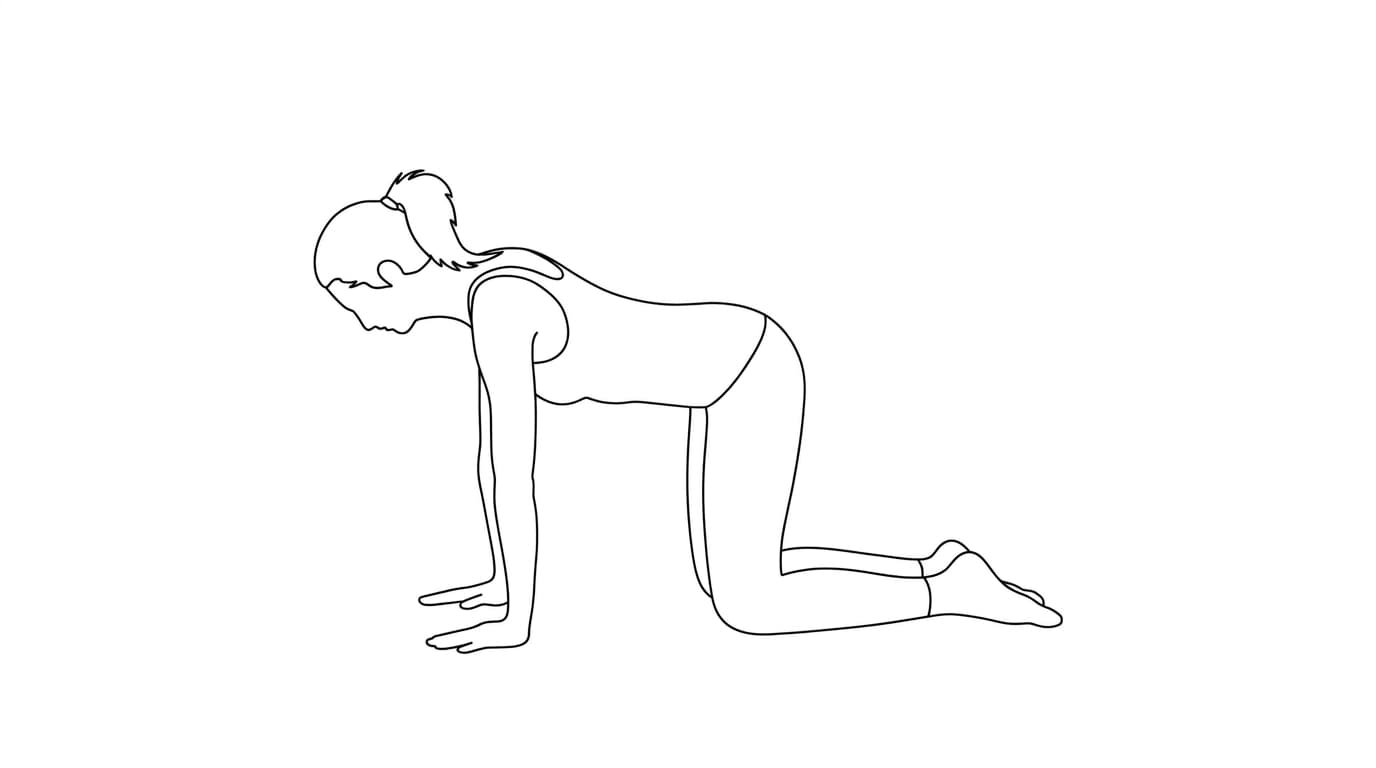
Box Pose
Chakravakasanaचक्रवाकासन
Box Pose is a hands-and-knees position that can serve as a base for gentle movement. Place padding under the knees, keep the wrists comfortable, and use fists or forearm support if hands-flat positioning is unsuitable.
මඟපෙන්වීම විවෘත කරන්න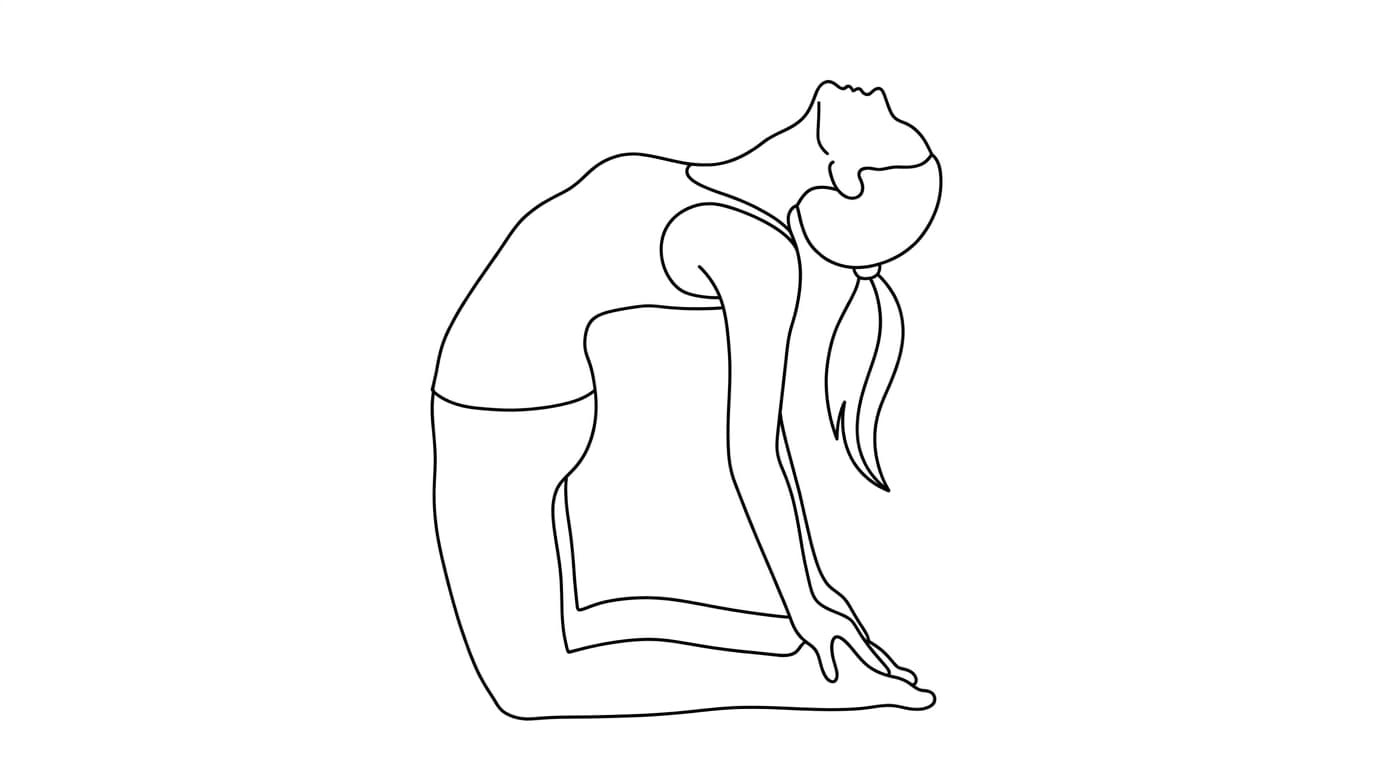
Camel Pose
Ushtrasanaउष्ट्रासन
Camel Pose is a kneeling backbend that can be practiced with the hands on the hips and only a small chest lift. Reaching for the heels is optional; keep the neck neutral and avoid pushing the lower back into a deep arch.
මඟපෙන්වීම විවෘත කරන්න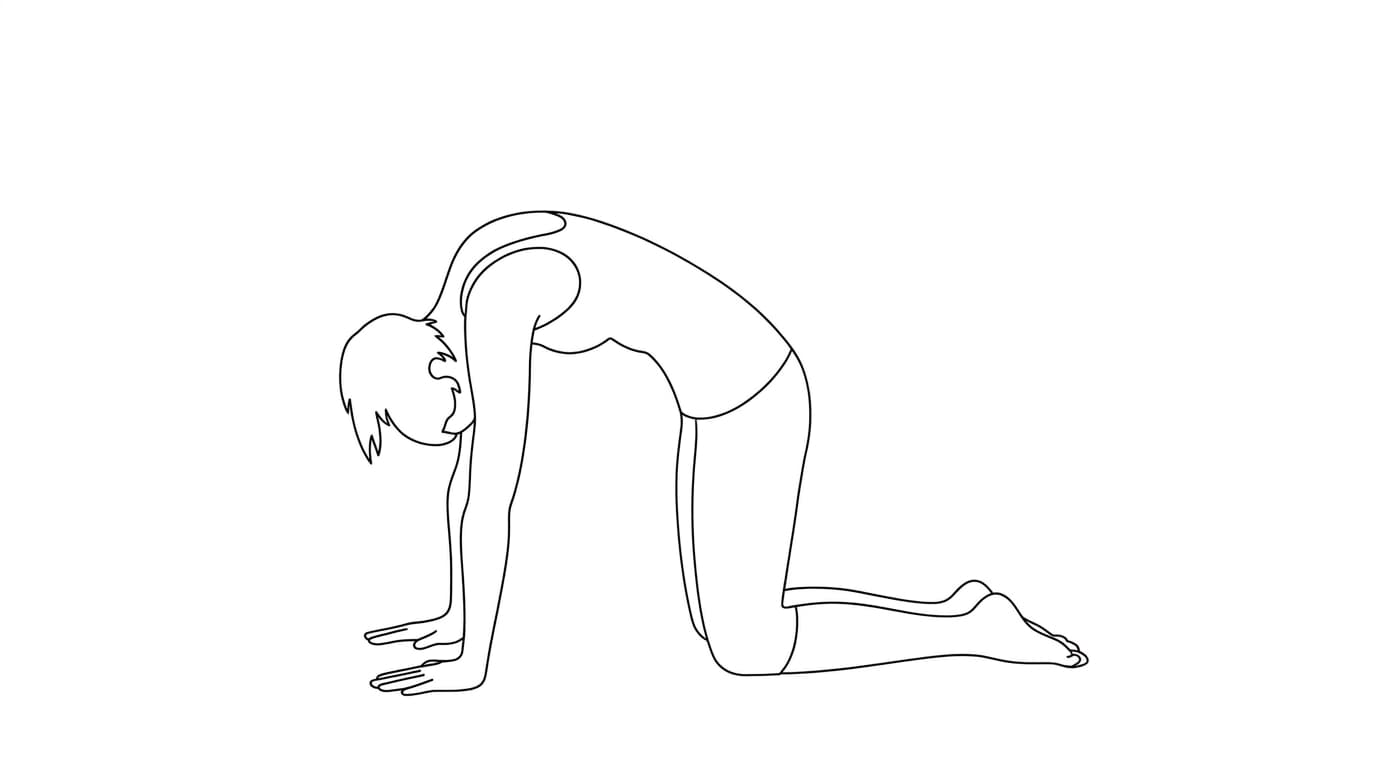
Cat Pose
Marjariasanaमार्जरीआसन
Cat Pose is a hands-and-knees spinal movement in which the back rounds gently. Move with the breath only if that feels natural, keep the neck comfortable, and reduce the range or use a chair if wrists or knees are sensitive.
මඟපෙන්වීම විවෘත කරන්න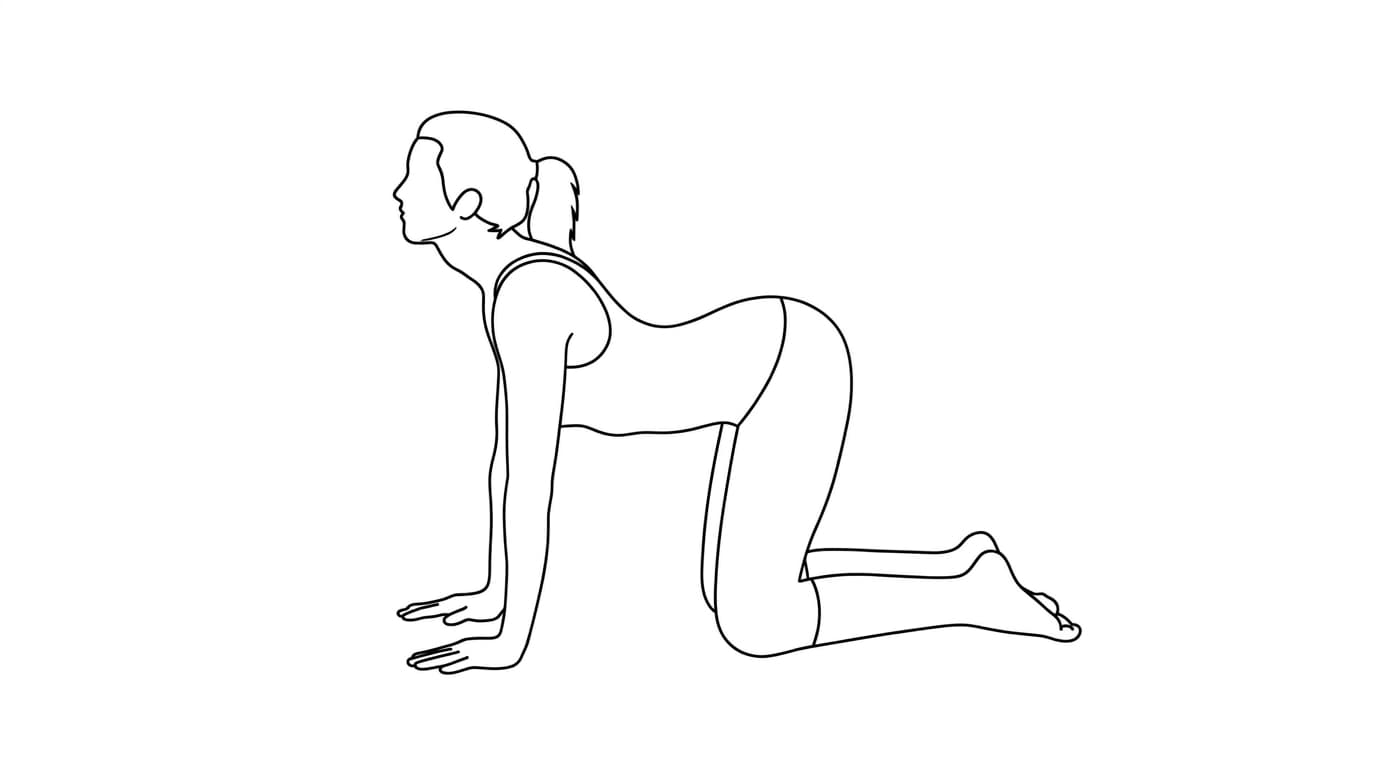
Cow Pose
Bitilasanaबितिलासन
Cow Pose is a hands-and-knees movement that gently opens the front of the torso while the spine moves toward a mild arch. Keep the range small, avoid throwing the head back, and use chair support if kneeling or wrists are uncomfortable.
මඟපෙන්වීම විවෘත කරන්න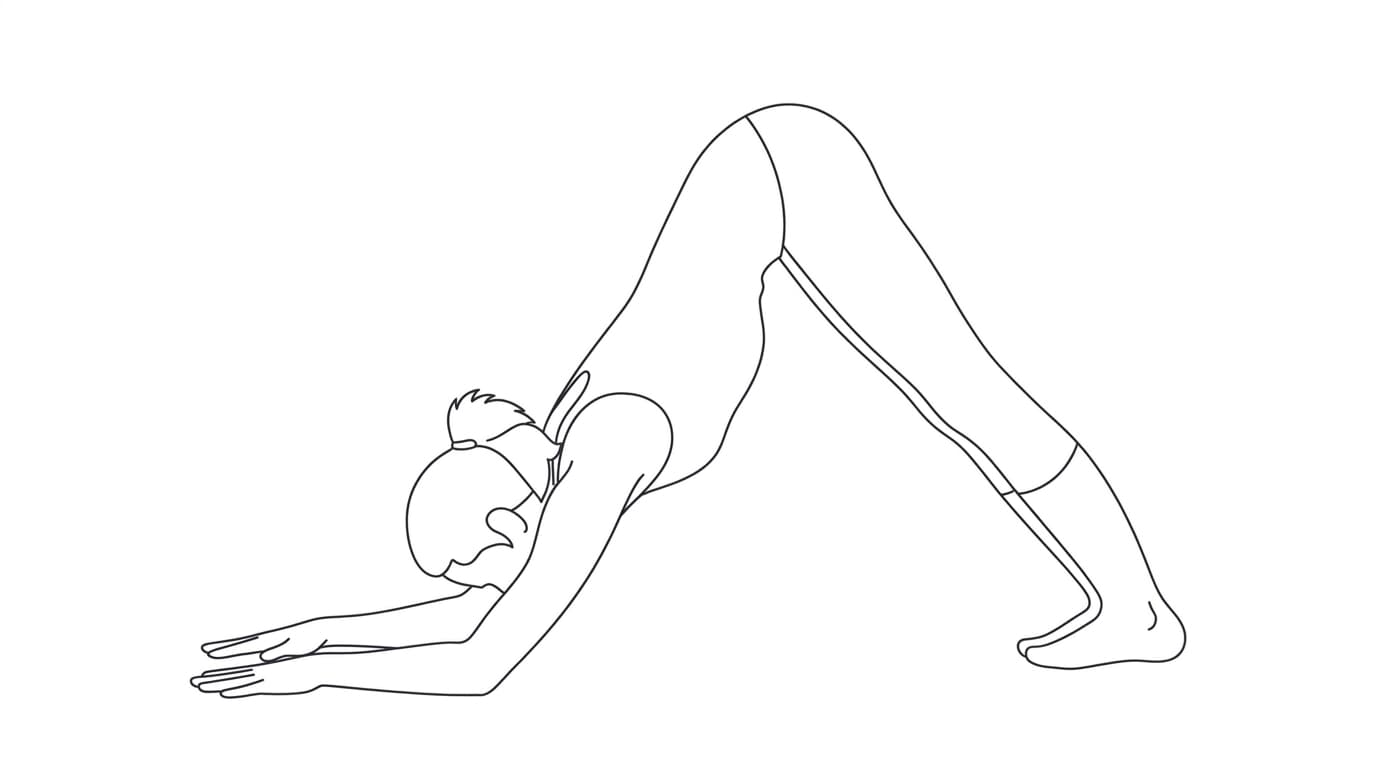
Dolphin Pose
Shishumarasanaशिशुमारासन
Dolphin Pose is a forearm-supported posture with the hips lifted. Keep the head off the floor, bend the knees, and use a wall or chair if needed; do not treat it as a headstand entry drill without qualified instruction.
මඟපෙන්වීම විවෘත කරන්න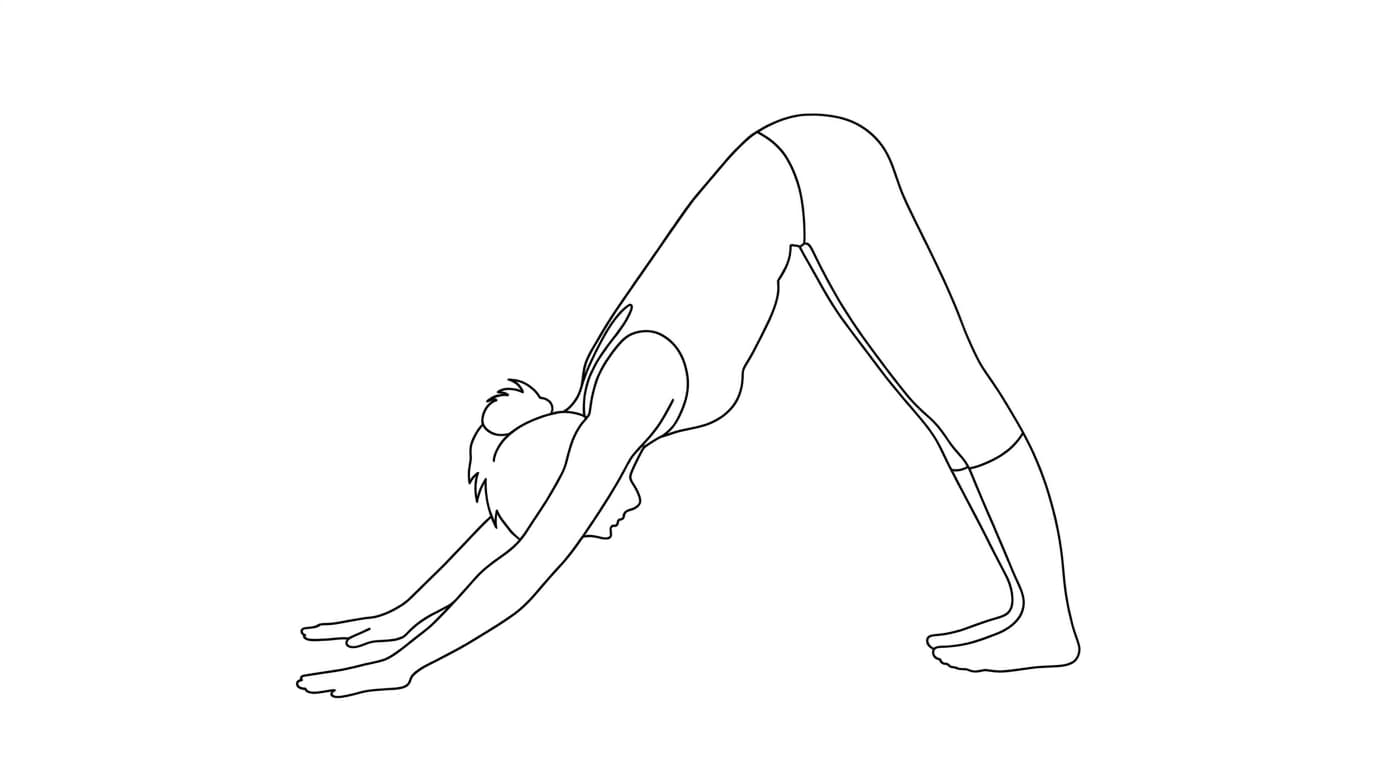
Adho Mukha Svanasana (පහළට මුහුණලා සිටින බල්ලා)
Adho Mukha Shvanasanaअधोमुखश्वानासन
පහළට මුහුණලා සිටින බල්ලා යනු ප්රතිලෝම V හැඩයේ බර උසුලන යෝගා ඉරියව්වකි. උකුල් පිටුපසට ගමන් කරන විට අත් සහ පාද බිමට තද කරන්න; විලුඹ පහළට බල නොකර කොඳු ඇට පෙළ දිගු විය හැකි නිසා දණහිස් නැමිය හැක.
මඟපෙන්වීම විවෘත කරන්න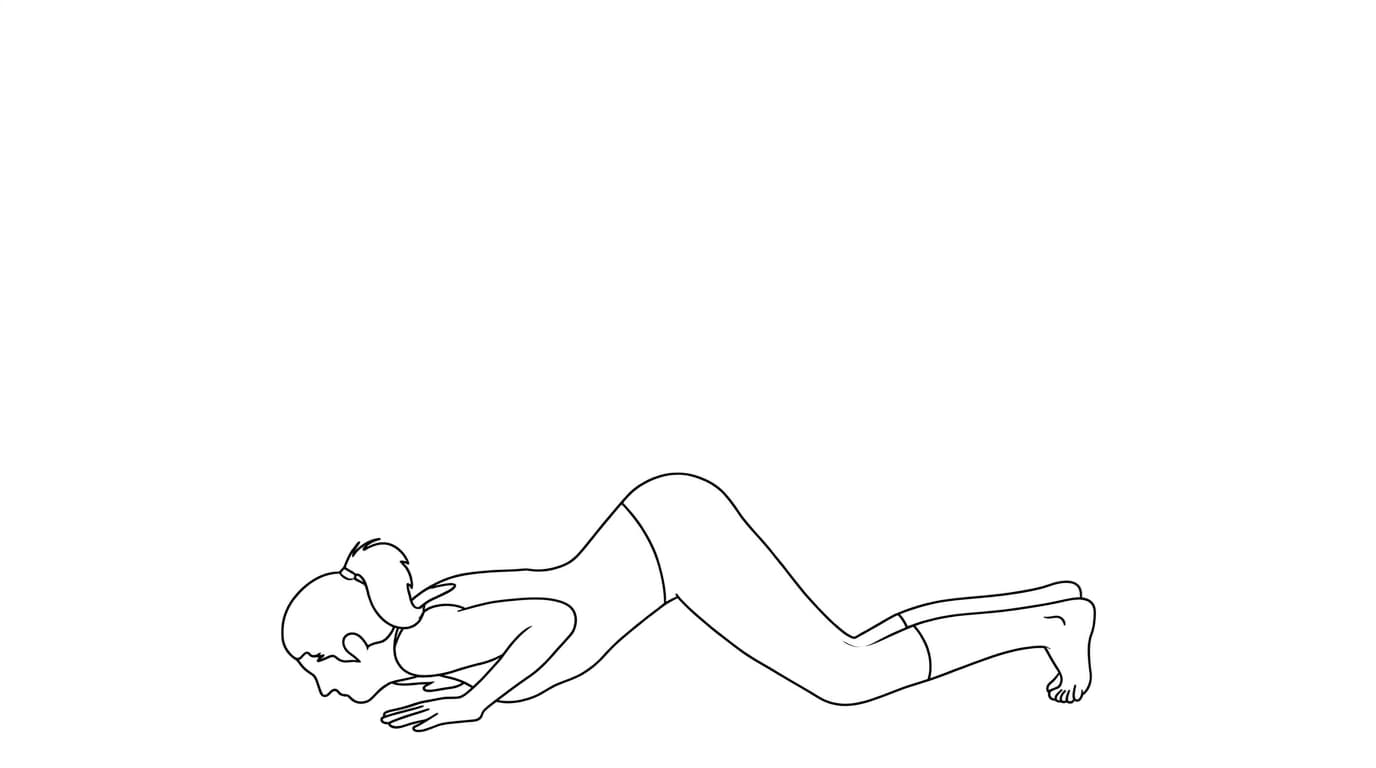
Eight-Point Pose
Ashtangasanaअष्टाङ्गासन
Eight-Point Pose is commonly taught as a prone lowering position with several body points supported. The neck and shoulders should not bear sudden load; use a knees-down alternative and learn the specific transition from a qualified teacher.
මඟපෙන්වීම විවෘත කරන්න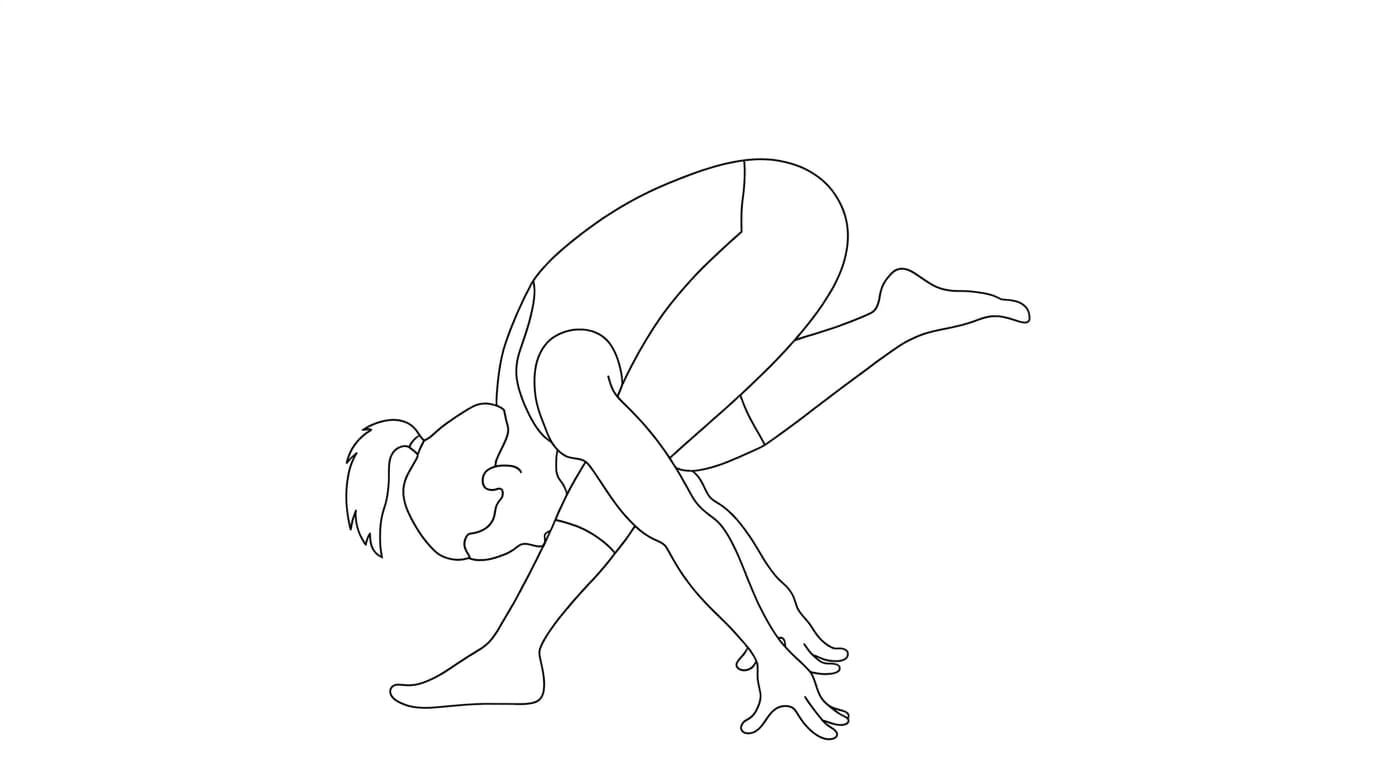
Humble Flamingo
Humble Flamingo is a contemporary name used for a bound balance variation, but the exact form is not standardized by the catalog entry. Verify the intended pose with its source teacher; do not attempt a binding balance from a name alone.
මඟපෙන්වීම විවෘත කරන්න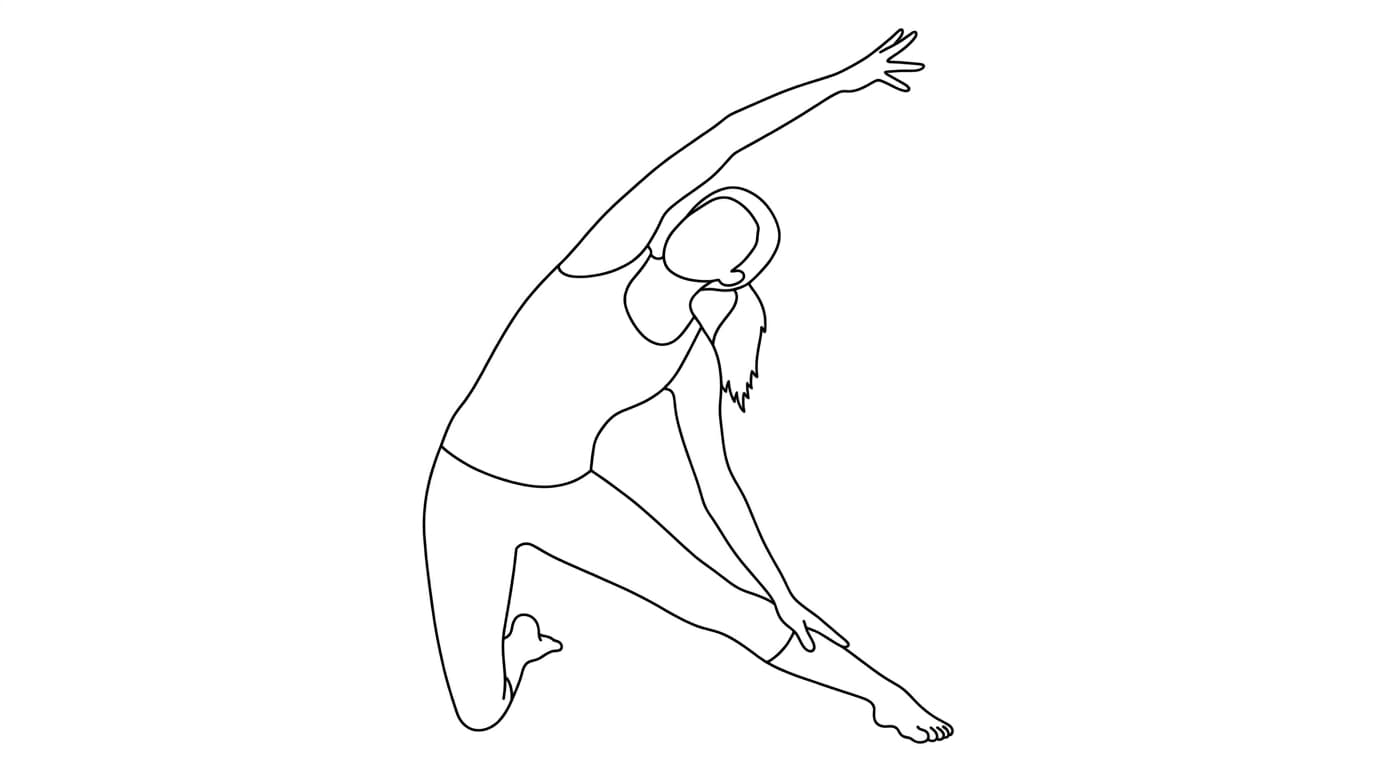
Gate Pose
Parighasanaपरिघासन
Gate Pose is a kneeling side stretch with one leg extended to the side. Pad the kneeling leg and keep the extended foot grounded; rest a hand on the thigh or a chair rather than reaching beyond a comfortable range.
මඟපෙන්වීම විවෘත කරන්න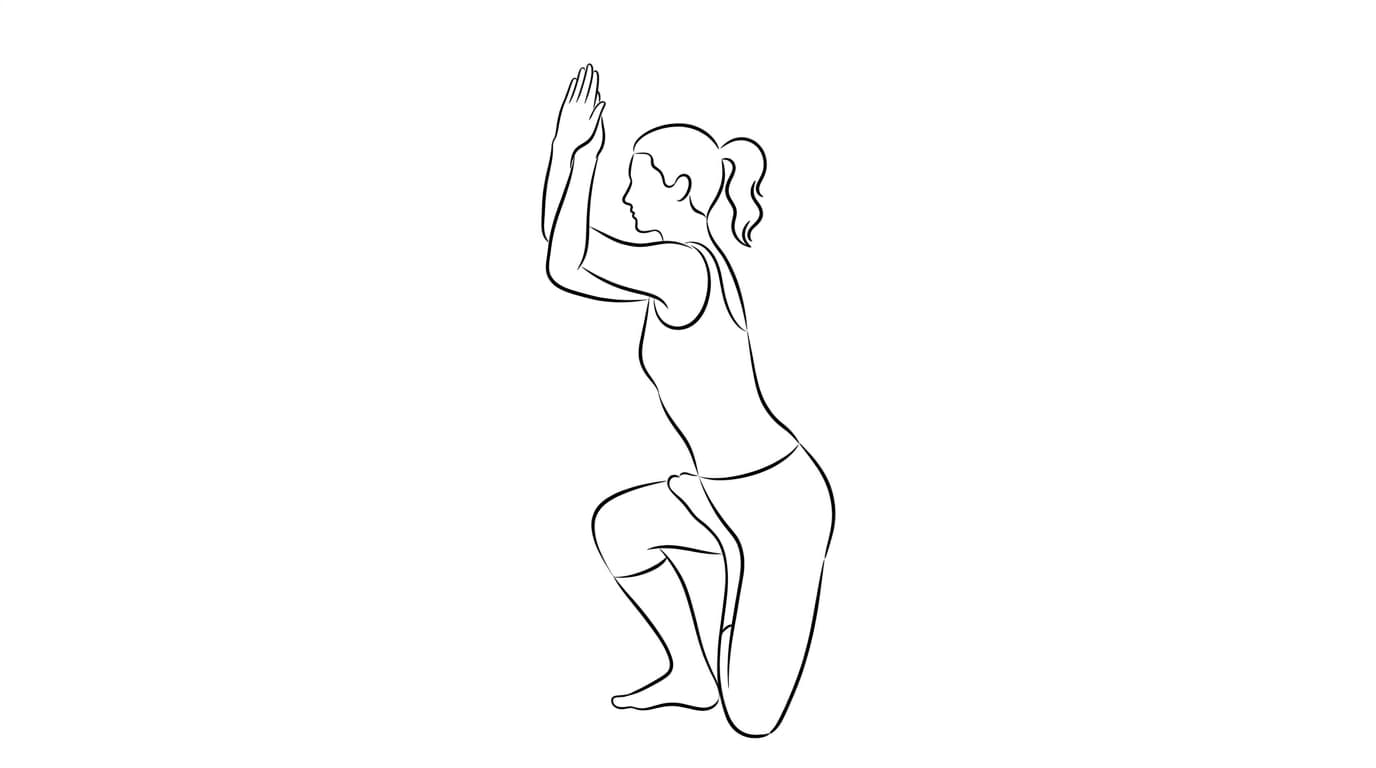
Horse Pose
Vatayanasanaवातायनासन
Vatayanasana is catalogued as Horse Pose and may involve a half-lotus leg position with a standing or kneeling balance. The name and form need source verification; do not force the knee or attempt the full balance without qualified instruction.
මඟපෙන්වීම විවෘත කරන්න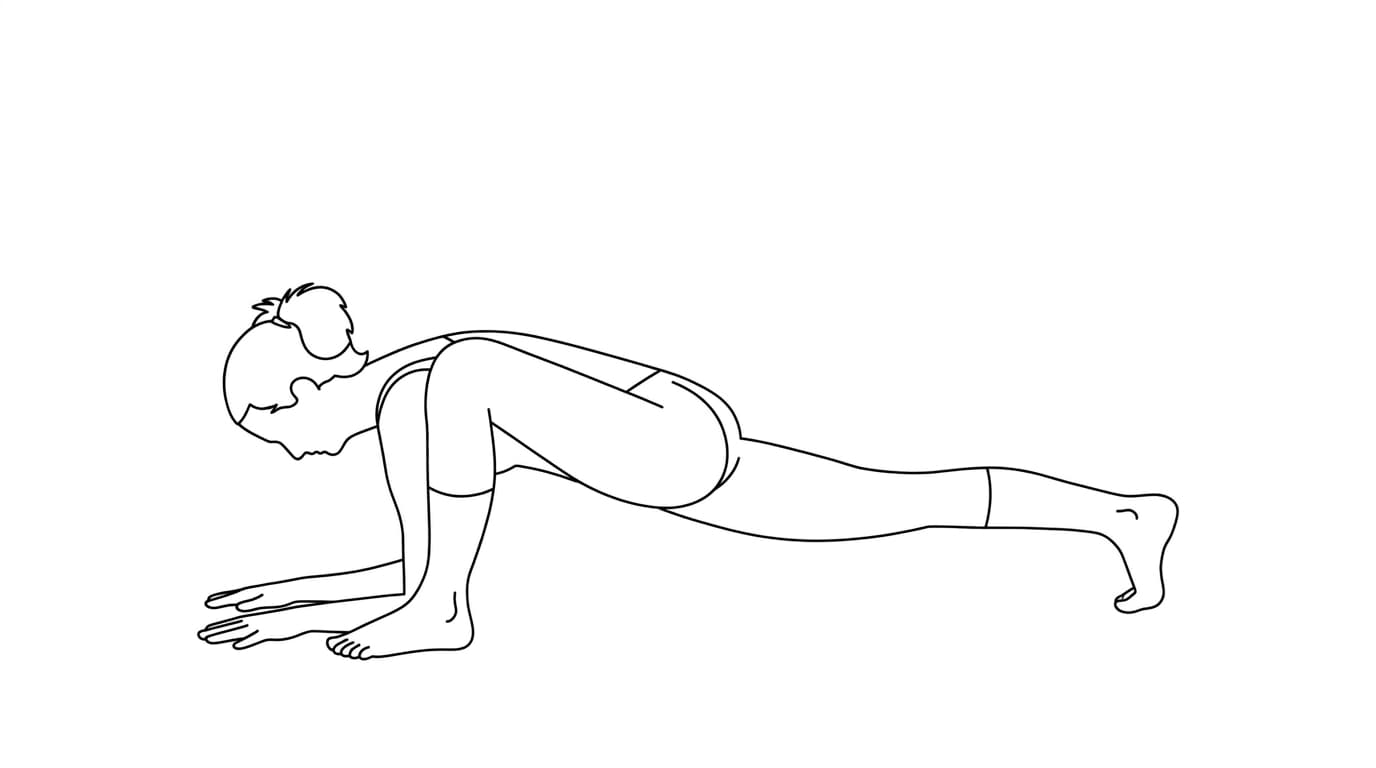
Lizard Pose
Uttana Pristhasanaउत्तानपृष्ठासन
Lizard Pose is a low-lunge variation with the front foot outside the hands. Keep the back knee padded and use blocks or a chair; the front knee need not open widely and the forearms do not need to reach the floor.
මඟපෙන්වීම විවෘත කරන්න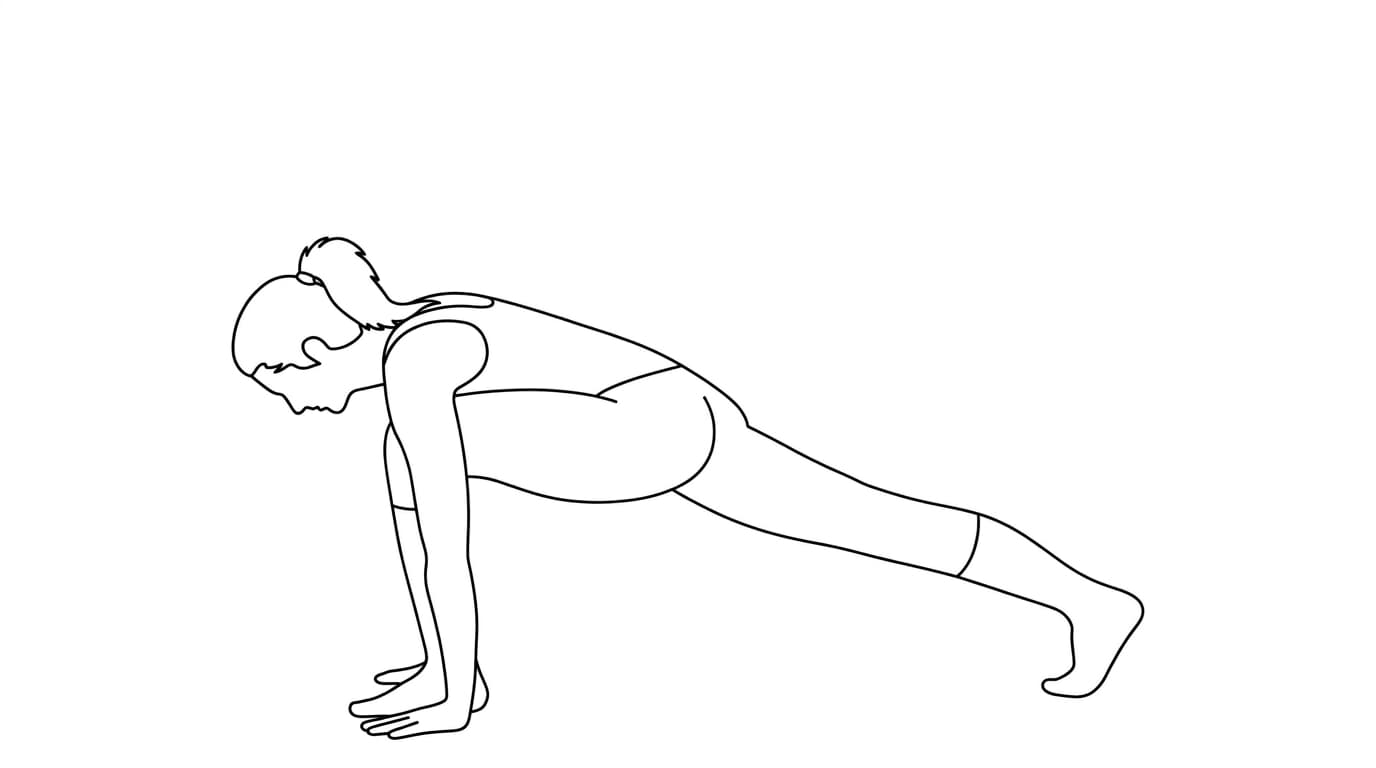
Lunge Pose
Lunge Pose is a general label for several forward and low-lunge shapes. Use padding under a kneeling knee, keep the front foot stable, and choose a hand support; confirm which lunge variation a class or source intends.
මඟපෙන්වීම විවෘත කරන්න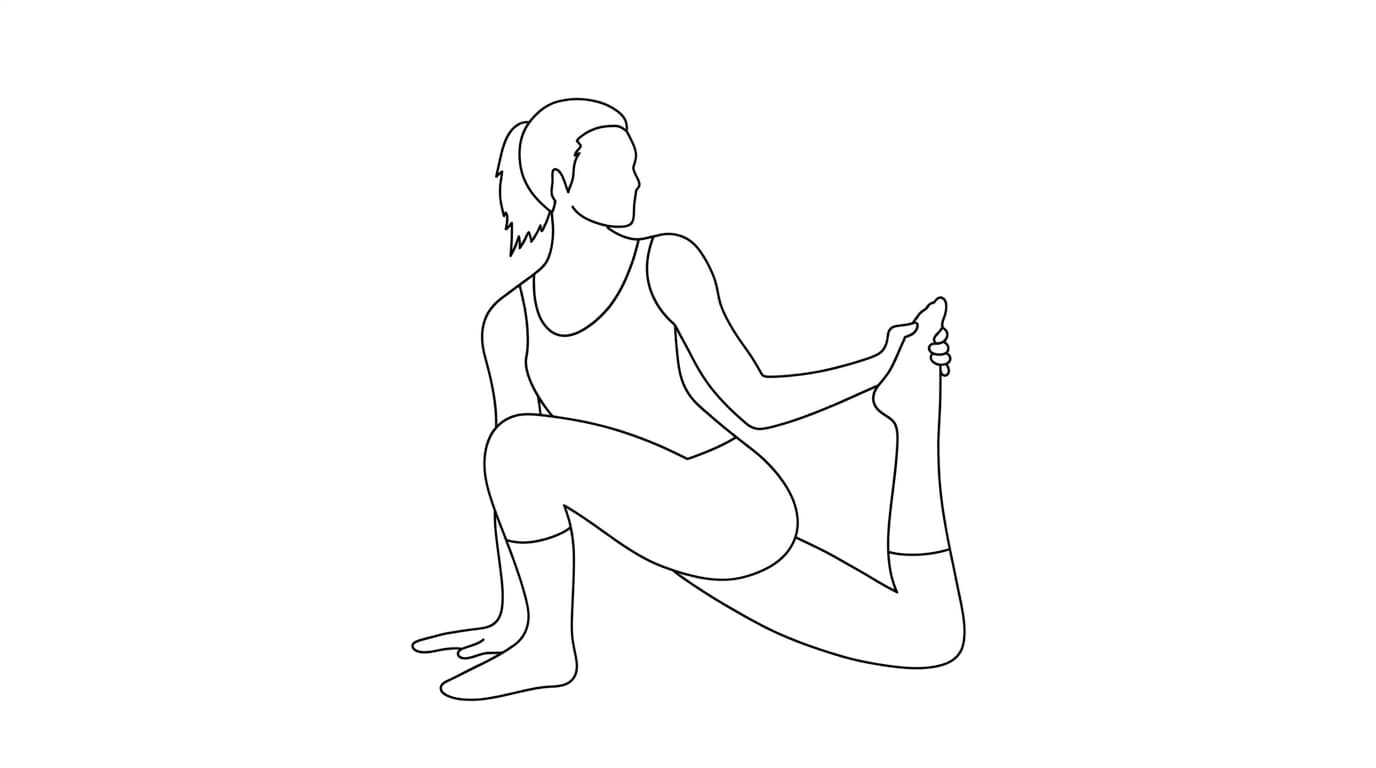
Crooked Monkey
Crooked Monkey is a contemporary pose name with differing descriptions across classes. Confirm the intended shape with its source, keep the knees and shoulders supported, and do not rely on the name alone for a specific technique.
මඟපෙන්වීම විවෘත කරන්න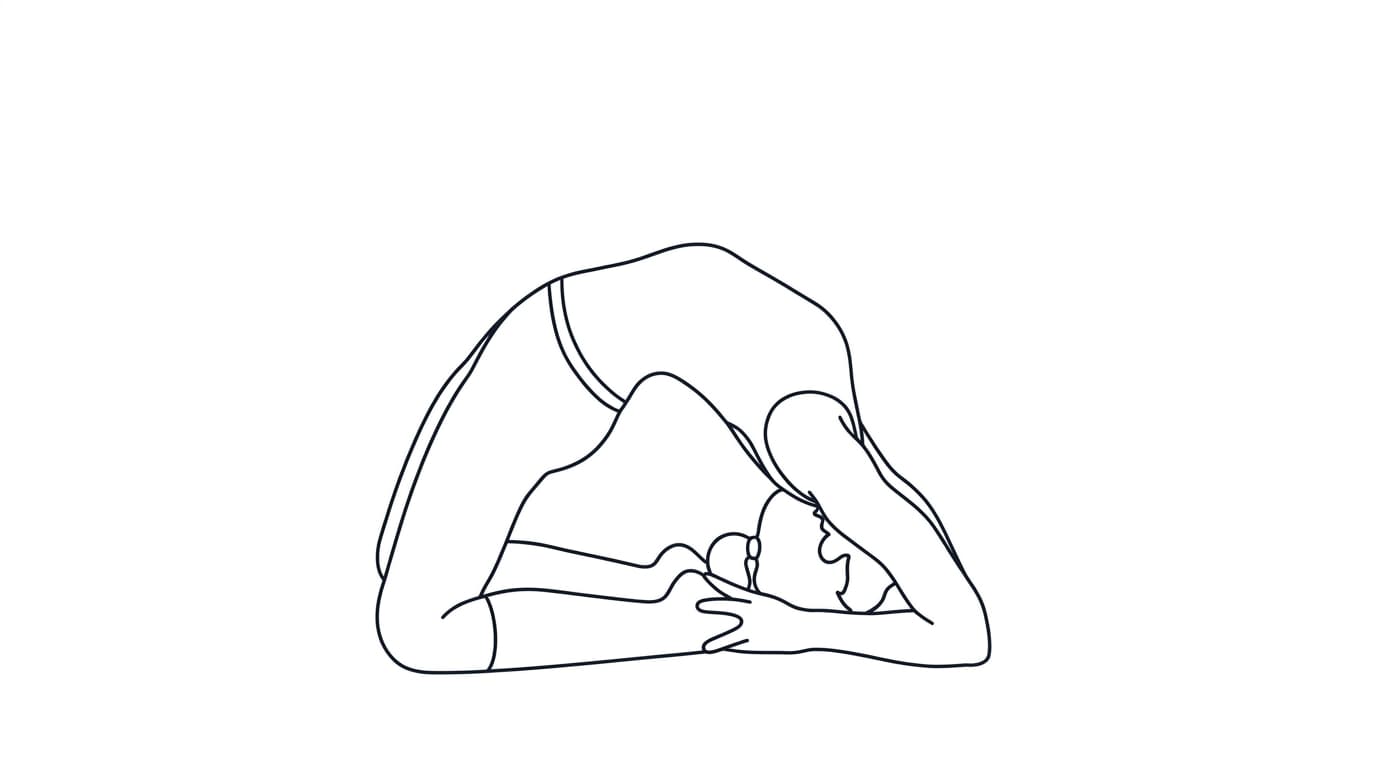
Pigeon Pose
Kapotasanaकपोतासन
Kapotasana is catalogued as Pigeon Pose and may refer to a deep kneeling backbend, unlike the supported Half Pigeon hip stretch. Confirm the intended version and do not attempt a deep backbend from text alone.
මඟපෙන්වීම විවෘත කරන්න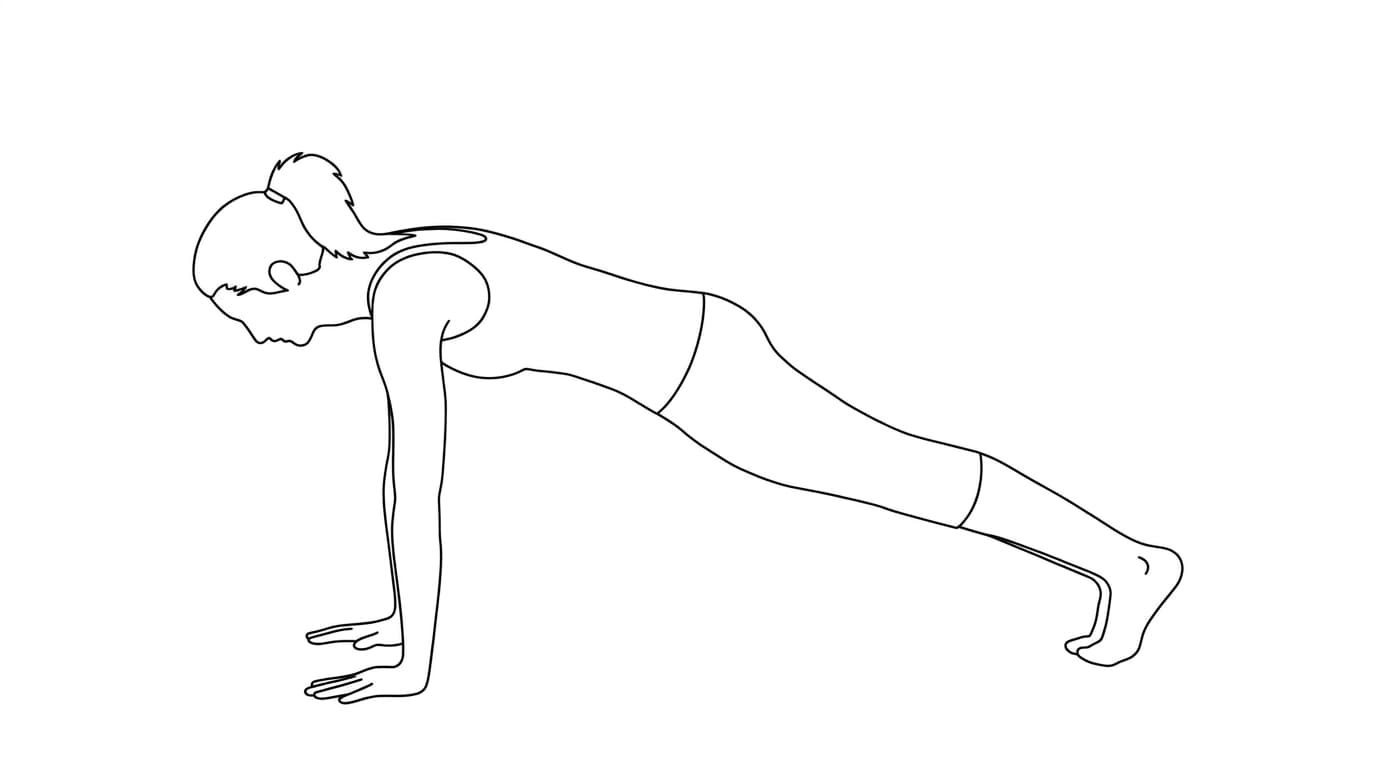
Plank Pose
Phalakasanaफलकासन
Plank Pose is a supported posture with the hands and feet on the floor and the body held in a long line. Begin with knees down or hands on a wall; keep the breath moving and stop before the shoulders, wrists, or back become strained.
මඟපෙන්වීම විවෘත කරන්න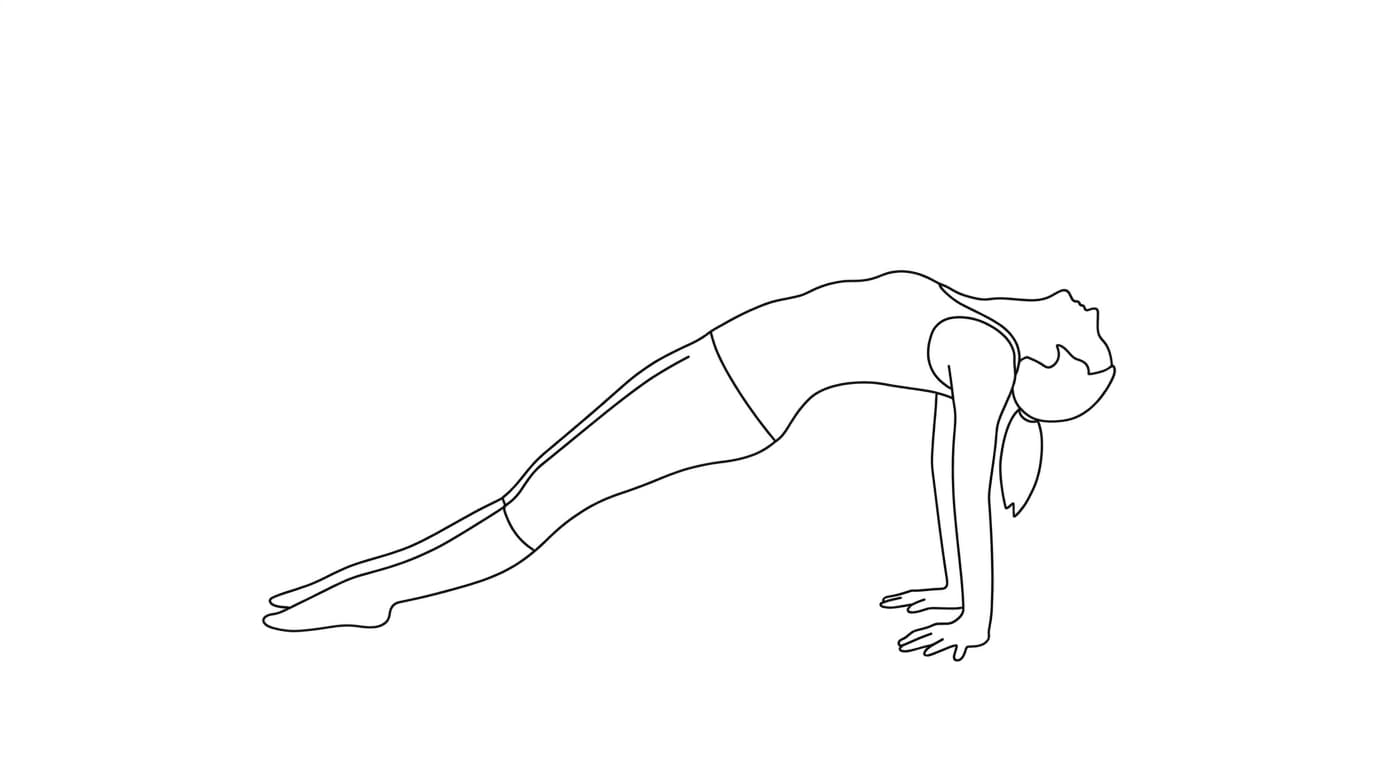
Upward Plank
Purvottanasanaपूर्वोत्तानासन
Upward Plank is a seated reverse-support posture that can load the wrists and shoulders. Begin with a small supported chest lift and knees bent; the hips do not need to rise into a full plank.
මඟපෙන්වීම විවෘත කරන්න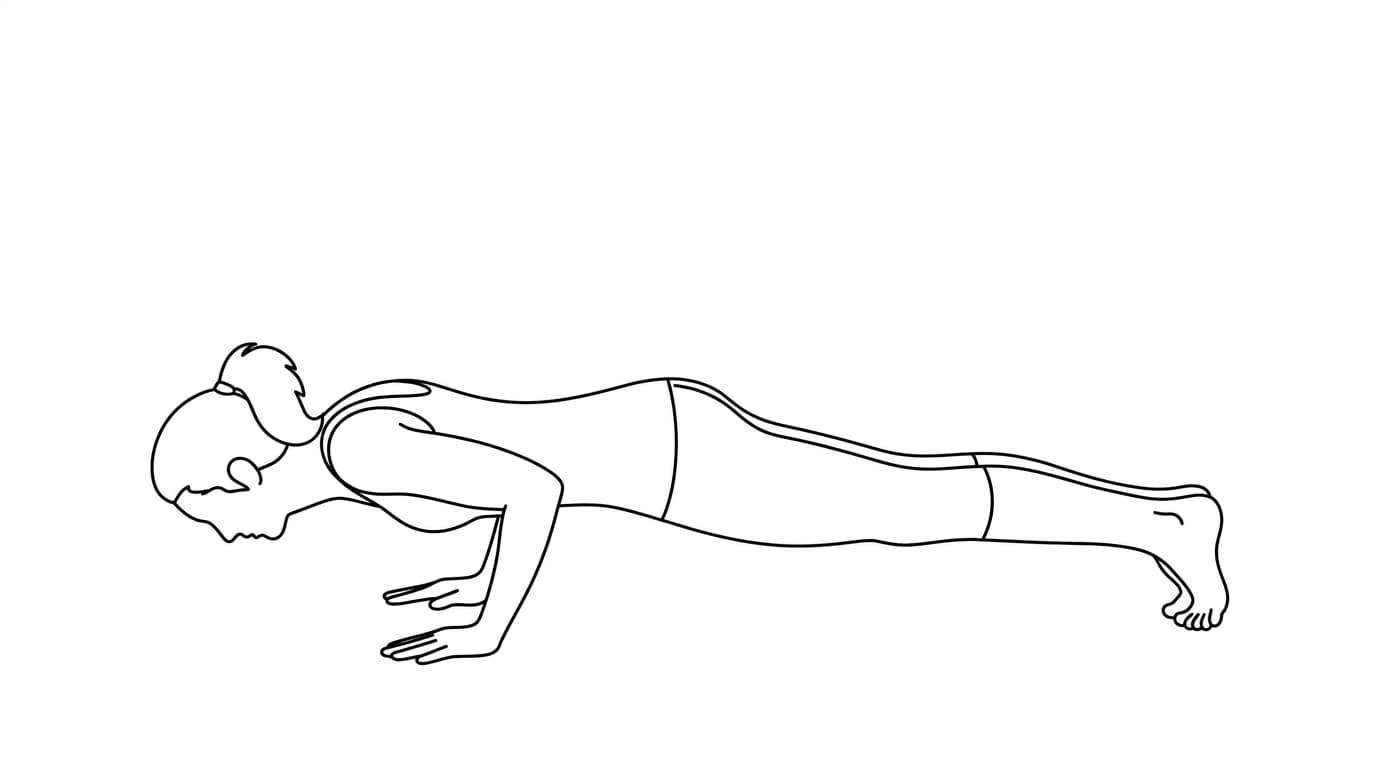
Low Push-up
Chaturanga Dandasanaचतुरङ्गदण्डासन
Chaturanga Dandasana is a low push-up transition requiring shoulder and trunk strength. Do not lower until the shoulders are ready; use knees-down or wall-supported versions and keep the movement small and controlled.
මඟපෙන්වීම විවෘත කරන්න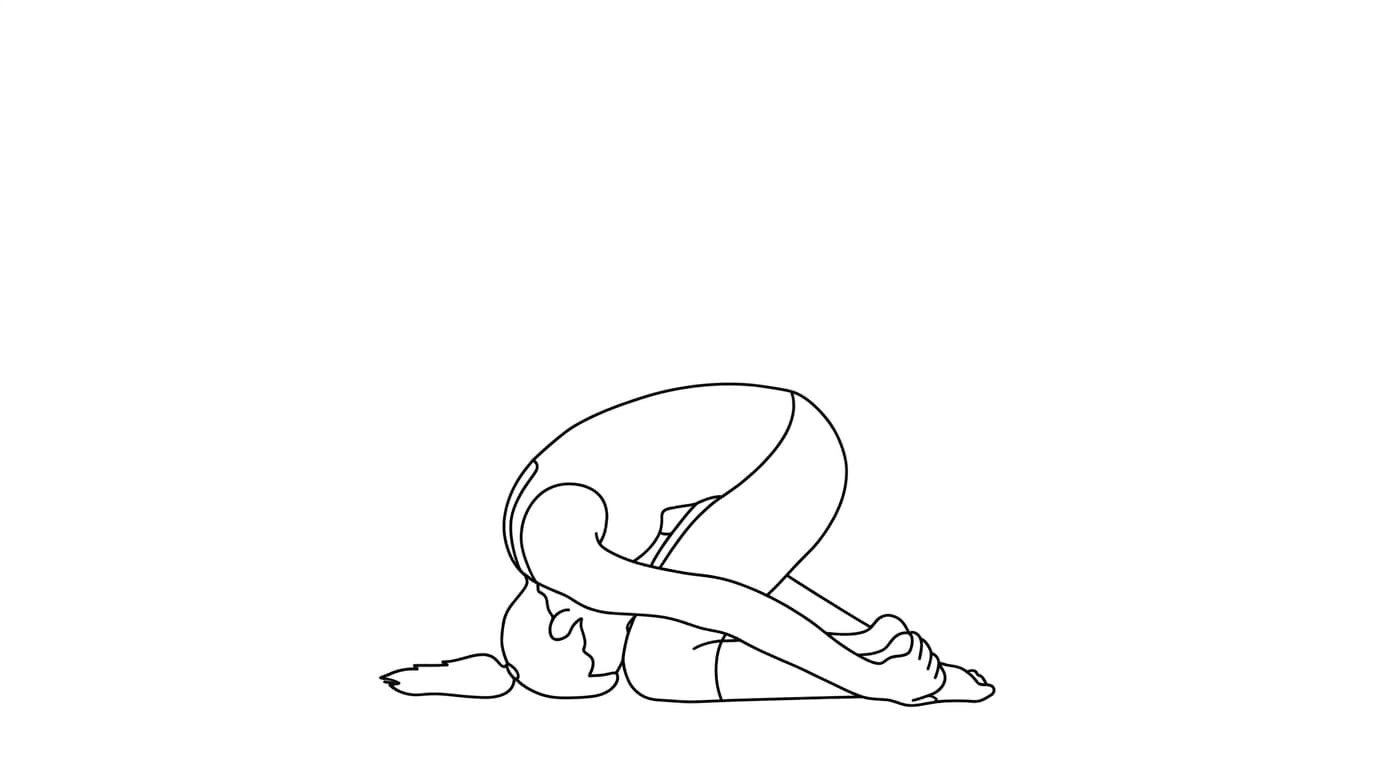
Rabbit Pose
Shashankasanaशशाङ्कासन
Rabbit Pose is a kneeling forward-fold variation whose form differs across yoga schools. Avoid placing body weight on the head or pulling the neck; use a supported Child's Pose if the intended version is unfamiliar.
මඟපෙන්වීම විවෘත කරන්න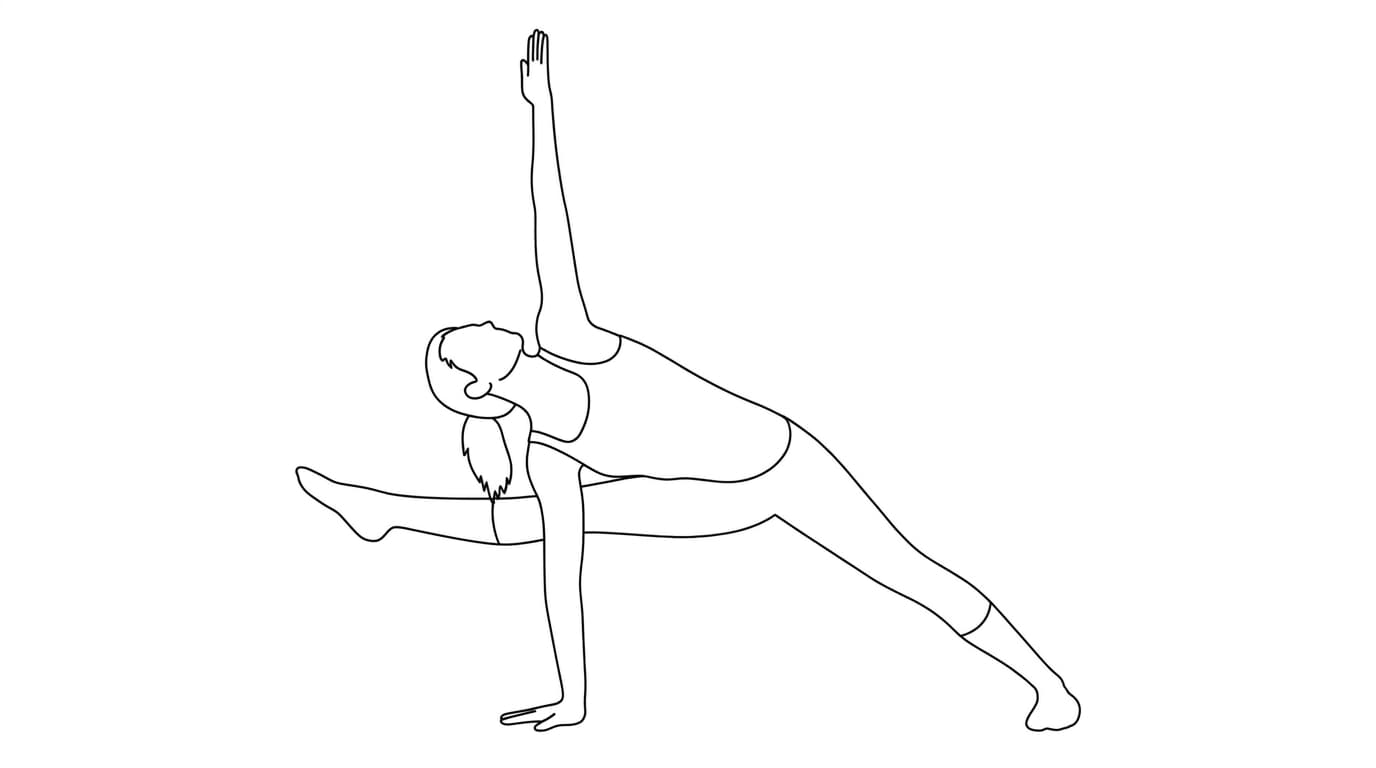
Sage Visvamitra's Pose
Vishvamitrasanaविश्वामित्रासन
Vishvamitrasana is an advanced side balance combining a leg hold, torso rotation, and arm support. This page intentionally avoids a full entry tutorial; learn the specific version with qualified guidance and use a grounded side-angle variation as an alternative.
මඟපෙන්වීම විවෘත කරන්න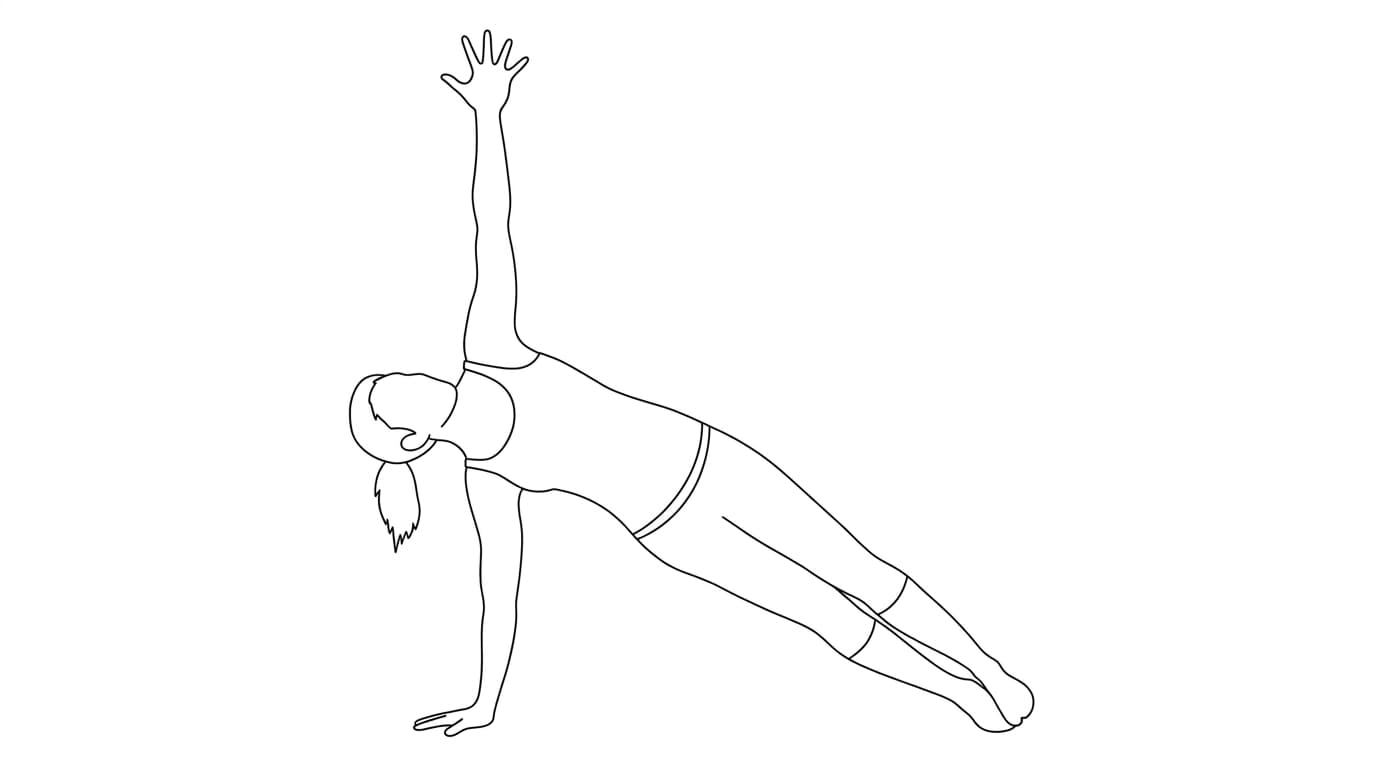
Side Plank
Vasishthasanaवशिष्ठासन
Side Plank is a side-facing balance supported by one hand and the feet or knees. Start with the lower knee down or the hand on a wall, stack the shoulder comfortably over support, and keep the hold brief.
මඟපෙන්වීම විවෘත කරන්න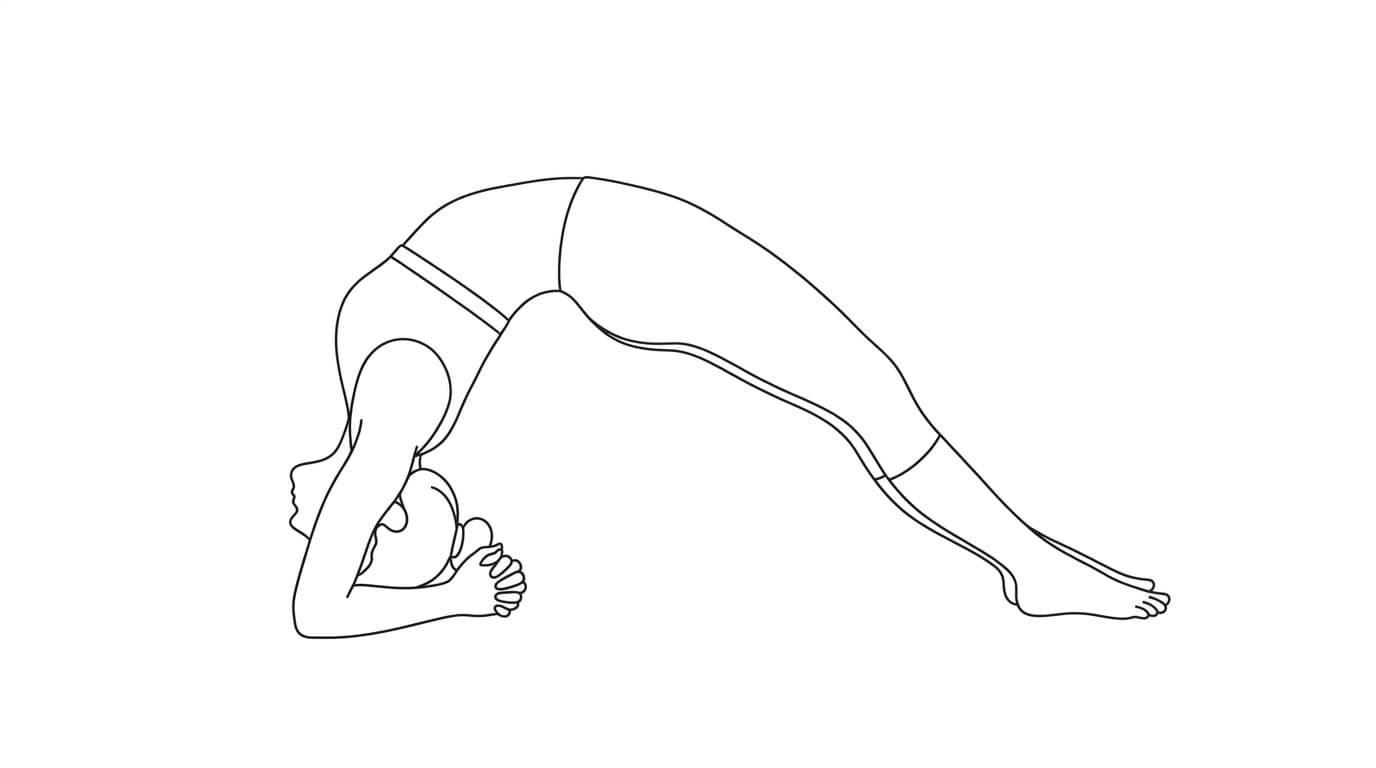
Inverted Staff
Dvi Pada Viparita Dandasanaद्विपादविपरीतदण्डासन
Inverted Staff is an advanced inversion and backbend that can load the shoulders, spine, wrists, and neck. This page does not prescribe entry steps; use qualified in-person instruction and do not place uncontrolled weight on the head or neck.
මඟපෙන්වීම විවෘත කරන්න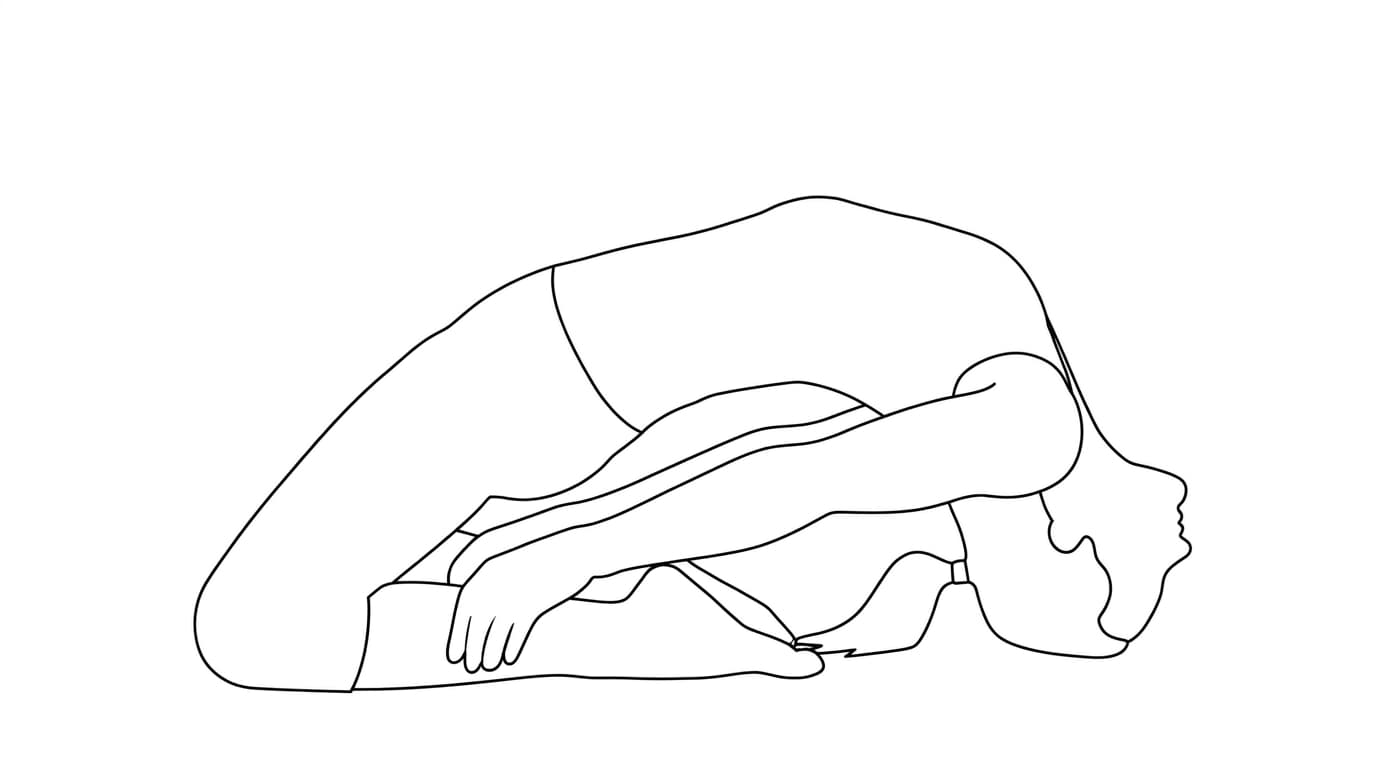
Little Thunderbolt
Laghu Vajrasanaलघुवज्रासन
Little Thunderbolt is an advanced kneeling backbend that may lower the head and torso toward the floor. It can load the knees, spine, and neck; do not self-teach the drop or use the head as a support point.
මඟපෙන්වීම විවෘත කරන්න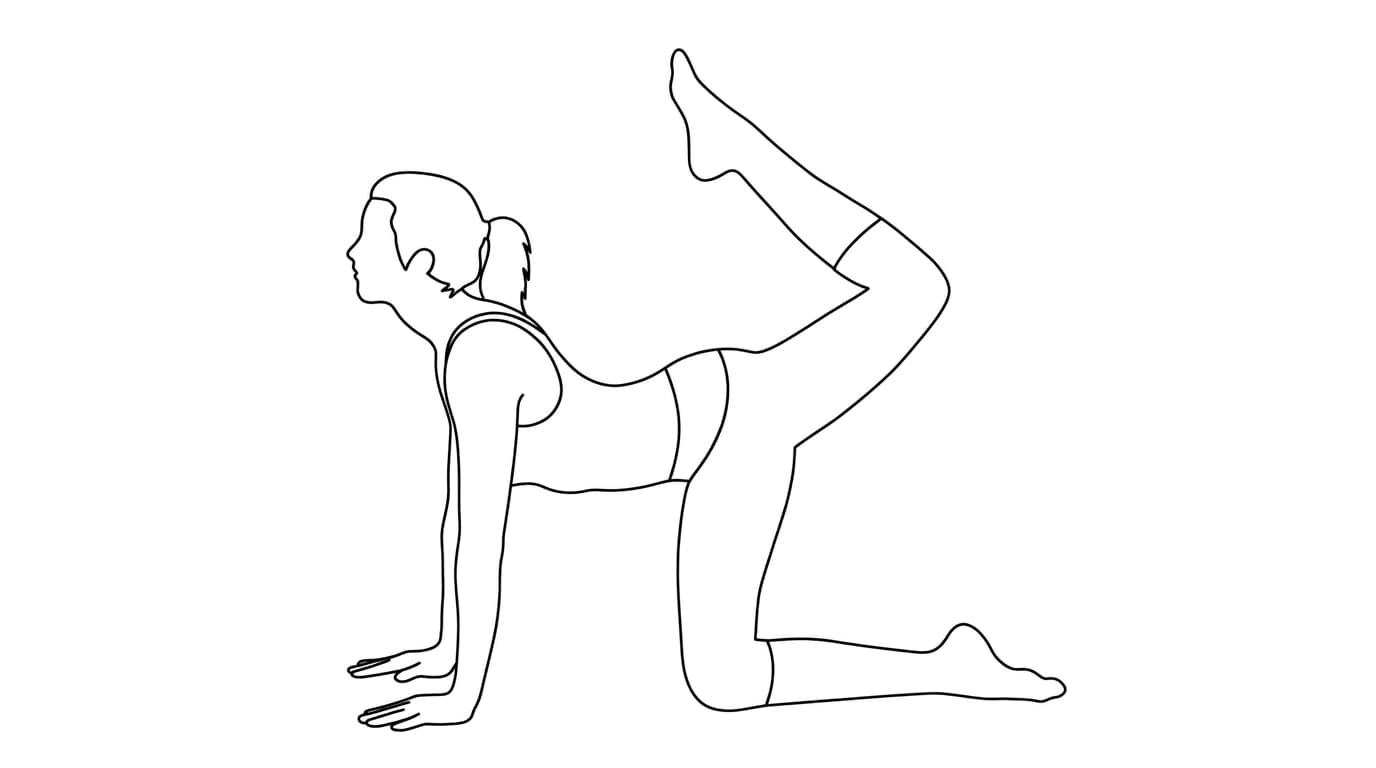
Tiger Pose
Vyaghrasanaव्याघ्रासन
Tiger Pose is a hands-and-knees balance that may involve moving one leg behind the body. Keep the range modest, use a wall or chair for support if needed, and do not force a backbend or lift the leg high.
මඟපෙන්වීම විවෘත කරන්න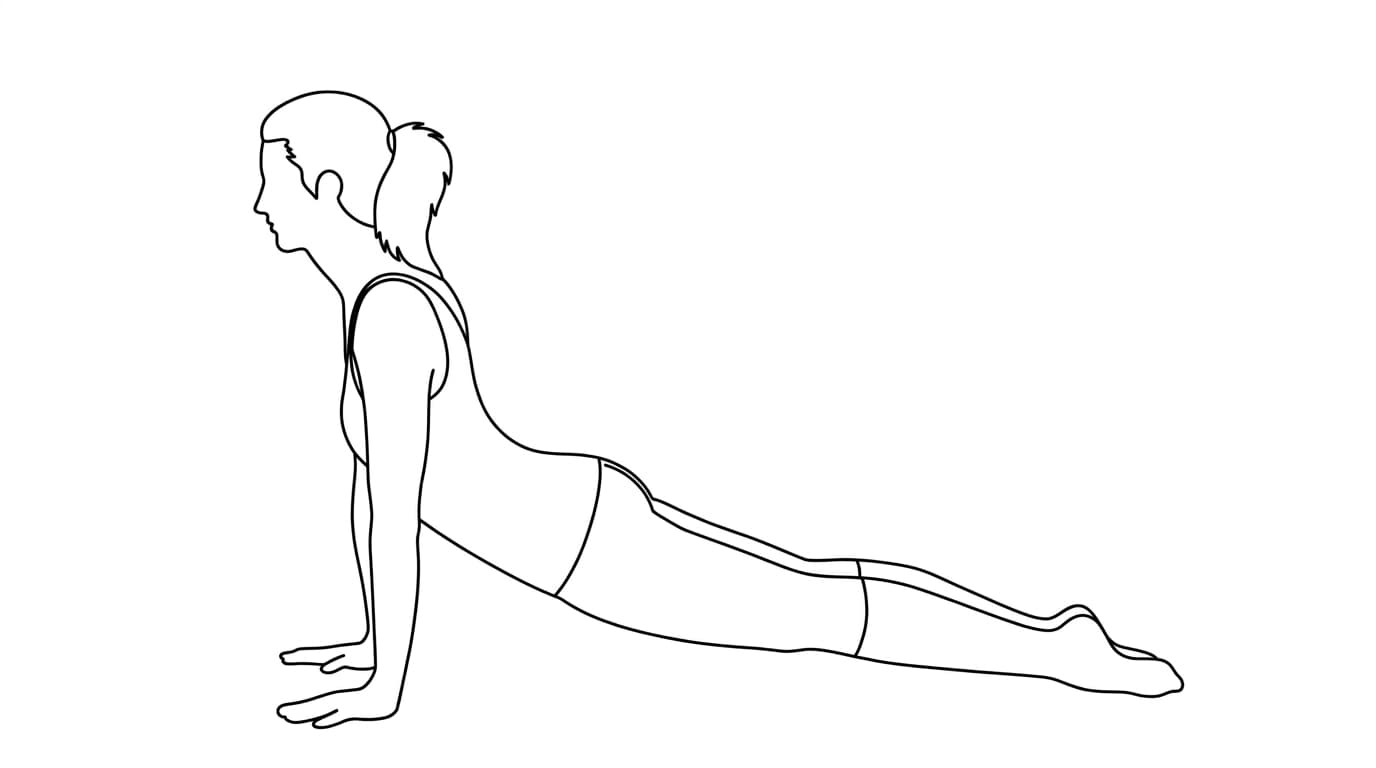
Upward-Facing Dog
Urdhva Mukha Shvanasanaऊर्ध्वमुखश्वानासन
Upward-Facing Dog is an arm-supported backbend in which the torso lifts while the legs remain active. It can strain wrists, shoulders, or the lower back; use Cobra Pose or keep the thighs down if lifting is uncomfortable.
මඟපෙන්වීම විවෘත කරන්න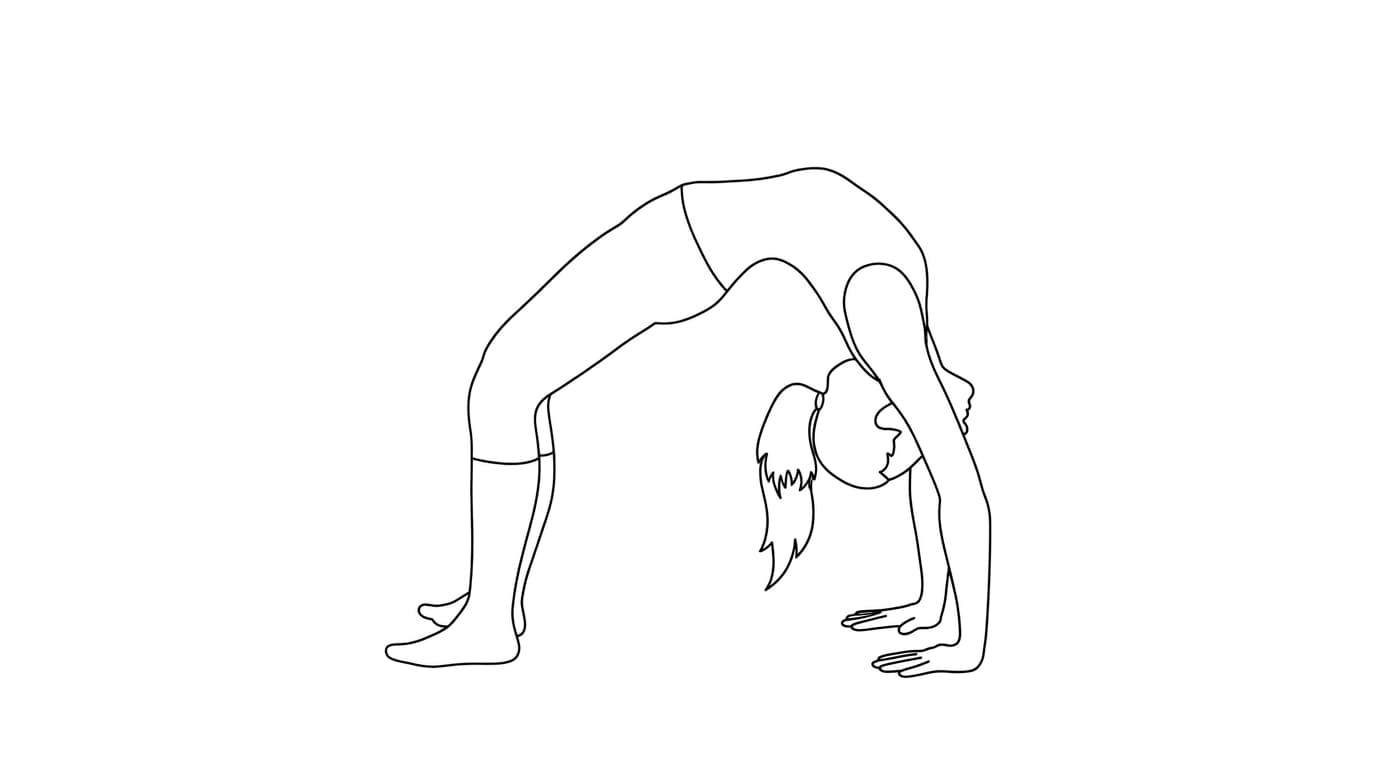
Wheel Pose
Urdhva Dhanurasanaऊर्ध्वधनुरासन
Wheel Pose is a deep backbend supported by the hands and feet. It requires preparation and controlled entry; do not push into it from text alone, and stop for back, wrist, shoulder, or neck pain.
මඟපෙන්වීම විවෘත කරන්න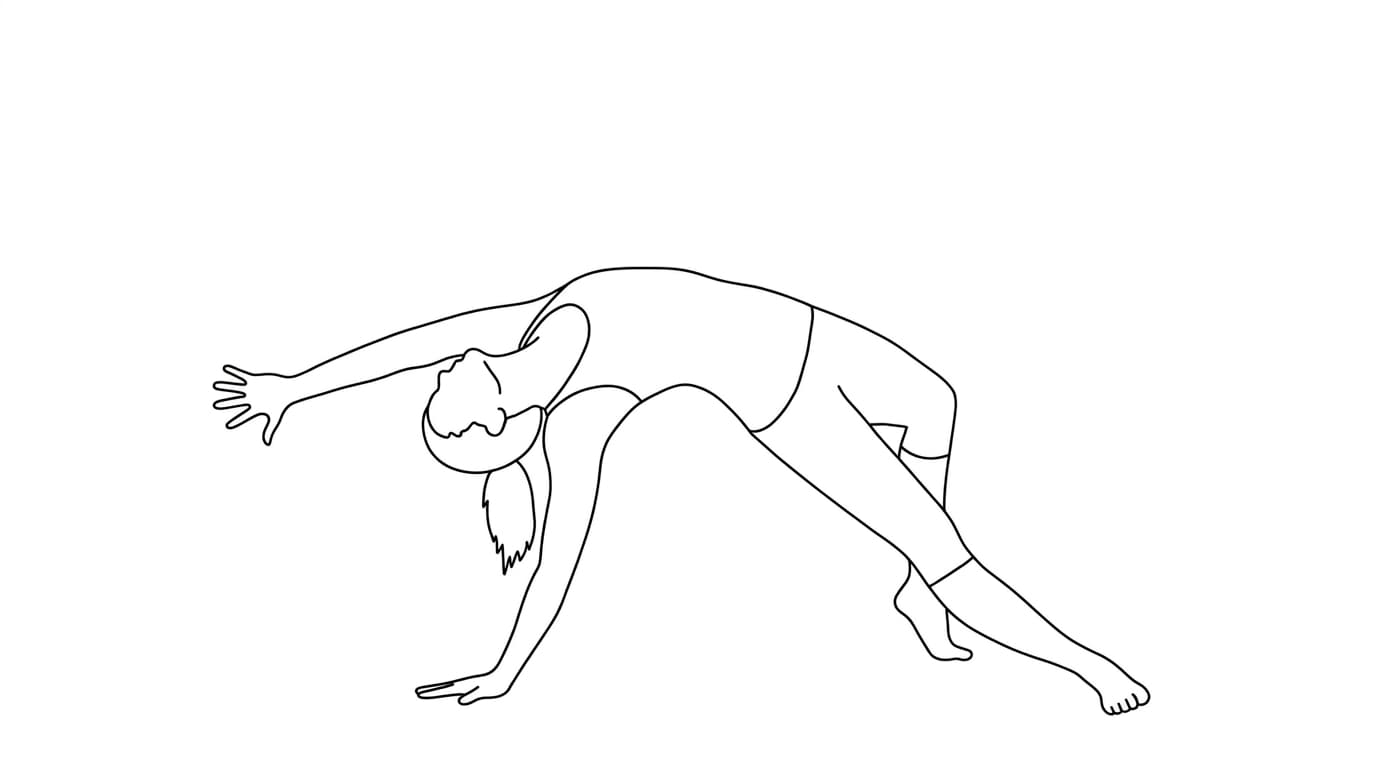
Wild Thing
Chamatkarasanaचमत्कारासन
Wild Thing is a side balance that transitions into a backbend and may place substantial load on one shoulder and wrist. Learn the transition directly from a qualified teacher; use a grounded side-reach alternative if the support or rotation feels uncertain.
මඟපෙන්වීම විවෘත කරන්නබාහු තුලනය සහ උඩුයටිකුරු
ඉරියව් 32 ක්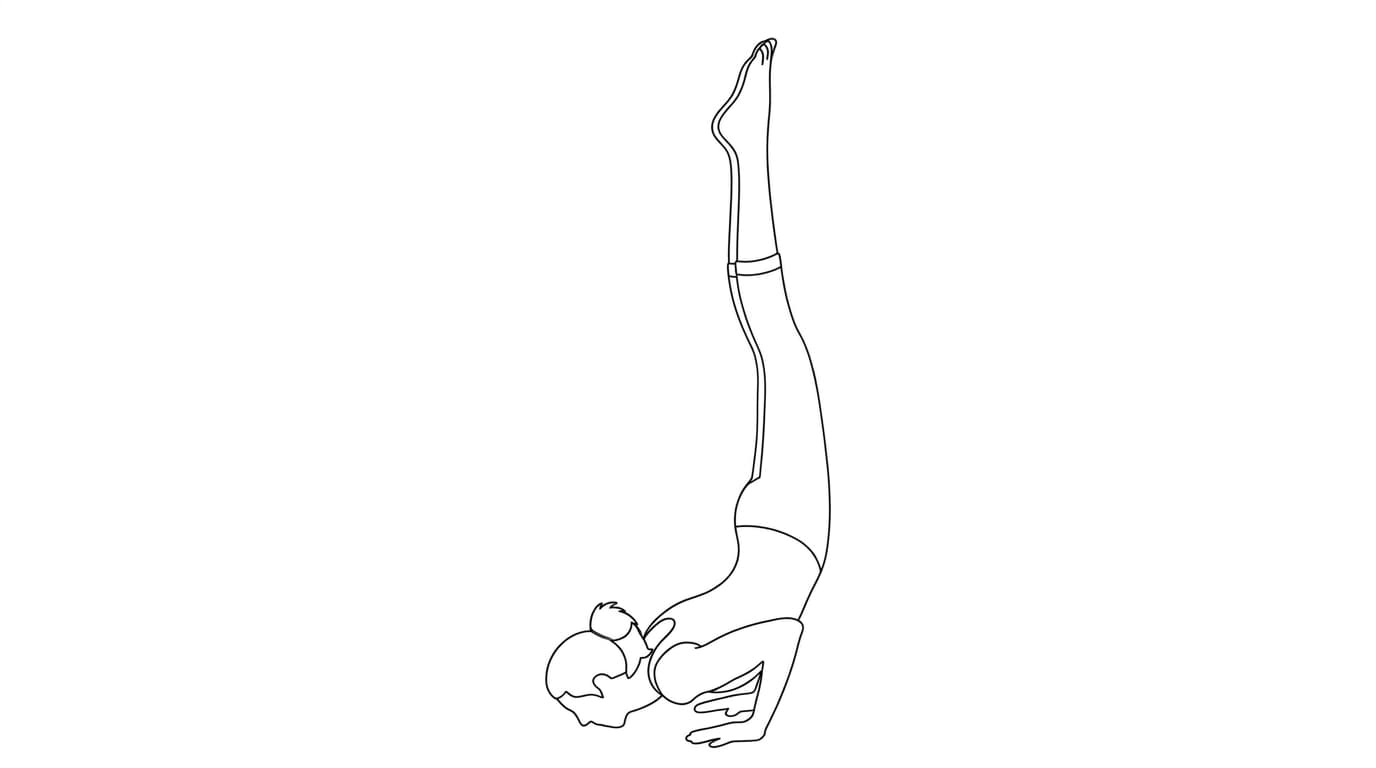
Chin Stand
Ganda Bherundasanaगण्डभेरुण्डासन
Ganda Bherundasana, often called Chin Stand, is an advanced inversion that can place dangerous pressure on the neck. Do not attempt the full posture from text; use direct qualified instruction and avoid loading the chin or cervical spine.
මඟපෙන්වීම විවෘත කරන්න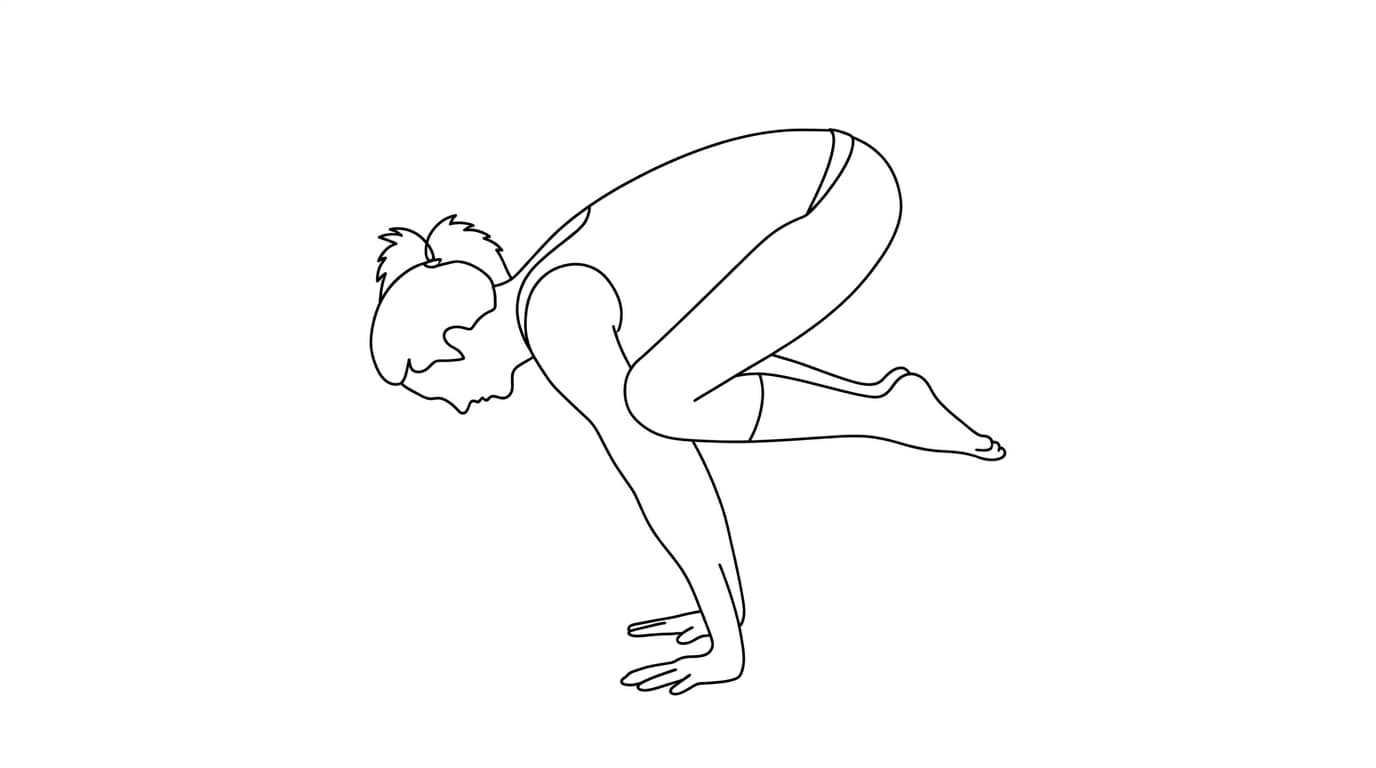
Crane Pose
Bakasanaबकासन
Crane Pose is an arm balance that places body weight through the hands and requires a controlled forward shift. Use a qualified teacher, a clear padded area, and grounded feet during preparation; do not hop or balance near hard objects.
මඟපෙන්වීම විවෘත කරන්න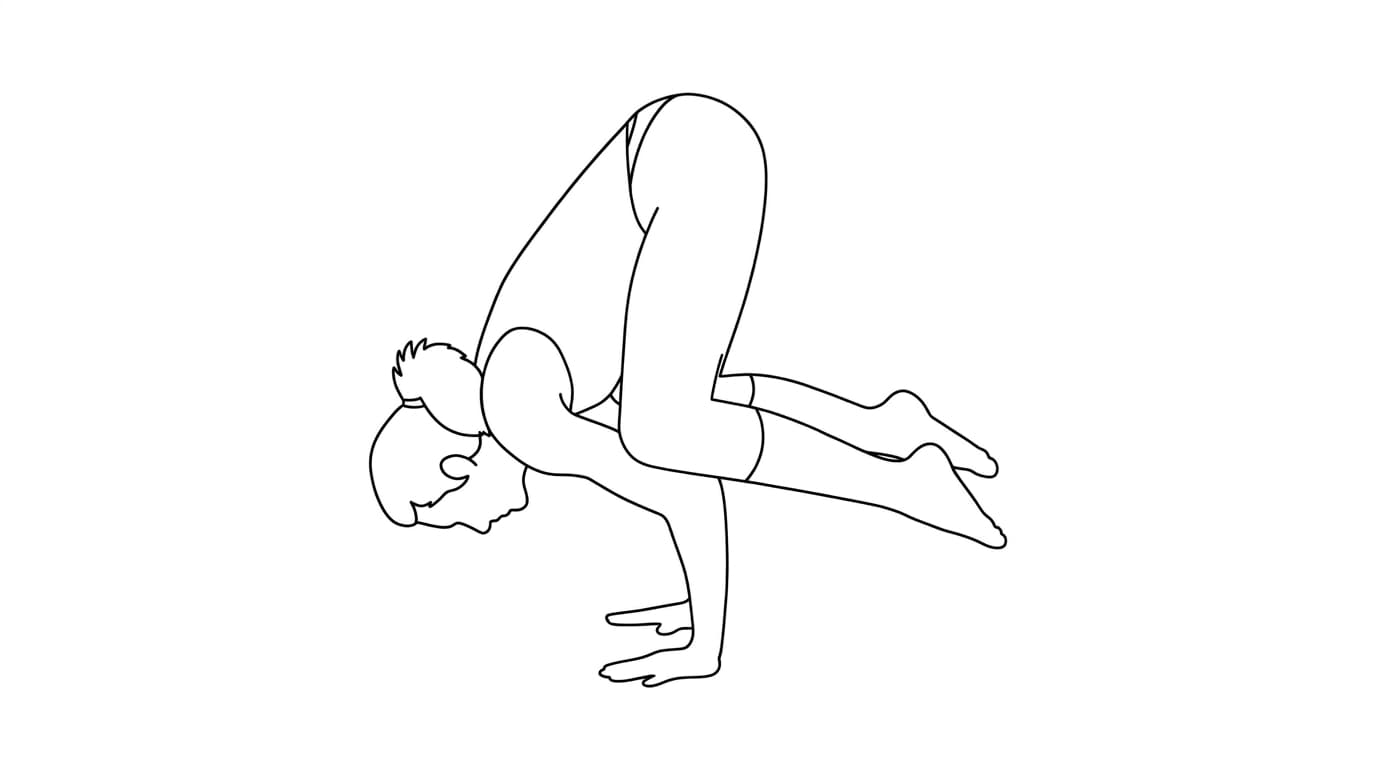
Kakasana (කපුටා ඉරියව්ව)
Kakasanaकाकासन
Kakasana, බොහෝ විට Crow Pose ලෙස හැඳින්වේ, මැණික් කටුව පැටවීම, සමතුලිතතාවය සහ පාලිත පිටවීමක් අවශ්ය වන බාහු සමබරතාවයකි. මෙම පිටුව ඉරියව් ප්රවර්ගය පැහැදිලි කරන නමුත් ස්වයං-මඟ පෙන්වන ලිෆ්ට්-ඕෆ් අනුපිළිවෙලක් සපයන්නේ නැත.
මඟපෙන්වීම විවෘත කරන්න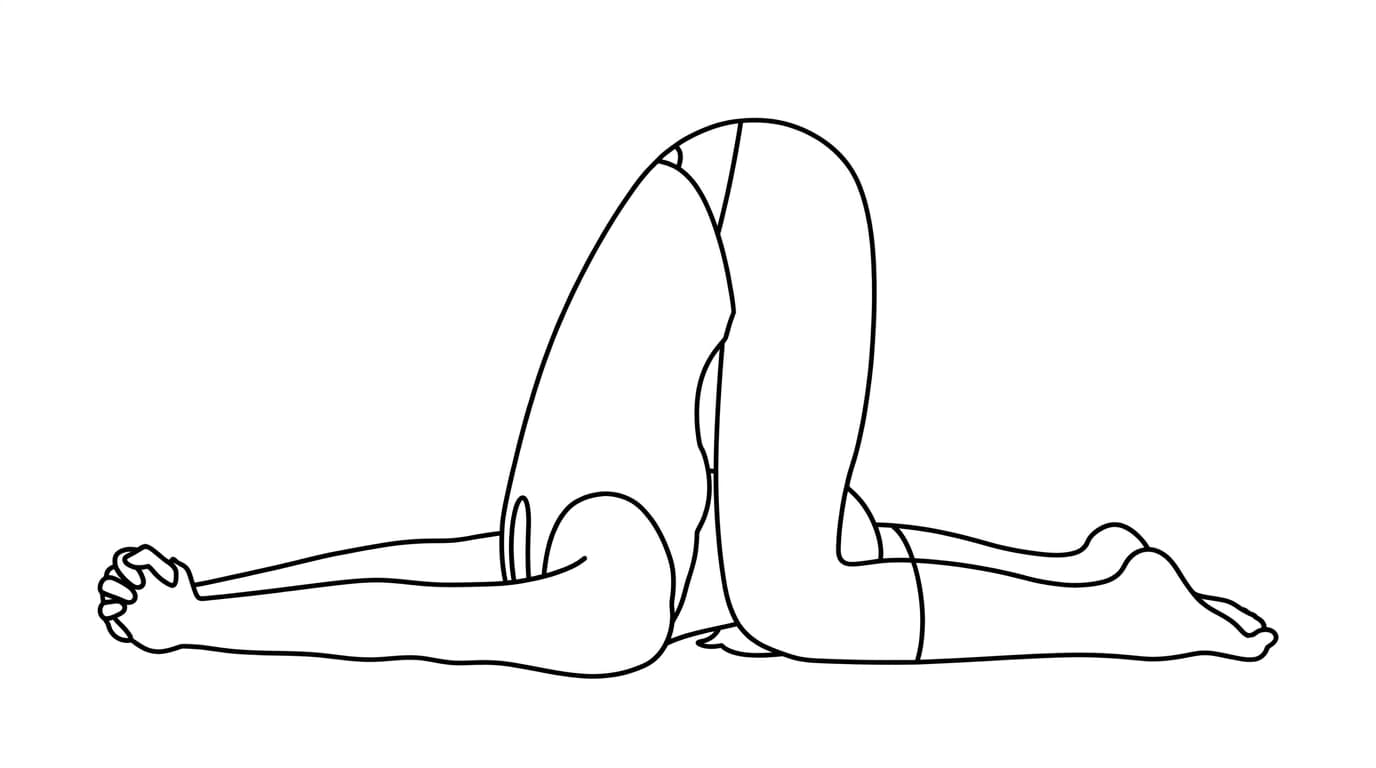
Deaf Man's Pose
Karna Pidasanaकर्णपीडासन
Karna Pidasana is an advanced inverted posture commonly entered from Shoulderstand, with the legs moving toward the floor beside the head. It can compress the neck; do not practice from text or lower the legs without qualified instruction.
මඟපෙන්වීම විවෘත කරන්න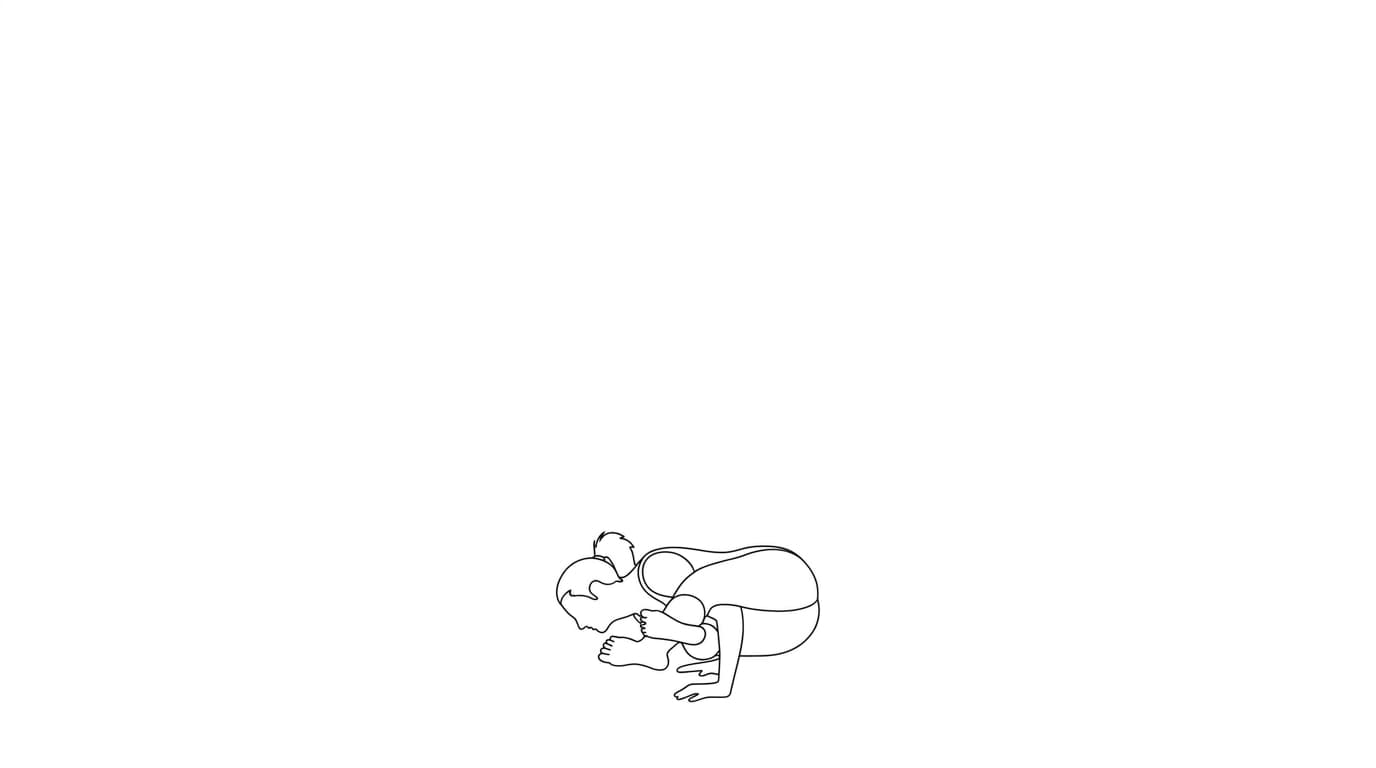
Eight-Angle Pose
Ashtavakrasanaअष्टावक्रासन
Eight-Angle Pose is an advanced arm balance combining a twist, leg position, and weight through the hands. Do not hop into the balance or force the legs around the arms; learn the setup and exit with qualified instruction.
මඟපෙන්වීම විවෘත කරන්න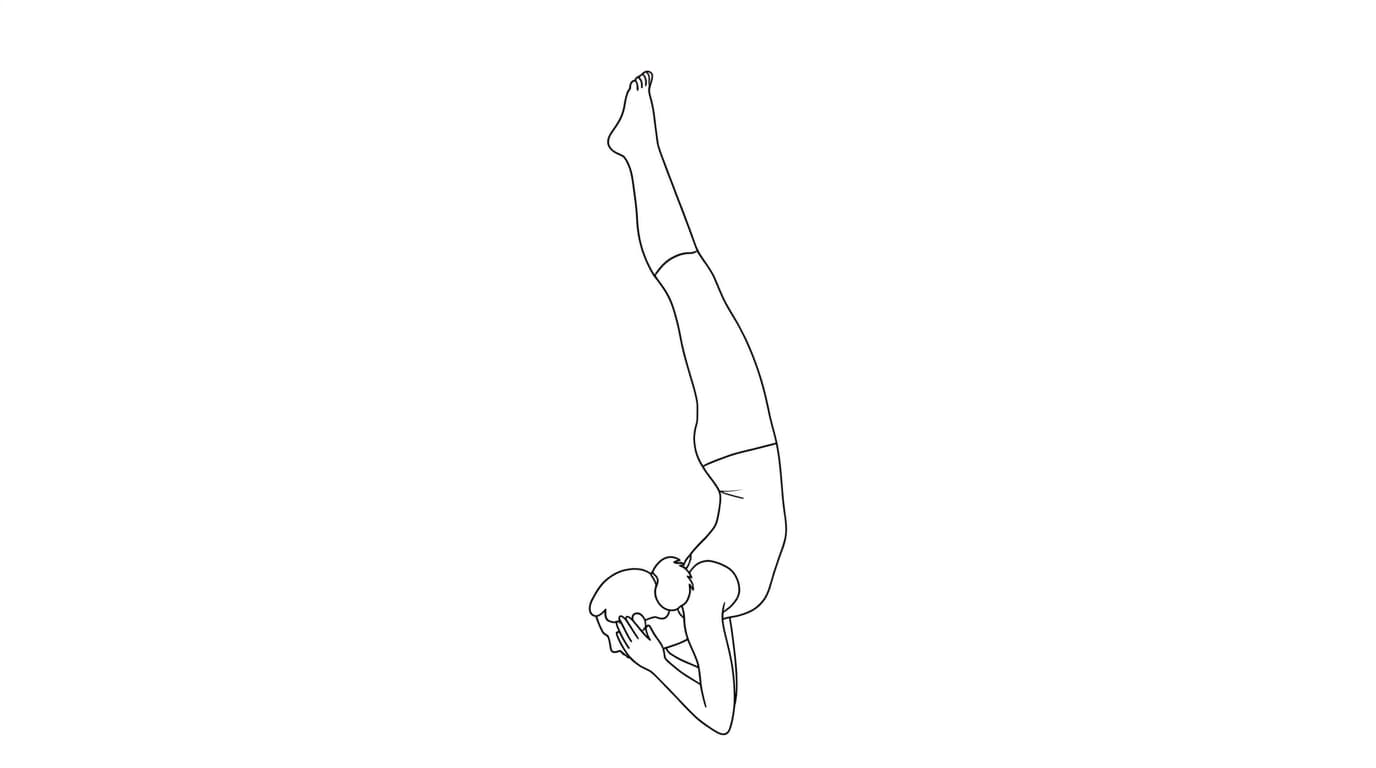
Elbow Balance
Shayanasanaशयनासन
Shayanasana is catalogued as Elbow Balance, but the name is used inconsistently and does not define a safe standardized inversion. Verify the intended pose from an authoritative teaching source; do not attempt an unsupported balance based only on this page.
මඟපෙන්වීම විවෘත කරන්න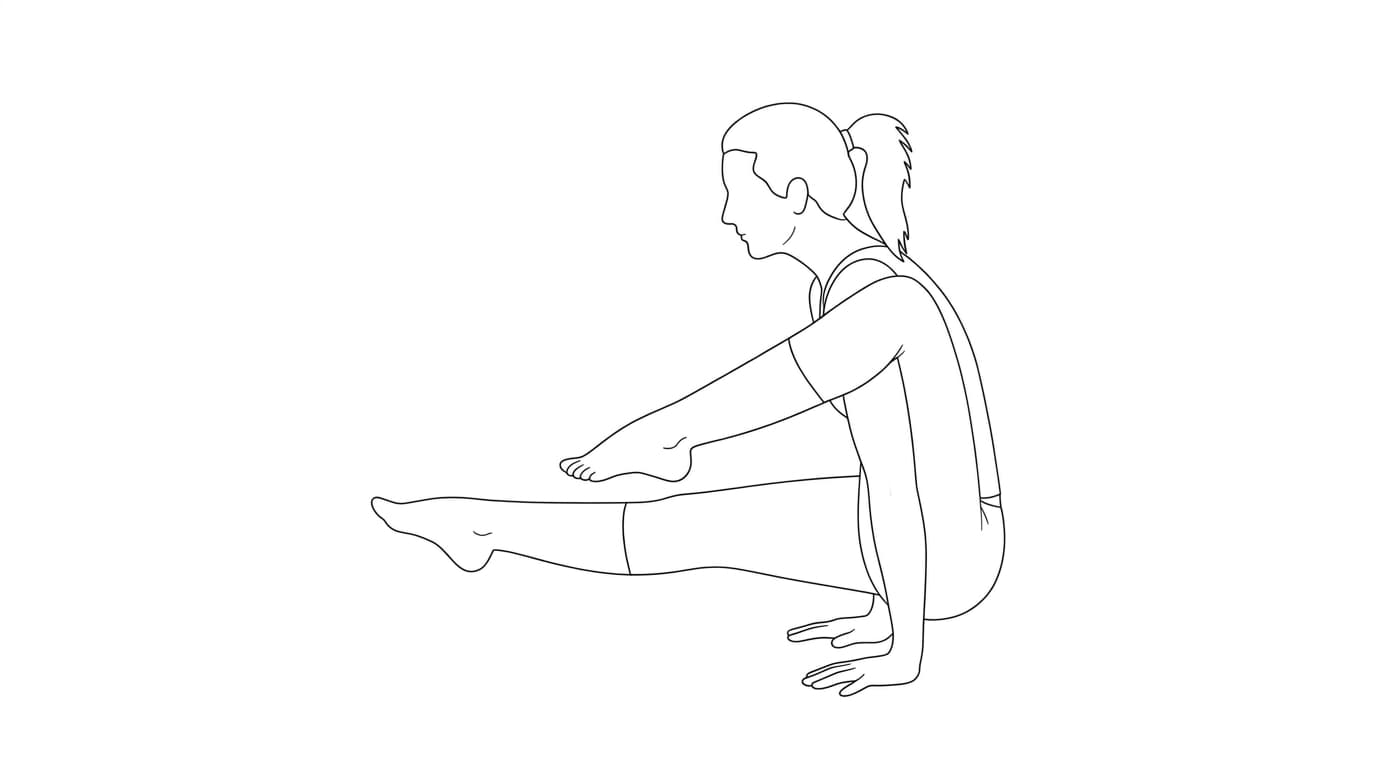
Elephant Trunk
Eka Hasta Bhujasanaएकहस्तभुजासन
Elephant Trunk Pose is a seated arm balance with one leg positioned over an arm. It demands hip mobility and wrist/shoulder strength; do not pull the leg into place or attempt to lift without qualified instruction and a clear padded area.
මඟපෙන්වීම විවෘත කරන්න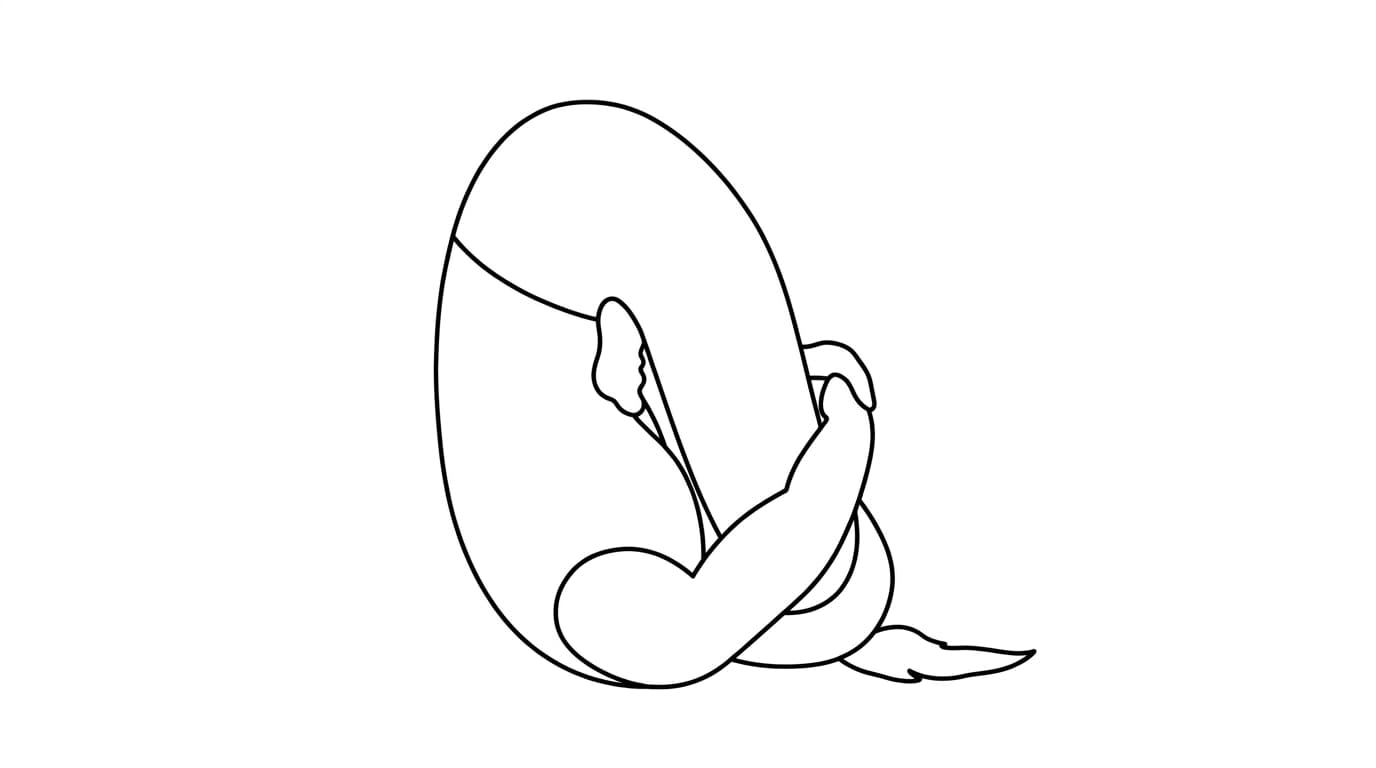
Embryo Pose
Pindasanaपिण्डासन
Pindasana is an advanced bound posture often associated with a shoulderstand or lotus-like leg position. It can place load on the neck and knees; do not attempt the full form without qualified in-person instruction.
මඟපෙන්වීම විවෘත කරන්න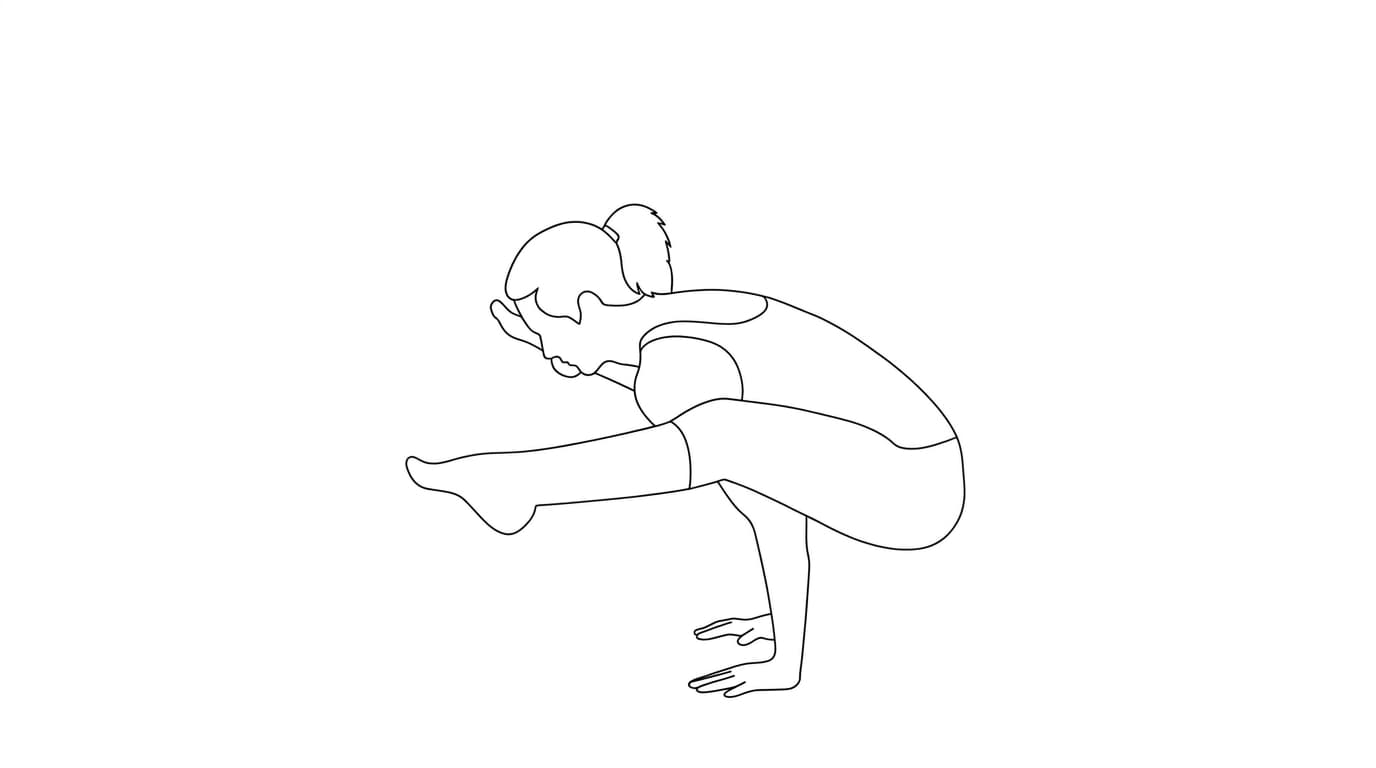
Firefly I
Tittibhasana Aतित्तिभासन
Firefly I is an advanced arm balance with the legs extending while the body is supported by the hands. It places substantial demand on wrists, shoulders, and hips; learn it directly from a qualified teacher and do not hop into the balance.
මඟපෙන්වීම විවෘත කරන්න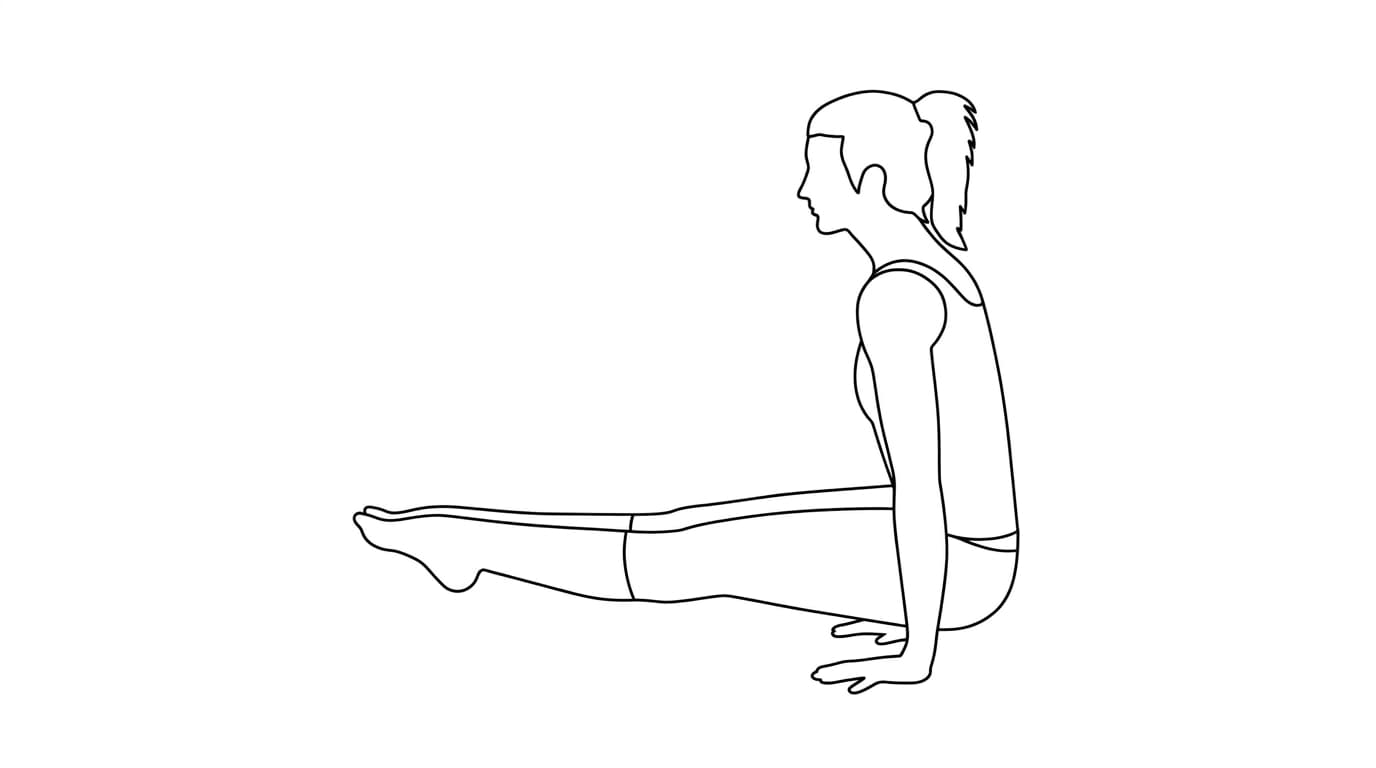
Floating Stick
Brahmacharyasanaब्रह्मचर्यासन
Floating Stick is a challenging seated arm balance, but this catalog label and Sanskrit mapping need source verification before exact technique is assigned. Do not attempt a lift based on the name alone; use qualified instruction and a grounded alternative.
මඟපෙන්වීම විවෘත කරන්න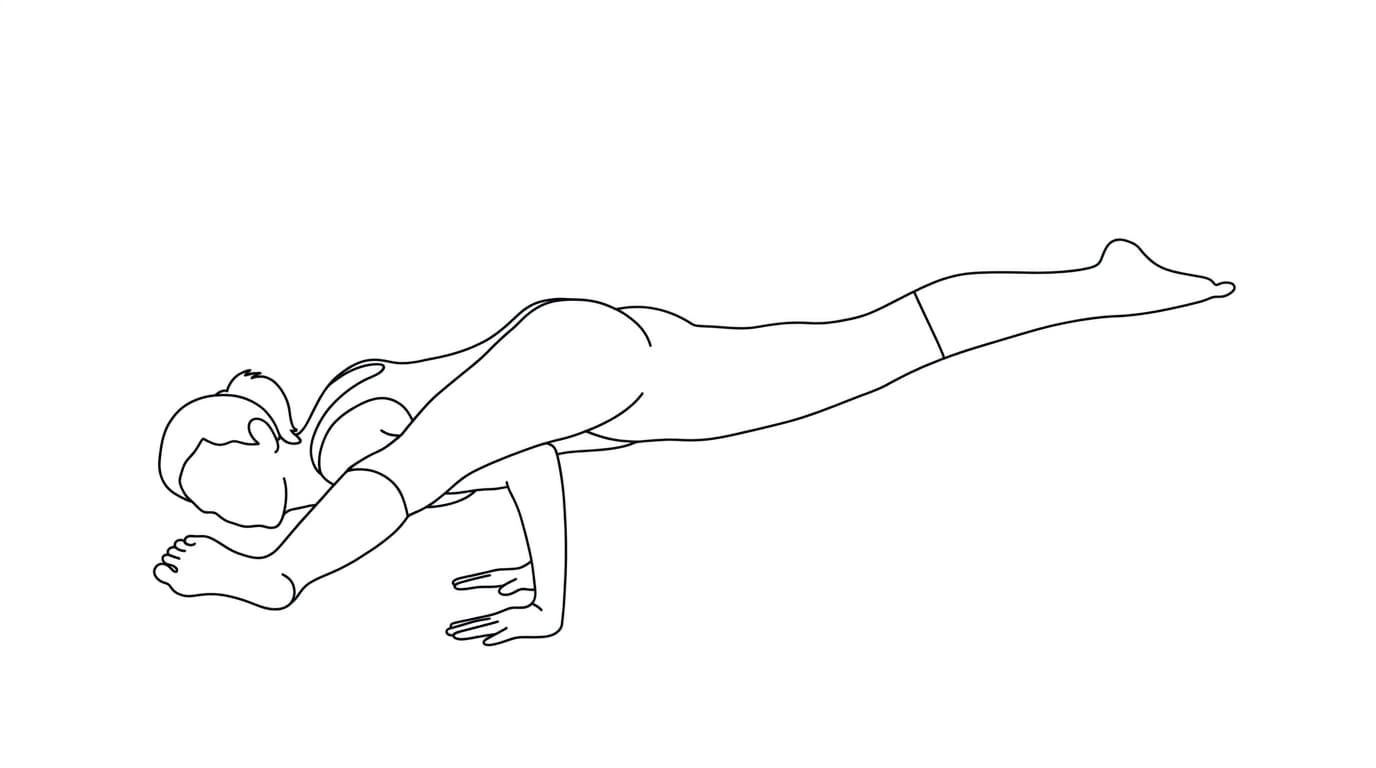
Flying Man
Eka Pada Koundinyasanaएकपादकौण्डिन्यासन
Eka Pada Koundinyasana is a twisting arm balance requiring strength, coordination, and controlled weight transfer. Learn the exact setup and exit with a qualified teacher; do not hop into the pose or practice near hard objects.
මඟපෙන්වීම විවෘත කරන්න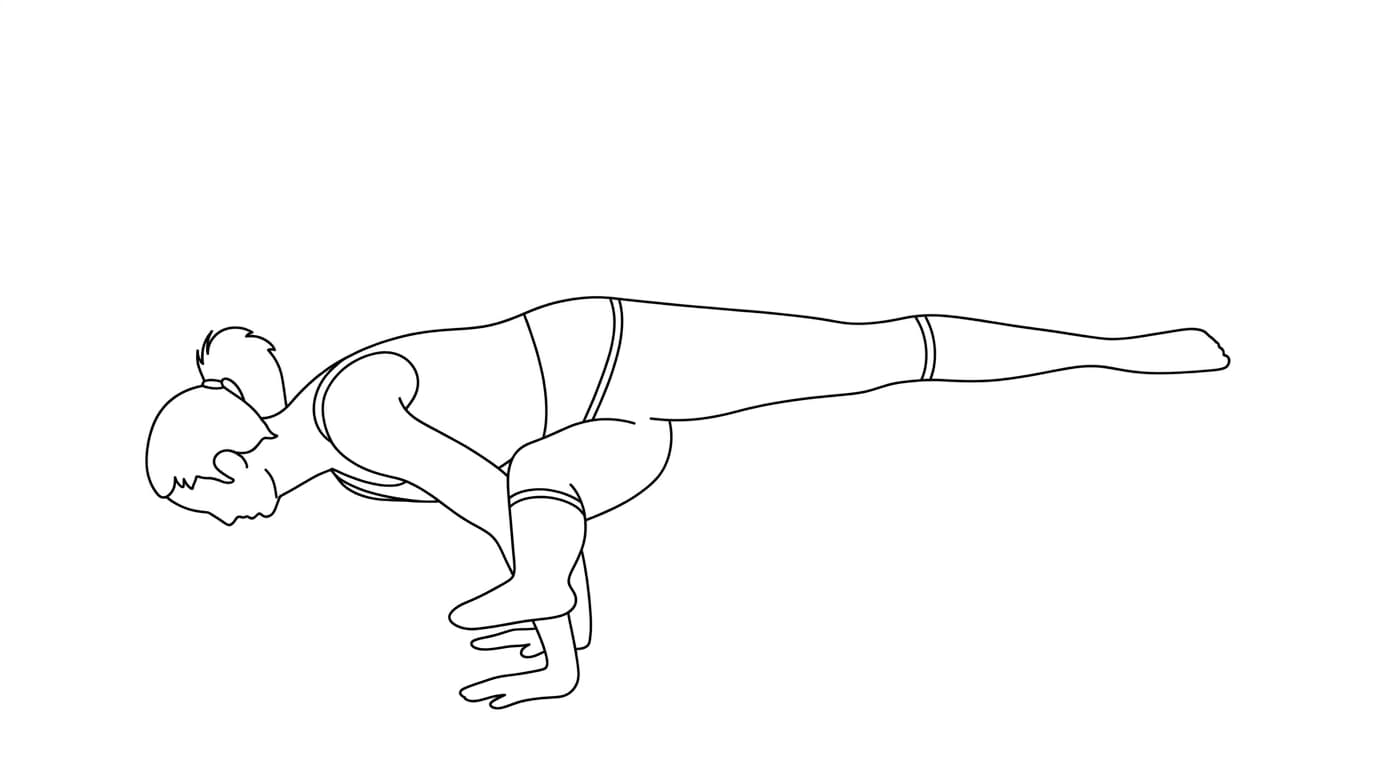
Revolved Flying Man
Parivritta Eka Pada Koundinyasanaपरिवृत्तैकपादकौण्डिन्यासन
Revolved Flying Man is an advanced twisting arm balance. It combines rotation with load through the arms and wrists; do not learn the full transition from text, and use a qualified teacher and controlled practice area.
මඟපෙන්වීම විවෘත කරන්න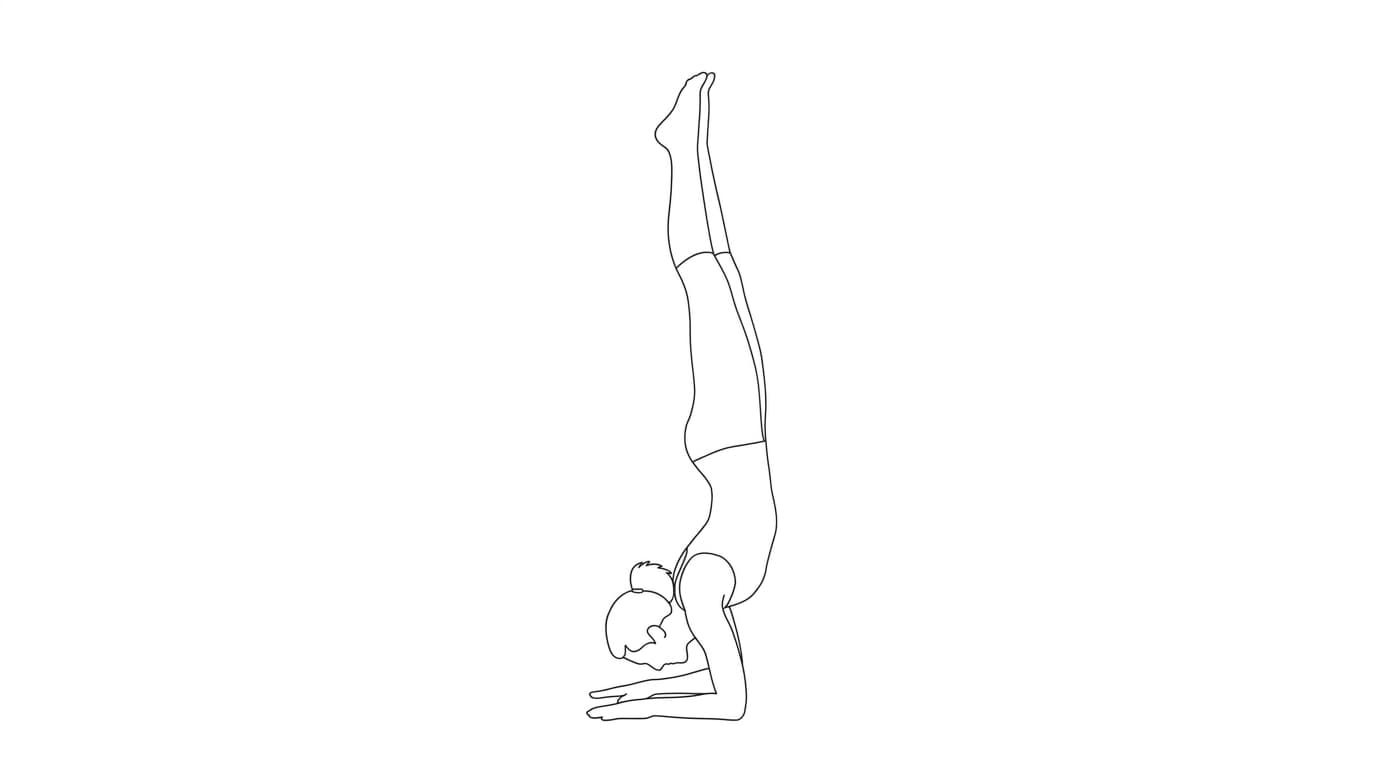
Forearm Balance
Pincha Mayurasanaपिञ्चमयूरासन
Forearm Balance is an inversion supported on the forearms and shoulders. It carries fall and shoulder-loading risk; do not kick up alone or use this text as an entry tutorial, and learn preparation and exit with qualified supervision.
මඟපෙන්වීම විවෘත කරන්න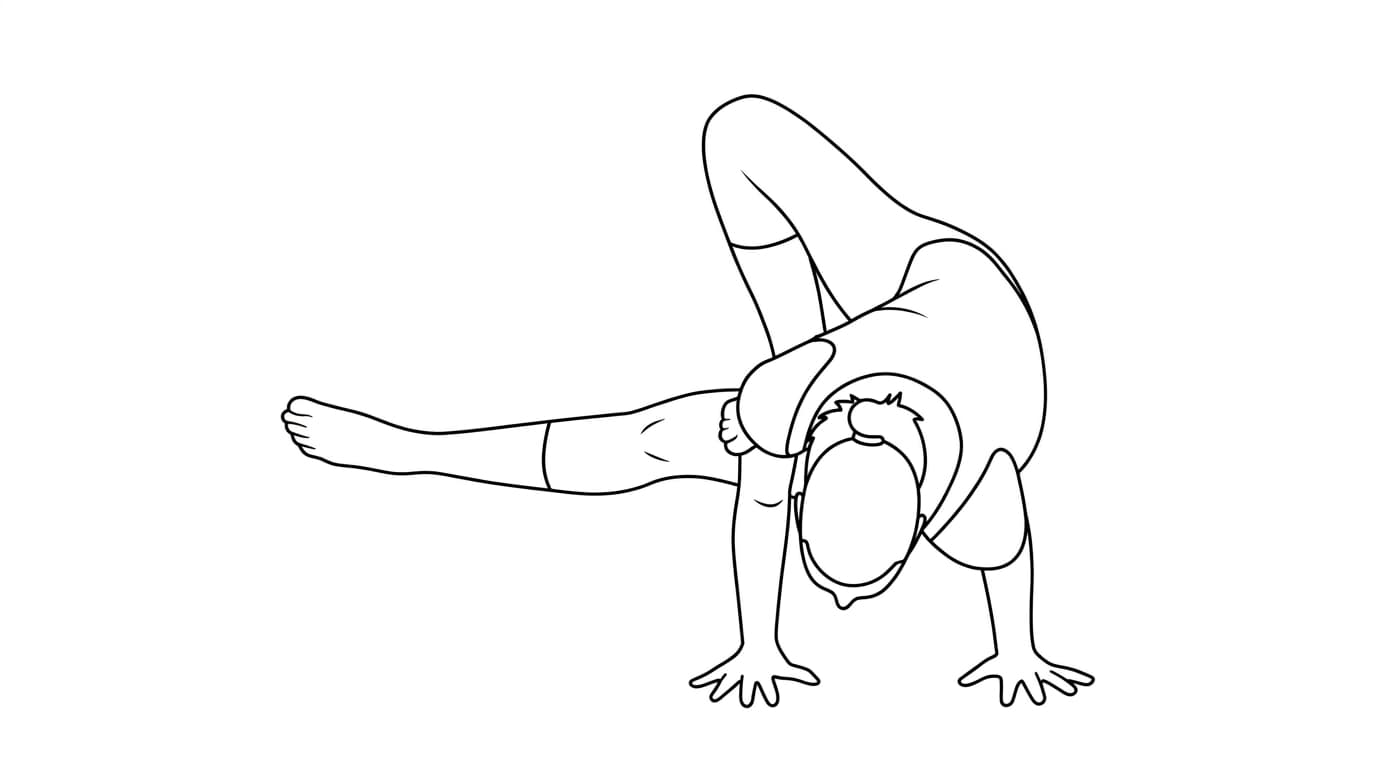
Grasshopper
Maksikanagasanaमक्षिकनागासन
Grasshopper is a twisting arm balance with leg placement across the torso and support through the hands. The exact form varies; do not attempt the lift from a written description or force a twist under load.
මඟපෙන්වීම විවෘත කරන්න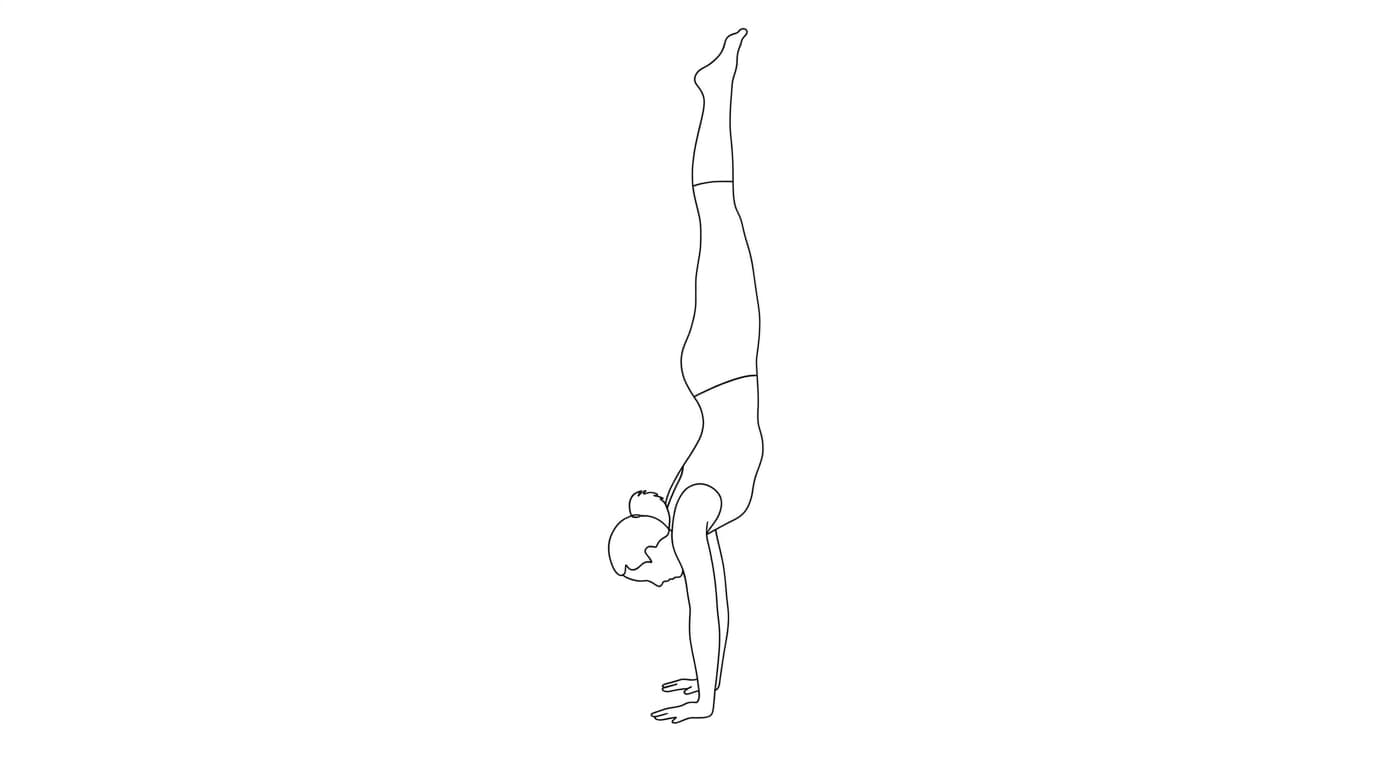
Handstand
Adho Mukha Vrikshasanaअधोमुखवृक्षासन
Handstand is an inversion supported through the hands and arms, with meaningful fall risk. Do not kick up alone or use this article as a tutorial; learn progressions, spotting, and exit strategy from a qualified teacher in a clear space.
මඟපෙන්වීම විවෘත කරන්න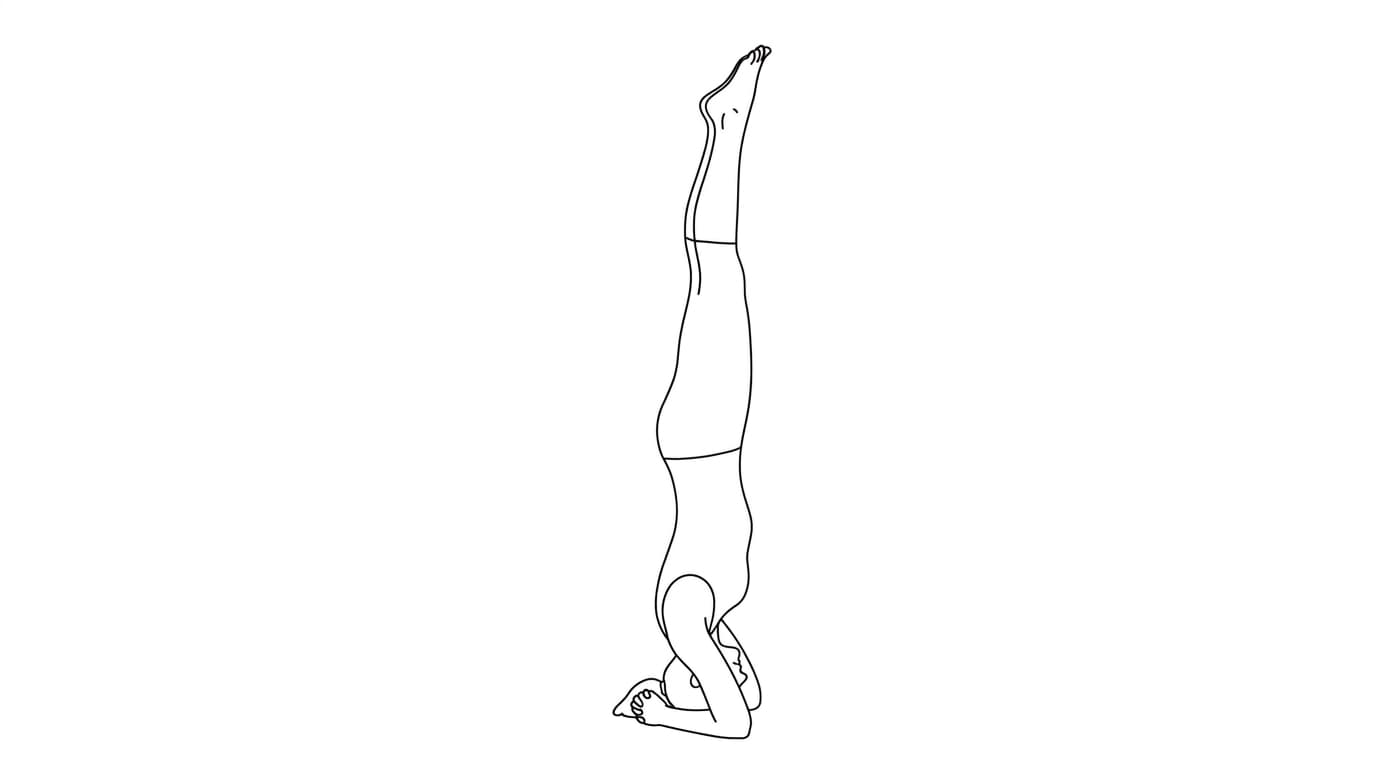
Salamba Shirshasana A (සහය දක්වන Headstand)
Salamba Shirshasana Aसालम्ब शीर्षासन अ
සහාය දක්වන Headstand Salamba Shirshasana A ලෙස ලැයිස්තුගත කර ඇත. එය සැලකිය යුතු සමතුලිතතාවයක් සහ බර ඉල්ලීම් සහිත උසස් ප්රතිලෝමයක් වන අතර ස්වයං-ඉගැන්වීම සඳහා සුදුසු නොවේ; මෙම පිටුව හිතාමතාම පියවරෙන් පියවර ප්රවේශයක් ලබා නොදේ.
මඟපෙන්වීම විවෘත කරන්න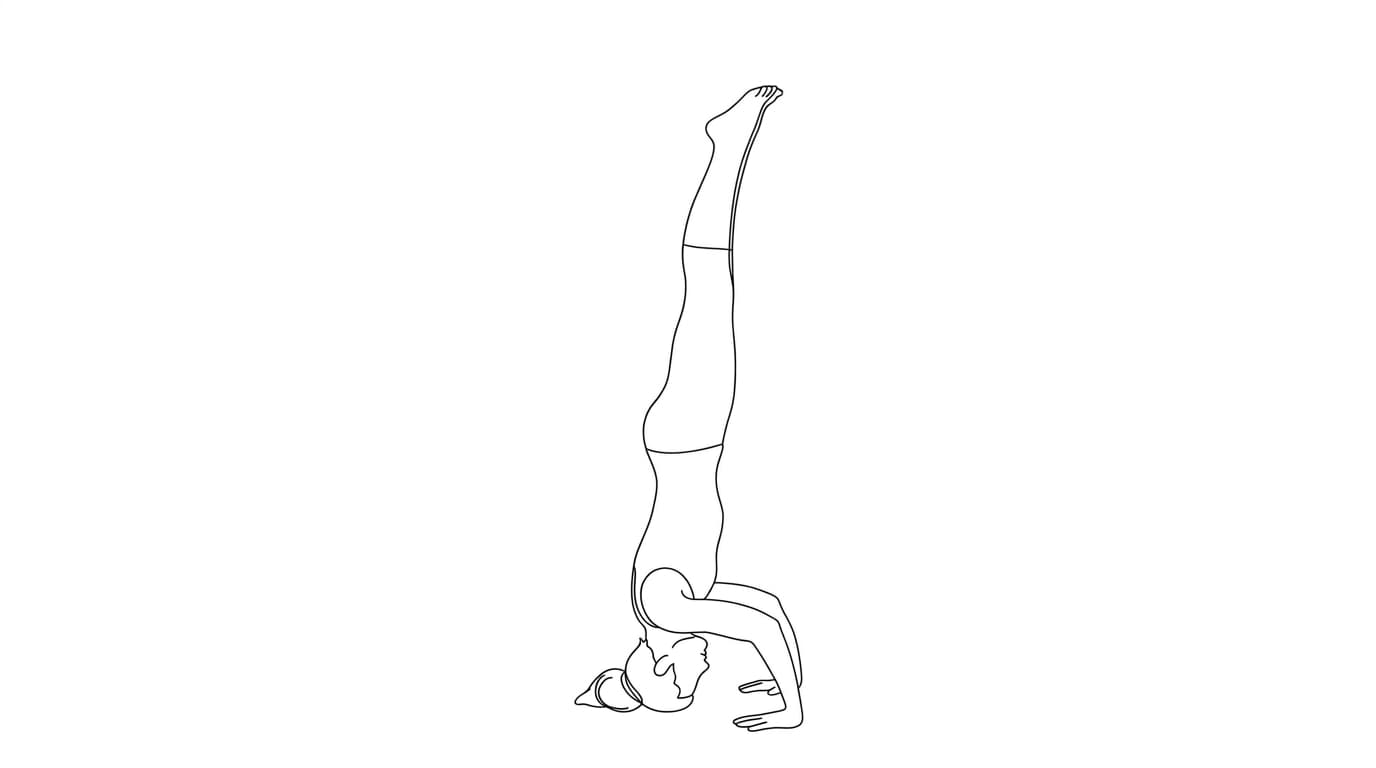
Tripod Headstand
Mukta Hasta Sirsasana Aमुक्तहस्तशीर्षासन
Tripod Headstand is an inversion with the head and hands forming a support base. It can load the neck and carries fall risk; do not attempt the full posture from text or place uncontrolled body weight on the head.
මඟපෙන්වීම විවෘත කරන්න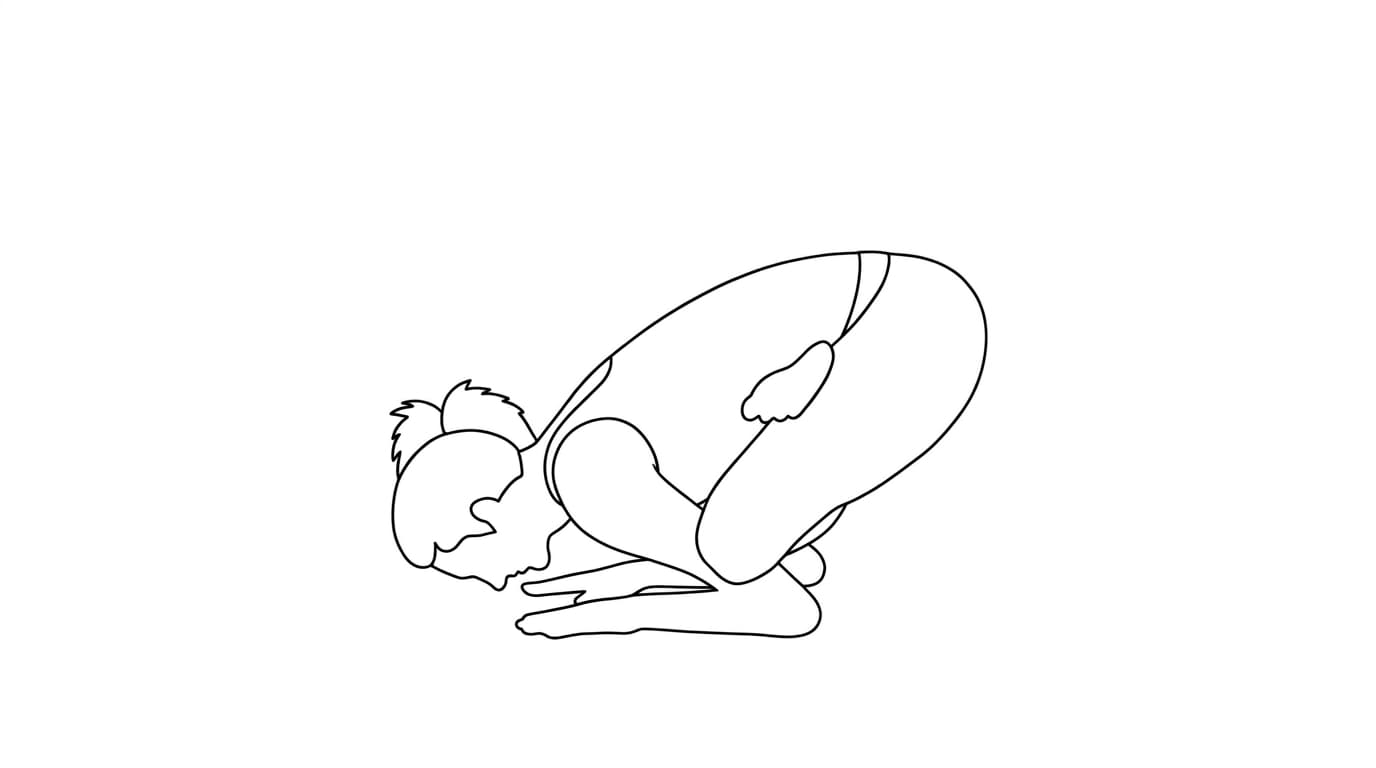
Himalayan Duck
Karandavasanaकरण्डवासन
Karandavasana, sometimes called Himalayan Duck, is an advanced forearm inversion with a complex leg transition. It should not be self-taught; use qualified supervision, a clear space, and never place uncontrolled load on the neck.
මඟපෙන්වීම විවෘත කරන්න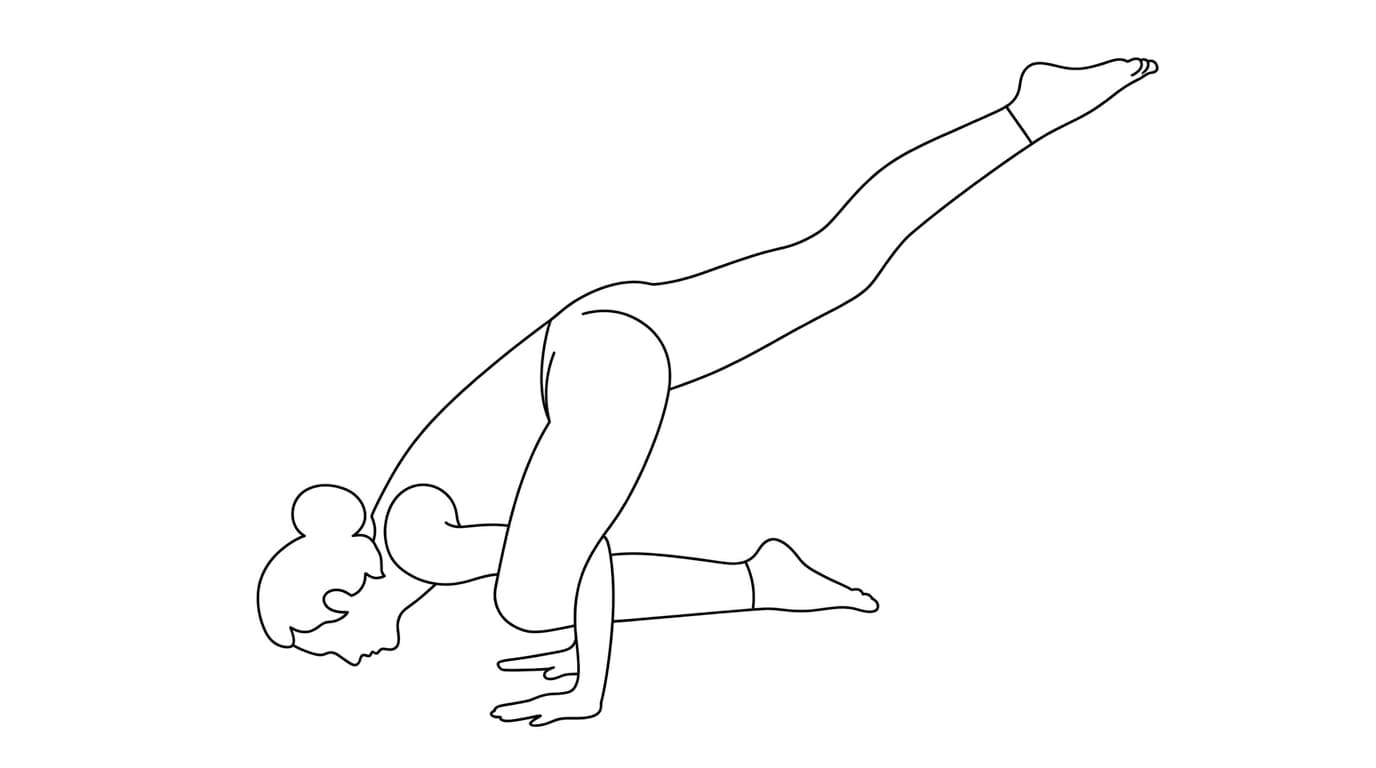
Flying Lizard
Flying Lizard is a contemporary name for a lunge-based arm balance, but the precise technique varies by teacher. Do not attempt to lift into it from text alone; use qualified instruction and a supported low lunge as an alternative.
මඟපෙන්වීම විවෘත කරන්න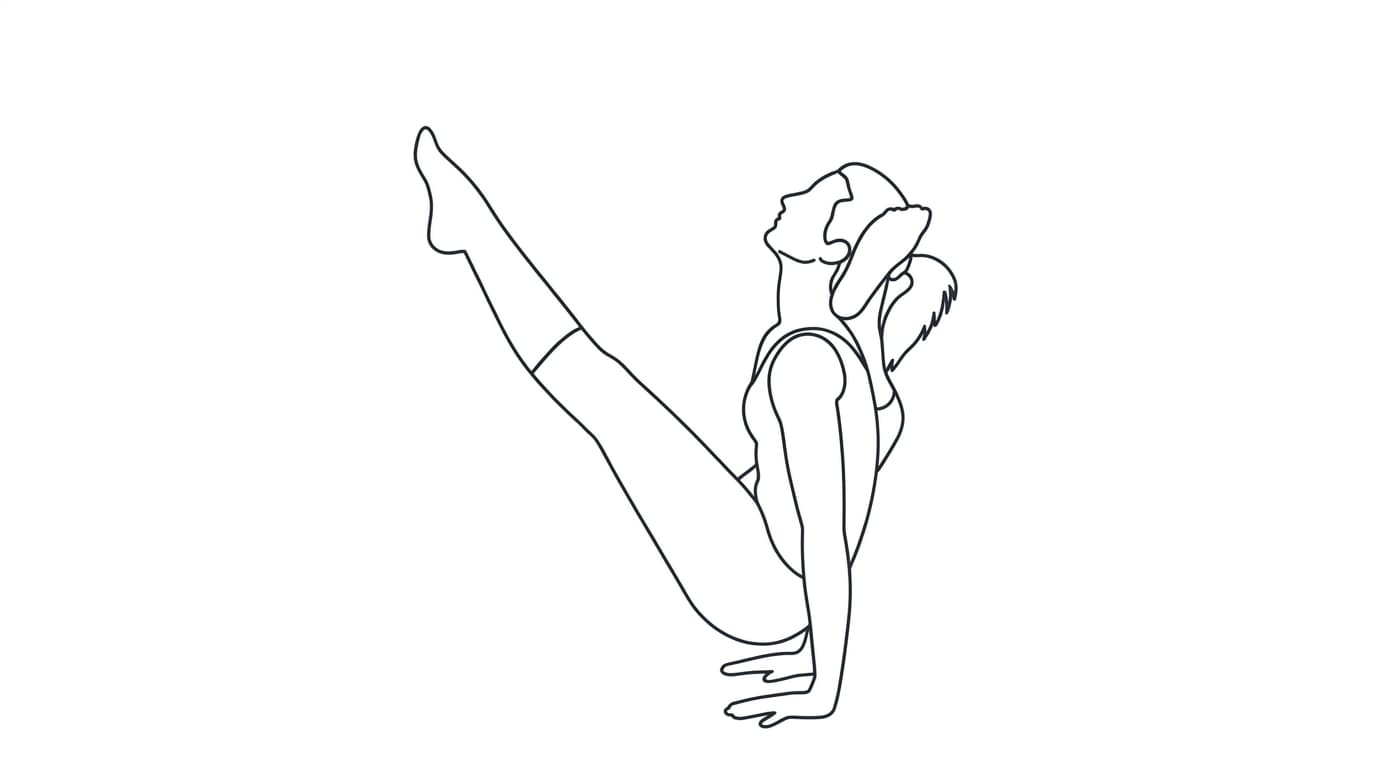
Moon Bird
Eka Pada Sirsasana Cएकपादशीर्षासन
Moon Bird is a catalogued advanced variation associated with the leg-behind-head family, but the name and exact shape need source verification. Do not force the leg or use the neck to support it; seek qualified instruction.
මඟපෙන්වීම විවෘත කරන්න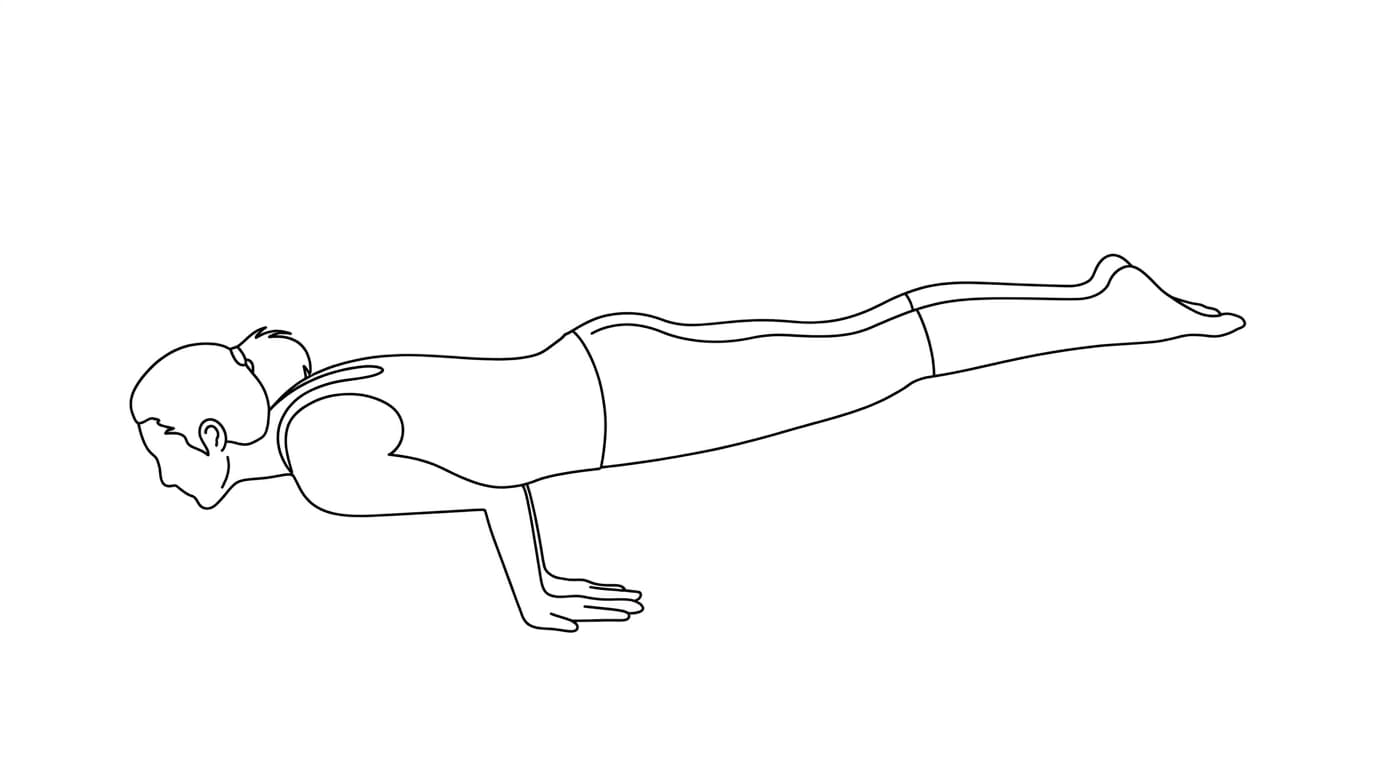
Peacock Pose
Mayurasanaमयूरासन
Peacock Pose is an advanced arm balance that places the elbows and body in a demanding supported position. It can strain wrists, elbows, and abdomen; do not attempt lift-off from text and seek direct qualified instruction.
මඟපෙන්වීම විවෘත කරන්න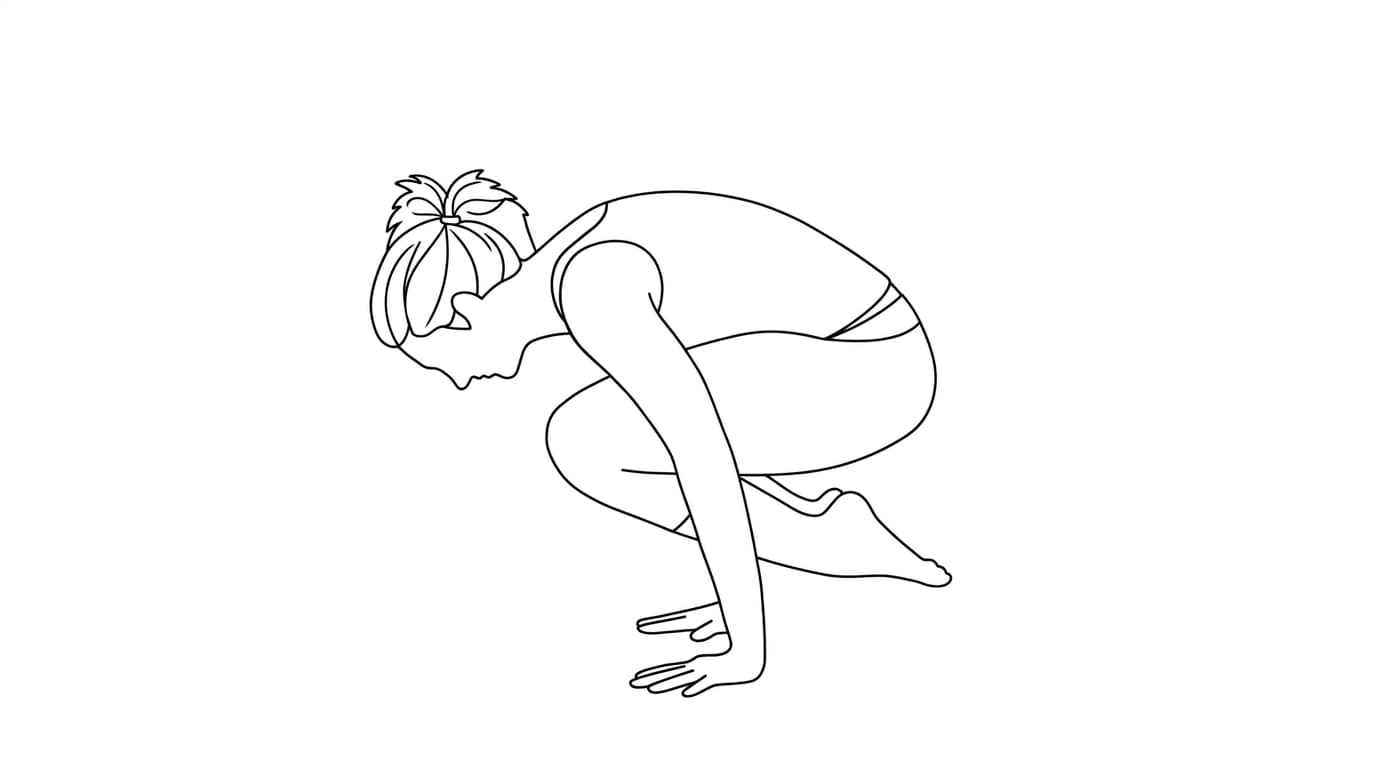
Pendant Pose
Lolasanaलोलासन
Pendant Pose is a seated arm balance in which the body may lift between the hands. Use blocks or a teacher-approved supported press, keep the feet grounded during preparation, and do not swing or jump into the lift.
මඟපෙන්වීම විවෘත කරන්න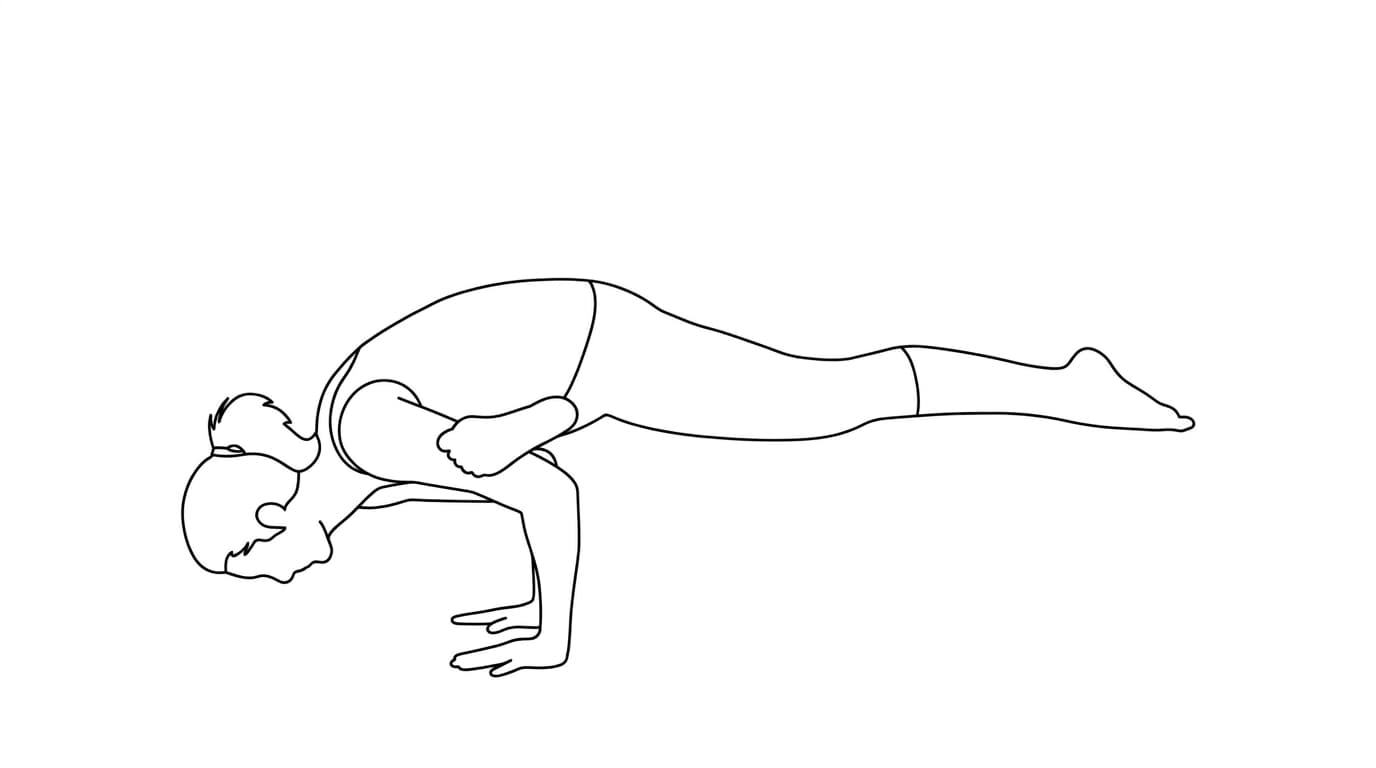
Flying Pigeon
Eka Pada Galavasanaएकपादगलवासन
Flying Pigeon is an advanced arm balance combining a crossed-leg hip position with weight through the hands. Learn the setup and exit with a qualified teacher; do not hop into it or force the leg across the arm.
මඟපෙන්වීම විවෘත කරන්න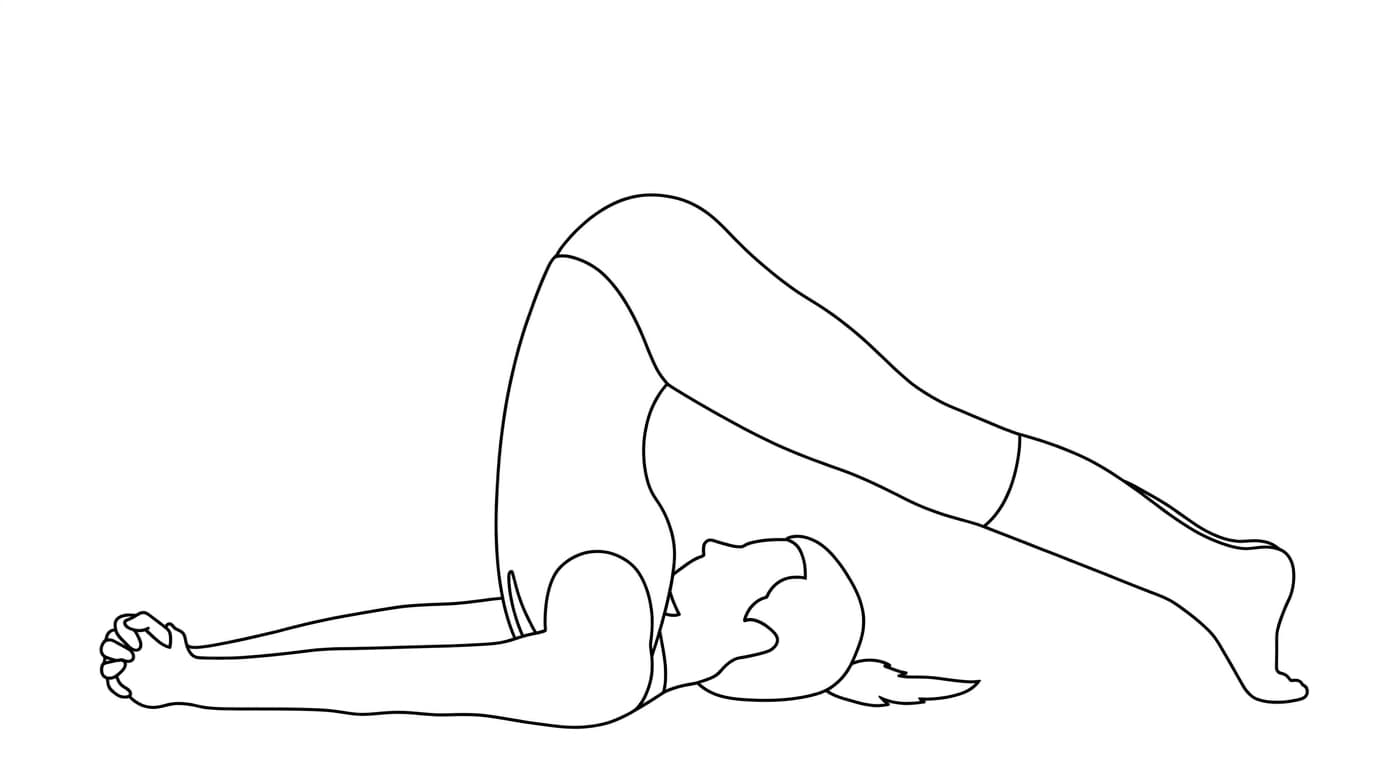
Halasana (නගුලේ ඉරියව්ව)
Halasanaहलासन
හලාසන නොහොත් නගුල් ඉරියව්ව යනු ප්රතිලෝමව ඉදිරියට නැමෙන ඉරියව්වක් වන අතර එහි කකුල් ඉහළට ගමන් කරයි. එය බෙල්ල සහ උරහිස් මත සැලකිය යුතු ඉල්ලුමක් තැබිය හැක, එබැවින් මෙම වෙබ් අඩවිය දළ විශ්ලේෂණයක් සපයන නමුත් ස්වයං-මඟපෙන්වන ඇතුල්වීමේ පියවර නොමැත.
මඟපෙන්වීම විවෘත කරන්න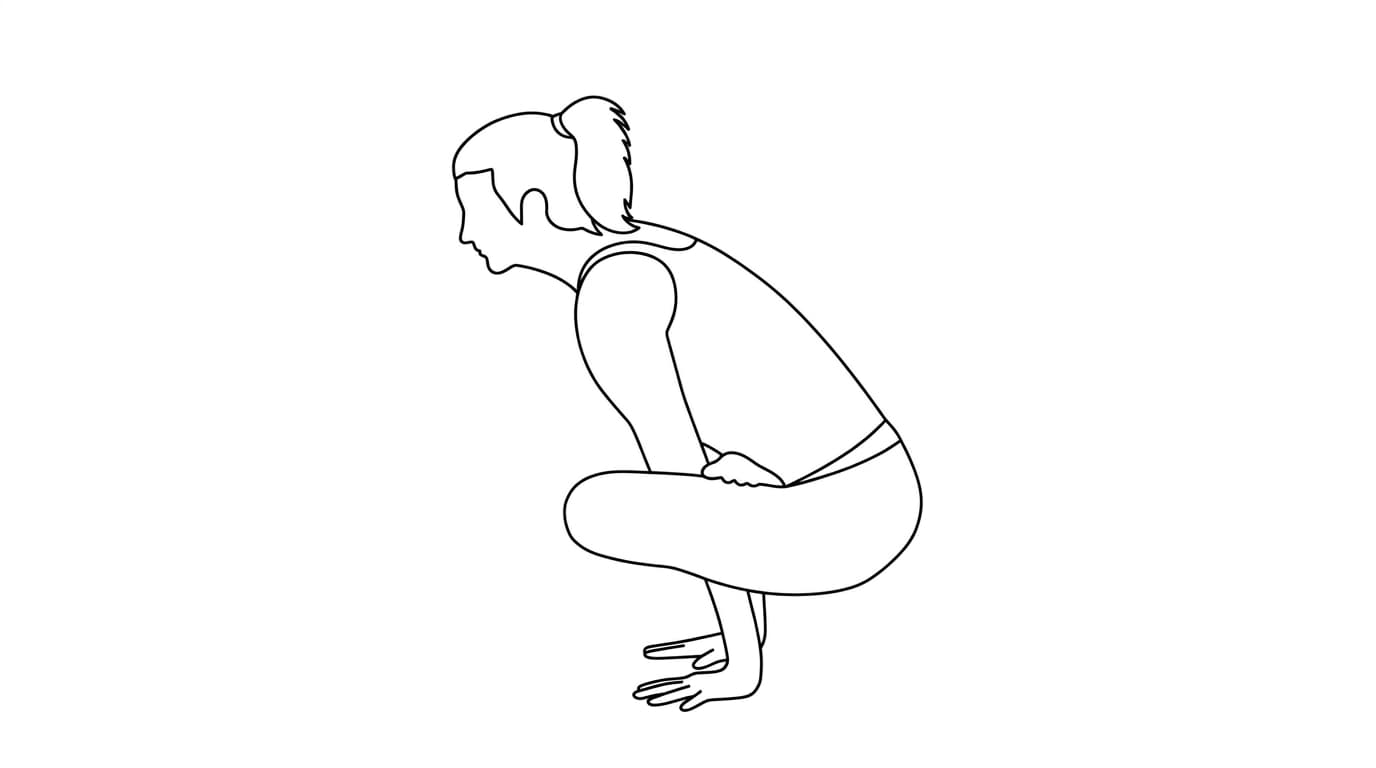
Rooster Pose
Kukkutasanaकुक्कुटासन
Kukkutasana is an advanced arm balance often associated with Lotus Pose and arms threaded through the legs. It can stress the knees, shoulders, and wrists; do not force Lotus or attempt the lift without direct qualified instruction.
මඟපෙන්වීම විවෘත කරන්න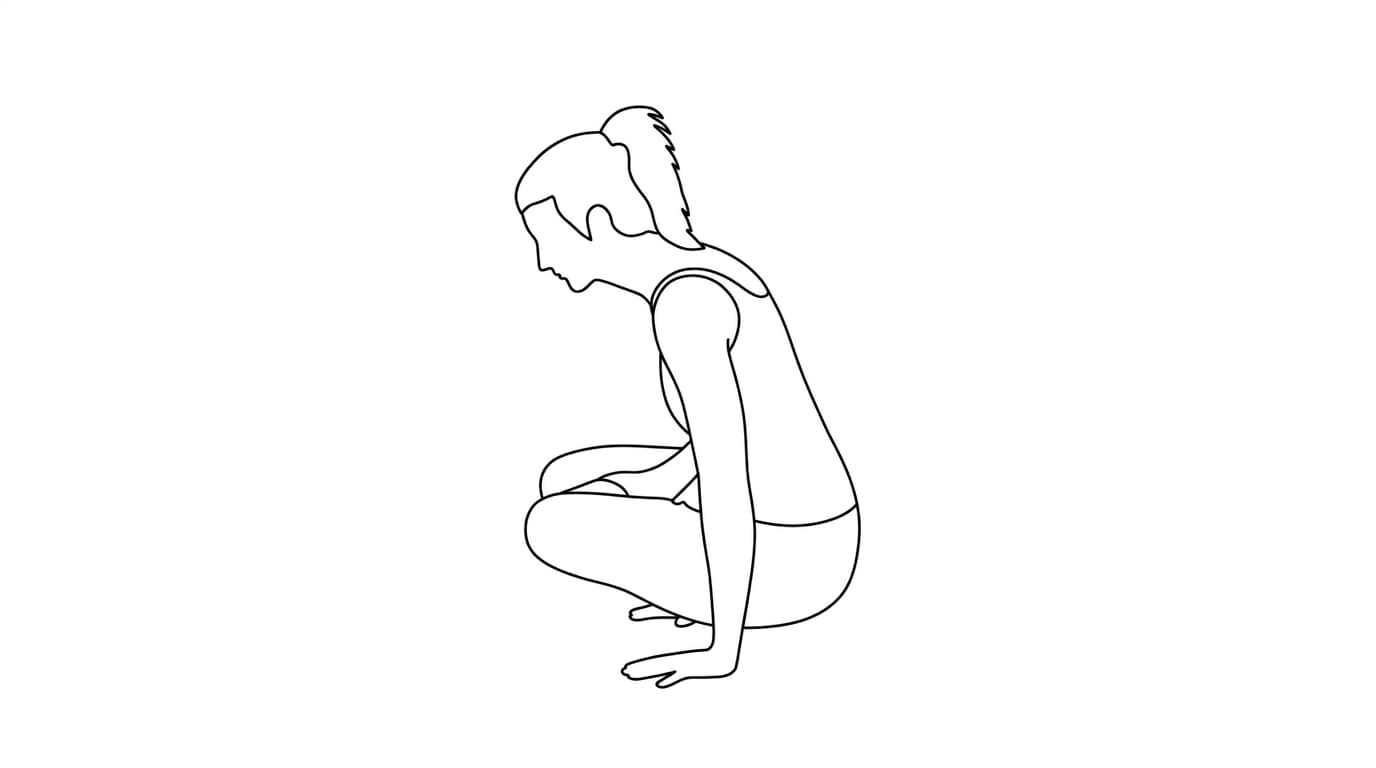
Scale Pose
Tolasanaतोलासन
Scale Pose is a seated arm balance that may involve lifting the body while cross-legged. Do not force a Lotus leg position or use blocks to attempt an unsupported lift without qualified instruction; keep the feet grounded during any preparation.
මඟපෙන්වීම විවෘත කරන්න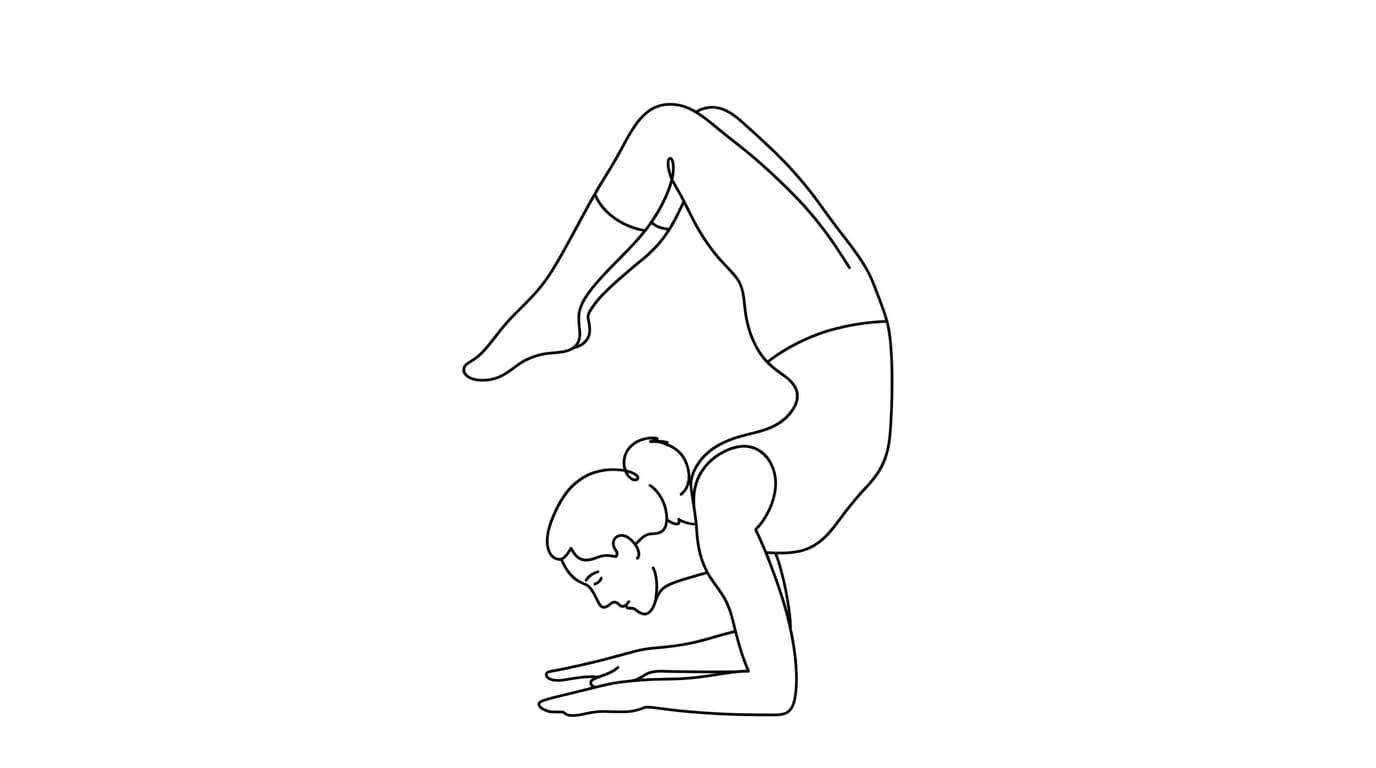
Scorpion A
Vrischikasana Aवृश्चिकासन
Scorpion A is an advanced forearm balance combined with a deep backbend. It should not be attempted from written directions; work with an experienced qualified teacher, avoid loading the neck, and use a controlled exit plan.
මඟපෙන්වීම විවෘත කරන්න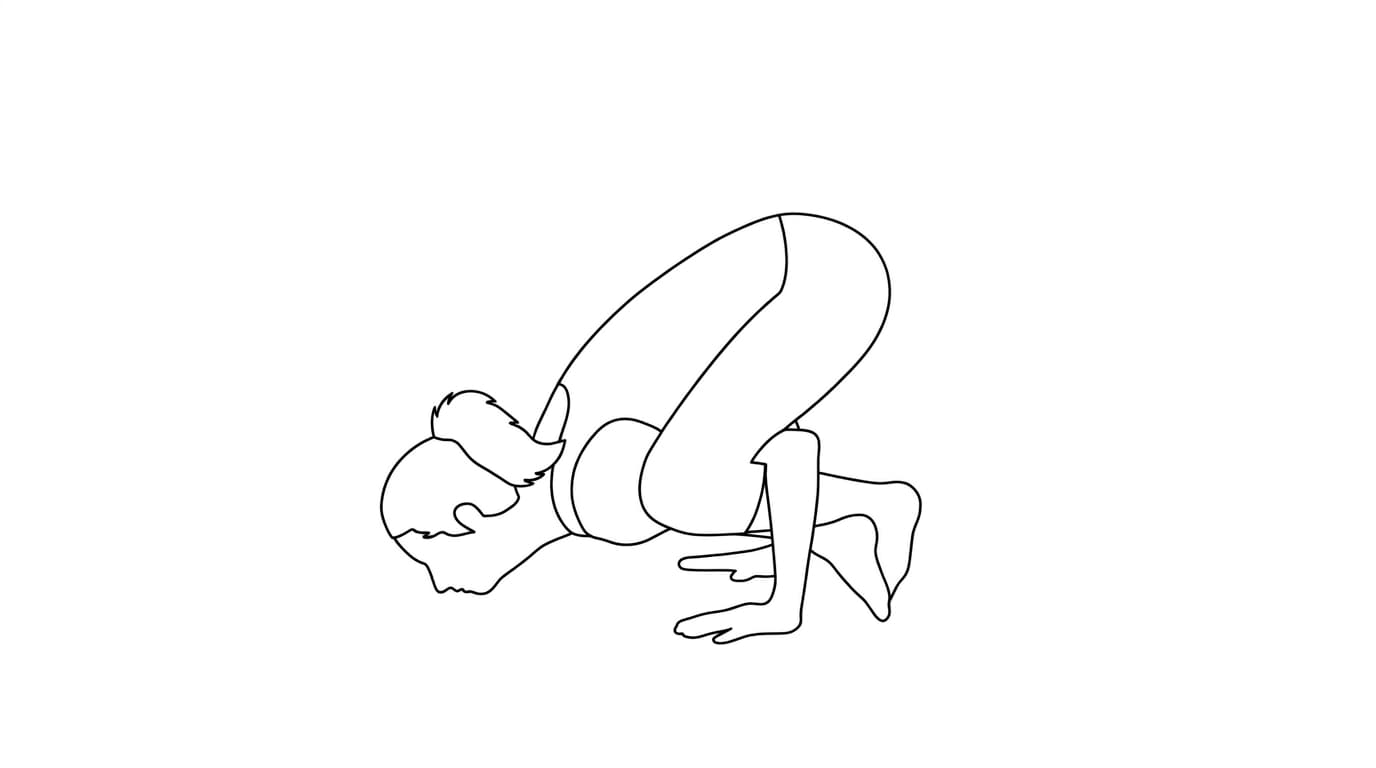
Shoulder Pressing
Bhuja Pidasanaभुजपीडासन
Bhuja Pidasana is an advanced arm balance involving the legs and torso supported by the arms. It can strain wrists and shoulders; learn the setup and exit directly with a qualified teacher and do not jump into the pose.
මඟපෙන්වීම විවෘත කරන්න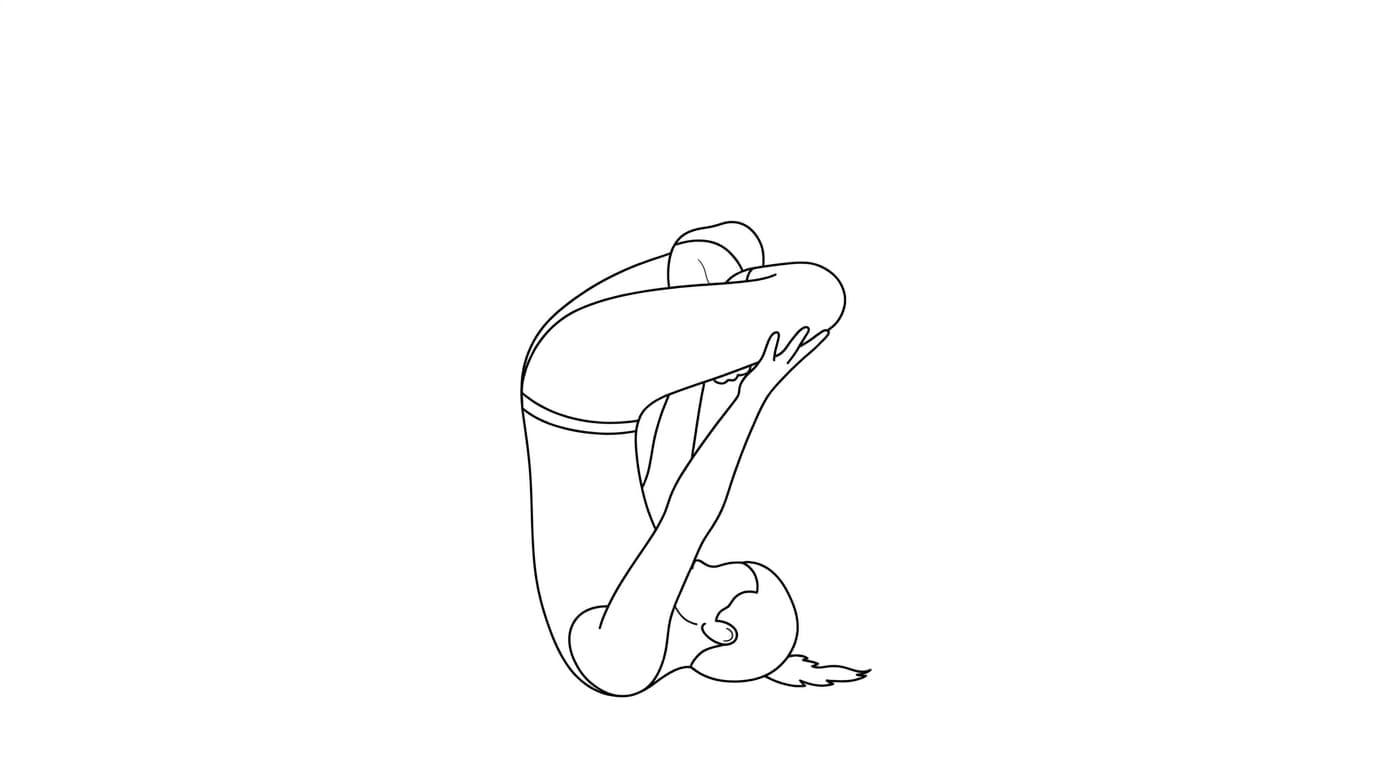
Shoulderstand with Lotus Legs
Urdhva Padmasanaऊर्ध्वपद्मासन
Shoulderstand with Lotus Legs is an advanced inversion combined with a lotus position. Both neck loading and knee rotation require caution; do not attempt from text, force Lotus, or bear uncontrolled weight on the neck.
මඟපෙන්වීම විවෘත කරන්න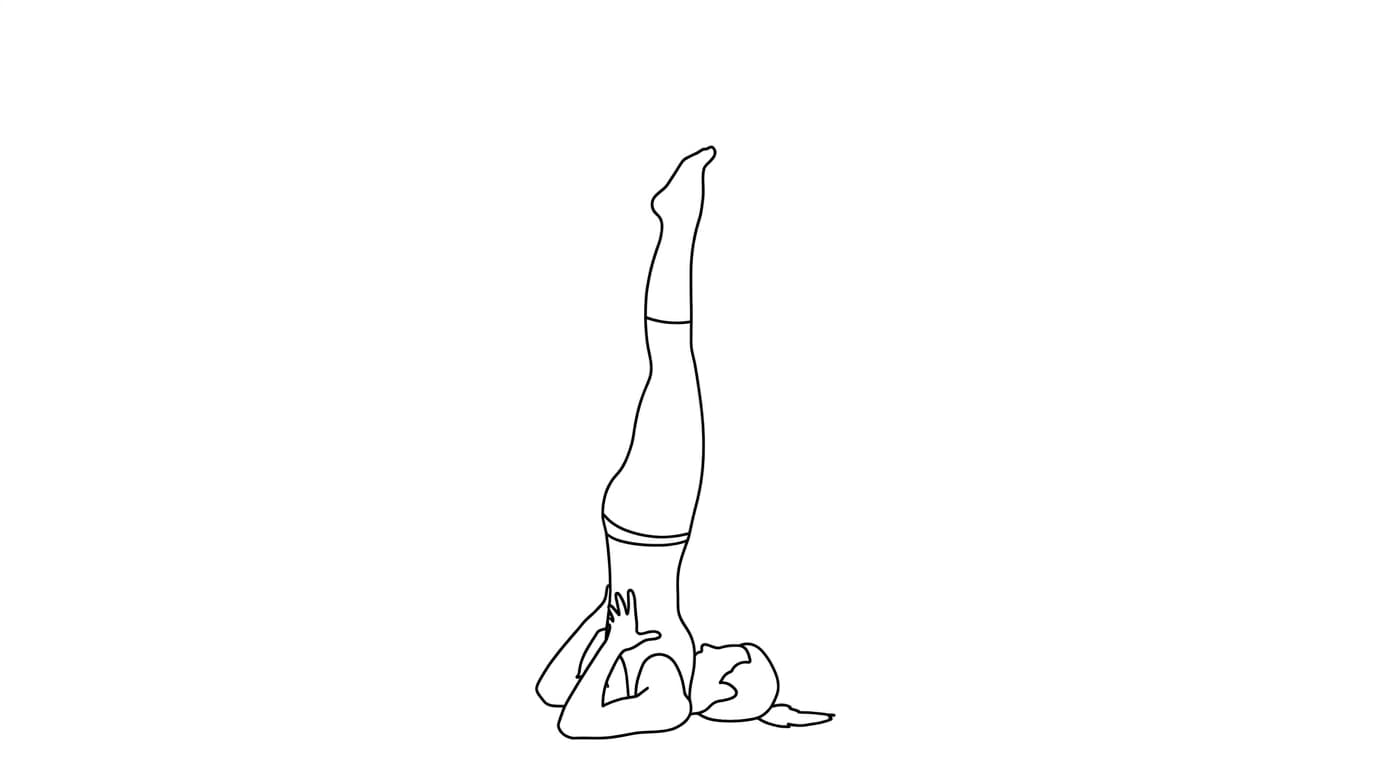
Salamba Sarvangasana (සහාය දක්වන උරහිස් ස්ථාවරය)
Salamba Sarvangasana
මෙම ඉරියව් නාමාවලියෙහි සලාම්බ සර්වාංගාසන ලෙස ලැයිස්තුගත කර ඇති ආධාරක උරහිස් තලය සැලකිය යුතු බෙල්ලක් පැටවීම සහ ශේෂ ඉල්ලීම් සහිත ප්රතිලෝමයකි. මෙම පිටුව සන්දර්භය පමණක් සපයන අතර හිතාමතාම ස්වයං-මාර්ගෝපදේශ ඇතුළත් අනුපිළිවෙලක් ලබා නොදේ; එය උත්සාහ කිරීමට පෙර සුදුසුකම් ලත් පුද්ගල උපදෙස් අවශ්ය වේ.
මඟපෙන්වීම විවෘත කරන්න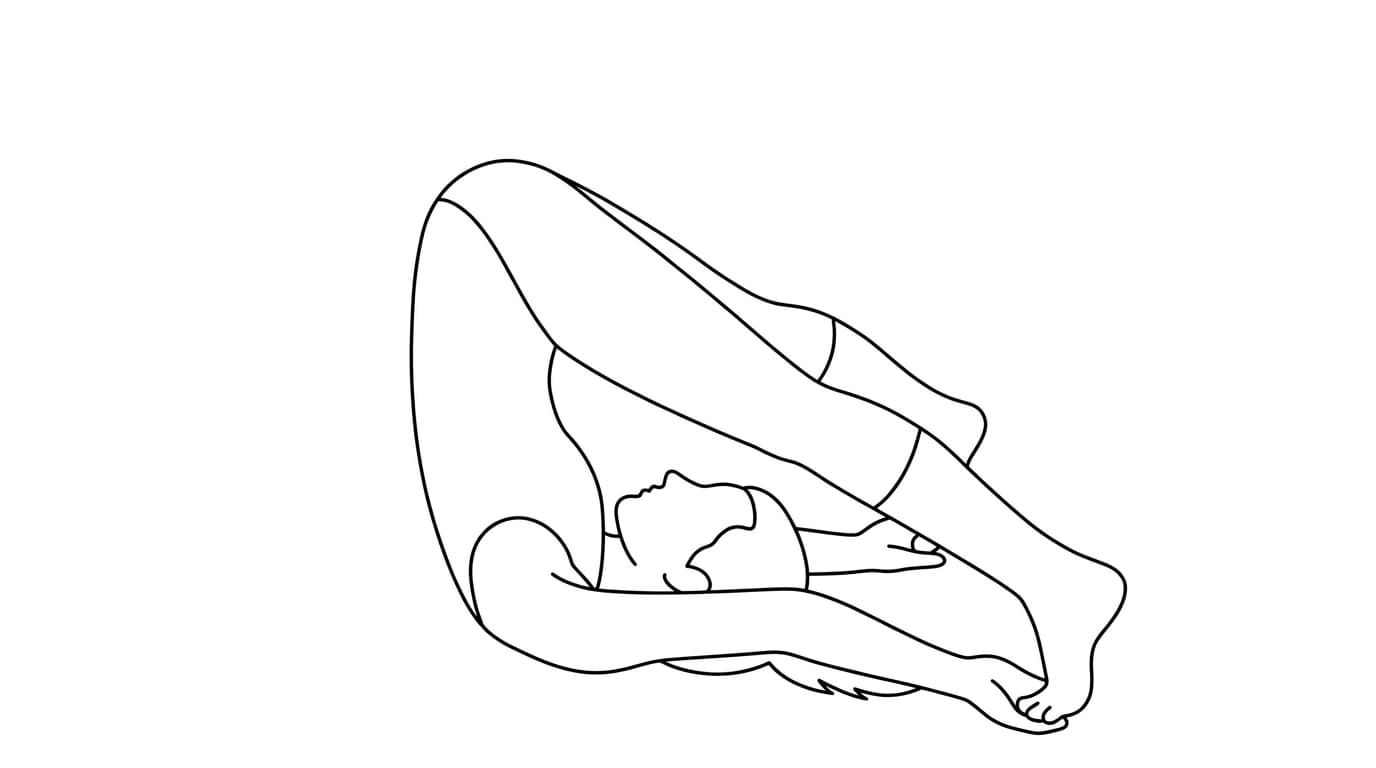
Supine Angle
Supta Konasanaसुप्तकोणासन
Supta Konasana is an advanced supine angle variation often associated with an inversion. The catalog label does not define a safe entry; do not place the legs overhead or load the neck without direct qualified instruction.
මඟපෙන්වීම විවෘත කරන්න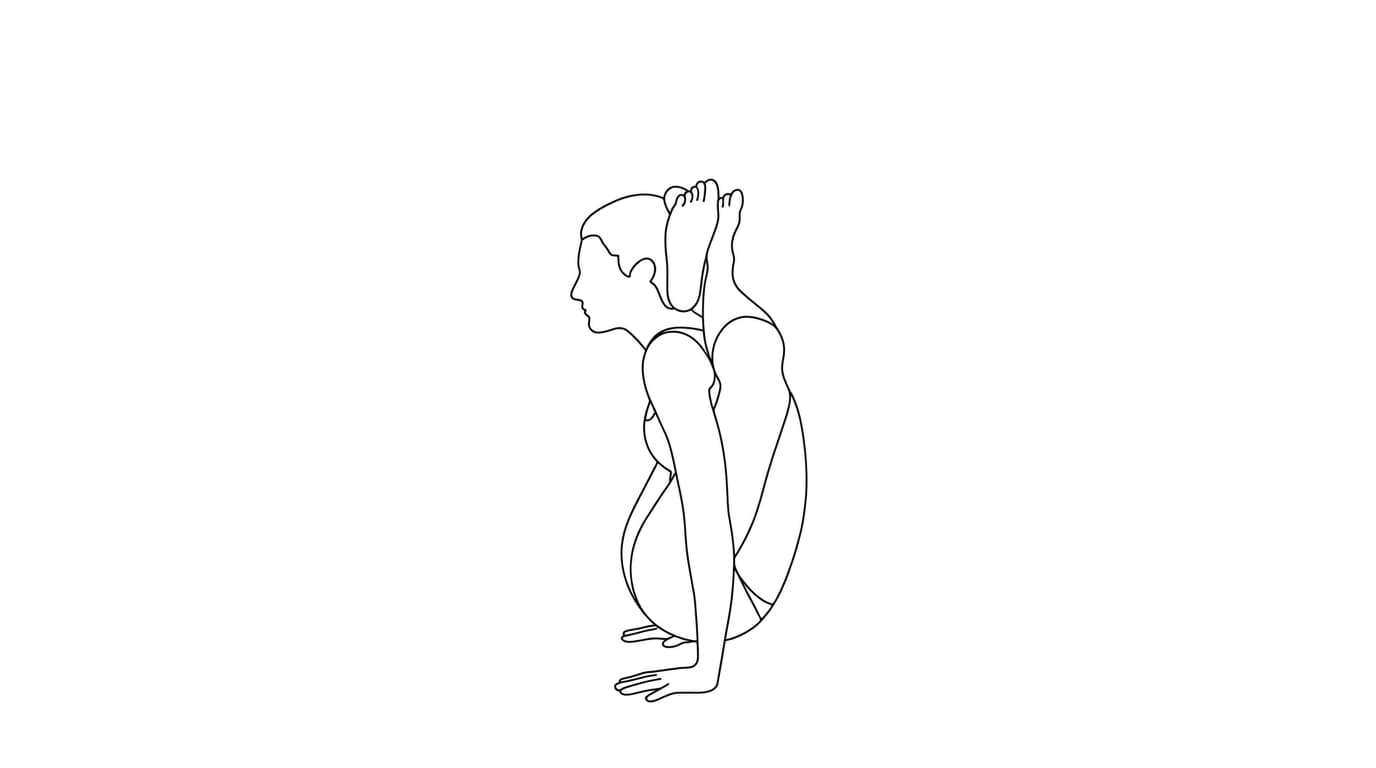
Two Legs Behind the Head II
Dvi Pada Sirsasana Bद्विपादशीर्षासन
Two Legs Behind the Head II is an advanced variation involving both legs behind the head or shoulders. The specific form is lineage-dependent; do not force the knees, load the neck, or attempt the posture without qualified in-person guidance.
මඟපෙන්වීම විවෘත කරන්නමුනින්තලාවූ
ඉරියව් 14 ක්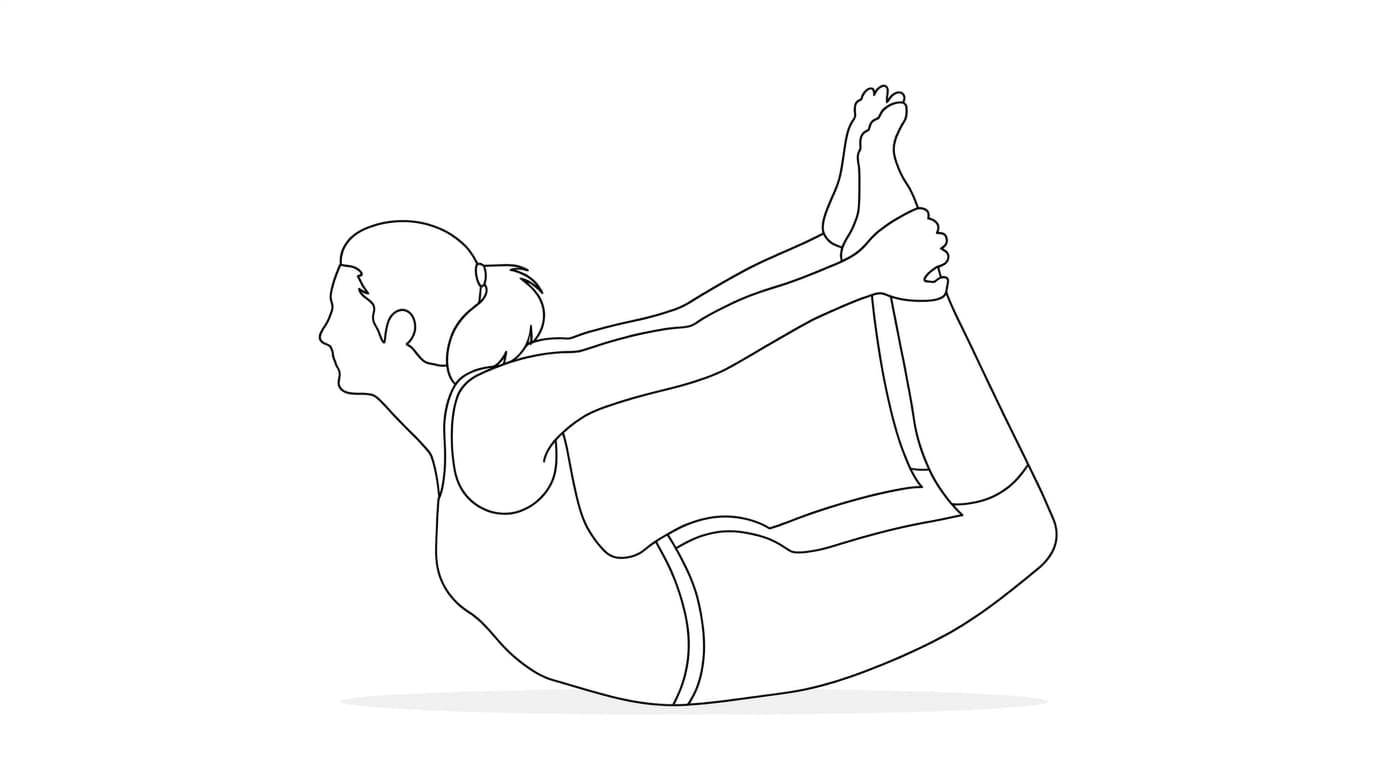
Dhanurasana (දුන්න ඉරියව්ව)
Dhanurasanaधनुरासन
ධනුරාසනය නොහොත් දුනු ඉරියව්ව යනු පපුව සහ පාද ඔසවන විට දෑත් වළලුකර අල්ලාගෙන සිටින පසුපස නැමීමකි. එය උරහිස් සහ පසුපස සංචලනය අවශ්ය වේ; කුඩා සූදානමක් හෝ වෙනස් ඉරියව්වක් වඩාත් සුදුසු විය හැකිය.
මඟපෙන්වීම විවෘත කරන්න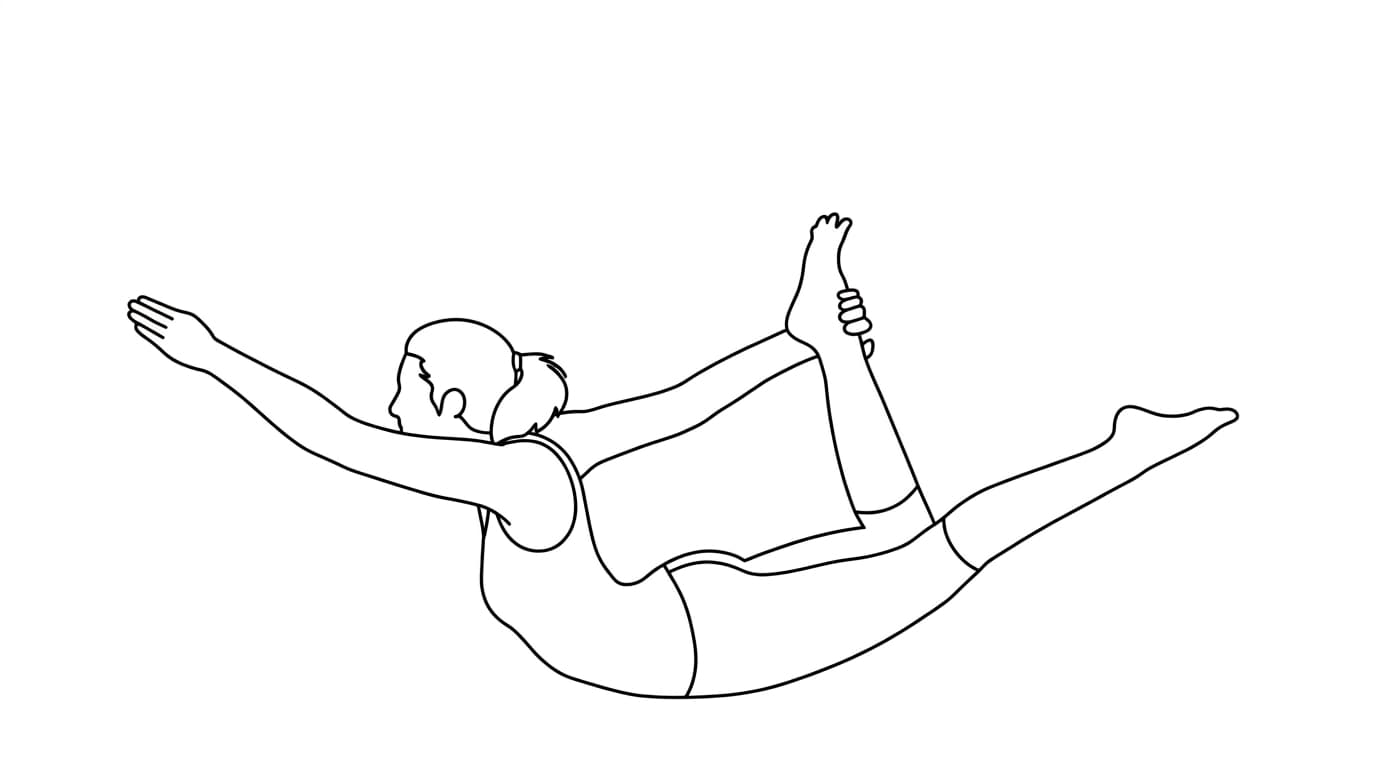
Half Bow
Ardha Dhanurasanaअर्धधनुरासन
Half Bow is a prone backbend variation in which one knee bends and the same-side hand may reach toward the foot. The grasp is optional; keep the lift small and use a strap only if a teacher has shown a comfortable setup.
මඟපෙන්වීම විවෘත කරන්න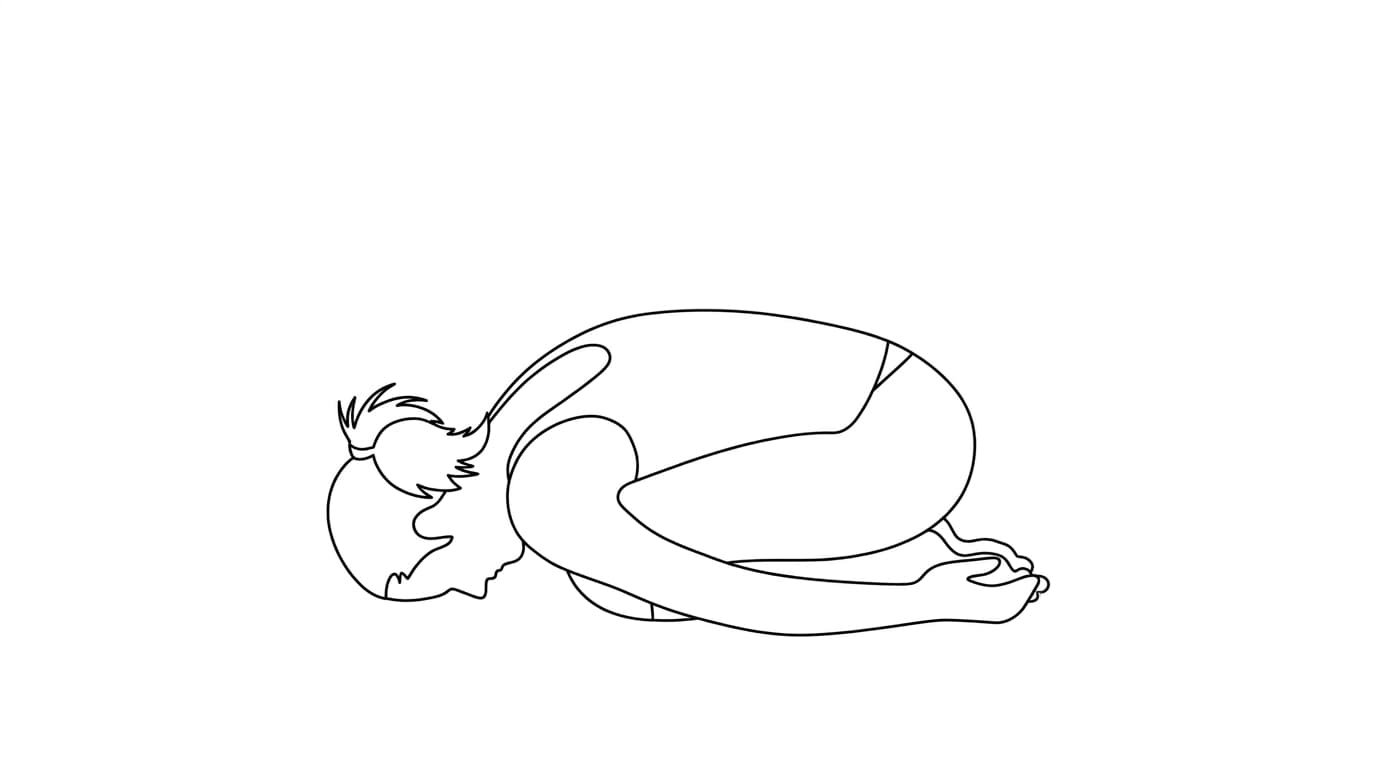
Balasana (දරුවාගේ ඉරියව්ව)
Balasanaबालासन
බොහෝ විට ළමා ඉරියව්ව ලෙස හැඳින්වෙන බලසනය, දණහිස් හැඩයක් වන අතර එහි කඳ කලවා දෙසට නැමෙයි. දණහිස් එකට හෝ වෙන් විය හැකි අතර, කඳට හෝ හිසට යටින් ආධාරකයක් පිහිටීම වඩාත් සුවපහසු කළ හැකිය.
මඟපෙන්වීම විවෘත කරන්න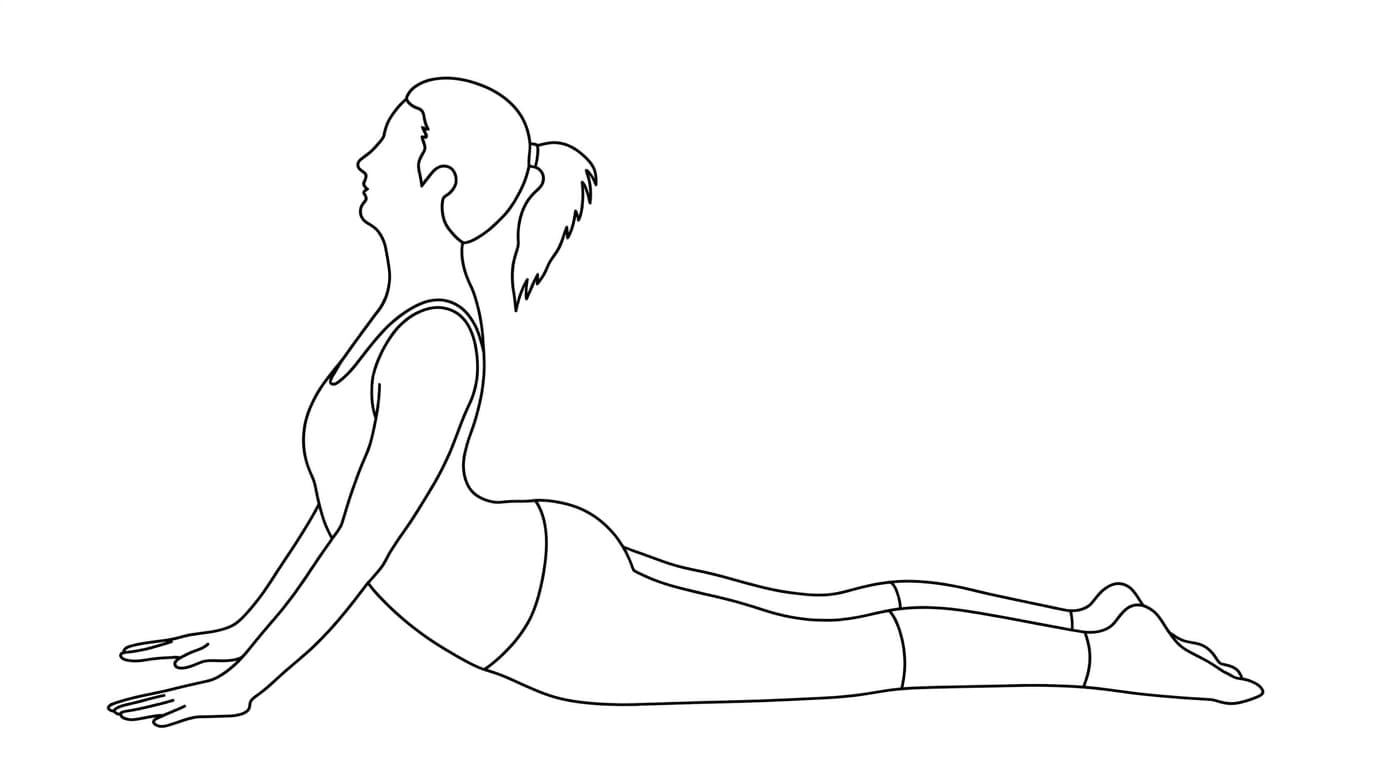
Bhujangasana (නාග ඉරියව්ව)
Bhujangasanaभुजङ्गासन
භුජංගාසනය නොහොත් නාග ඉරියව්ව යනු ශ්රෝණිය, පාද සහ පාදවල මුදුන් බිමට ආධාරකව පවතින අතර පපුව ඔසවන පසුපස නැමීමකි. පහත් අනුවාදයක් වැලමිට නැමෙන අතර බෙල්ල සුවපහසු වේ. පහසු, බලහත්කාරයෙන් හුස්ම ගැනීමට ඉඩ සලසන පරාසයක් තුළ පමණක් ඔසවන්න.
මඟපෙන්වීම විවෘත කරන්න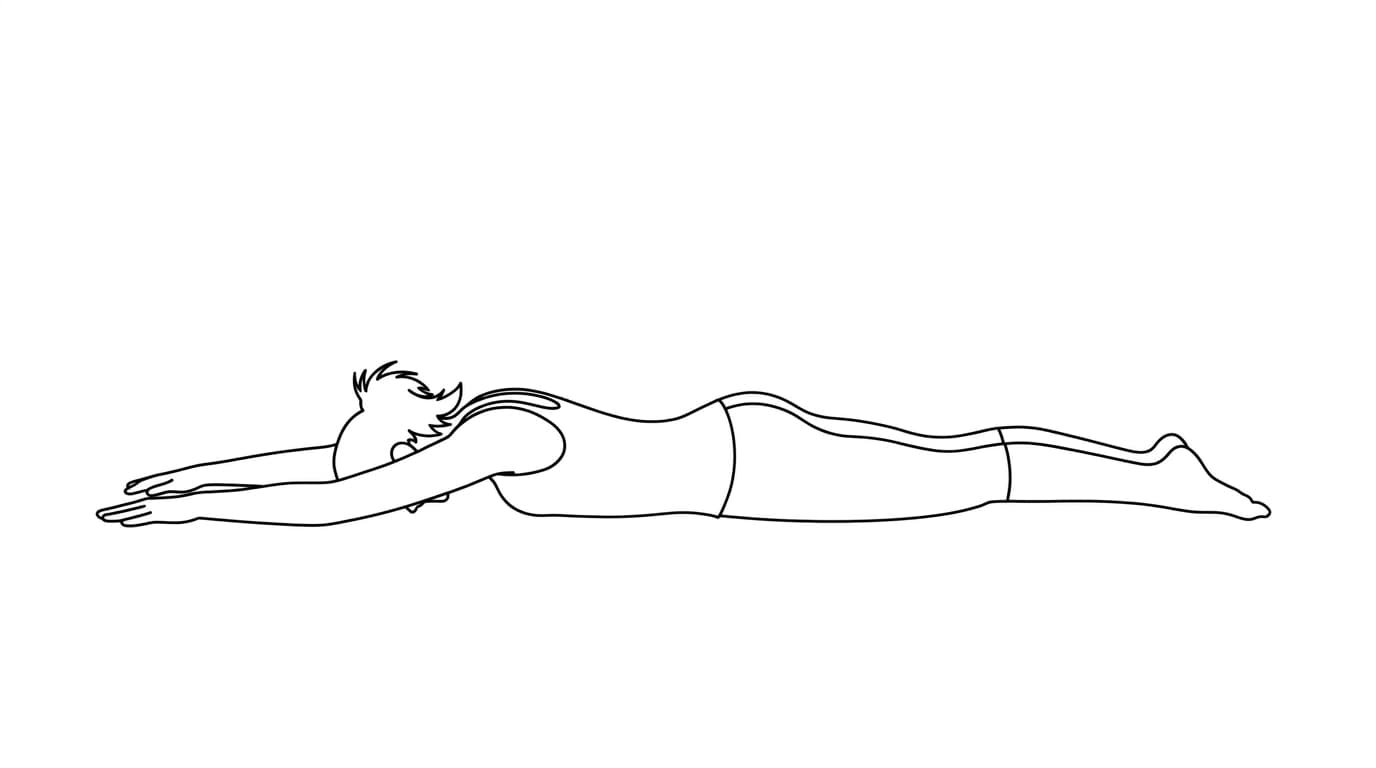
Reverse Corpse
Advasanaअध्वासन
Advasana is a prone resting posture, sometimes called Reverse Corpse. Support the forehead or turn the head to one side, and change position if pressure on the face, chest, or lower back is uncomfortable.
මඟපෙන්වීම විවෘත කරන්න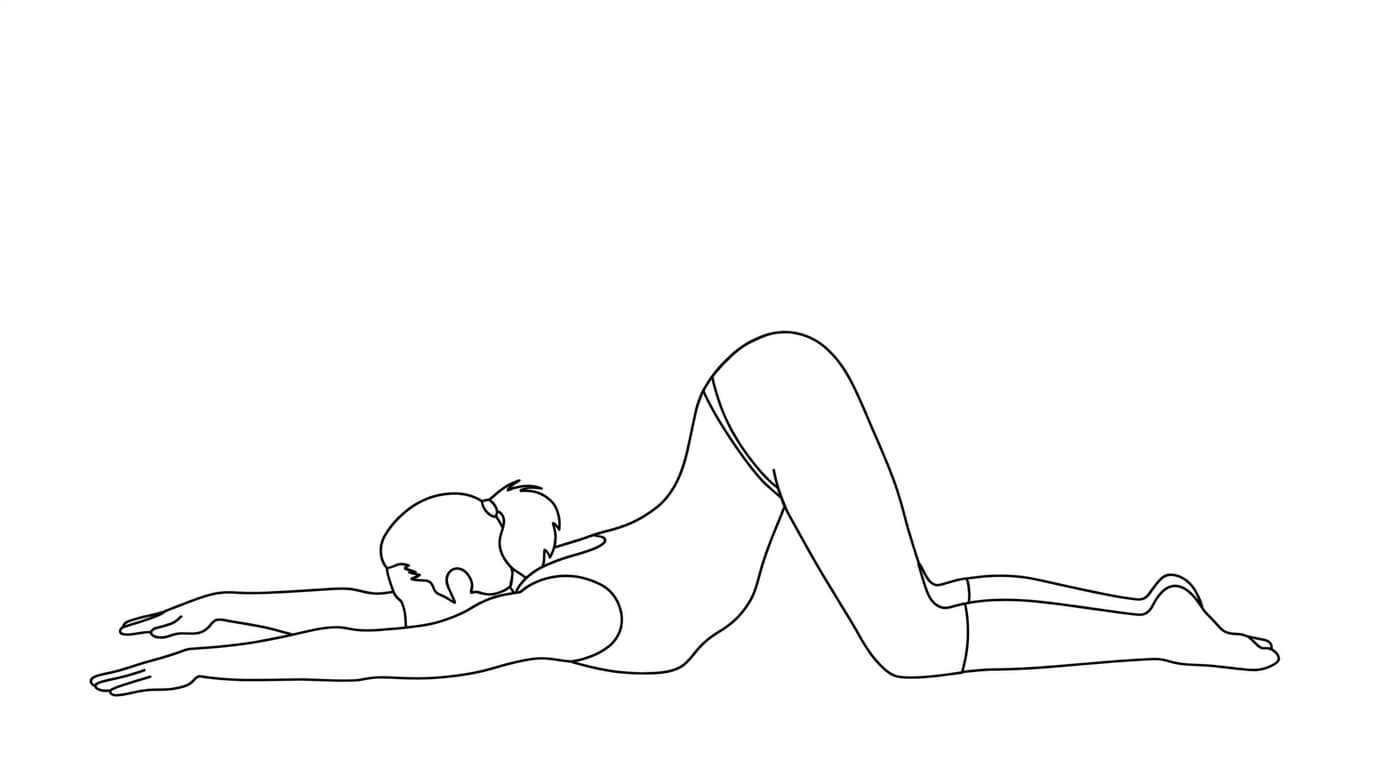
Extended Puppy
Uttana Shishosana
Extended Puppy is a kneeling posture with the hips above or behind the knees and the arms reaching forward. Rest the forehead or chest on support and keep the shoulders within a comfortable range; do not force the chest toward the floor.
මඟපෙන්වීම විවෘත කරන්න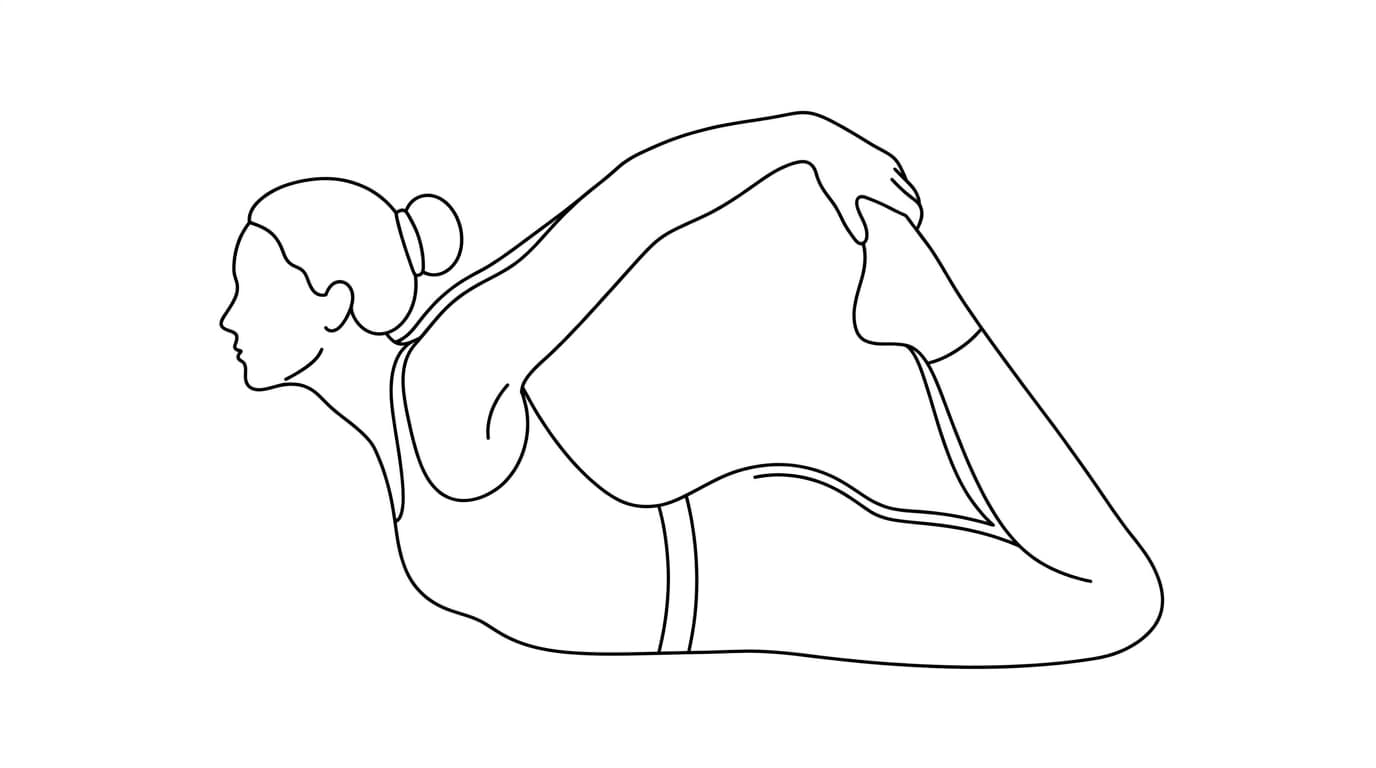
Frog Pose
Bhekasanaभेकासन
Bhekasana is a prone posture that may involve bending the knees and reaching for the feet. Because it can strongly load the knees and shoulders, use a small range, avoid pulling the feet forcefully, and practice only with suitable instruction.
මඟපෙන්වීම විවෘත කරන්න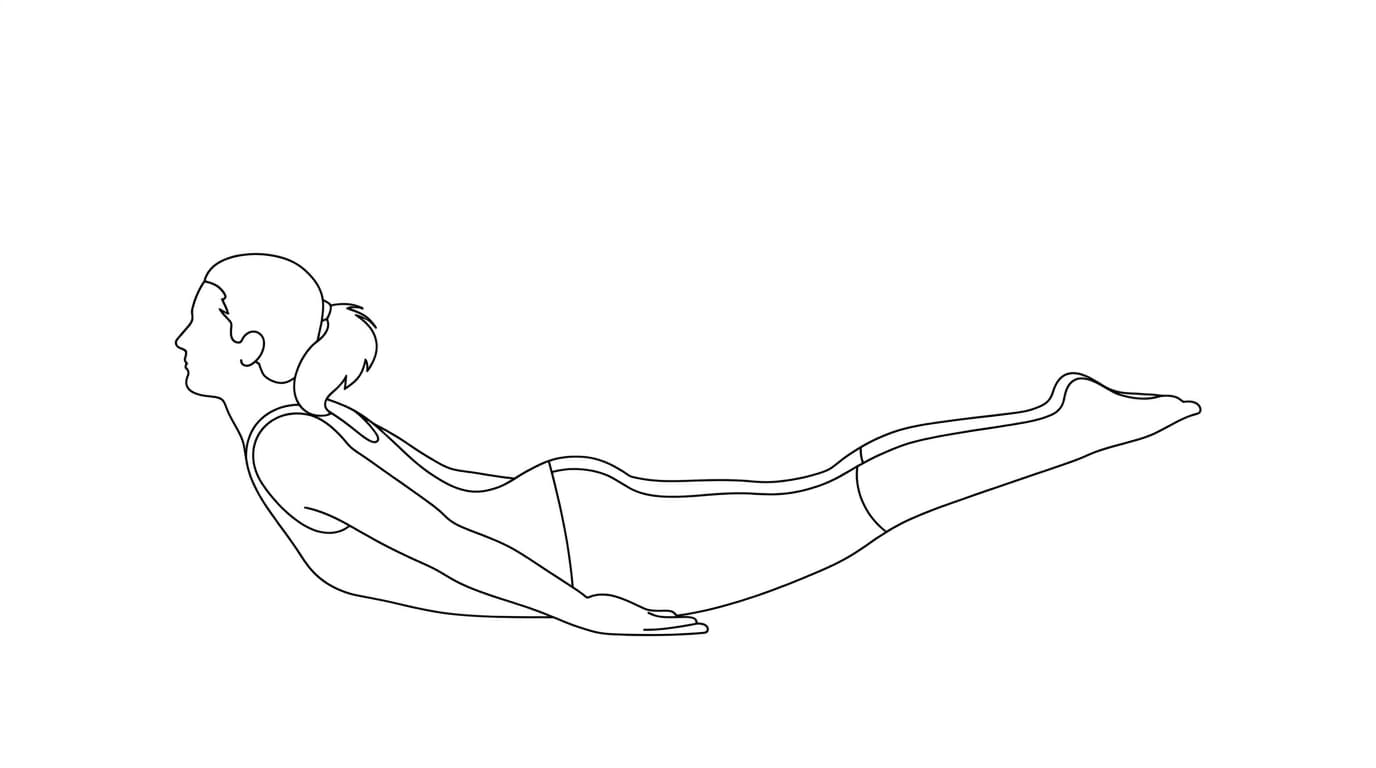
Shalabhasana A (පළඟැටියන් අයි)
Shalabhasana Aशलभासन अ
පළඟැටියන් I ශලභාසන A ලෙස වර්ගීකරණය කර ඇත. මෙහි විස්තර කර ඇති මෘදු පපුව හෝ තනි පාදයේ සෝපානය පහත් පරාසයක ගවේෂණ වේ, පළඟැටි I හි සත්යාපිත පෙළපත-විශේෂිත අනුවාදයක් නොවේ. චලනය පාලනය කර තබාගෙන පිටුපසට ඇණ ගැසීමක් දැනෙනවා නම් නවත්වන්න.
මඟපෙන්වීම විවෘත කරන්න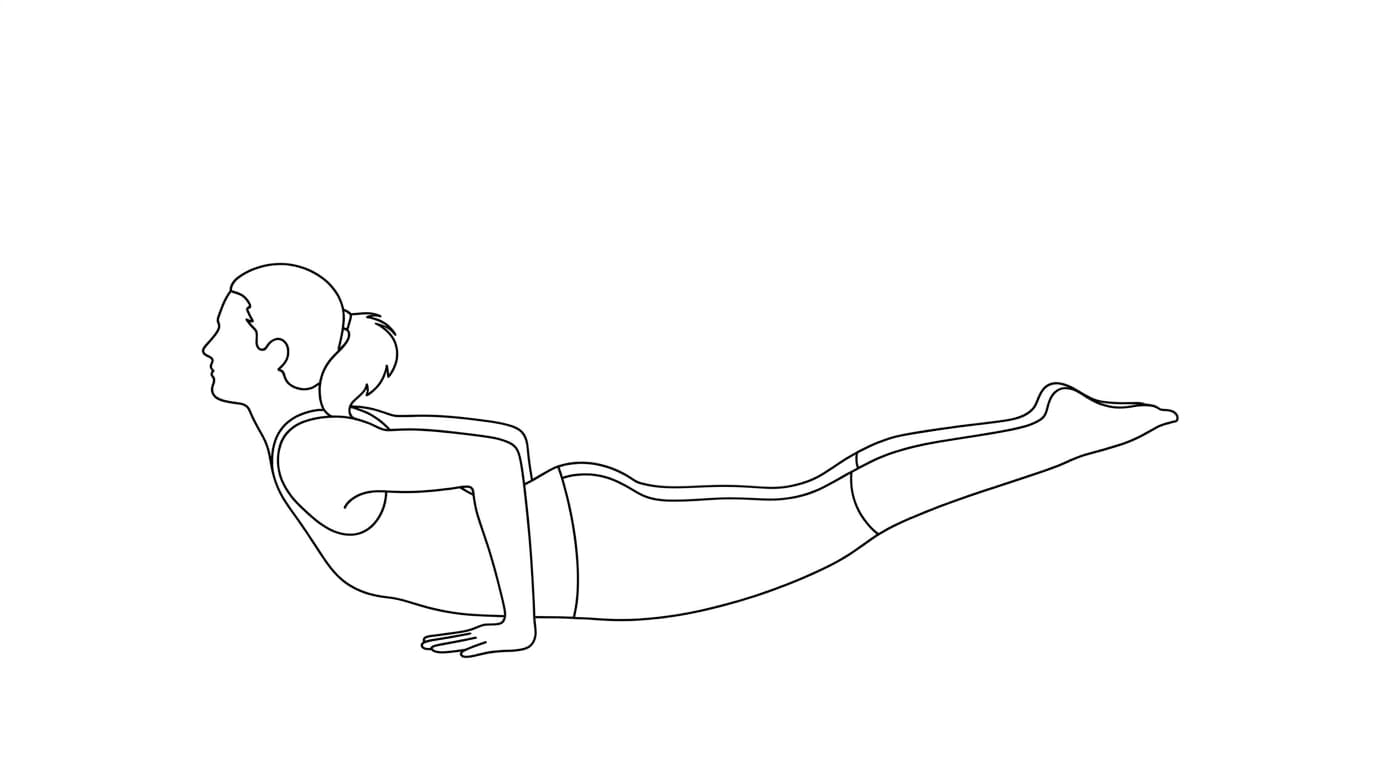
Locust II
Shalabhasana Bशलभासन
Locust II is one variation in the Shalabhasana family, commonly practiced lying face down with some combination of arm or leg lift. The variations differ by school; use a small lift and avoid compressing the lower back or straining the neck.
මඟපෙන්වීම විවෘත කරන්න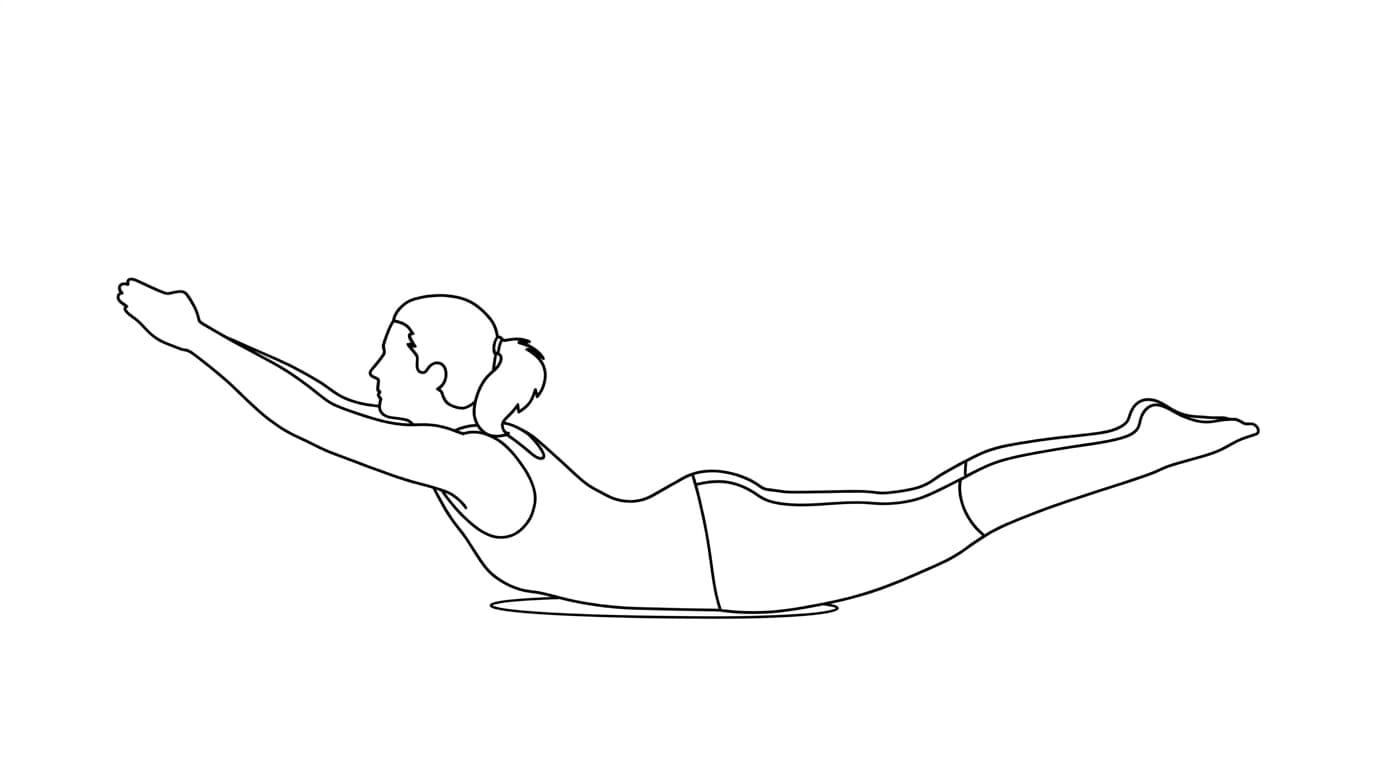
Locust III
Shalabhasana Cशलभासन
Locust III is a named variation in the Shalabhasana family, whose arm and leg arrangements differ among teaching sources. Treat this as a catalog identification rather than a definitive technique; keep any exploration low and stop if the back or neck is strained.
මඟපෙන්වීම විවෘත කරන්න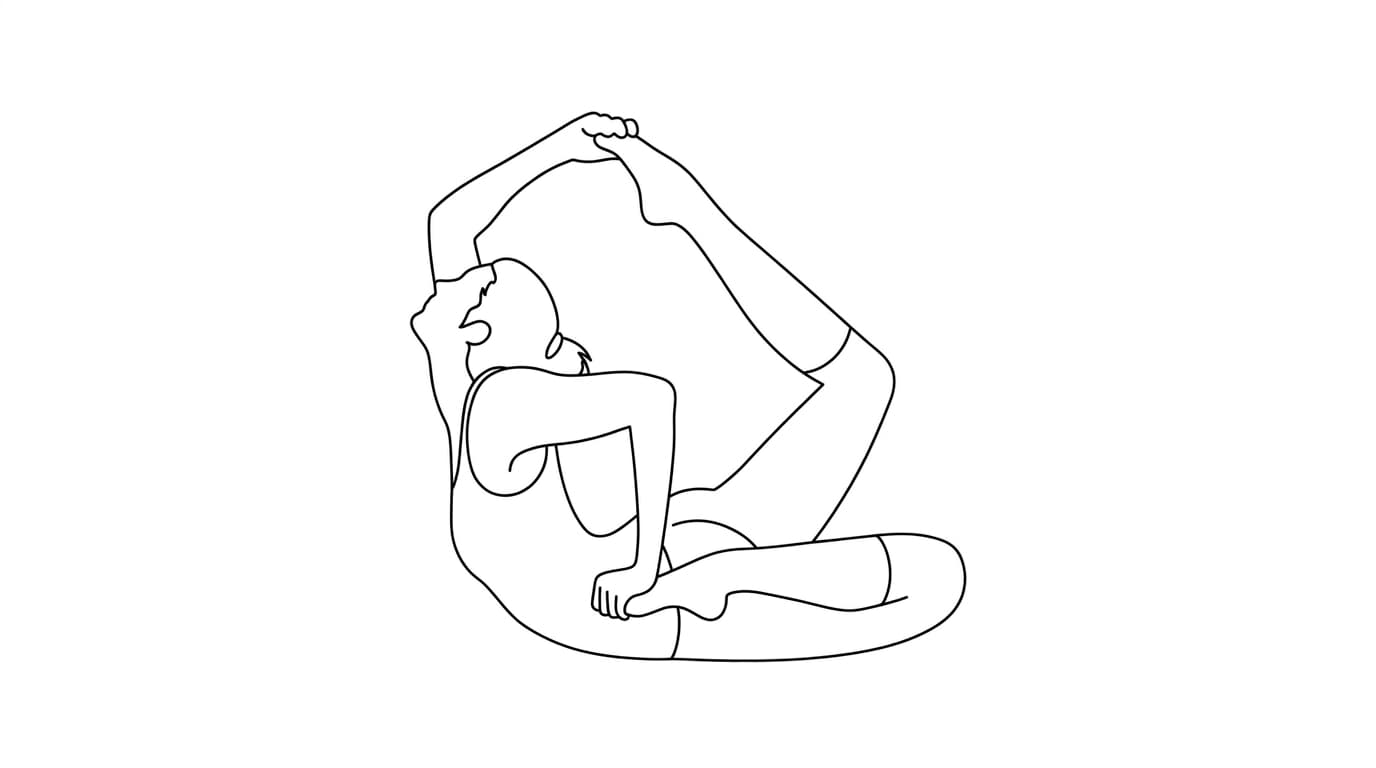
Sage Gheranda's Pose
Gherandasanaघेरण्डासन
Gherandasana is a named advanced posture with differing descriptions across sources. The catalog's prone grouping does not identify a standardized form; verify its source and do not attempt complex binds or balances from text alone.
මඟපෙන්වීම විවෘත කරන්න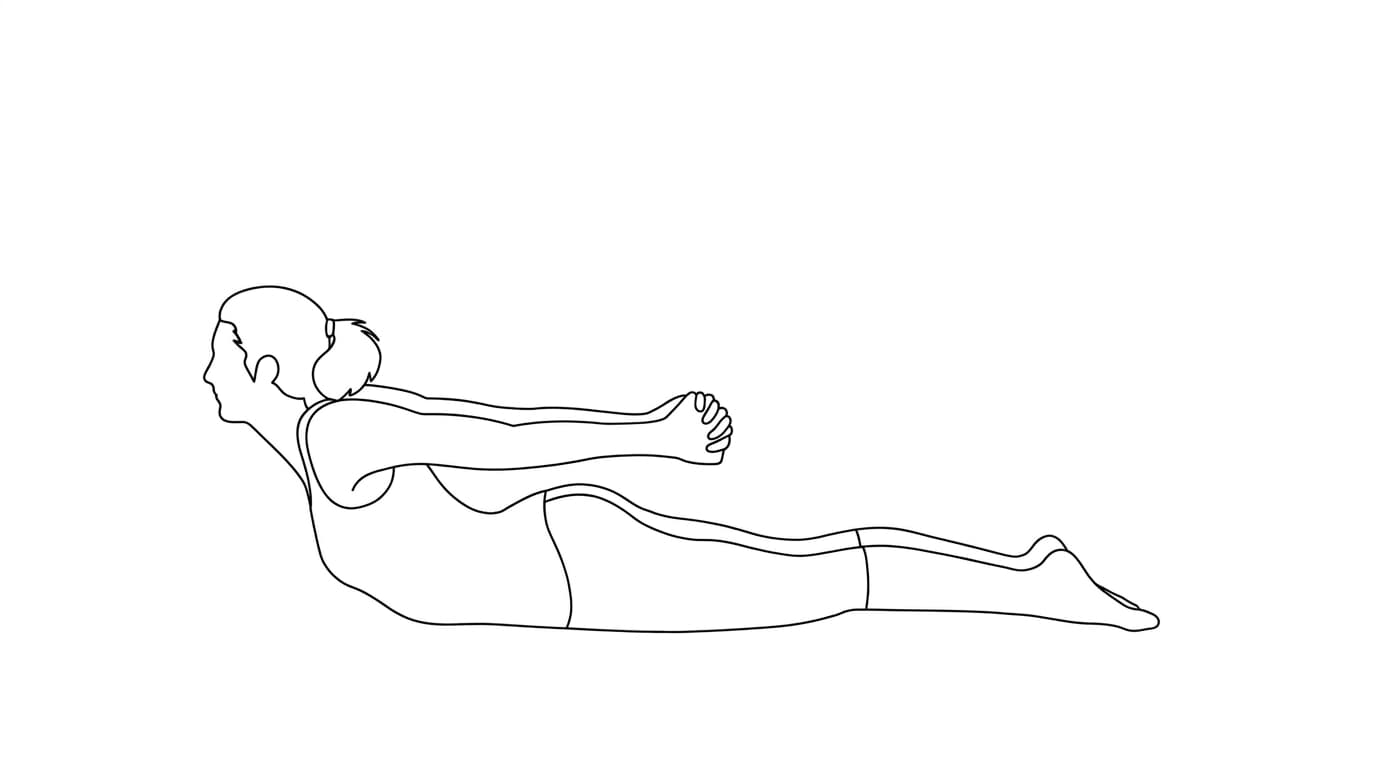
Snake Pose
Sarpasanaसर्पासन
Sarpasana is translated as Snake Pose, but sources use the name for different prone shapes. Confirm the intended version before following detailed cues; keep any prone chest lift low, neck neutral, and breathing unrestricted.
මඟපෙන්වීම විවෘත කරන්න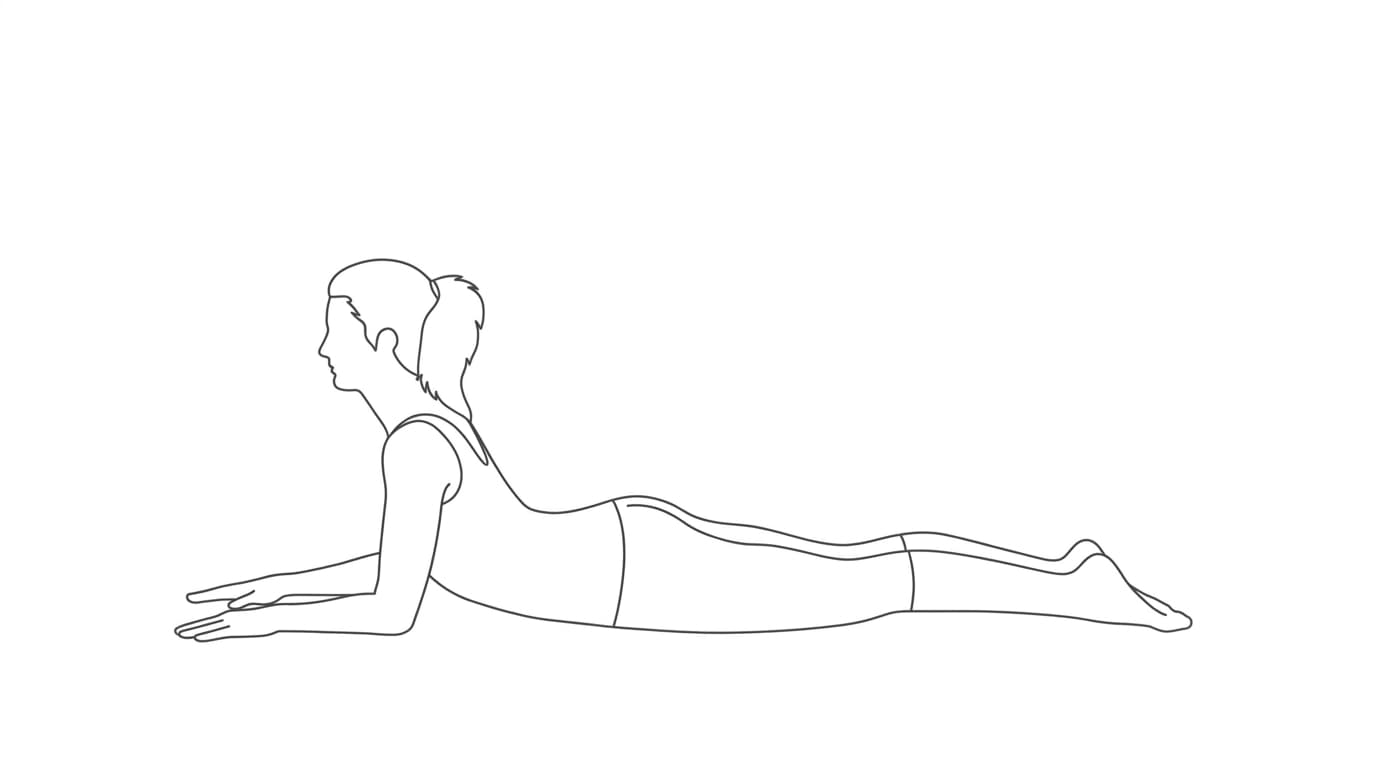
Sphinx Pose
Salamba Bhujangasanaसालम्बभुजङ्गासन
Sphinx Pose is a low prone backbend with the forearms resting on the floor. Keep the elbows where the shoulders feel comfortable and the front of the pelvis grounded; lift the chest only as far as the lower back remains comfortable.
මඟපෙන්වීම විවෘත කරන්න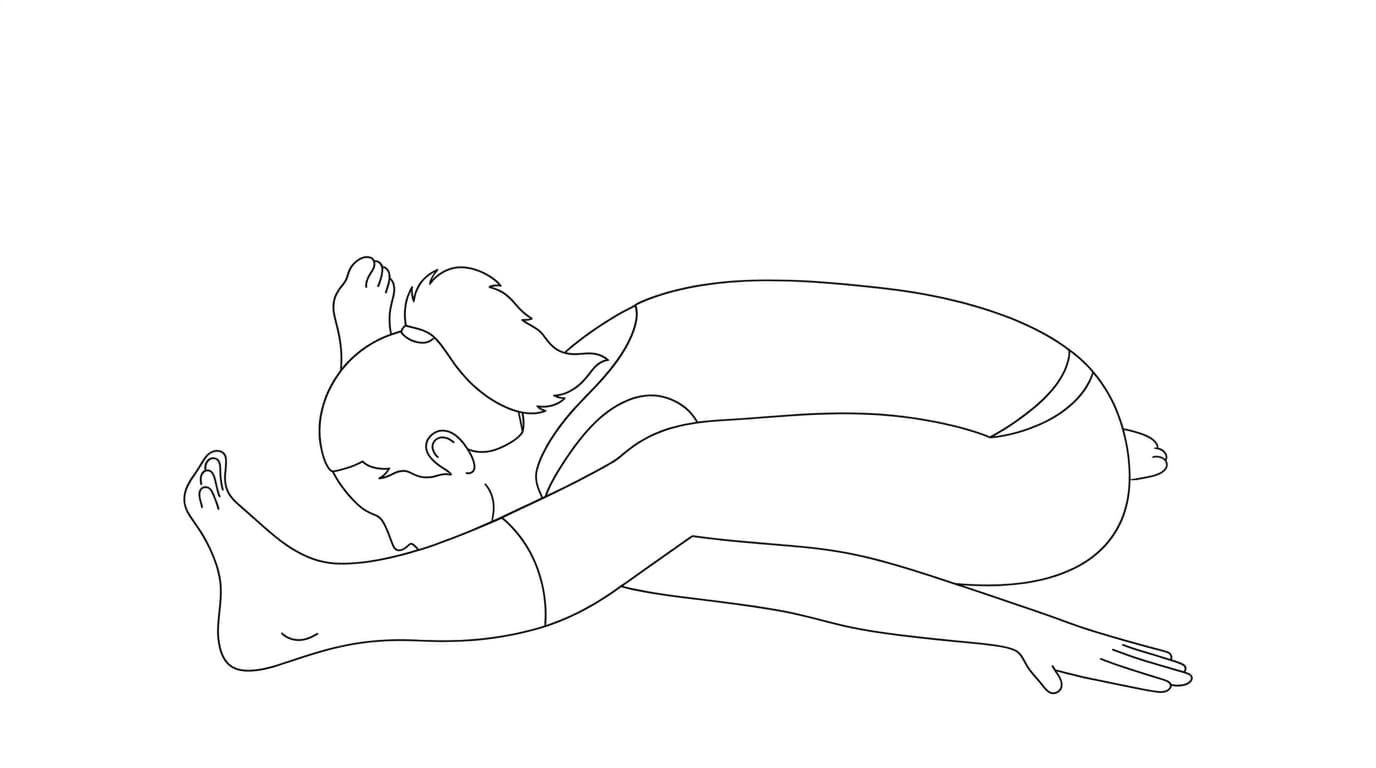
Tortoise Pose
Kurmasanaकूर्मासन
Kurmasana is an advanced seated forward-folding posture with demanding hip and shoulder positions. It should not be forced or learned from text alone; use a qualified teacher, keep the knees supported, and choose a simple seated alternative if there is any strain.
මඟපෙන්වීම විවෘත කරන්නහිඳගෙන සිටින
ඉරියව් 44 ක්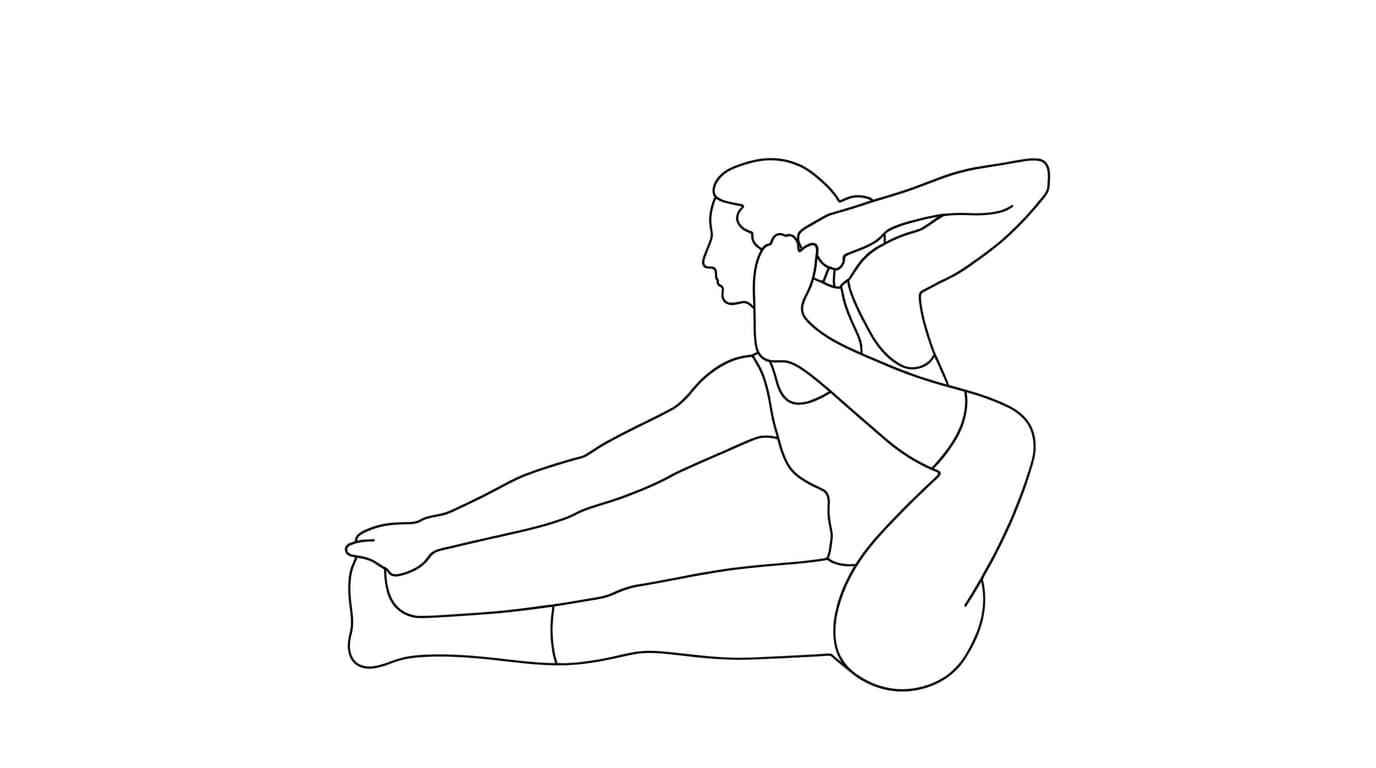
Archer's Pose
Akarna Dhanurasanaआकर्णधनुरासन
Archer's Pose is a seated leg-extension variation in which one foot may draw toward the ear. Keep the spine supported, use a strap, and do not pull the leg toward the head; the full range is not required.
මඟපෙන්වීම විවෘත කරන්න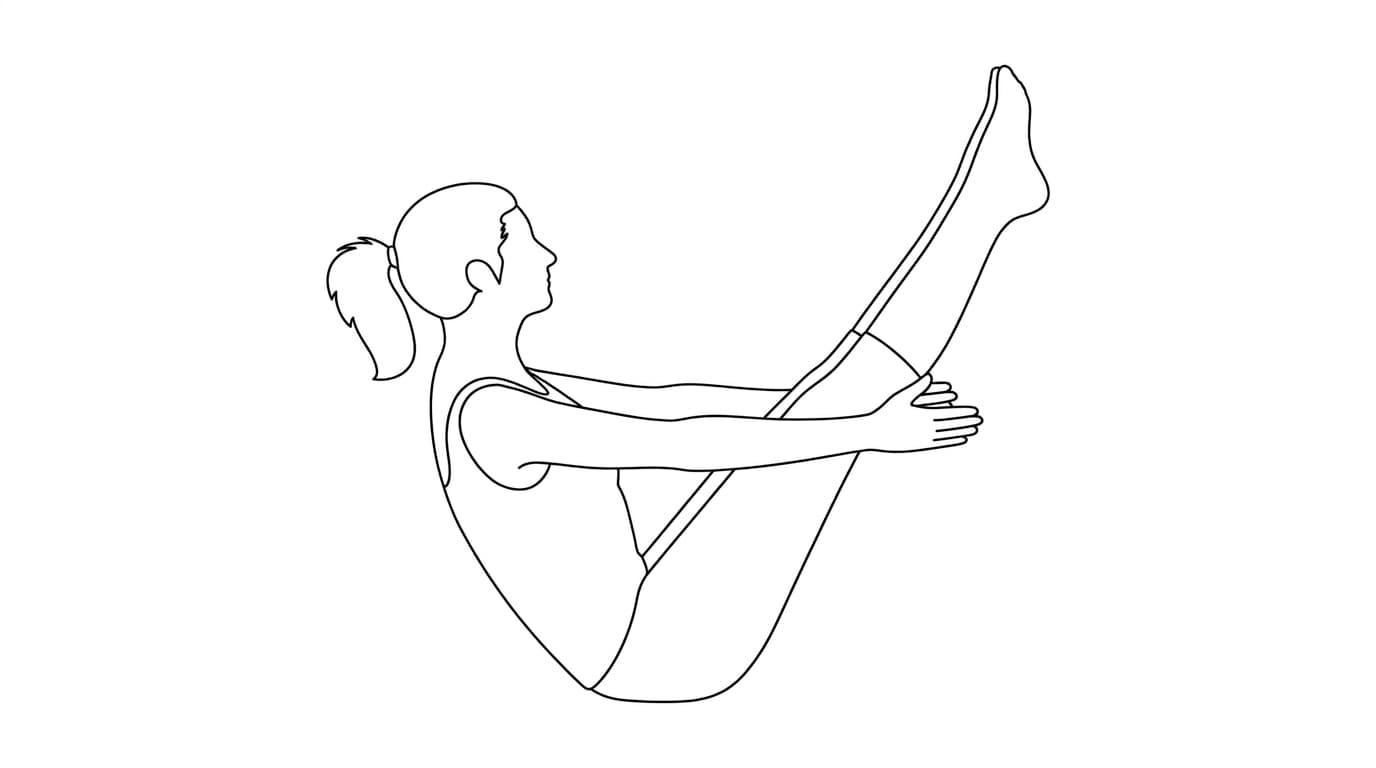
Boat Pose
Navasanaनावासन
Boat Pose is a seated balance that may involve lifting the feet while keeping the torso upright. The feet can stay on the floor, knees can remain bent, and hands can support the thighs; lifting the legs is optional.
මඟපෙන්වීම විවෘත කරන්න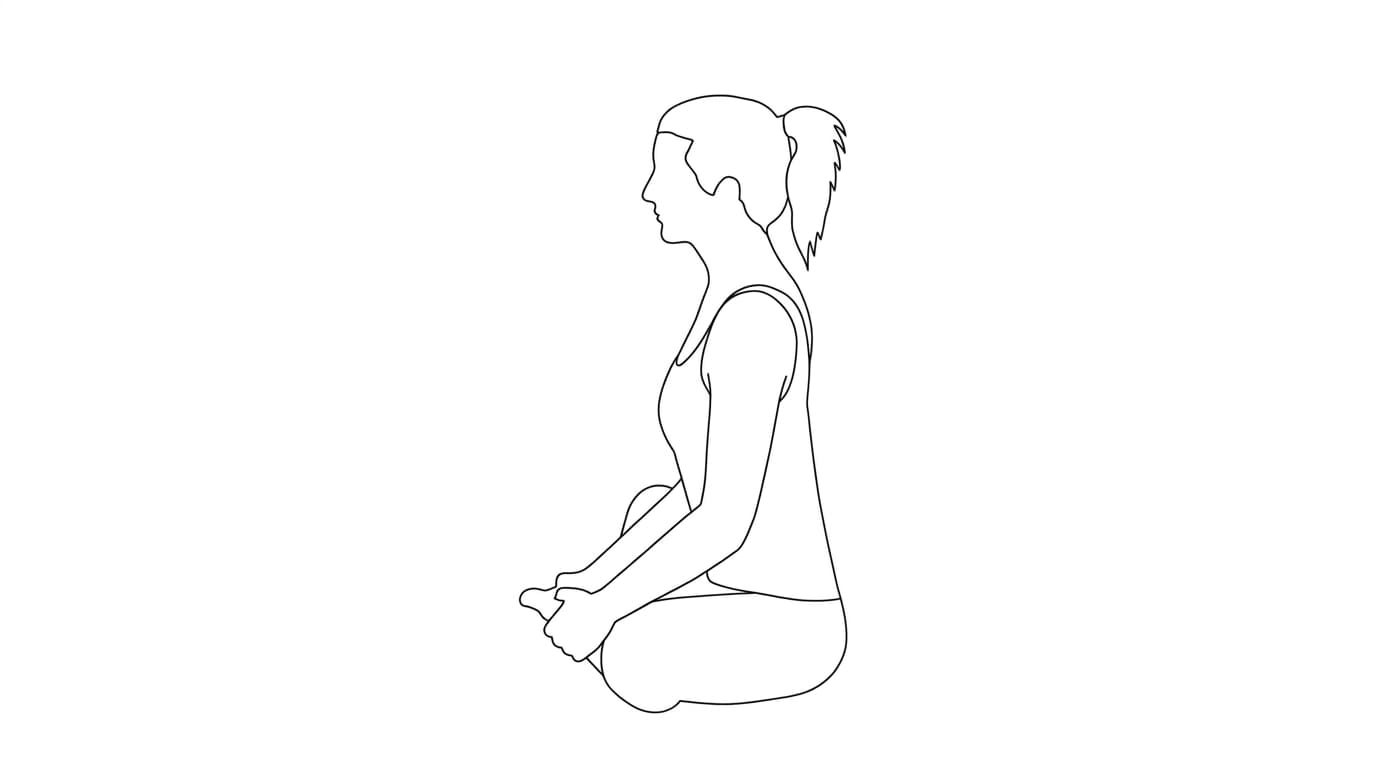
Bound Angle Pose
Baddha Konasanaबद्धकोणासन
Bound Angle Pose brings the soles of the feet together while sitting, with the knees opening to the sides. Keep the feet farther from the pelvis and support the thighs if needed; there is no need to press the knees down.
මඟපෙන්වීම විවෘත කරන්න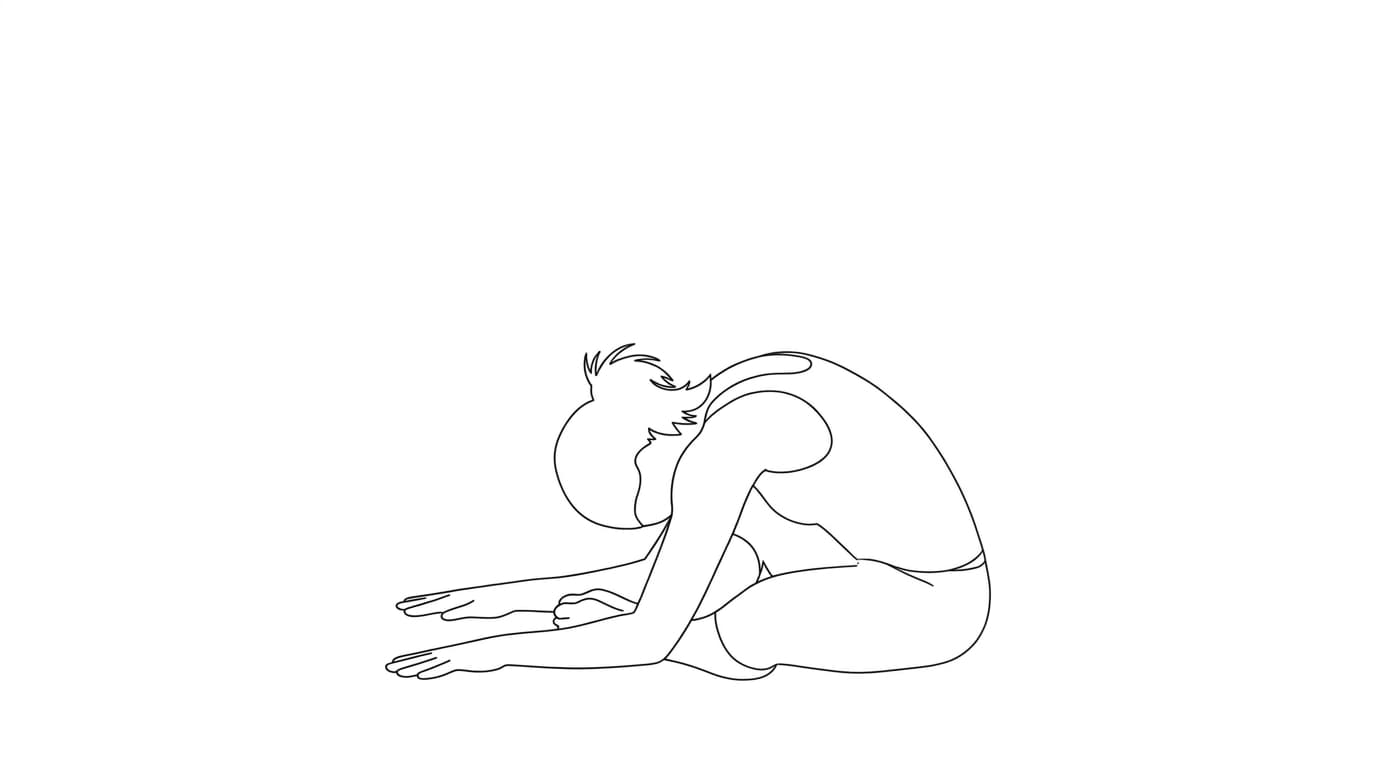
Butterfly Pose
Butterfly Pose is commonly another name for Bound Angle Pose, with the soles of the feet together and knees opening to the sides. The knees do not need to descend; sit on support and keep the feet farther from the pelvis if the hips or knees feel strained.
මඟපෙන්වීම විවෘත කරන්න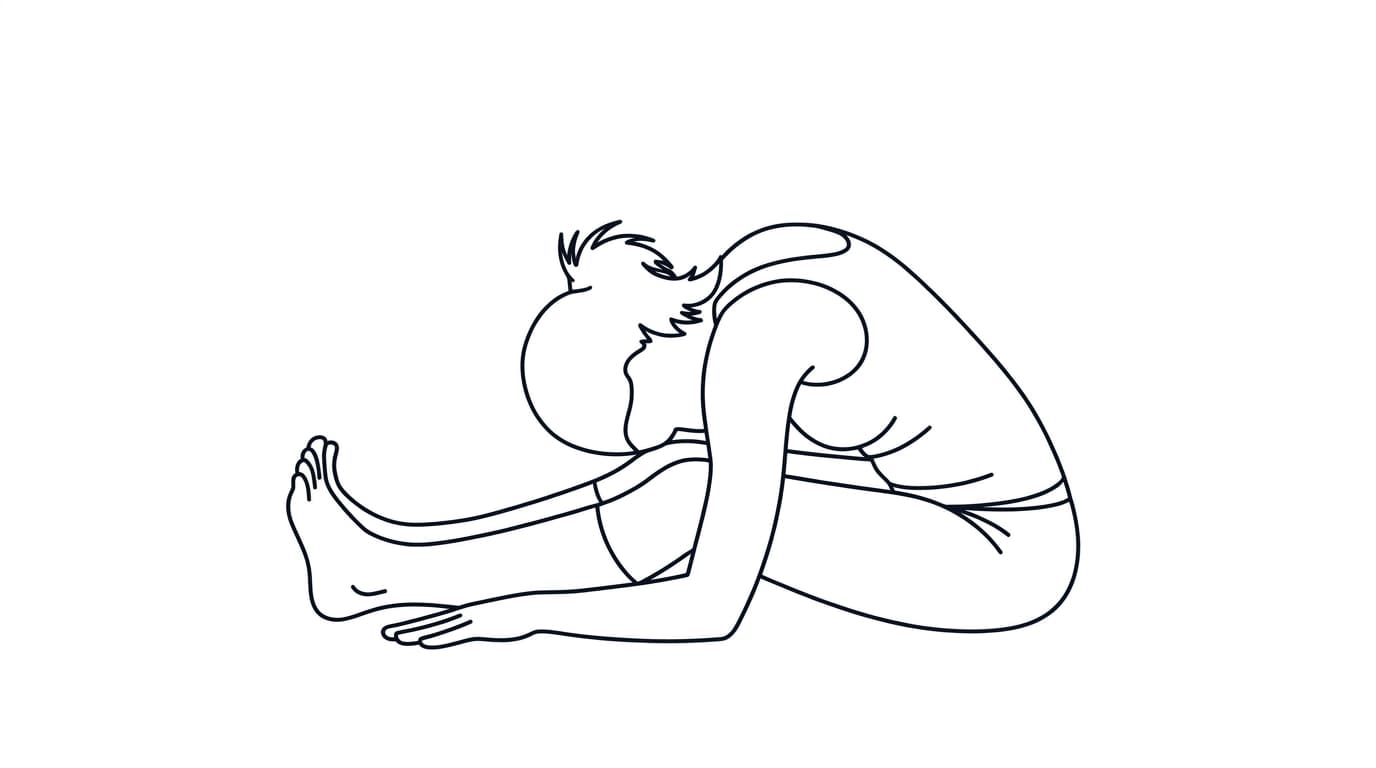
Caterpillar Pose
Caterpillar Pose is a Yin Yoga name for a seated forward fold with the legs extended and the body resting forward. It is not necessary to straighten the legs or round deeply; support the torso and keep the position comfortable.
මඟපෙන්වීම විවෘත කරන්න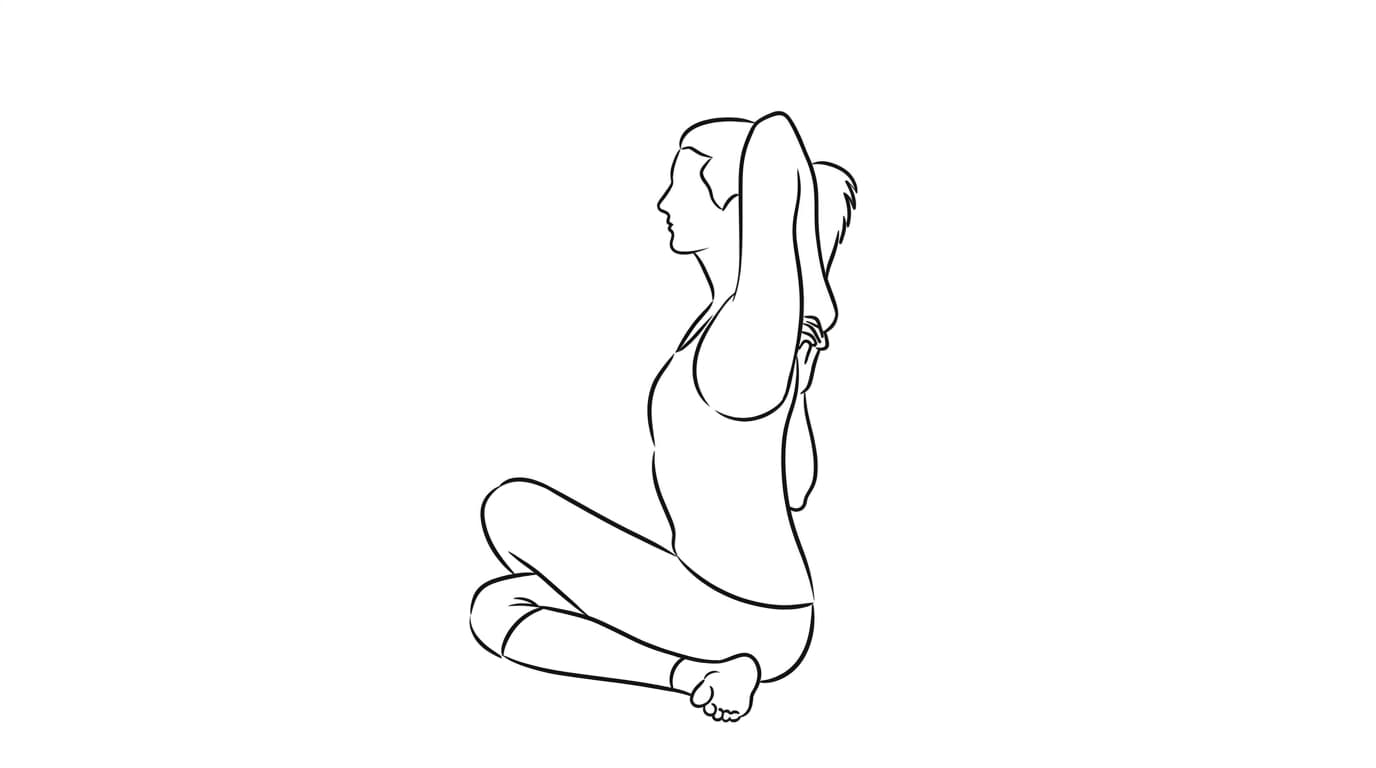
Cow Face Pose
Gomukhasanaगोमुखासन
Cow Face Pose combines a seated leg position with an optional overhead arm bind. The legs and arms can be practiced separately; sit on a support and use a strap rather than pulling the hands together.
මඟපෙන්වීම විවෘත කරන්න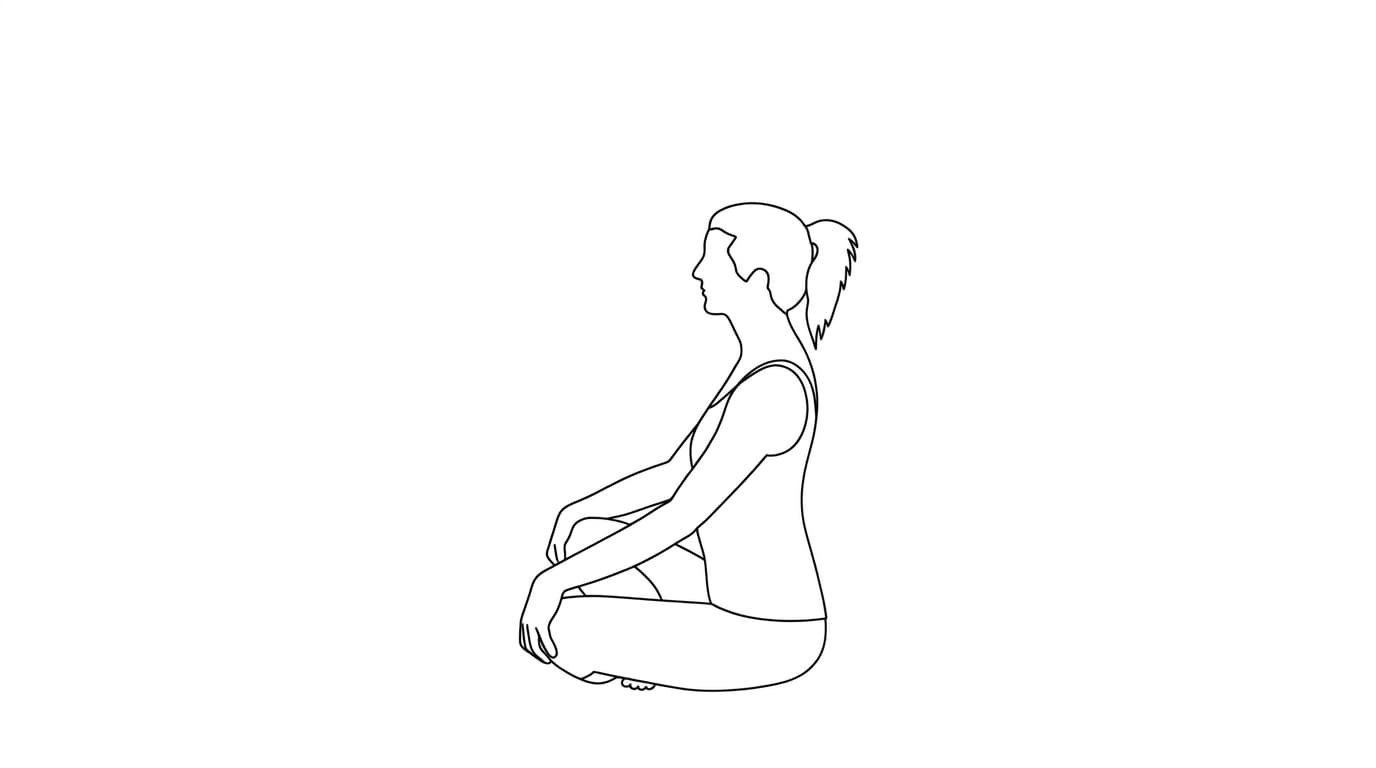
Easy Pose
Sukhasanaसुखासन
Easy Pose is a comfortable cross-legged seat used for breathing, meditation, and rest. It does not need to look symmetrical; sit on a folded blanket or choose a chair if the hips or knees feel strained.
මඟපෙන්වීම විවෘත කරන්න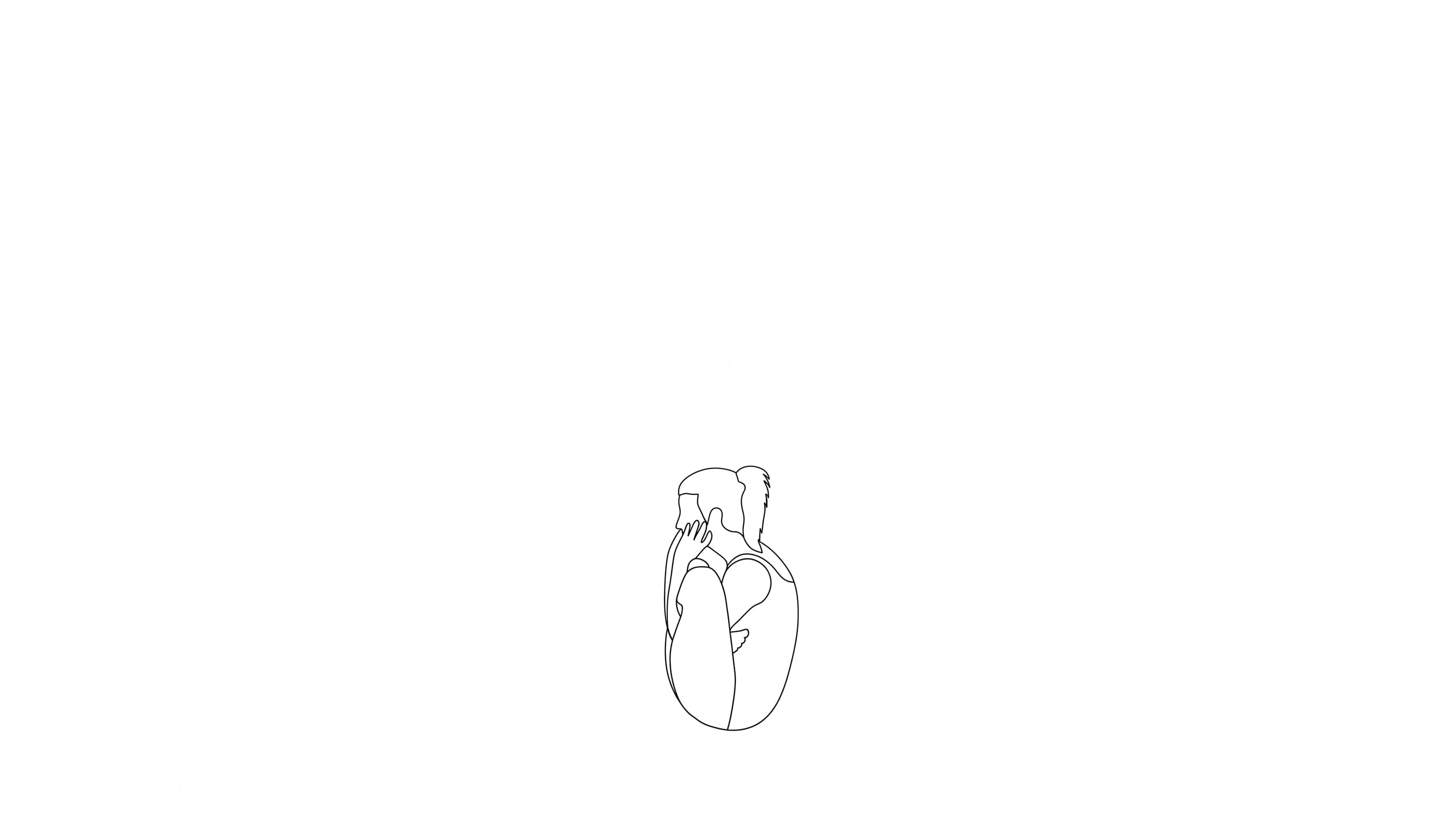
Embryo in Womb
Garbha Pindasanaगर्भपिण्डासन
Garbha Pindasana is an advanced bound seated posture involving a lotus-style leg position and arms threaded through the legs. It can strain knees and shoulders; this page does not provide entry steps and recommends qualified in-person instruction.
මඟපෙන්වීම විවෘත කරන්න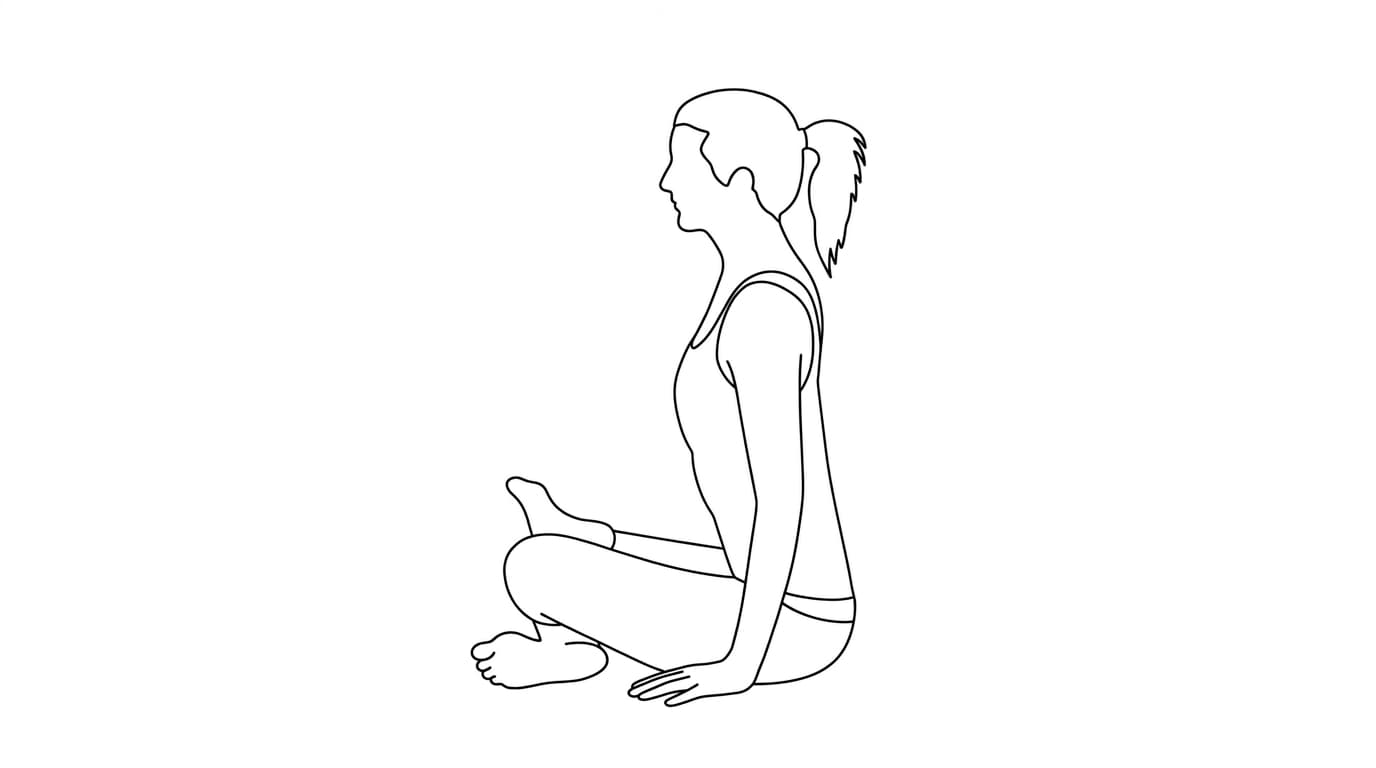
Fire Log Pose
Agnistambhasanaअग्निस्तम्भासन
Fire Log Pose is a seated hip position in which the shins may be stacked. It can place substantial demand on the hips and knees; keep the feet away from the knees, support the legs, and choose a simpler seat if there is pressure or pain.
මඟපෙන්වීම විවෘත කරන්න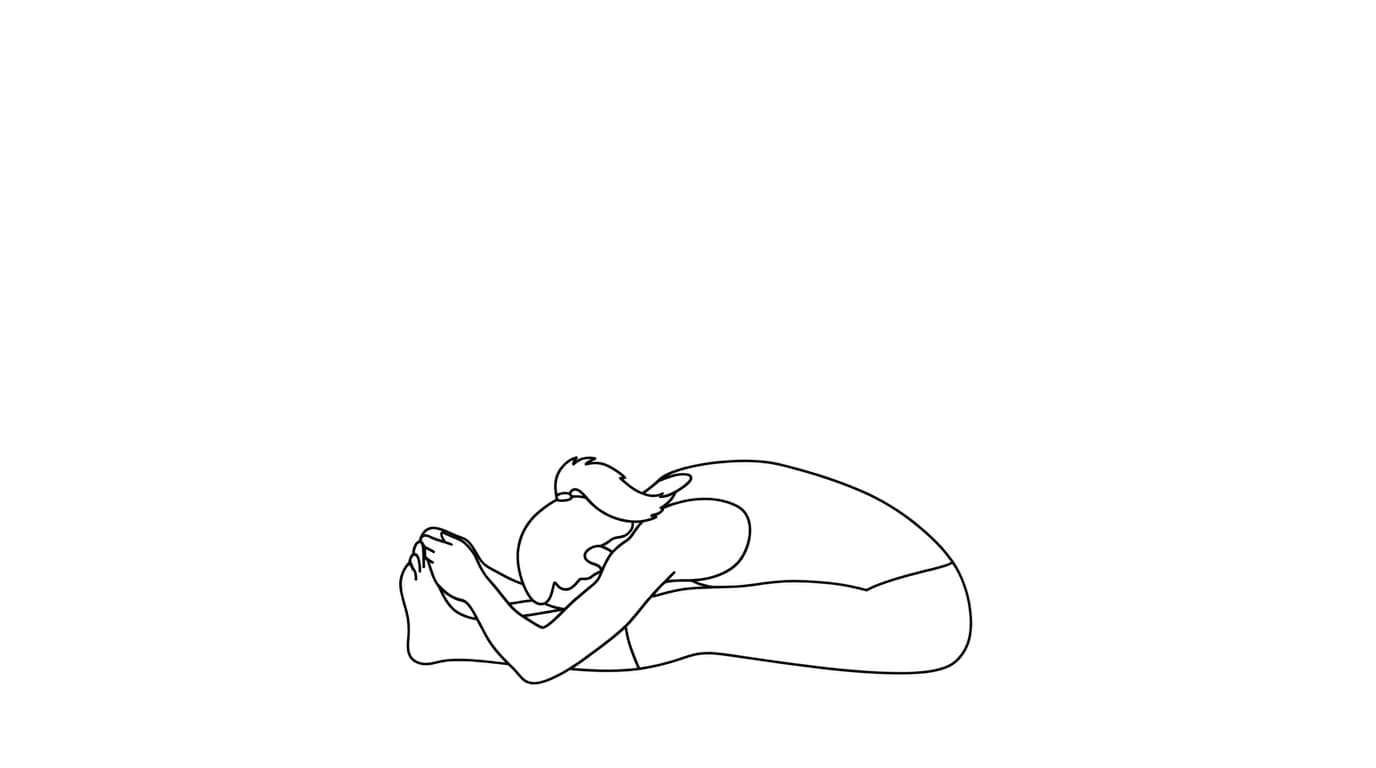
Paschimottanasana A (වාඩි වී සිටින ඉදිරි වංගුව I)
Paschimottanasana Aपश्चिमोत्तानासन
වාඩි වී සිටින ඉදිරි වංගුව I Paschimottanasana A ලෙස ලැයිස්තුගත කර ඇත. මෙම පිටුව A හි පෙළපත-විශේෂිත අනුවාදයකට වඩා මෘදු, නැමුණු දණහිස සකස් කිරීමක් ලබා දෙයි. පාදවලට ළඟා වීම හෝ කඳ කලවා වෙත ගෙන ඒම අවශ්ය නොවේ; ආධාරකයක් භාවිතා කර වික්රියා කිරීමට පෙර නතර කරන්න.
මඟපෙන්වීම විවෘත කරන්න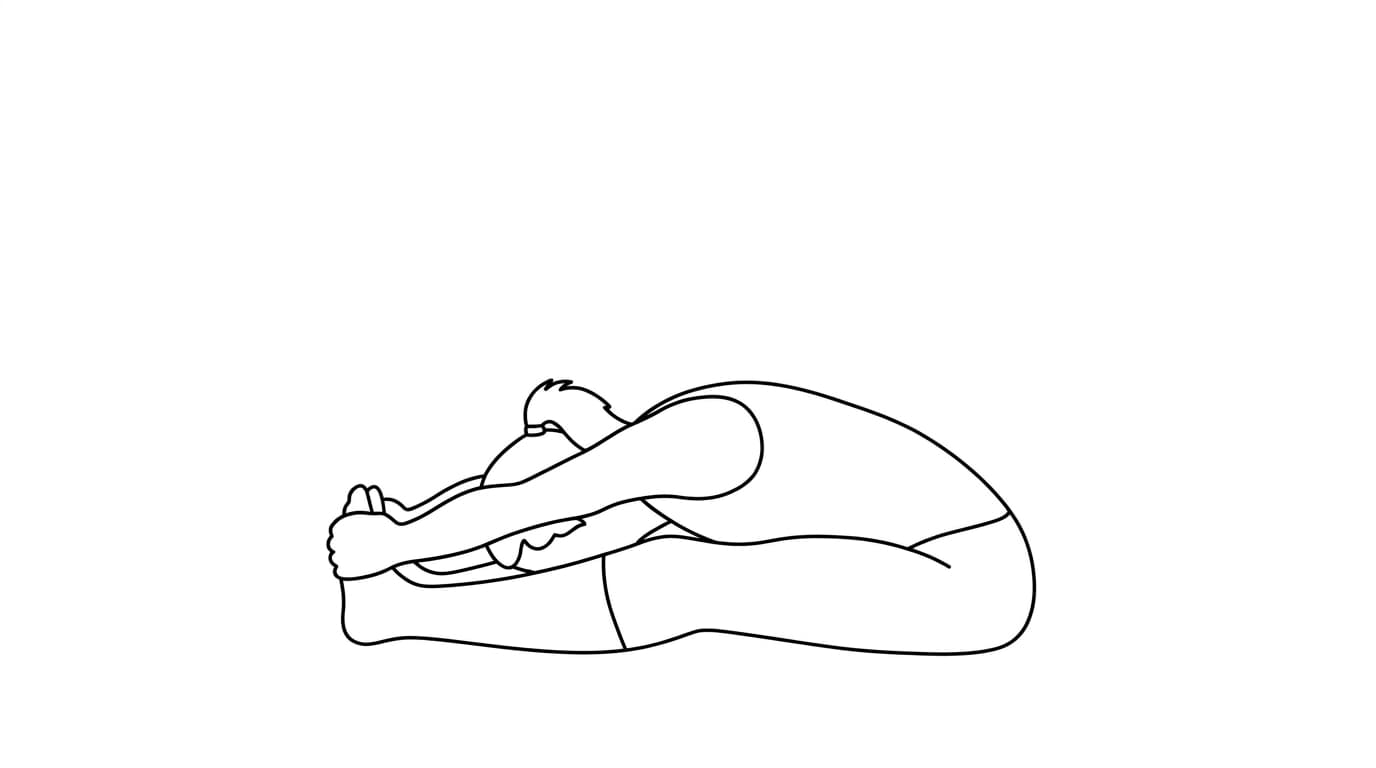
Seated Forward Bend II
Paschimottanasana Bपश्चिमोत्तानासन
Seated Forward Bend II is a named variation in the Paschimottanasana family, but the catalog does not specify its method-specific leg or hand arrangement. Use a supported seated fold with bent knees and verify the exact version before teaching its variant cues.
මඟපෙන්වීම විවෘත කරන්න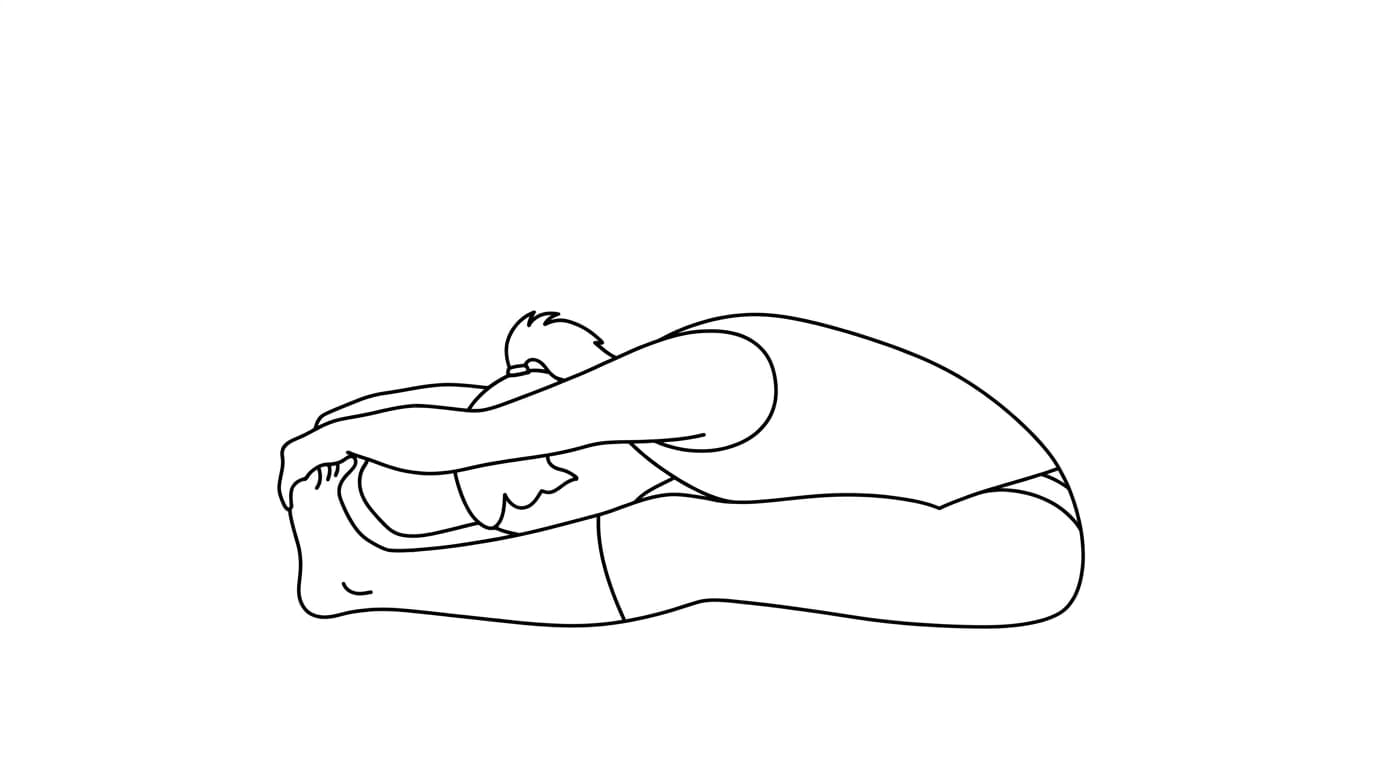
Seated Forward Bend III
Paschimottanasana Cपश्चिमोत्तानासन
Seated Forward Bend III is a lettered Paschimottanasana variation whose exact setup is not specified by the catalog. Use a gentle supported seated fold and do not infer a distinctive hand or leg position without verifying the teaching source.
මඟපෙන්වීම විවෘත කරන්න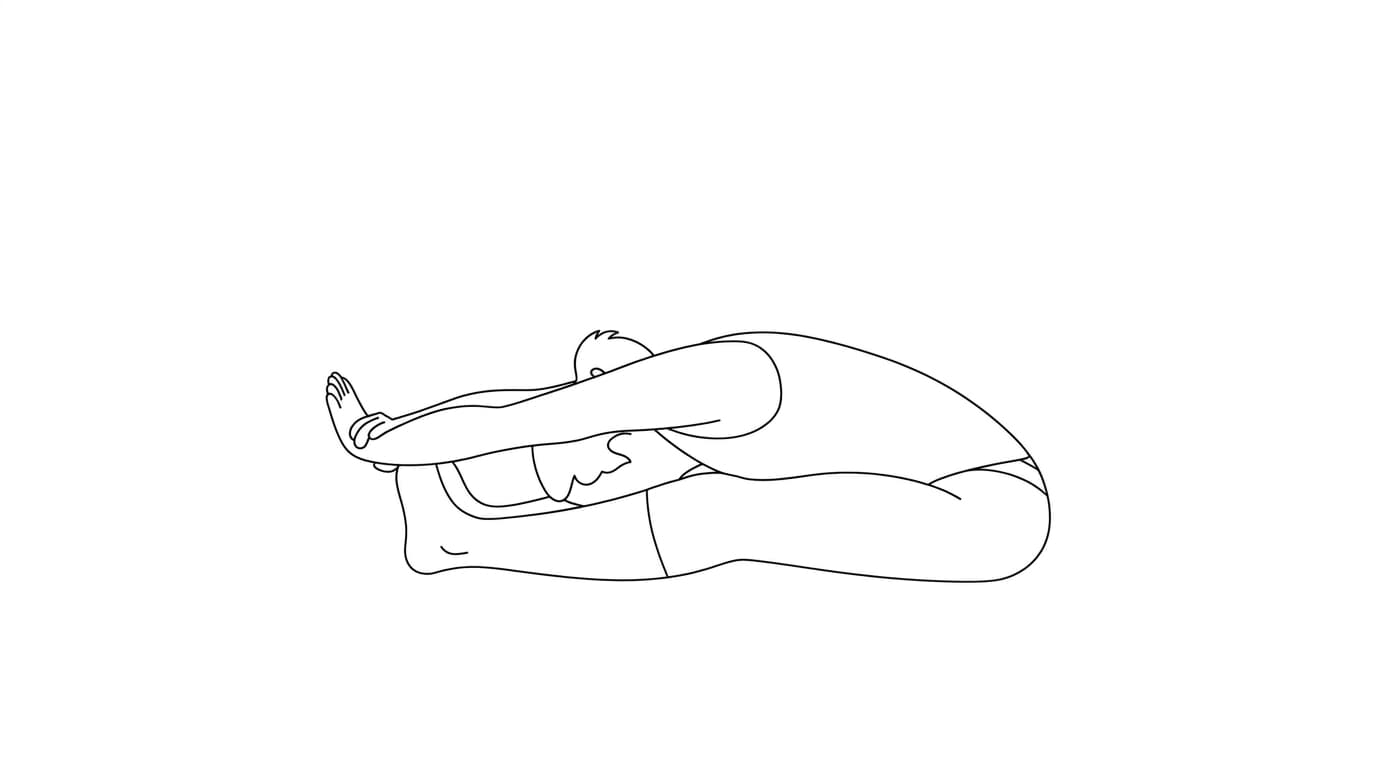
Seated Forward Bend IV
Paschimottanasana Dपश्चिमोत्तानासन
Seated Forward Bend IV is a named Paschimottanasana variation, but its defining arrangement is not given in the catalog. Use a gentle supported fold and verify the exact D variation with a qualified source before publishing distinctive technique.
මඟපෙන්වීම විවෘත කරන්න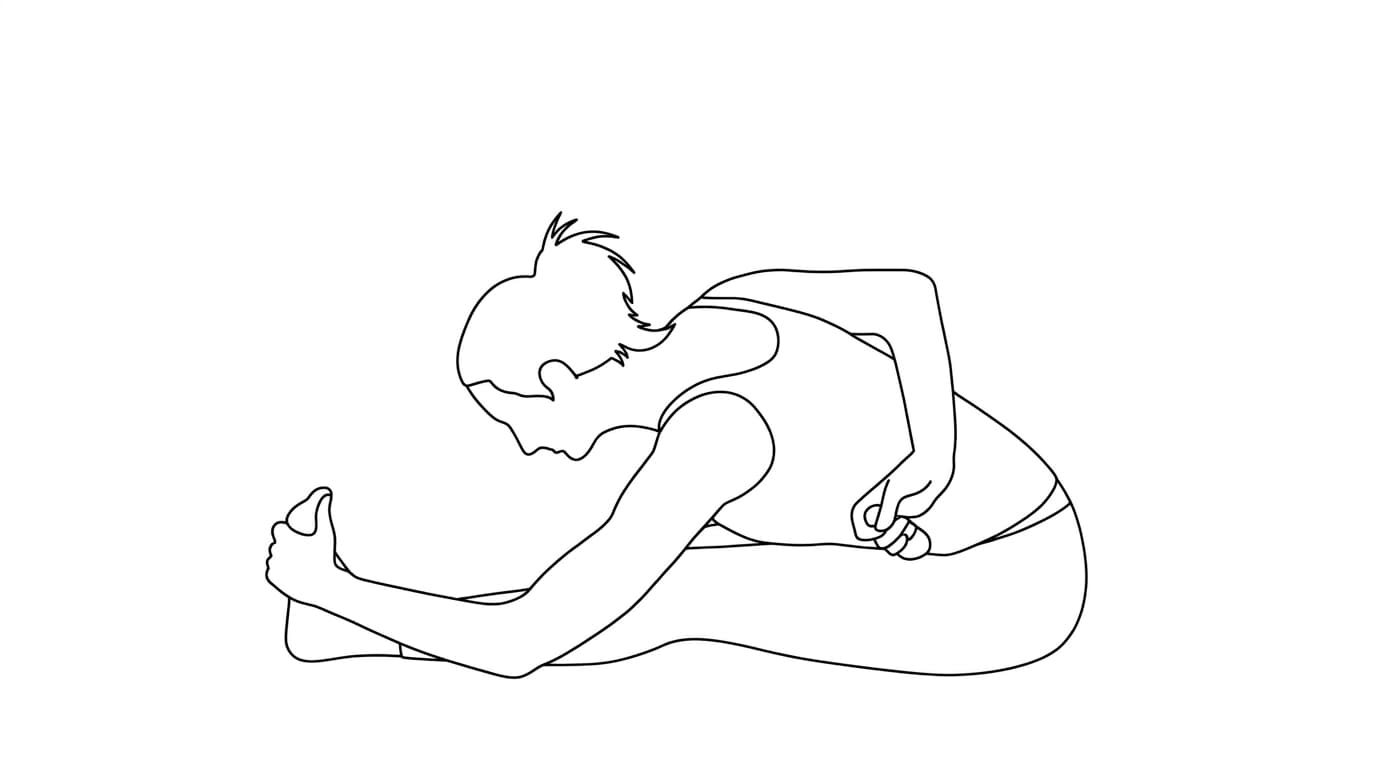
Seated Half Bound Lotus Forward Bend
Ardha Baddha Padma Paschimottanasanaअर्धबद्धपद्मपश्चिमोत्तानासन
Seated Half Bound Lotus Forward Bend combines a half-lotus leg position, a bind, and a forward fold. It can strain the knee and hip; never force the foot into Lotus, and learn the specific variation from a qualified teacher.
මඟපෙන්වීම විවෘත කරන්න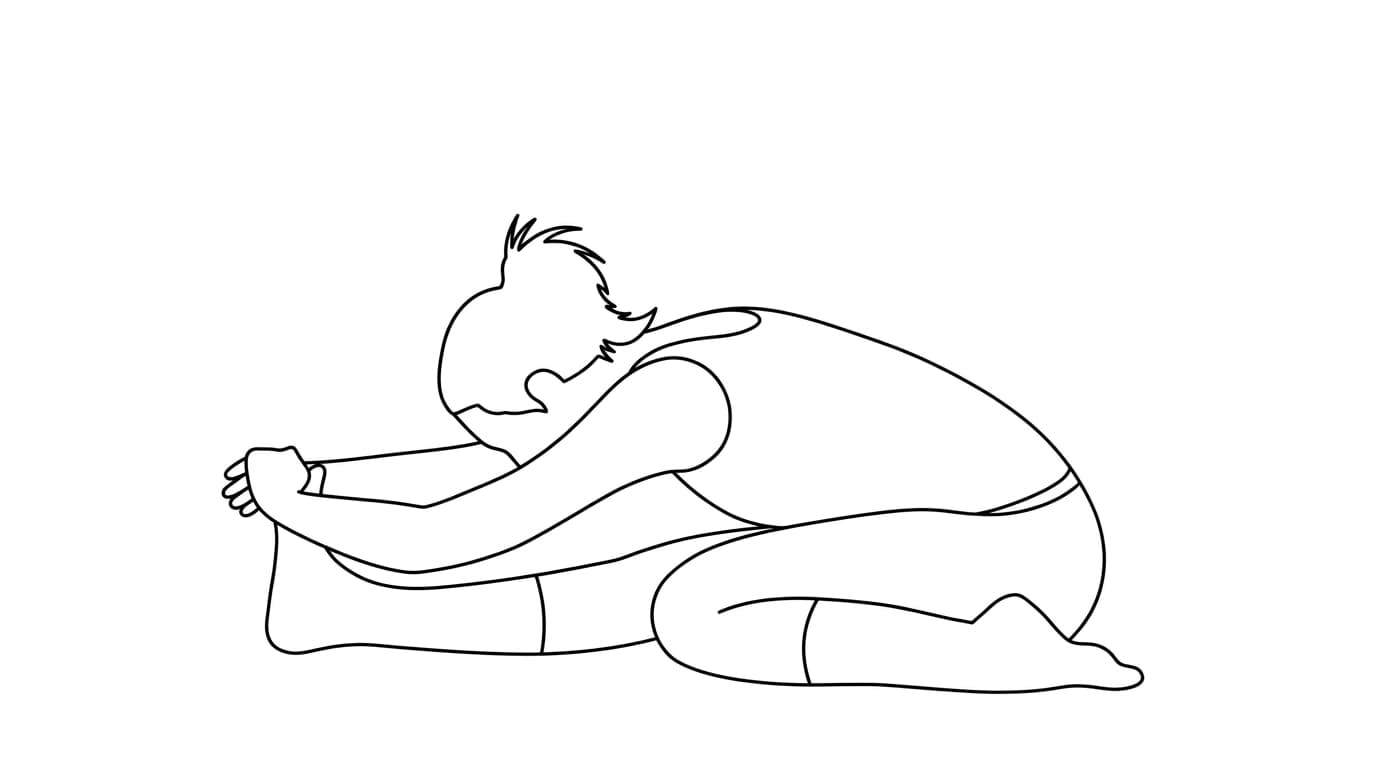
Seated Three-Limbed Forward Bend
Trianga Mukha Eka Pada Paschimottanasanaत्र्यङ्गमुखैकपादपश्चिमोत्तानासन
Seated Three-Limbed Forward Bend combines one extended leg with the other leg folded beside the hip. Pad the folded ankle and knee, sit higher if needed, and keep the torso upright rather than forcing a forward fold.
මඟපෙන්වීම විවෘත කරන්න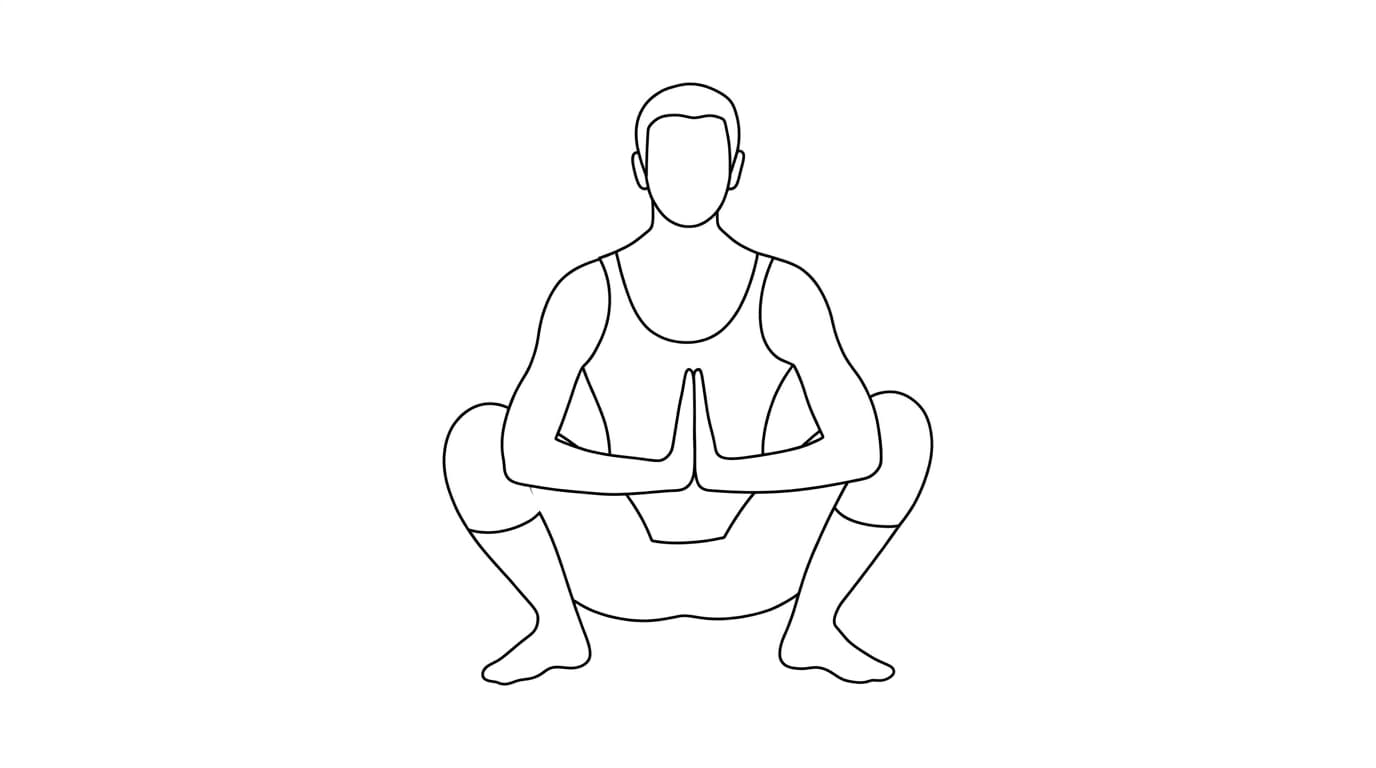
Garland Pose
Malasanaमालासन
Garland Pose is a low squat with the feet grounded and the torso upright or gently inclined. Use a support under the heels or sit on a block if the ankles, knees, or hips do not comfortably allow the full squat.
මඟපෙන්වීම විවෘත කරන්න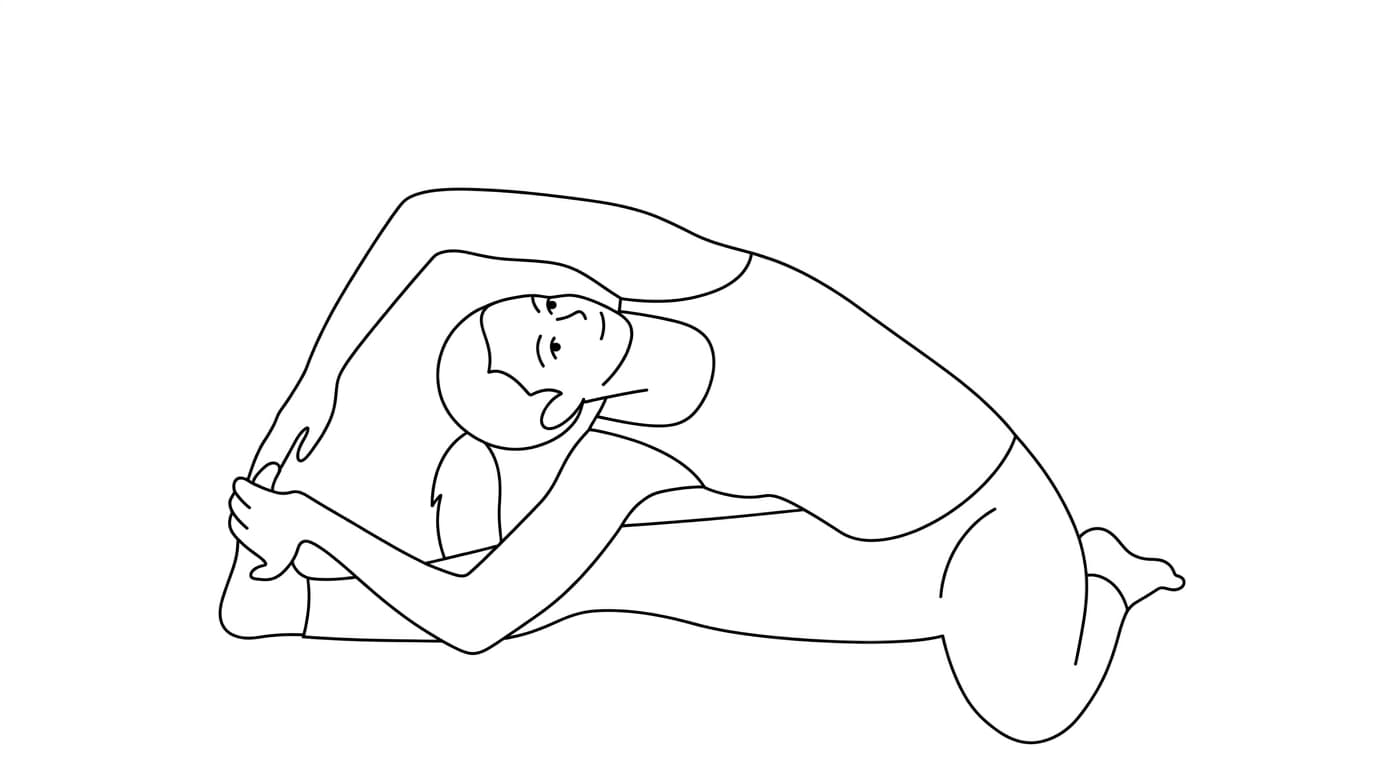
Seated Gate Pose
Parighasanaपरिघासन
Seated Gate Pose is a side-reaching position practiced from a seated base, though the catalog name may overlap with kneeling Gate Pose. Keep both sitting bones supported, use a chair or bolster, and verify which version is intended.
මඟපෙන්වීම විවෘත කරන්න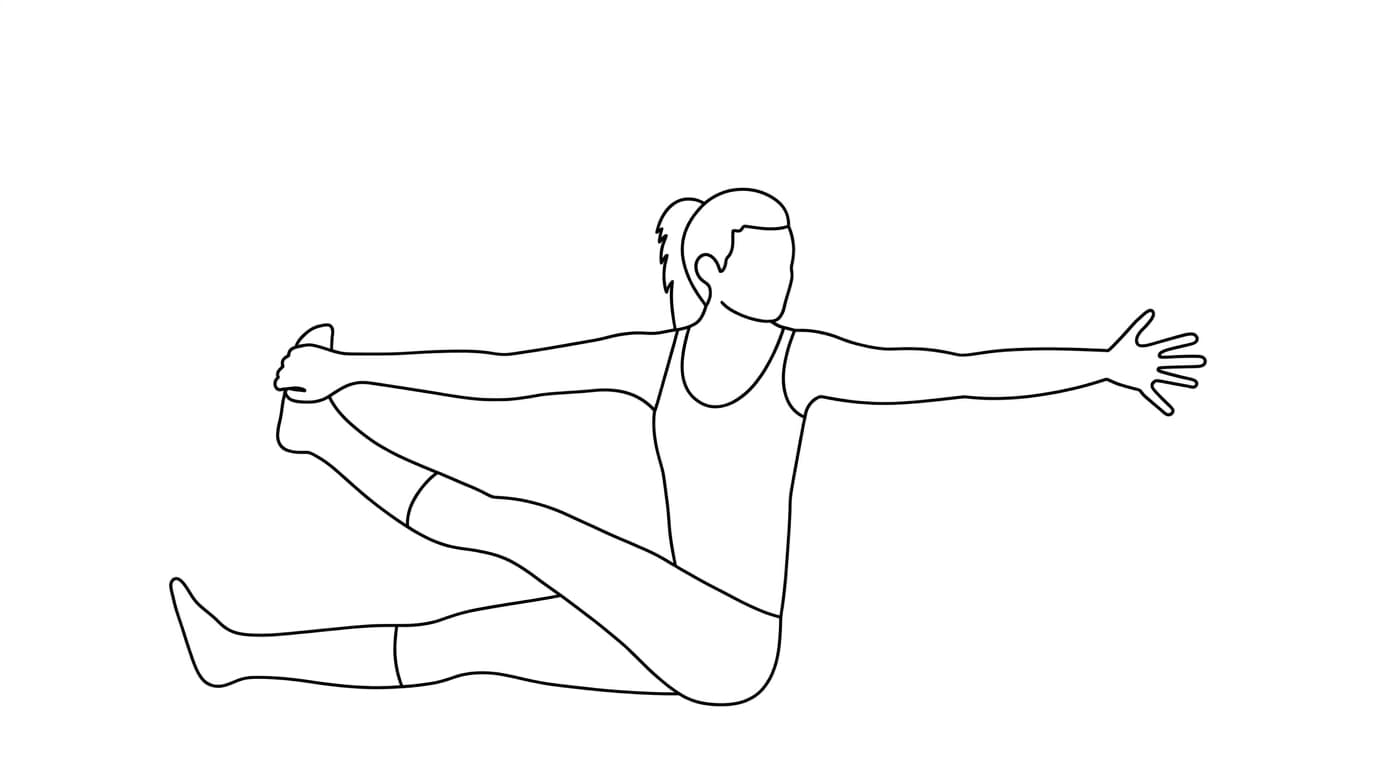
Revolved Seated Hand to Big Toe
Upavishta Parivritta Hasta Padangushthasanaउपविष्टपरिवृत्तहस्तपादाङ्गुष्ठासन
Revolved Seated Hand to Big Toe combines a seated leg lift, rotation, and a foot hold. It requires balance and mobility; keep the leg supported with a strap and omit the twist unless a qualified teacher has shown the specific form.
මඟපෙන්වීම විවෘත කරන්න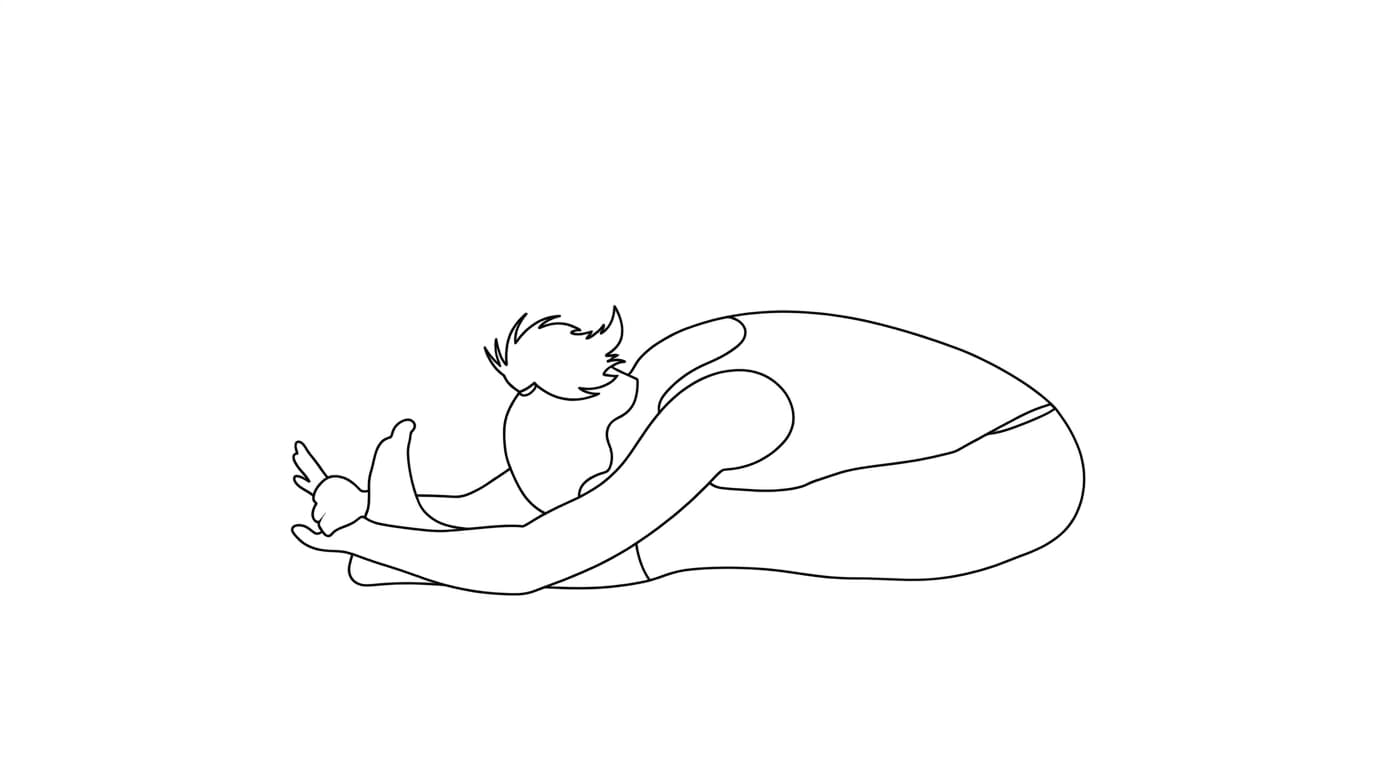
Head to Knee I
Janu Sirsasana Aजानु शीर्षासन
Head to Knee I is an asymmetric seated forward bend with one leg extended and the other bent. The torso can remain upright; a strap and a bent extended-leg knee can reduce strain, and touching the head to the knee is not required.
මඟපෙන්වීම විවෘත කරන්න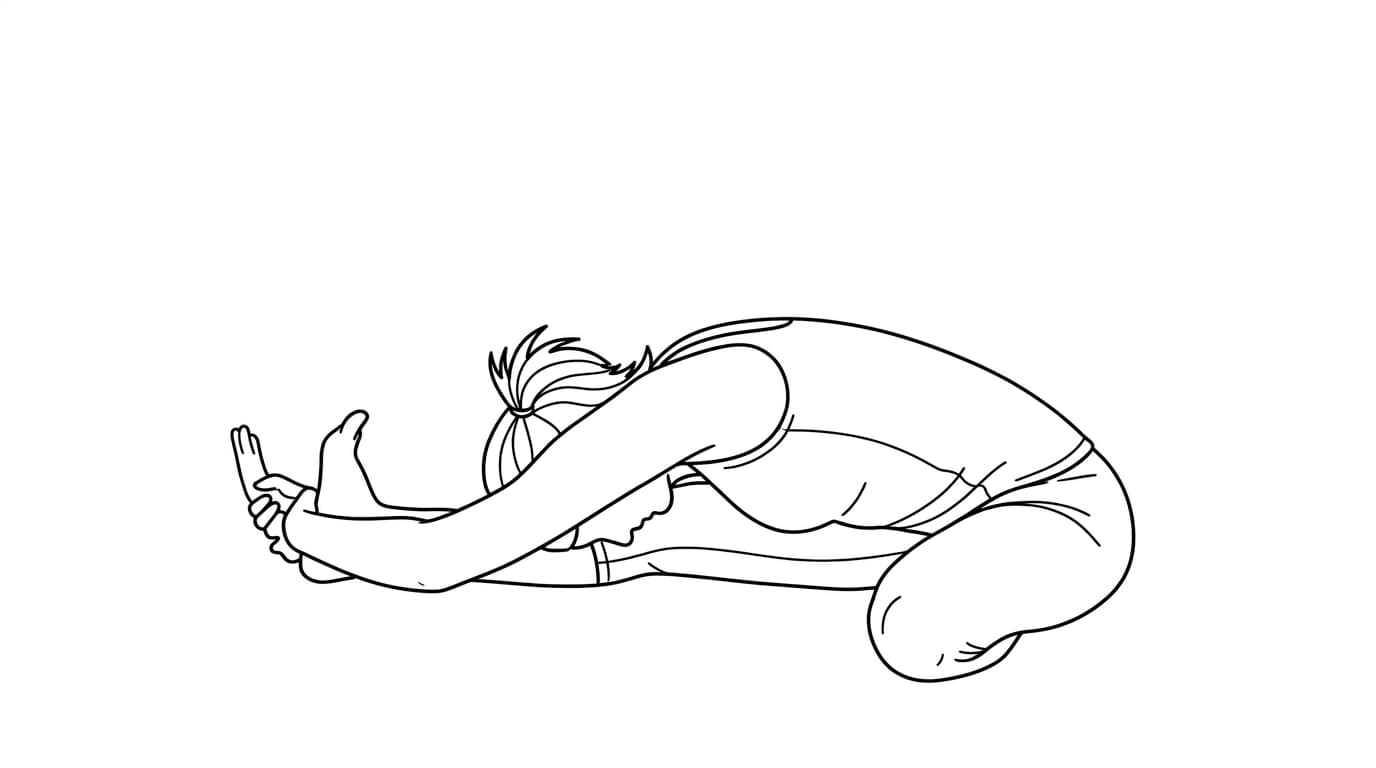
Head to Knee II
Janu Sirsasana Bजानु शीर्षासन
Head to Knee II is a variation in the Janu Sirsasana family with an altered bent-leg foot position. The precise setup differs among methods and may stress the knee; use only a version taught in person and choose the simpler A variation or a chair if uncomfortable.
මඟපෙන්වීම විවෘත කරන්න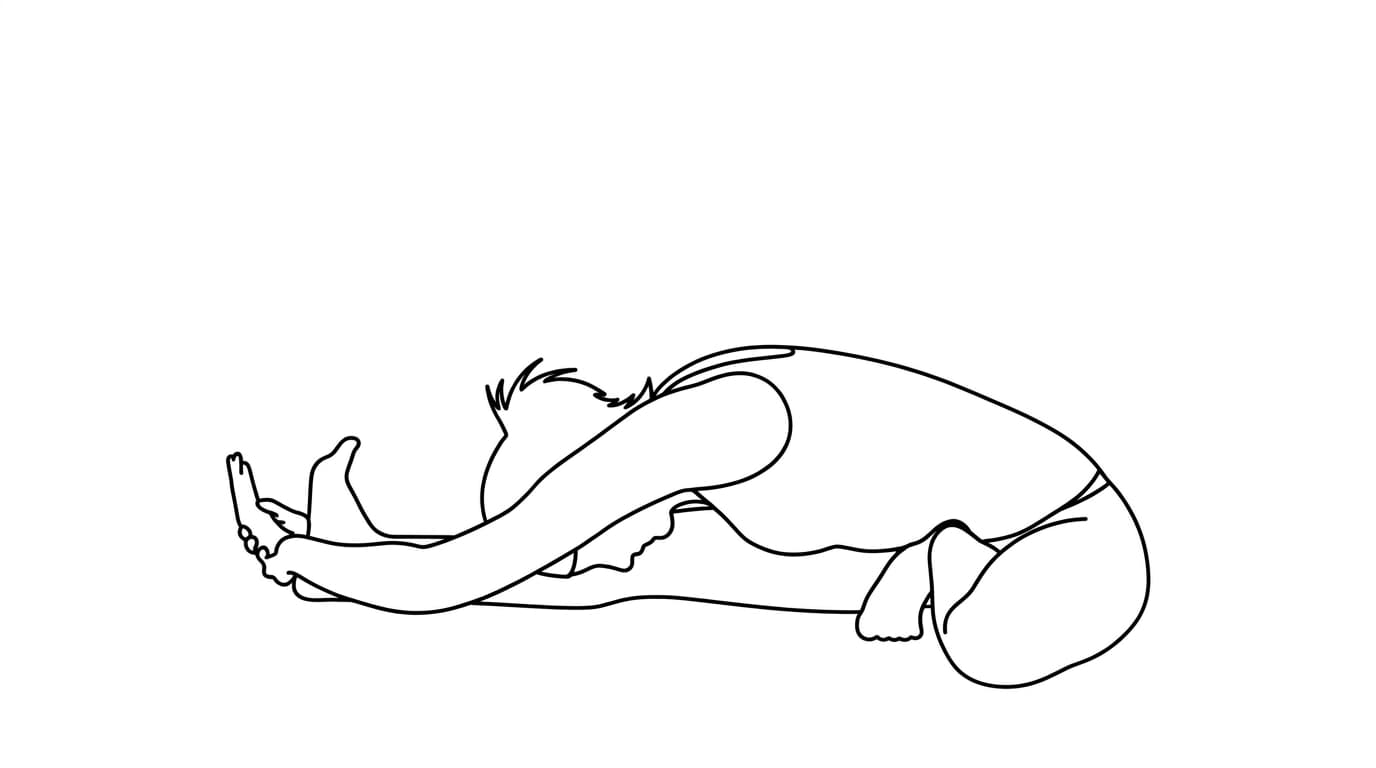
Head to Knee III
Janu Sirsasana Cजानु शीर्षासन
Head to Knee III is a lineage-specific variation in the Janu Sirsasana family, with a bent-leg foot position that can challenge the ankle and knee. Do not infer the setup from the name; use direct qualified instruction and a simpler seated alternative if uncertain.
මඟපෙන්වීම විවෘත කරන්න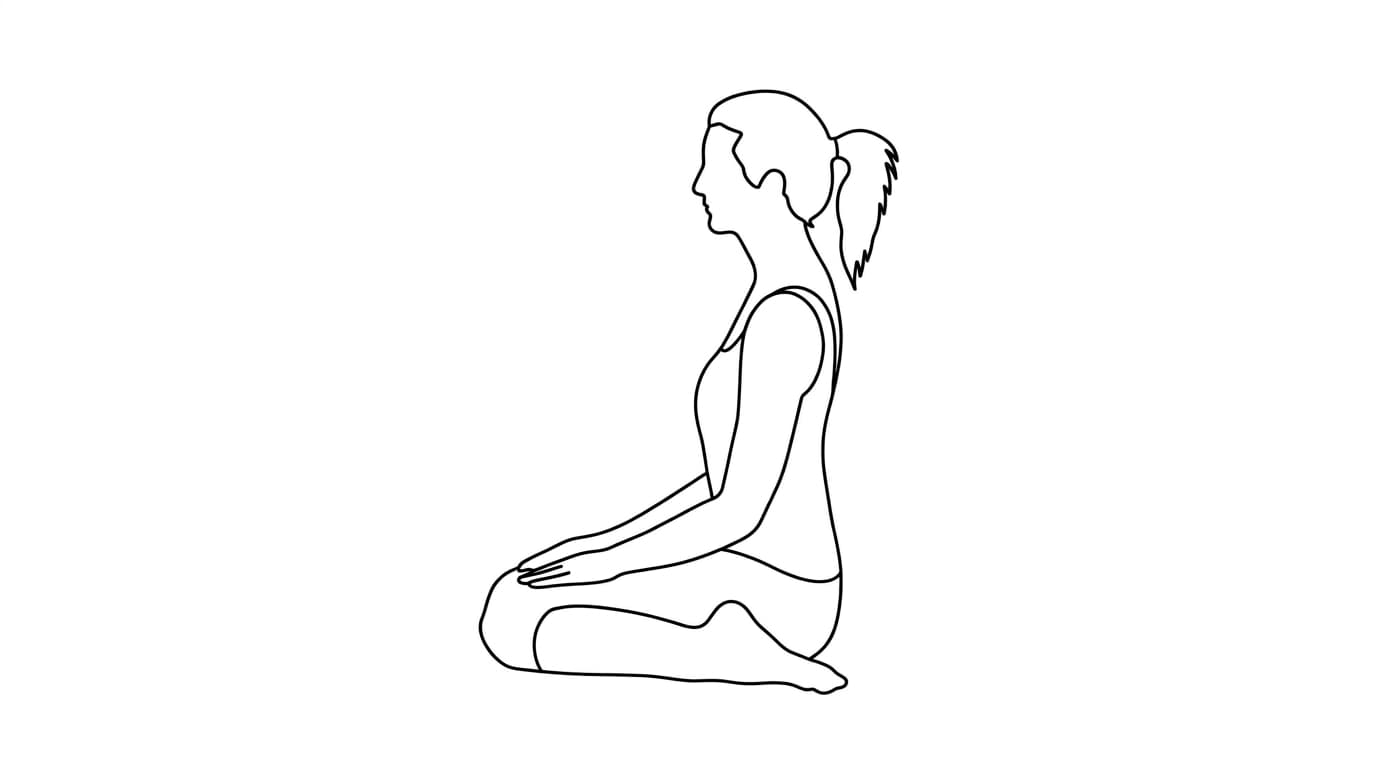
Hero Pose
Virasanaवीरासन
Hero Pose is a kneeling seat with the pelvis between the heels. Because it can place substantial pressure on the knees and ankles, sit on a block or chair and skip the pose if a comfortable supported position is unavailable.
මඟපෙන්වීම විවෘත කරන්න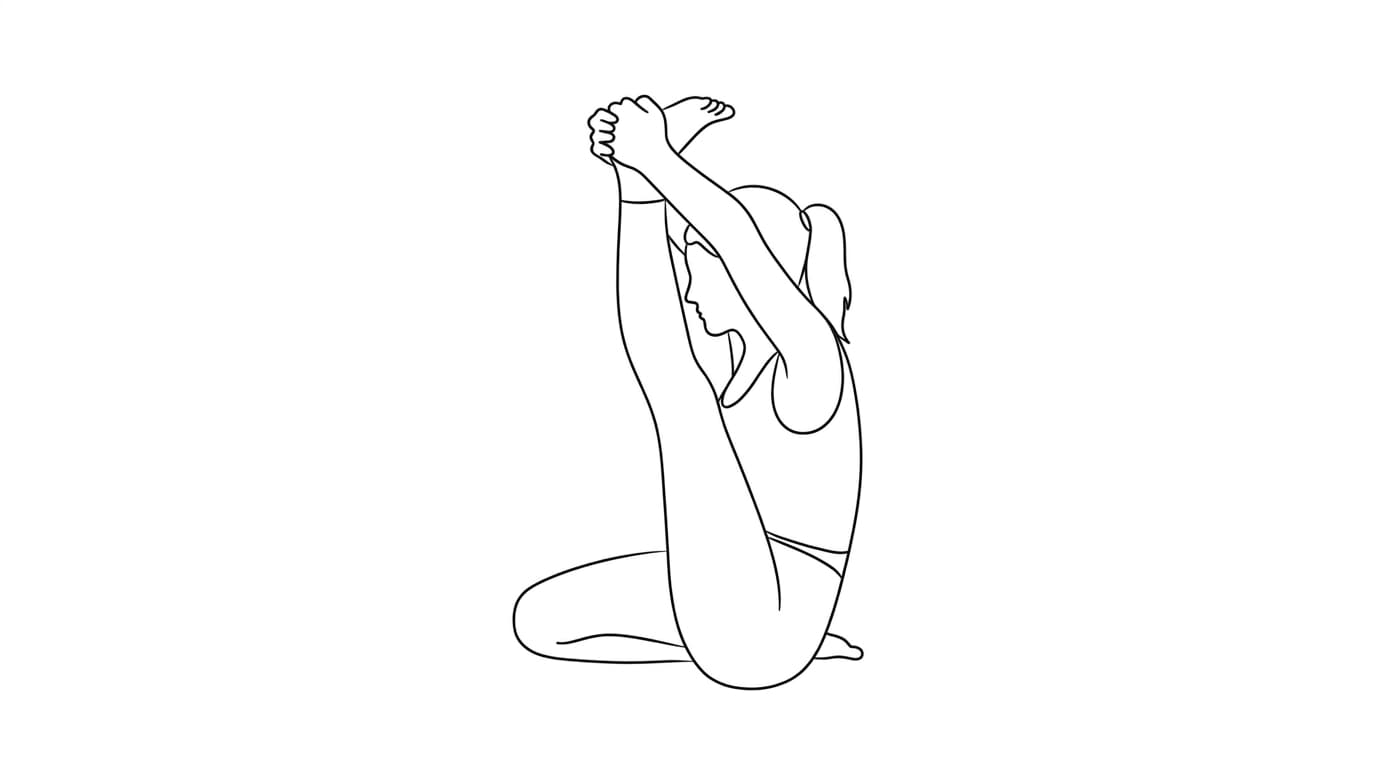
Heron Pose
Kraunchasanaक्रौञ्चासन
Heron Pose is a seated posture that may involve lifting and extending one leg while the other leg is folded. Use a strap and keep the lifted knee bent; do not pull the foot toward the face or force the folded knee.
මඟපෙන්වීම විවෘත කරන්න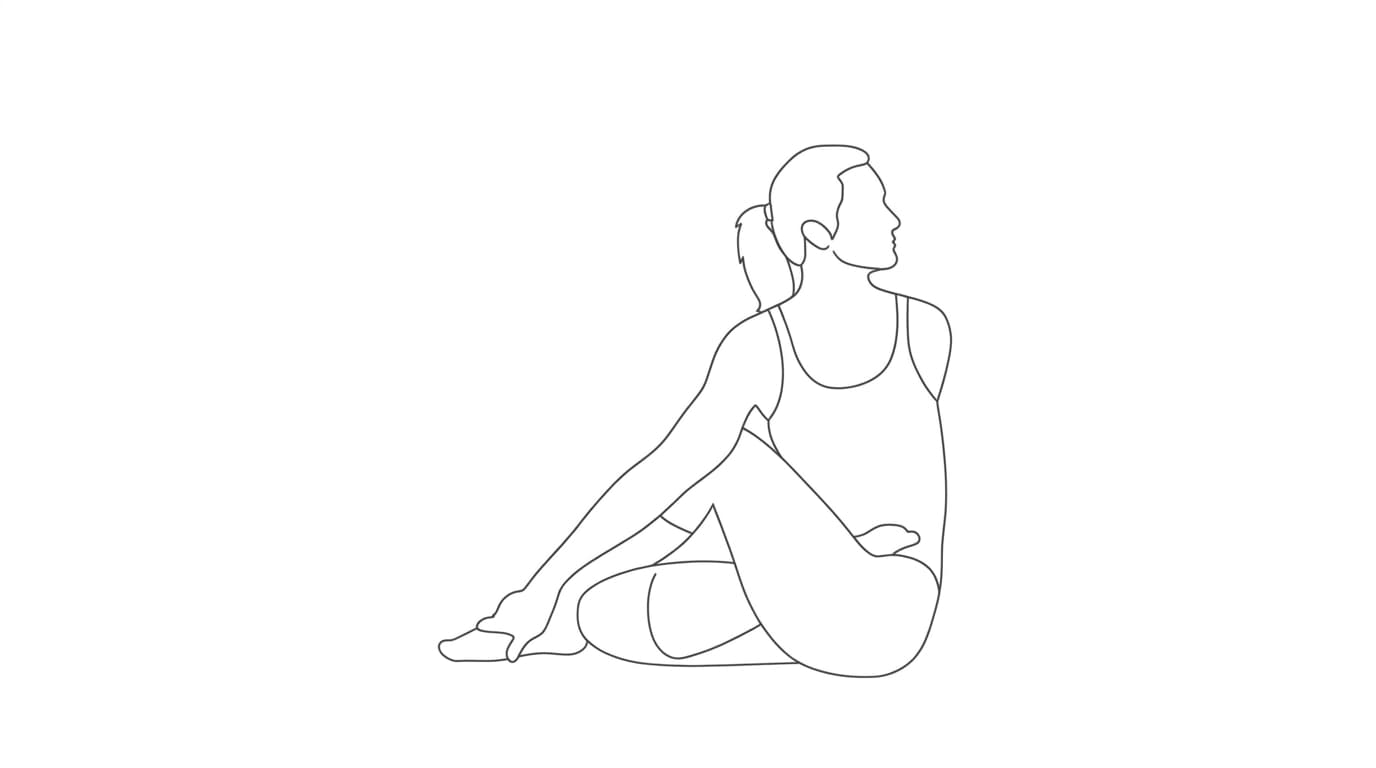
Ardha Matsyendrasana (Half Spinal Twist)
Ardha Matsyendrasanaअर्धमत्स्येन्द्रासन
අර්ධ මත්ස්යේන්ද්රාසනය යනු ආකාර කිහිපයකින් ප්රගුණ කරන ලද වාඩි වී සිටීමකි. භ්රමණය මෘදු ලෙස තබා කඳට නායකත්වය දෙන්න; අත් බැඳ තැබීමට හෝ දණහිස් විශේෂිත ස්ථානයකට බල කිරීමට අවශ්ය නොවේ.
මඟපෙන්වීම විවෘත කරන්න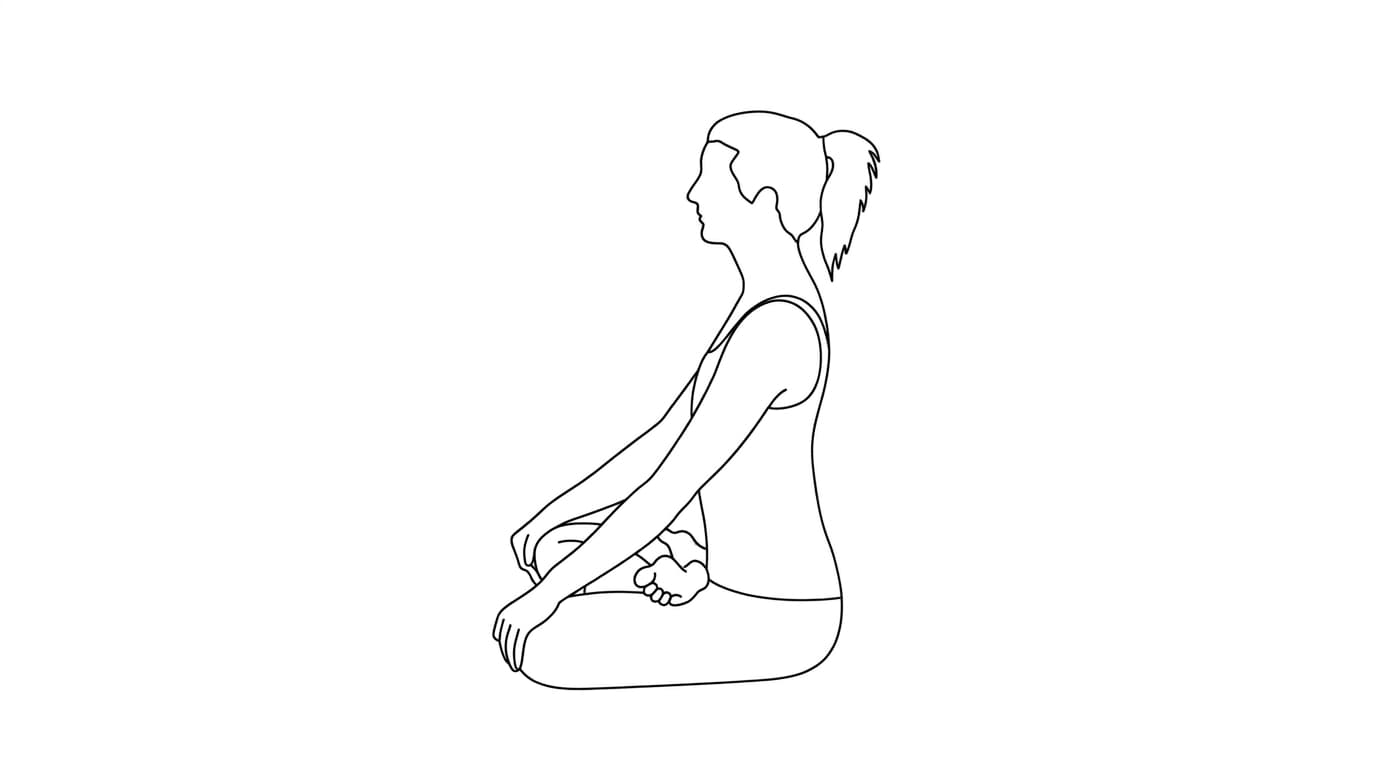
Lotus Pose
Padmasanaपद्मासन
Padmasana, or Lotus Pose, is an advanced cross-legged seated posture that requires substantial hip rotation. Do not pull the feet into place or force the knees. NCCIH advises beginners to avoid Lotus; meditation can instead use a chair or another comfortable, stable position.
මඟපෙන්වීම විවෘත කරන්න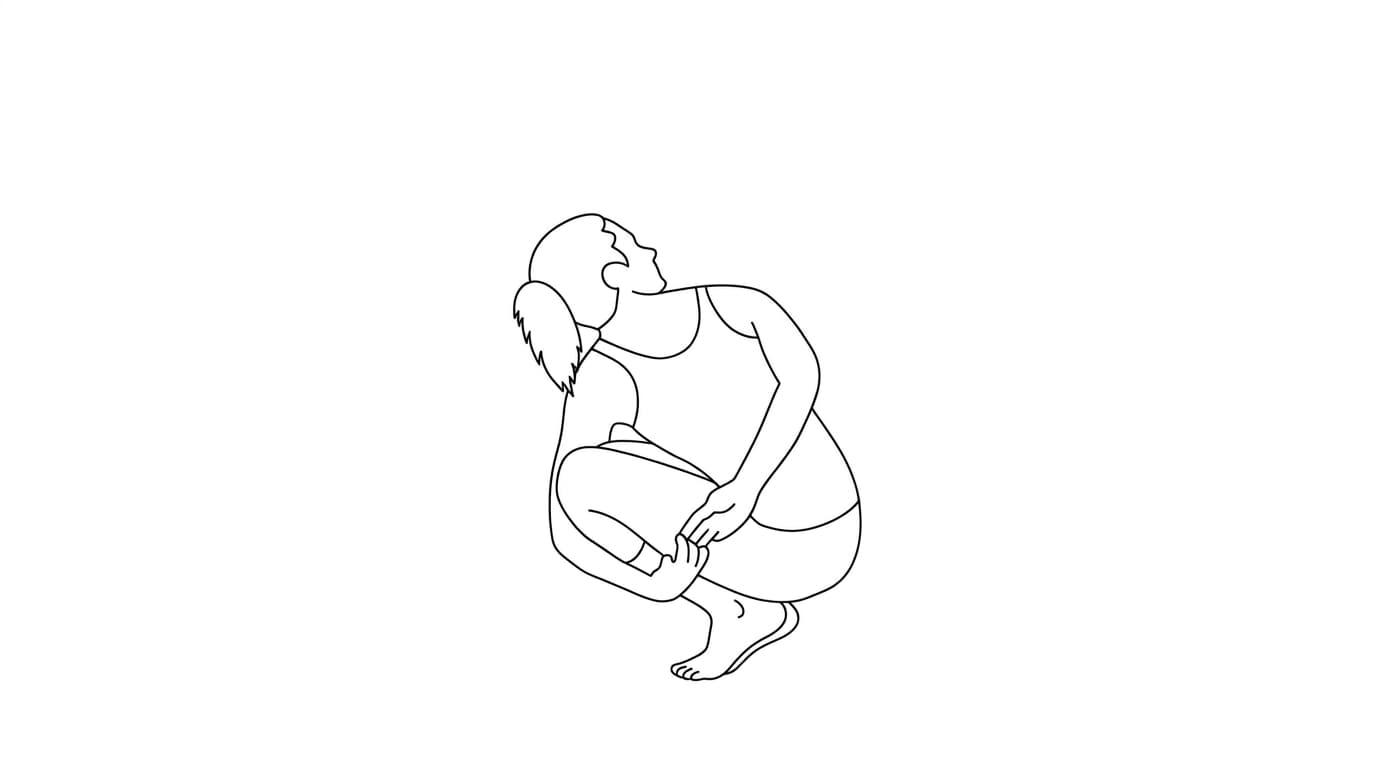
Noose Pose
Pashasanaपाशासन
Noose Pose is a deep squat combined with a twisting arm bind. Both the squat and bind may challenge knees, ankles, shoulders, and balance; use a supported squat and do not force the full bind without direct instruction.
මඟපෙන්වීම විවෘත කරන්න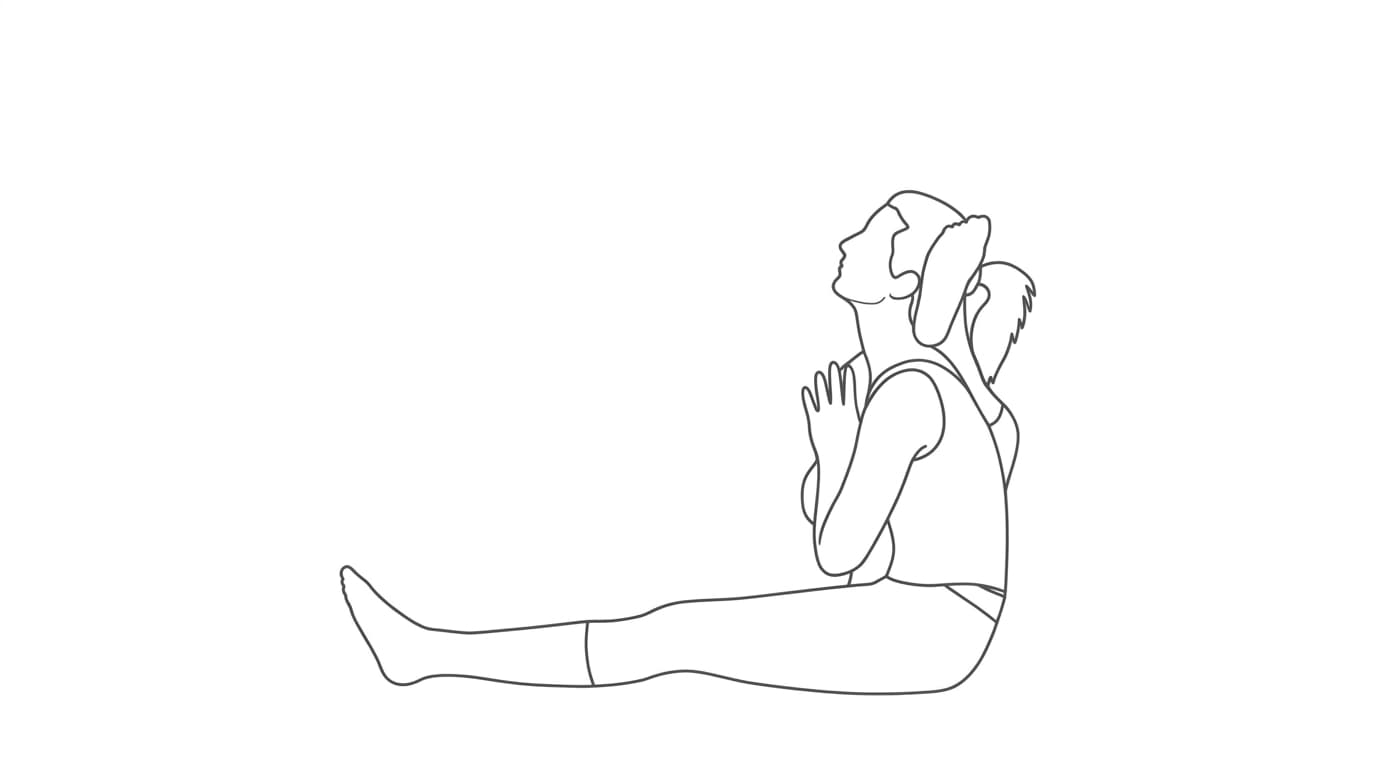
One Leg Behind the Head I
Eka Pada Sirsasana Aएकपादशीर्षासन
Eka Pada Sirsasana A is an advanced seated leg-behind-head posture. The position can stress the hip, knee, and neck; this page intentionally omits entry steps and advises direct instruction from a qualified teacher.
මඟපෙන්වීම විවෘත කරන්න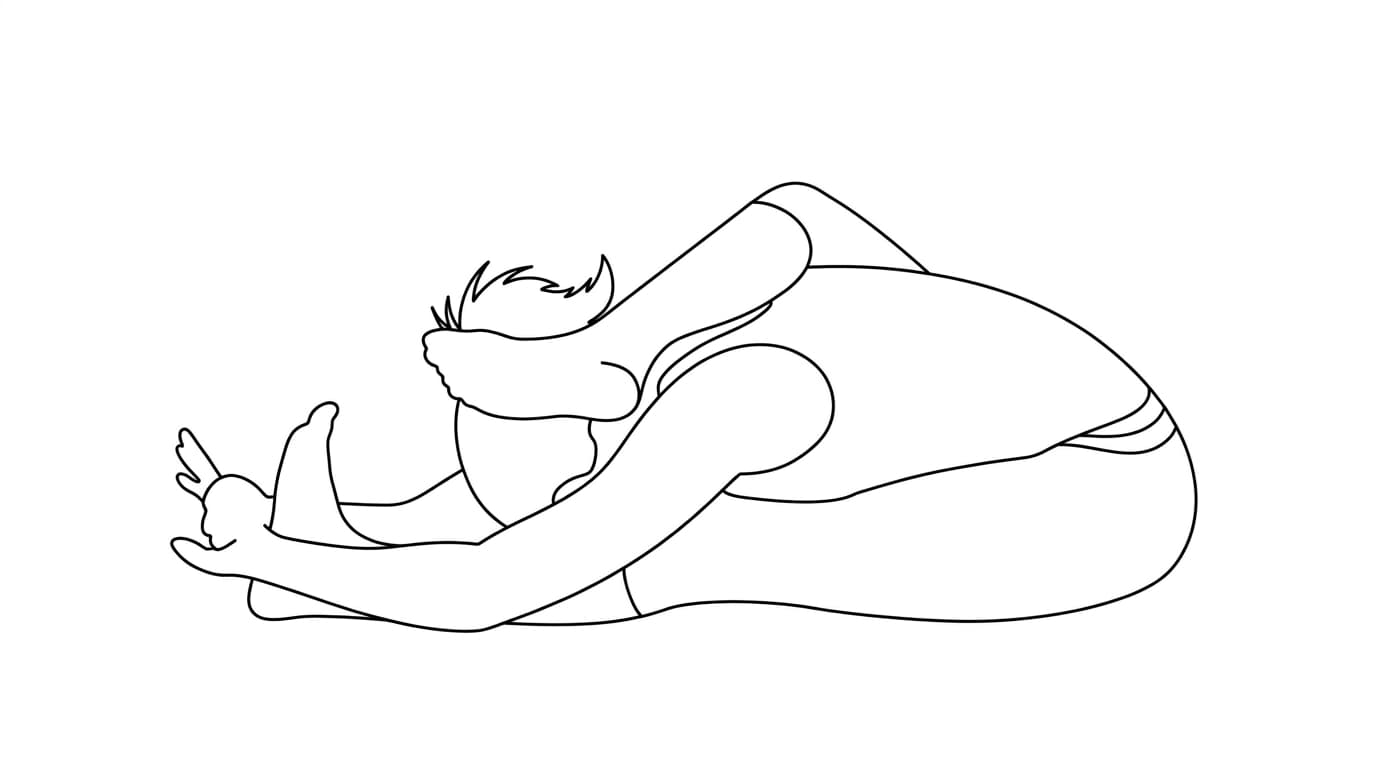
One Leg Behind the Head II
Eka Pada Sirsasana Bएकपादशीर्षासन
Eka Pada Sirsasana B is a named advanced variation in the leg-behind-head family. Exact form can vary by method; do not force the knee or use the neck to support the leg, and seek qualified in-person instruction.
මඟපෙන්වීම විවෘත කරන්න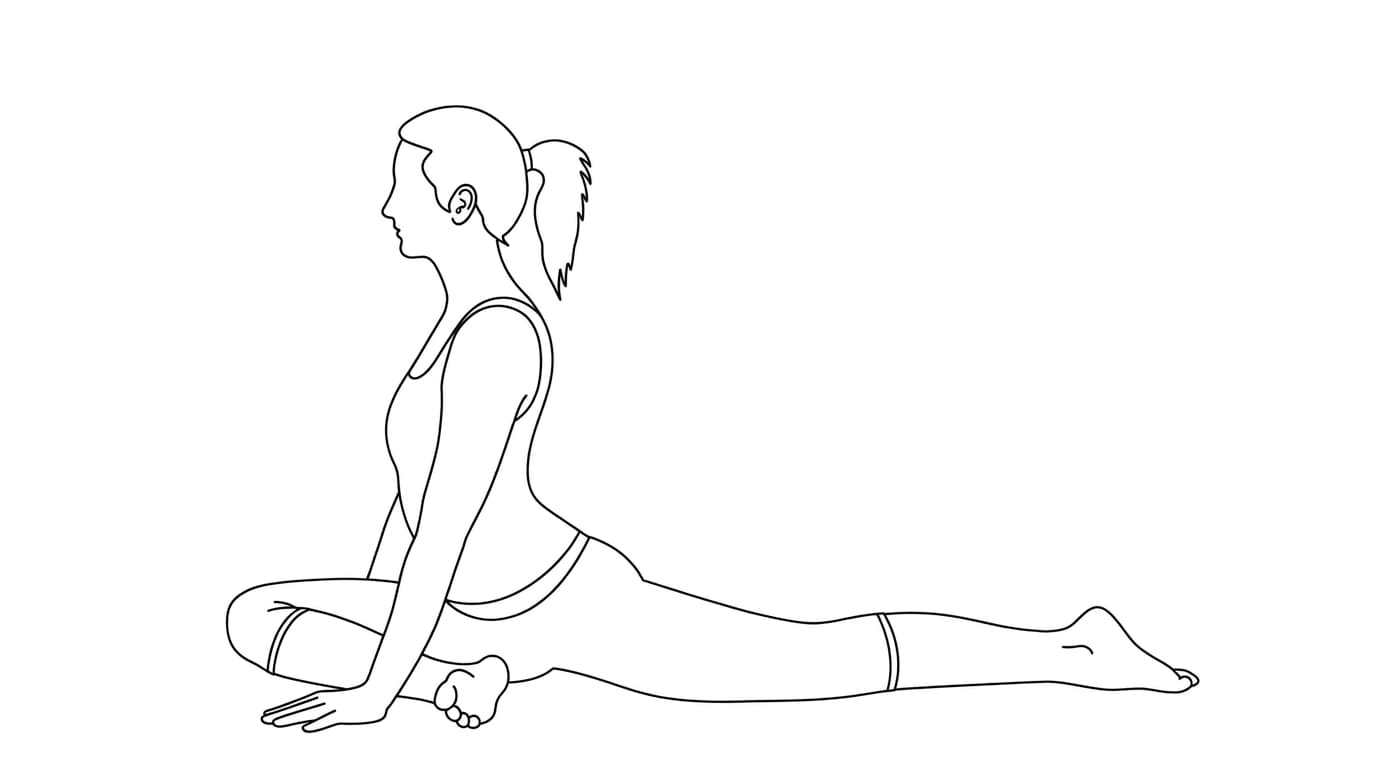
Half Pigeon
Ardha Kapotasanaअर्धकपोतासन
Half Pigeon is a floor posture with one leg forward and the other extended behind. It can load the front hip and knee, so keep the pelvis supported and choose a reclined or supine alternative if the knee feels pressure.
මඟපෙන්වීම විවෘත කරන්න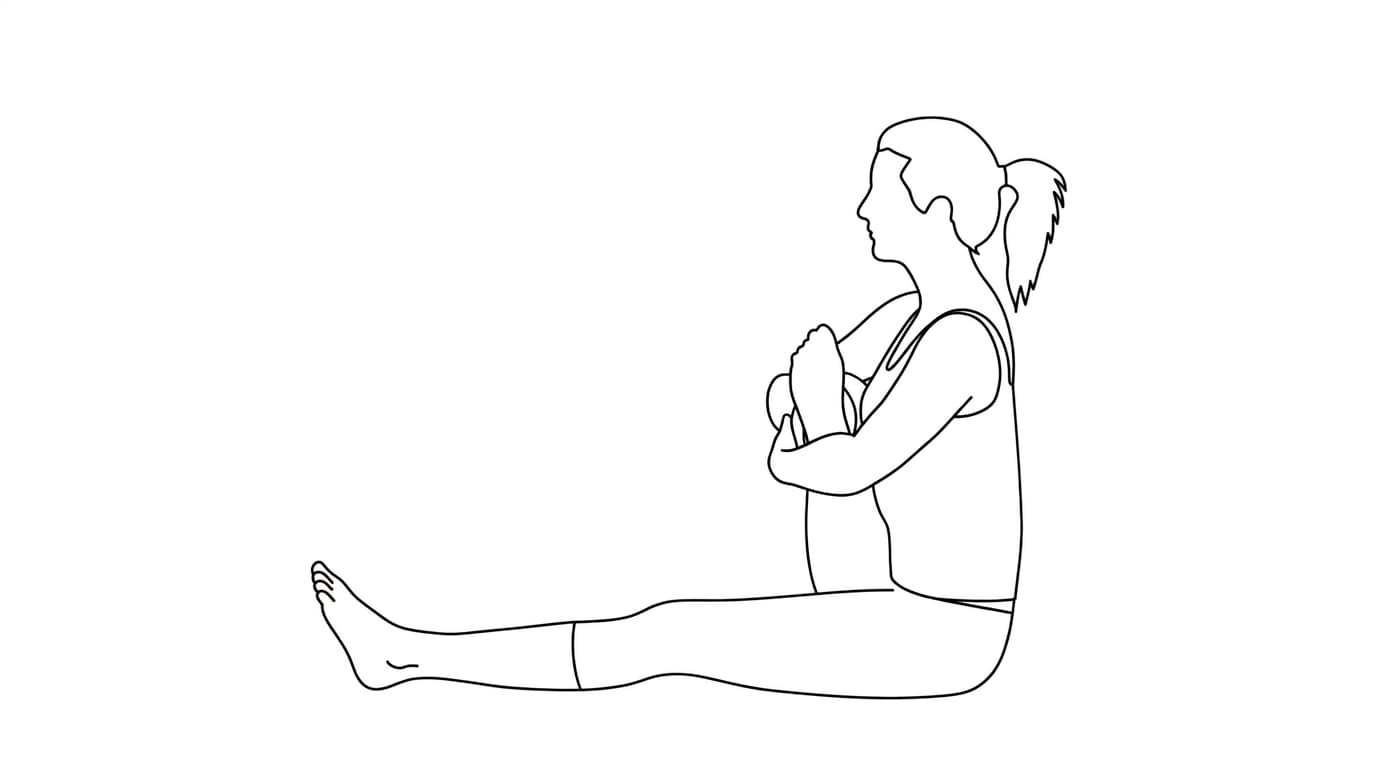
Rock the Baby
Rock the Baby is a seated mobility movement in which a bent leg is supported in the arms. Keep the knee and ankle supported without pulling, and stop if the hip or knee feels pinched; a chair-based alternative is available.
මඟපෙන්වීම විවෘත කරන්න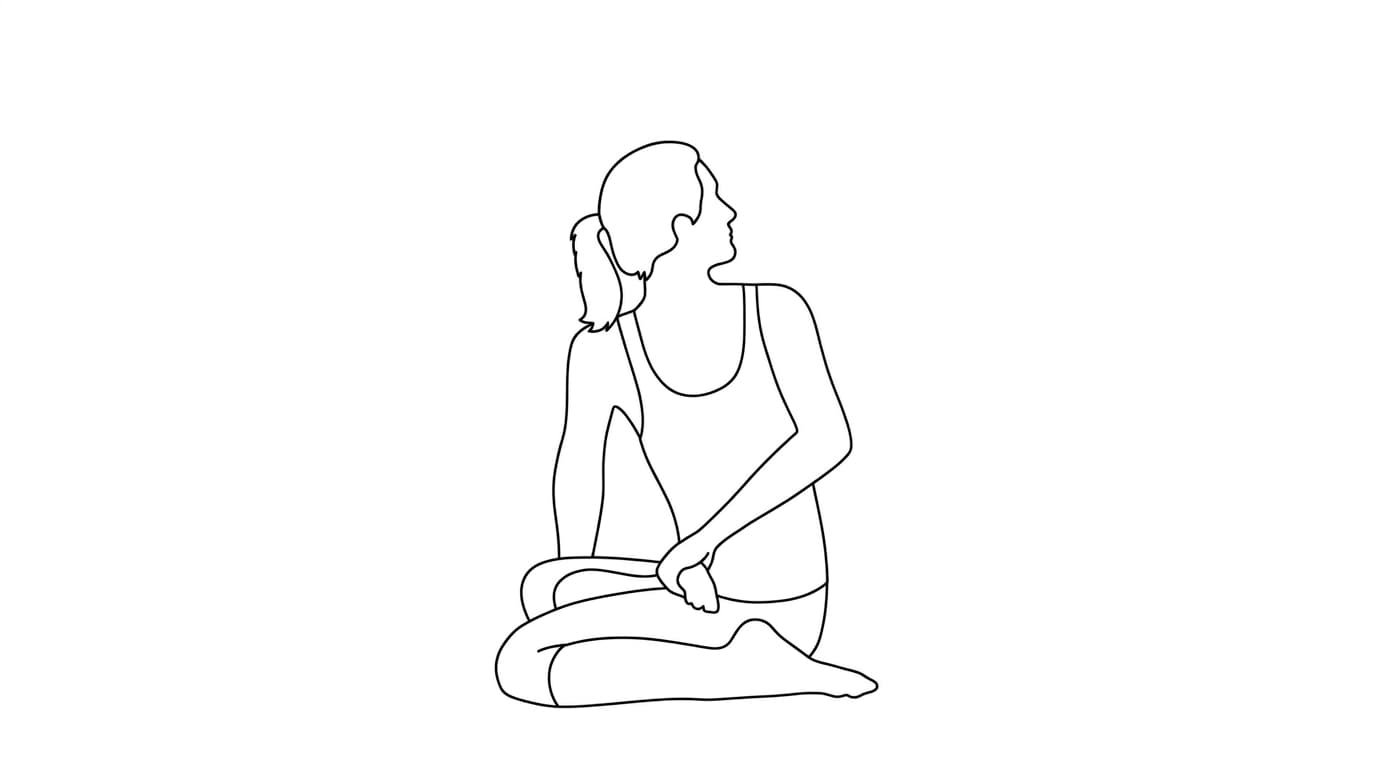
Sage Bharadvaja's Twist
Bharadvajasanaभारद्वाजासन
Bharadvajasana is a seated spinal twist associated with the sage Bharadvaja. Keep the twist small and easy, turn from the torso without pulling on the knees, and use a chair or neutral seat if the floor position is uncomfortable.
මඟපෙන්වීම විවෘත කරන්න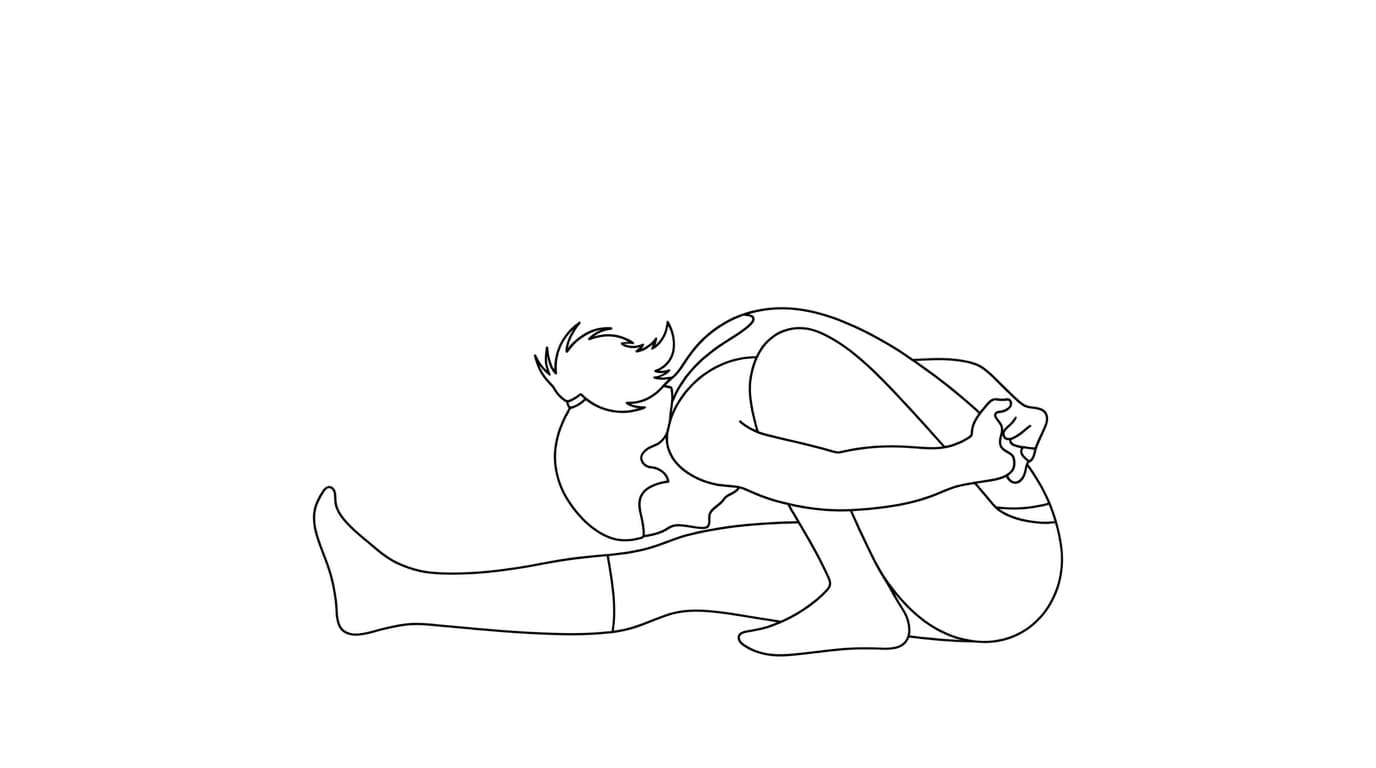
Sage Marichi's I
Marichyasana Aमरीच्यासन
Marichyasana A is a seated forward-fold variation with one knee bent and the other leg extended. Keep the bent foot grounded, support the torso with blocks, and do not force the shoulder or arm bind sometimes shown in the full form.
මඟපෙන්වීම විවෘත කරන්න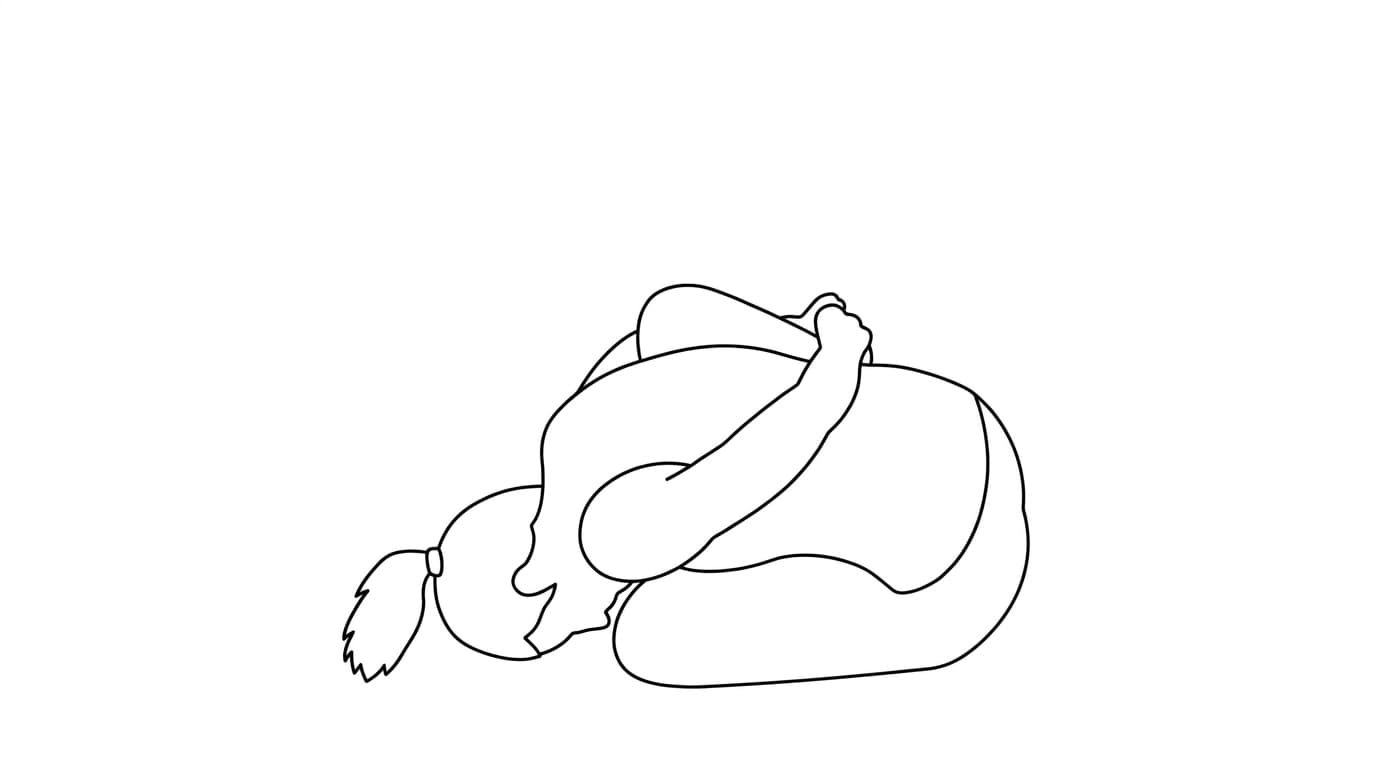
Sage Marichi's II
Marichyasana Bमरीच्यासन
Marichyasana B combines a lotus-style leg position with a bent opposite leg and may include an arm bind. Because it can stress the knee and hip, do not force the lotus position or attempt the full bind without direct qualified instruction.
මඟපෙන්වීම විවෘත කරන්න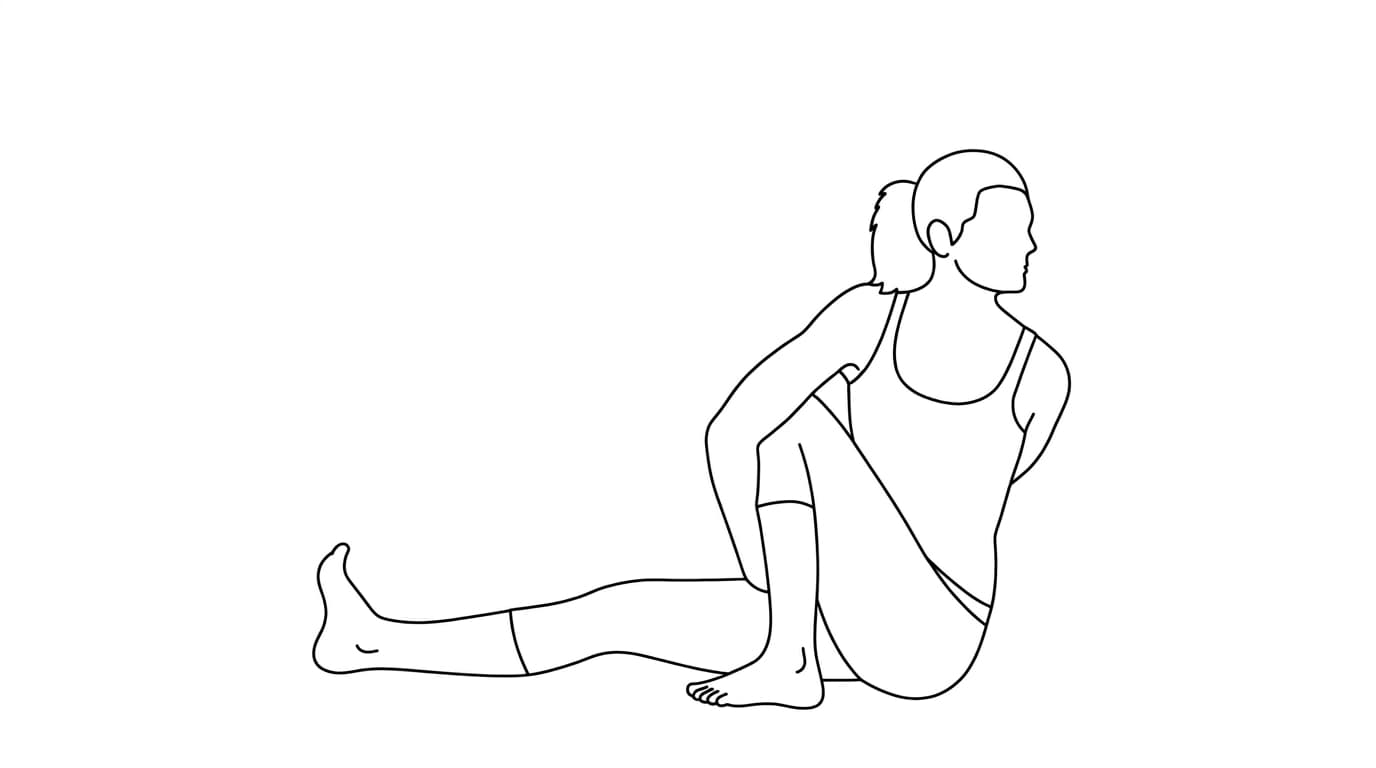
Sage Marichi's III
Marichyasana Cमरीच्यासन
Marichyasana C is a seated twist with one knee bent. Leg positions vary across yoga traditions; keep the spine comfortably long, turn gently, and avoid using the arm as a lever to force the rotation.
මඟපෙන්වීම විවෘත කරන්න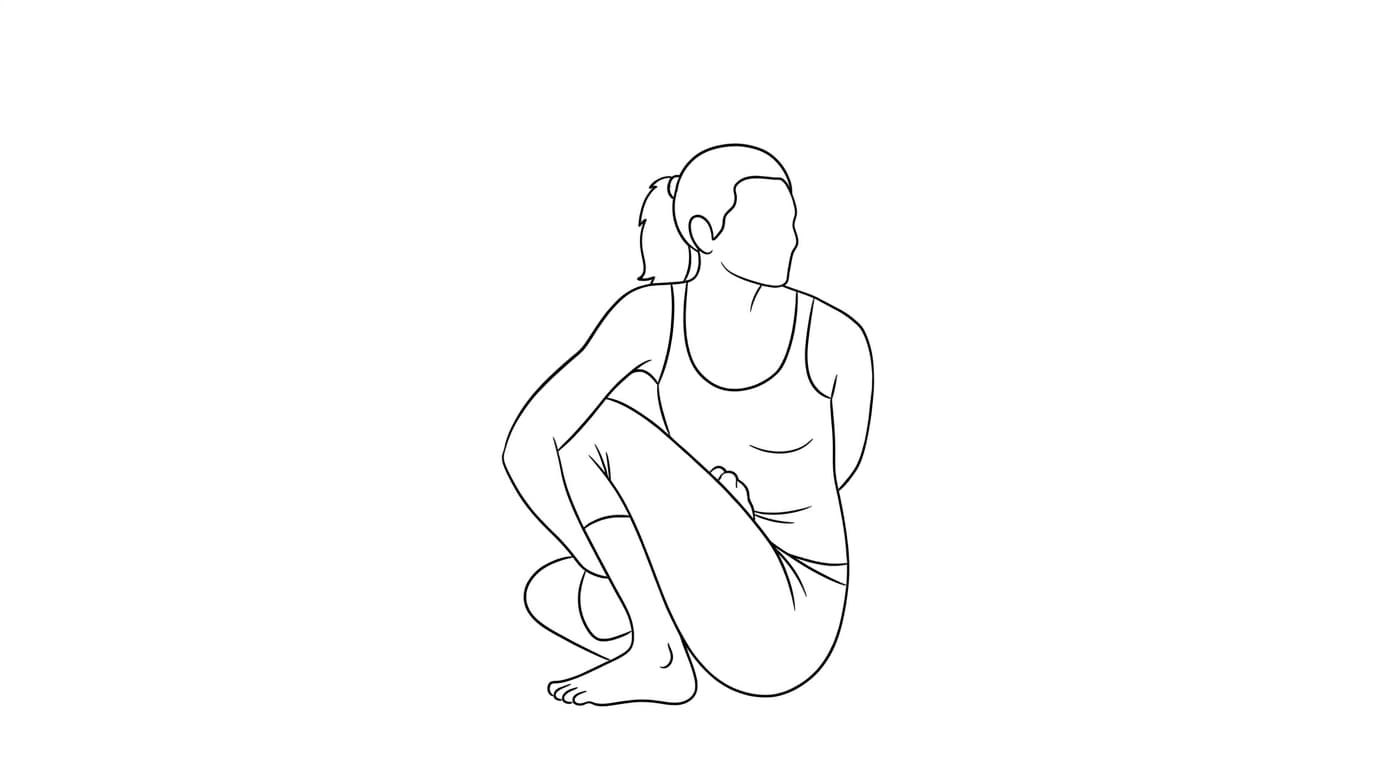
Sage Marichi's IV
Marichyasana Dमरीच्यासन
Marichyasana D is an advanced bound twist in the Marichyasana family, often involving a lotus-style leg position. Do not force the knee or use the arm to lever the spine; learn the specific version directly from a qualified teacher.
මඟපෙන්වීම විවෘත කරන්න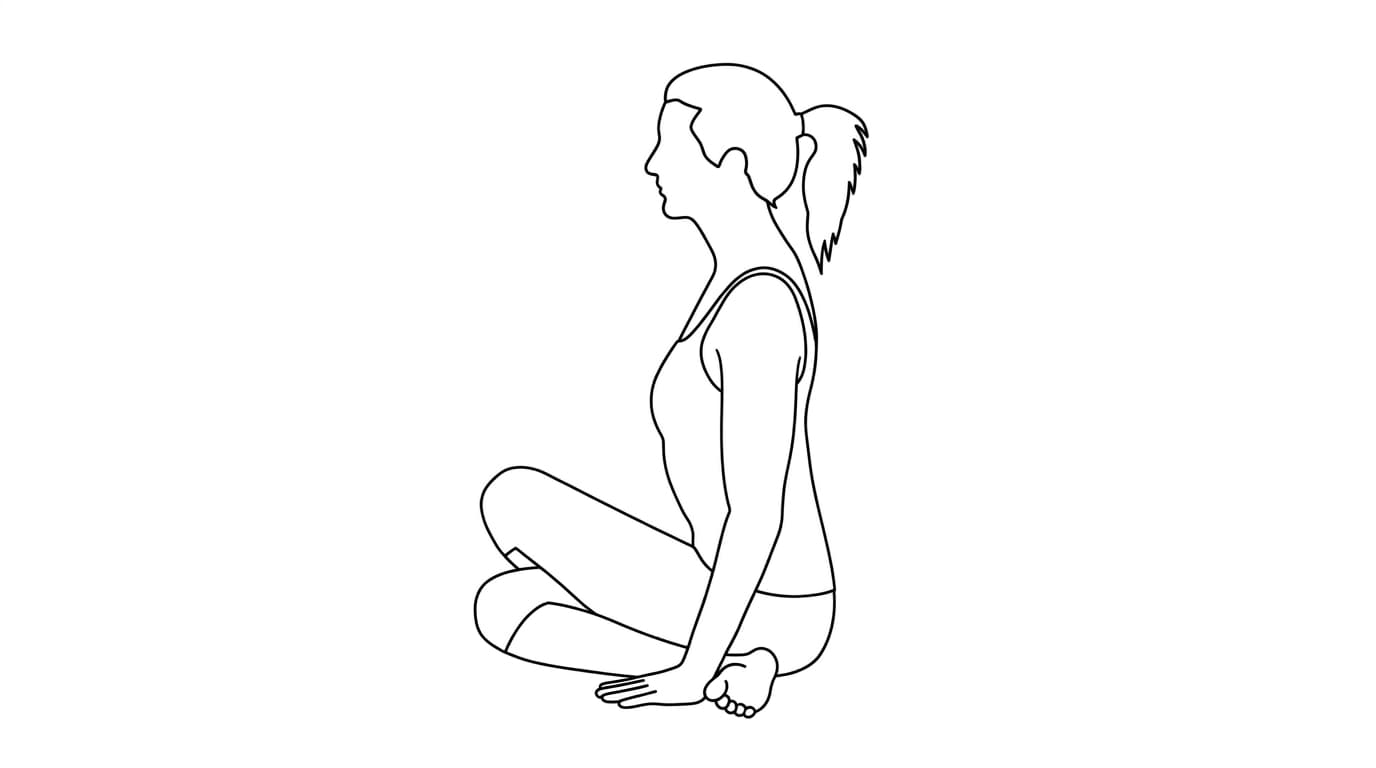
Shoelace Pose
Shoelace Pose is a seated Yin Yoga shape with the knees stacked and feet beside the hips. Because it can place pressure on knees and hips, support the seat and legs, avoid forcing the stack, and choose a simpler cross-legged position if uncomfortable.
මඟපෙන්වීම විවෘත කරන්න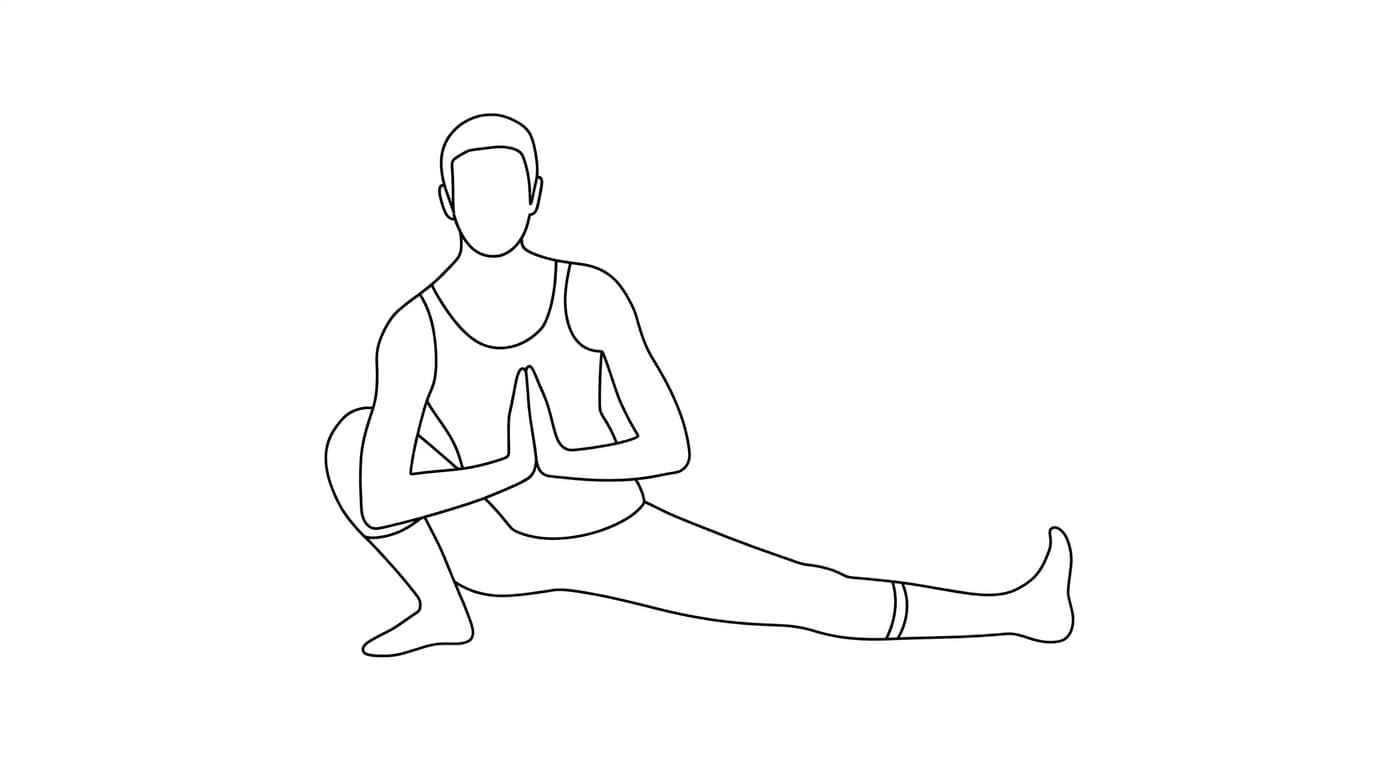
Side Lunge
Skandasanaस्कन्दासन
Skandasana is a lateral lunge with one knee bending while the other leg lengthens to the side. Use blocks or a chair for balance, keep the bent knee comfortable, and do not force the straight leg or heel to the floor.
මඟපෙන්වීම විවෘත කරන්න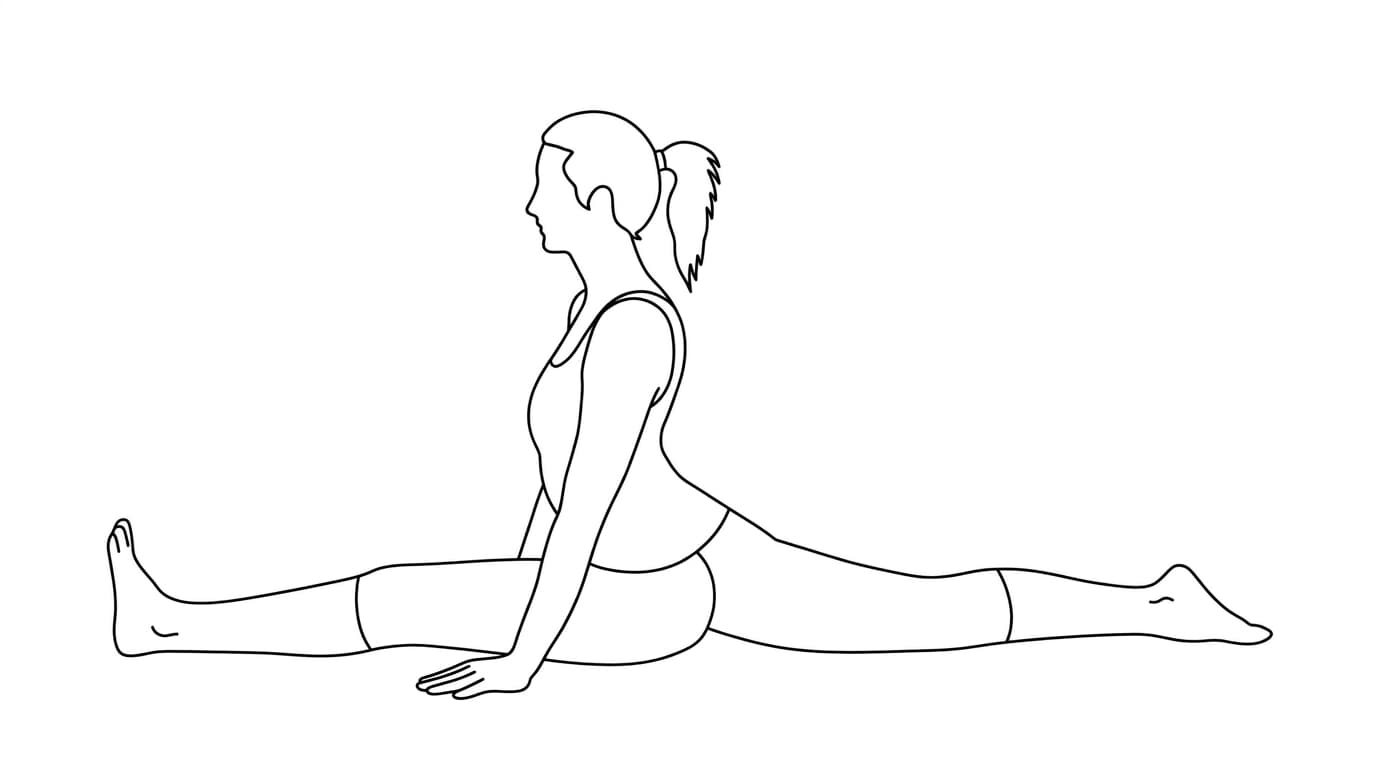
Front Splits
Hanumanasanaहनुमानासन
Hanumanasana is a deep front-split posture requiring substantial hip and leg range. Do not slide into the floor or force the hamstrings or hip flexors; use substantial support and qualified instruction, or choose a gentler lunge instead.
මඟපෙන්වීම විවෘත කරන්න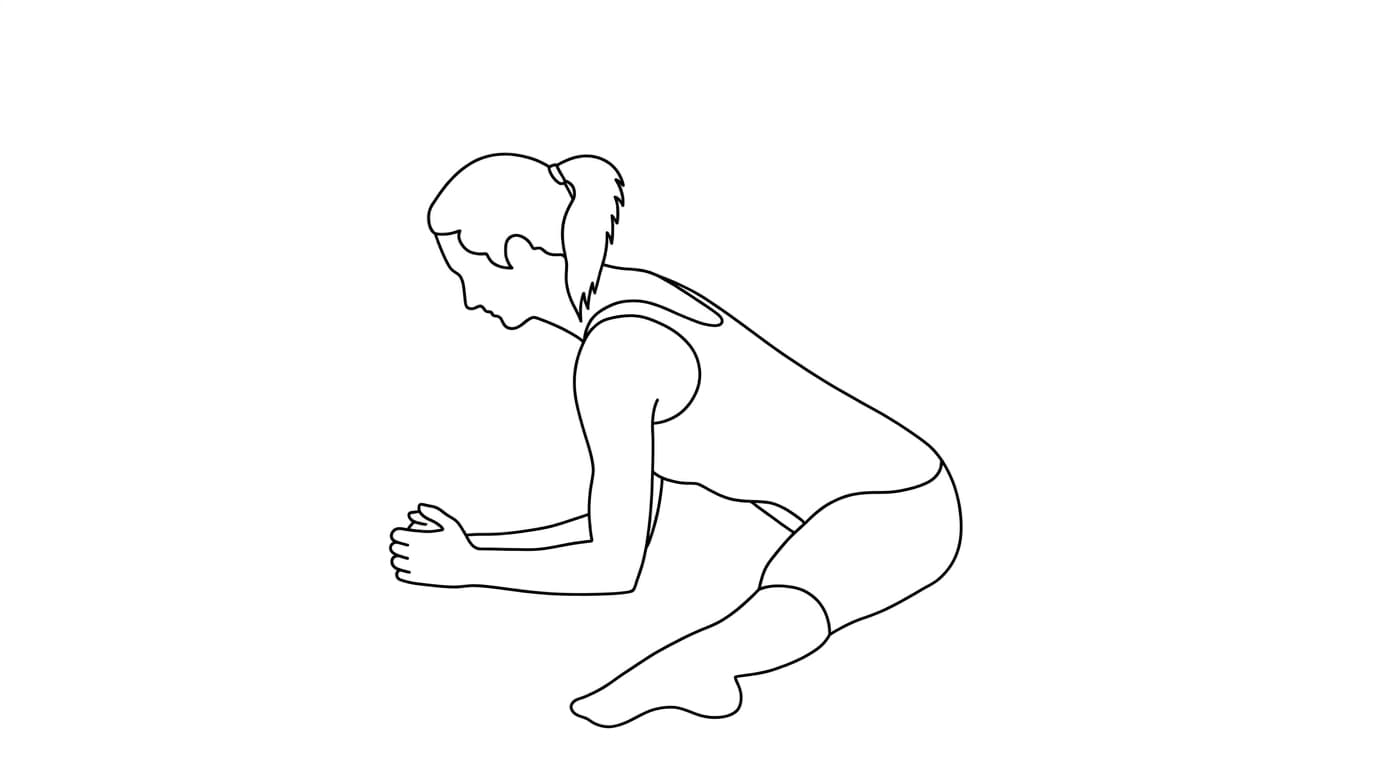
Wide Splits
Samakonasanaसमकोणासन
Samakonasana is a wide-leg split posture that asks for substantial inner-thigh and hip range. Do not slide or press the legs wider; use support and qualified instruction, or choose a comfortable seated wide-leg position with knees bent.
මඟපෙන්වීම විවෘත කරන්න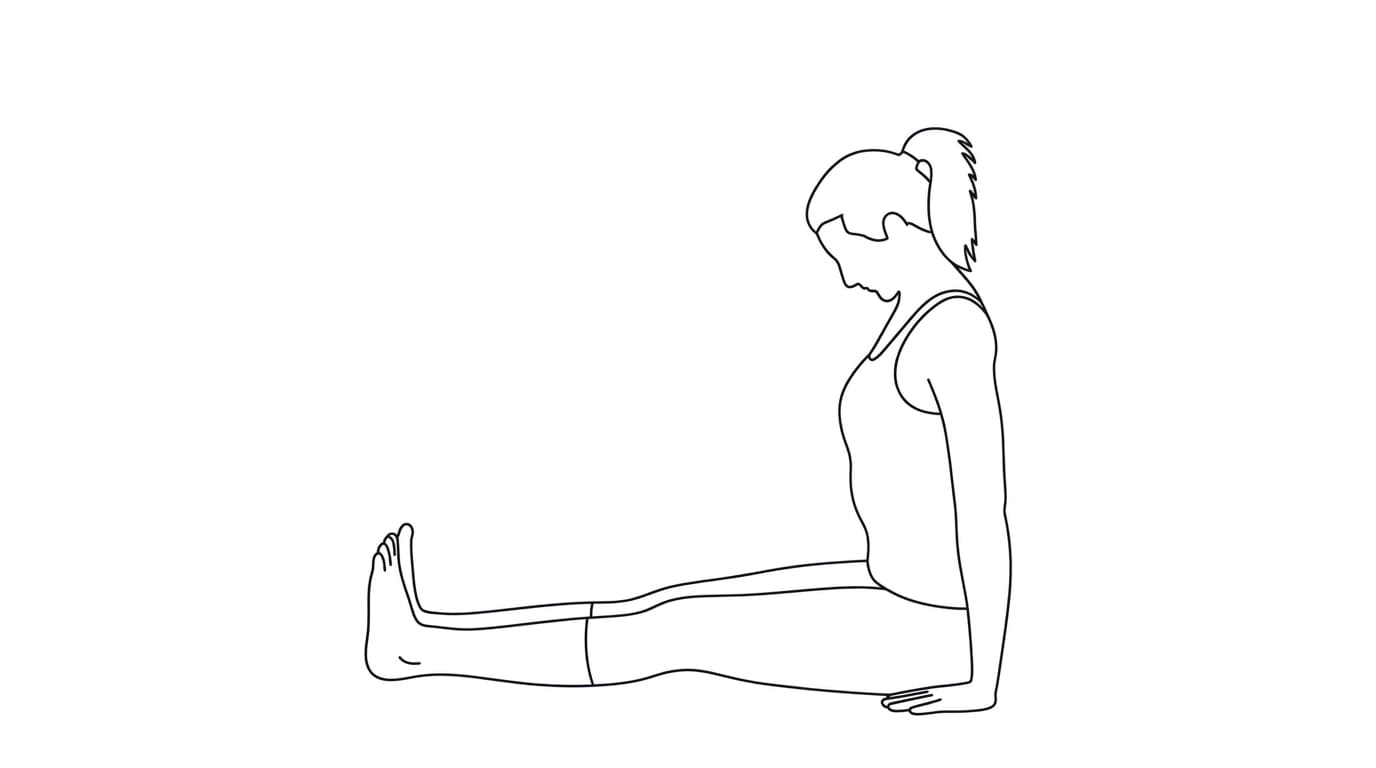
Staff Pose
Dandasanaदण्डासन
Staff Pose is a seated position with the legs extended in front. Bend the knees or sit on support if keeping the legs straight makes the back round or strains the knees; the shape is a starting point, not a flexibility test.
මඟපෙන්වීම විවෘත කරන්න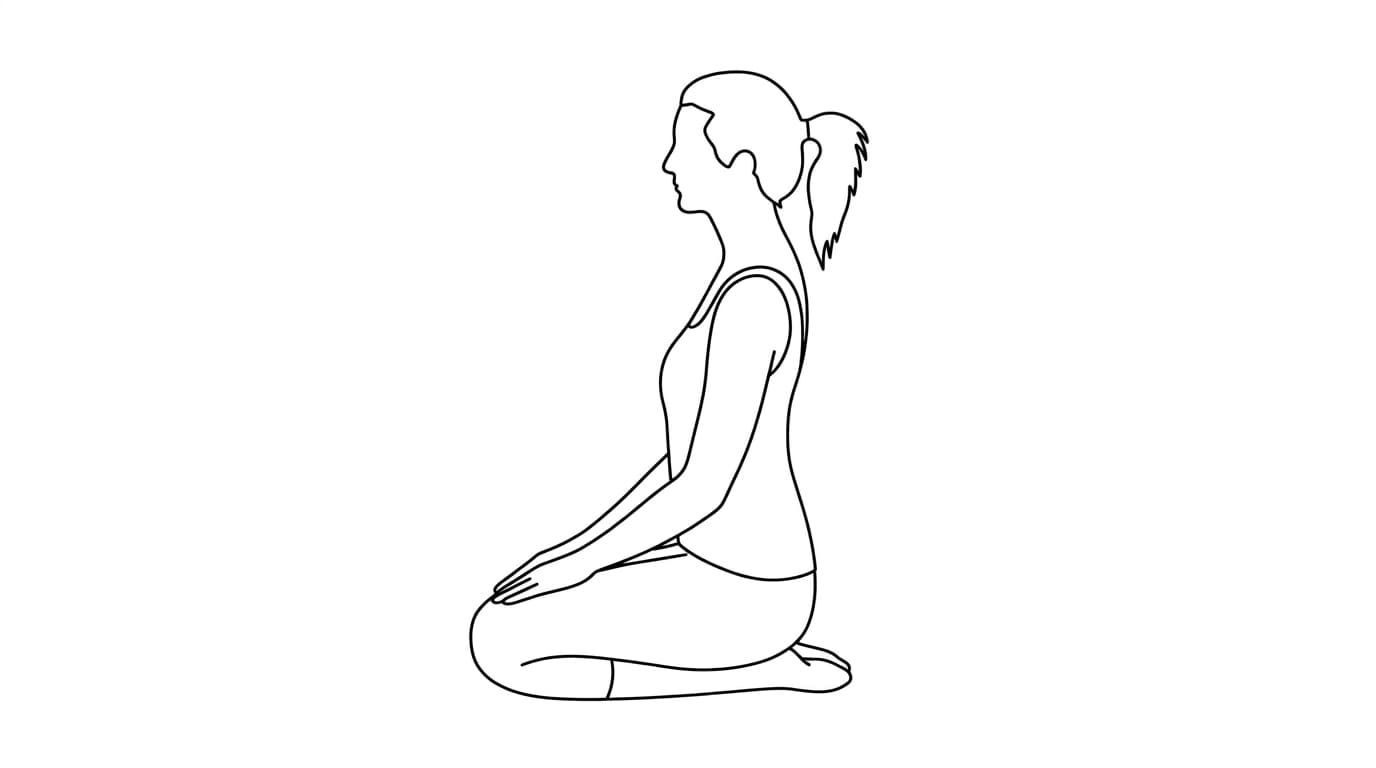
Thunderbolt Pose
Vajrasanaवज्रासन
Thunderbolt Pose is a kneeling seat with the hips resting toward the heels. It can place pressure on the knees and ankles, so use padding, a yoga block, or a chair, and leave the pose if discomfort builds.
මඟපෙන්වීම විවෘත කරන්න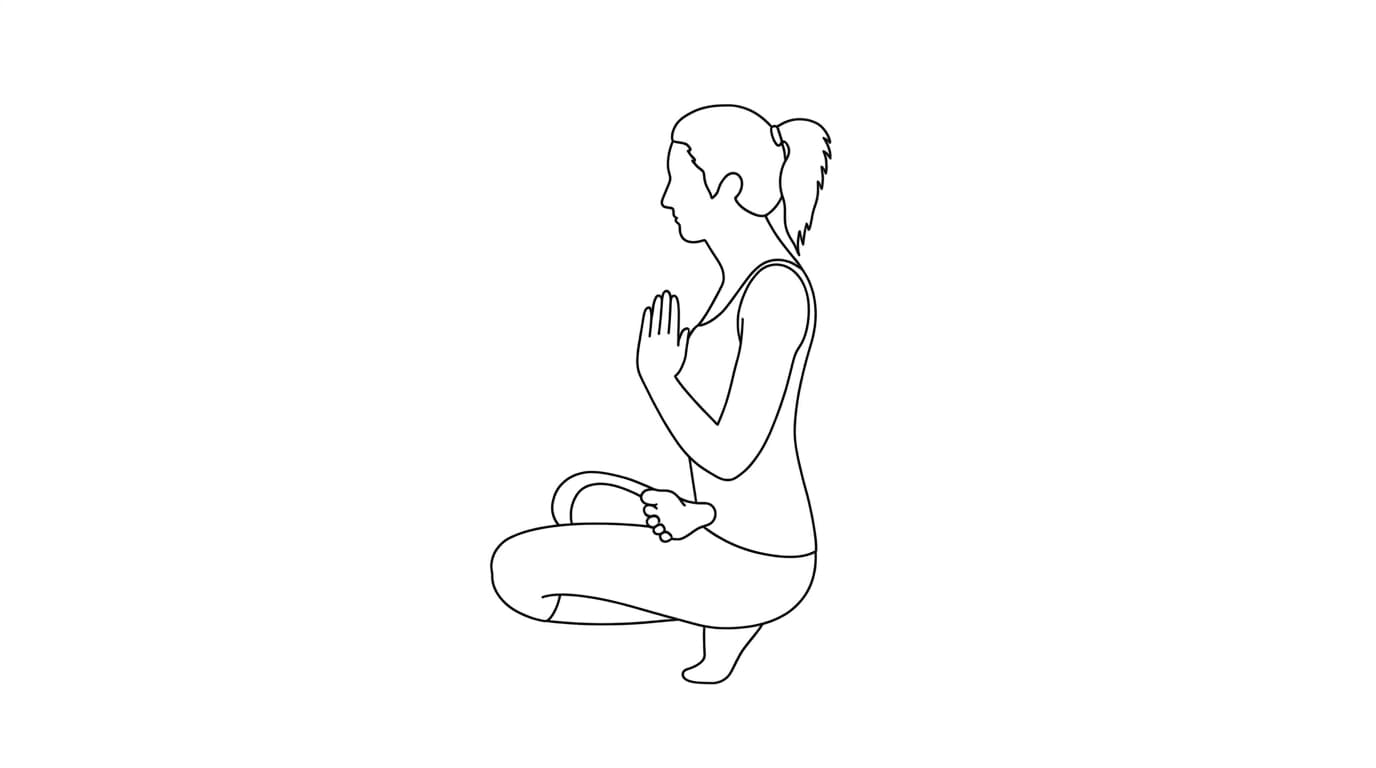
Toe Stand
Toe Stand is a balance that may combine a squat with the heels raised and weight on the toes. One pose directory applies Padangushthasana to both this balance and Big Toe Pose, a standing forward fold. Because the names are ambiguous, this page leaves its Sanskrit label unassigned and gives no entry sequence.
මඟපෙන්වීම විවෘත කරන්න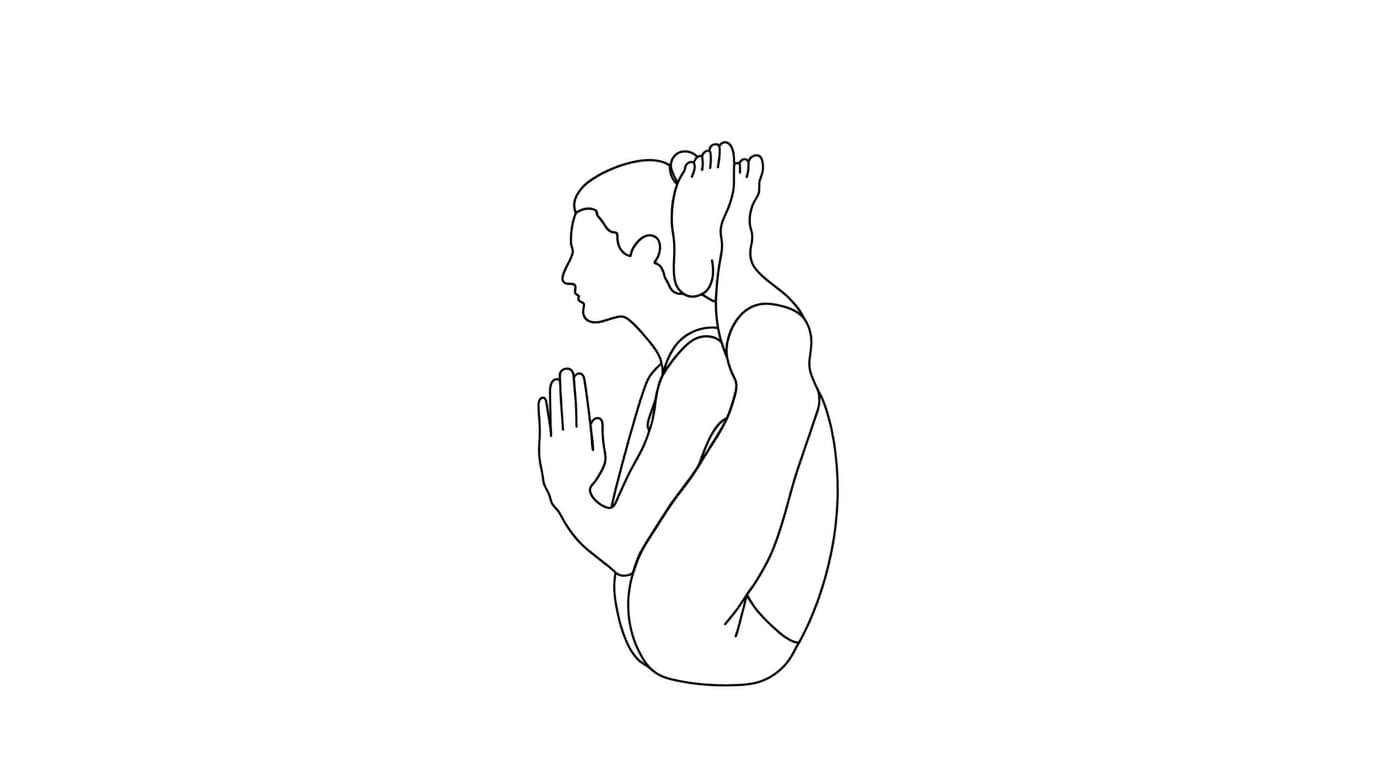
Two Legs Behind the Head I
Dvi Pada Sirsasana Aद्विपादशीर्षासन
Dvi Pada Sirsasana A is an advanced seated posture involving both legs behind the head or shoulders. It can strongly load the hips, knees, and neck; this page intentionally provides no entry steps and recommends qualified in-person instruction.
මඟපෙන්වීම විවෘත කරන්නසිටගෙන සිටින
ඉරියව් 40 ක්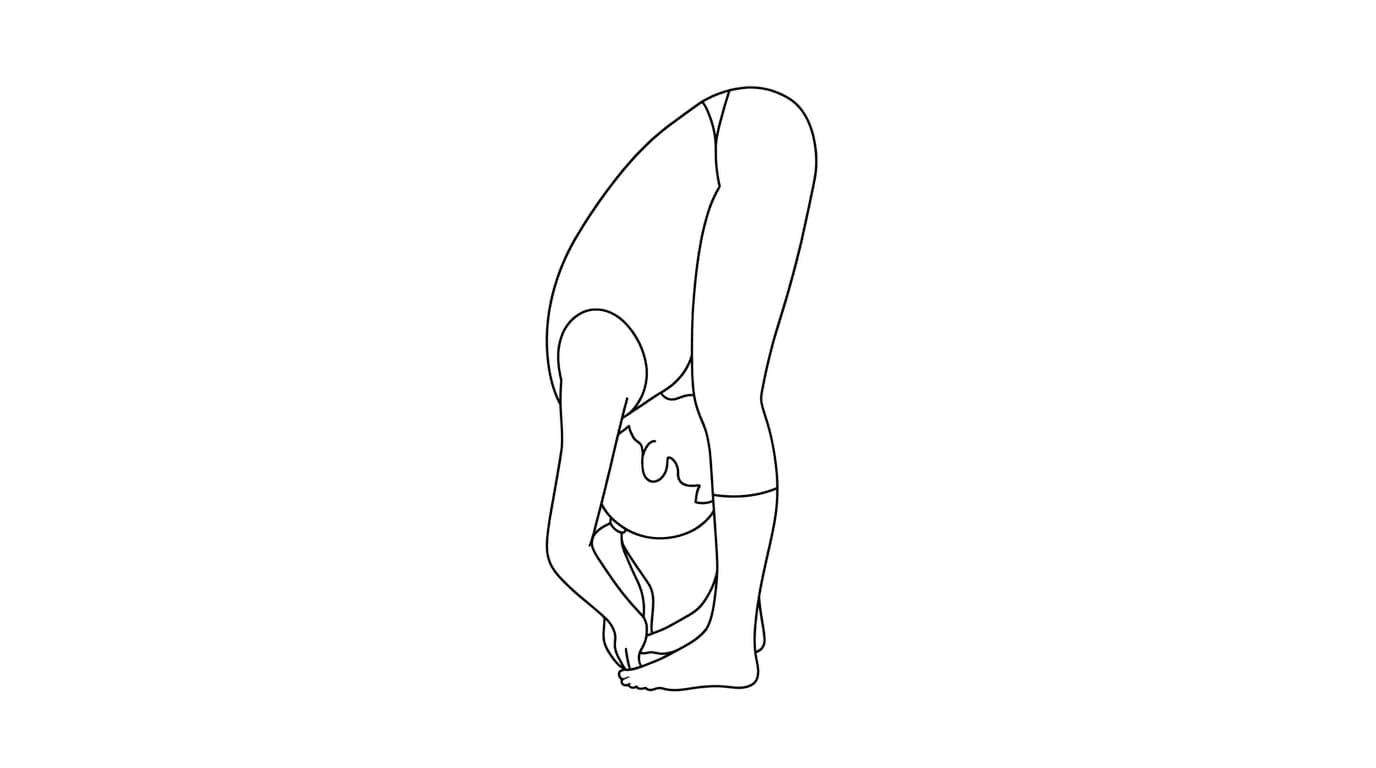
Big Toe Pose
Padangushthasanaपादाङ्गुष्ठासन
Big Toe Pose is a standing forward fold in which the hands traditionally hold the big toes. Keep the knees bent and use a strap or blocks if reaching the toes pulls on the back or legs; the grip is optional.
මඟපෙන්වීම විවෘත කරන්න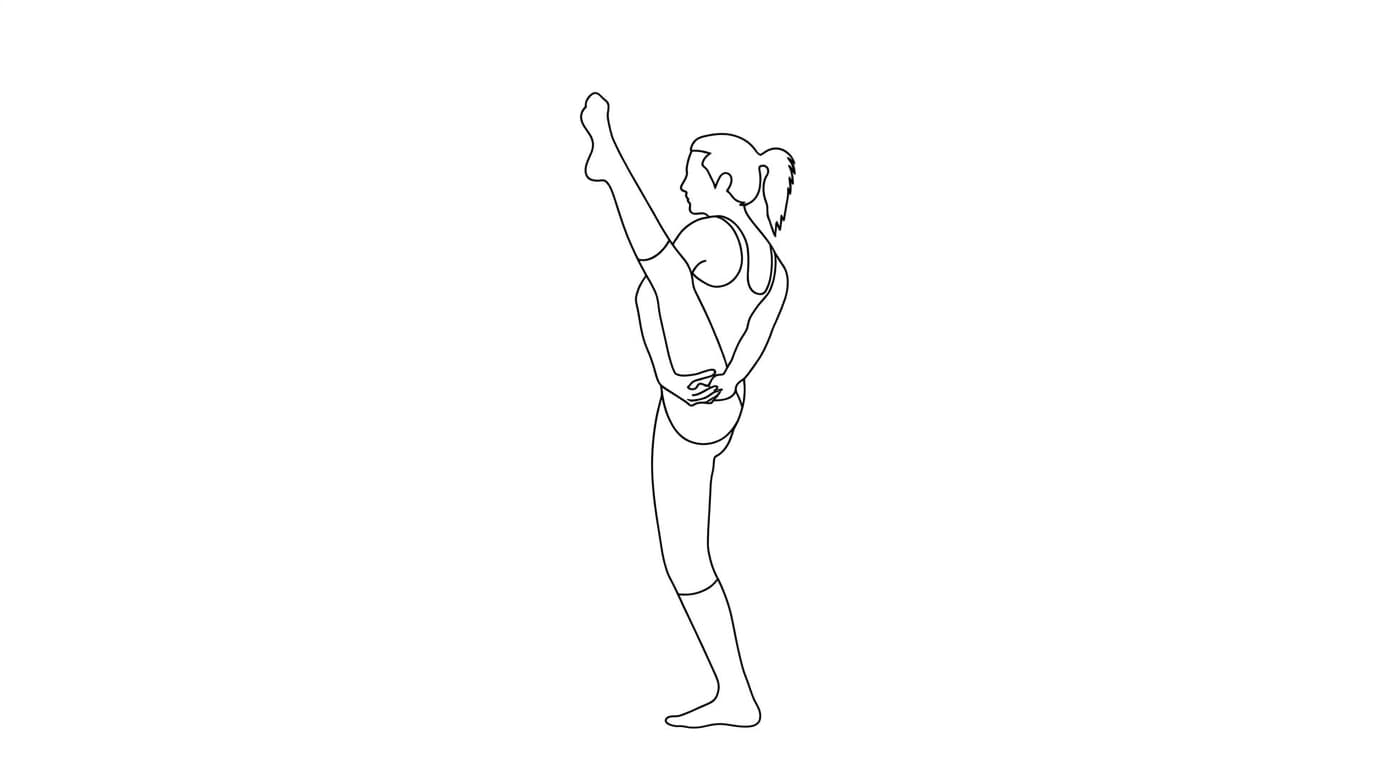
Bird of Paradise
Svarga Dvijasanaस्वर्गद्विजासन
Bird of Paradise combines a bound standing balance with one leg lifted and extended. The bind and balance are advanced and method-dependent; use a wall, keep the lifted knee bent, and learn the full entry and exit directly from a qualified teacher.
මඟපෙන්වීම විවෘත කරන්න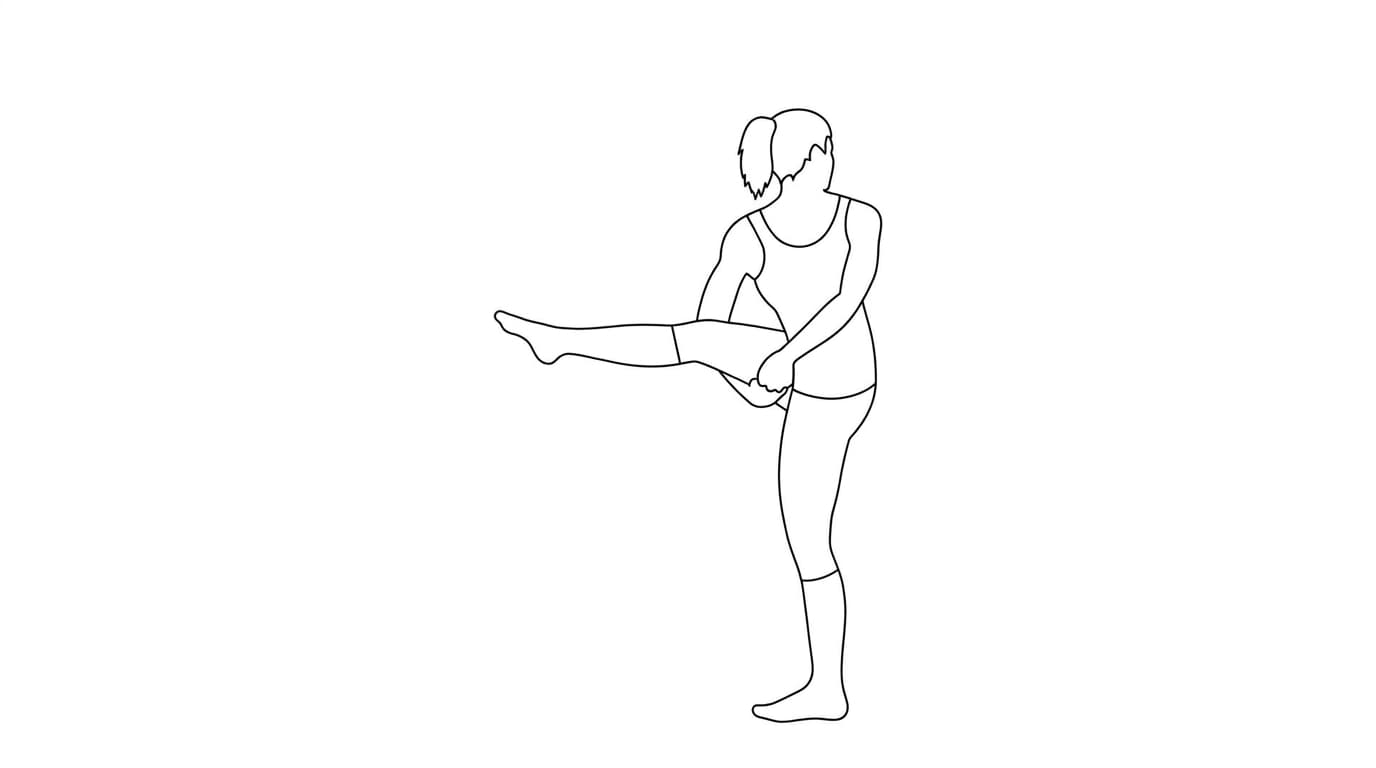
Revolved Bird of Paradise
Parivritta Svarga Dvijasanaपरिवृत्तस्वर्गद्विजासन
Revolved Bird of Paradise adds rotation to an already demanding bound standing balance. This combination should not be self-taught from text; confirm the specific lineage form with a qualified teacher and use a non-instructional supported preparation until reviewed.
මඟපෙන්වීම විවෘත කරන්න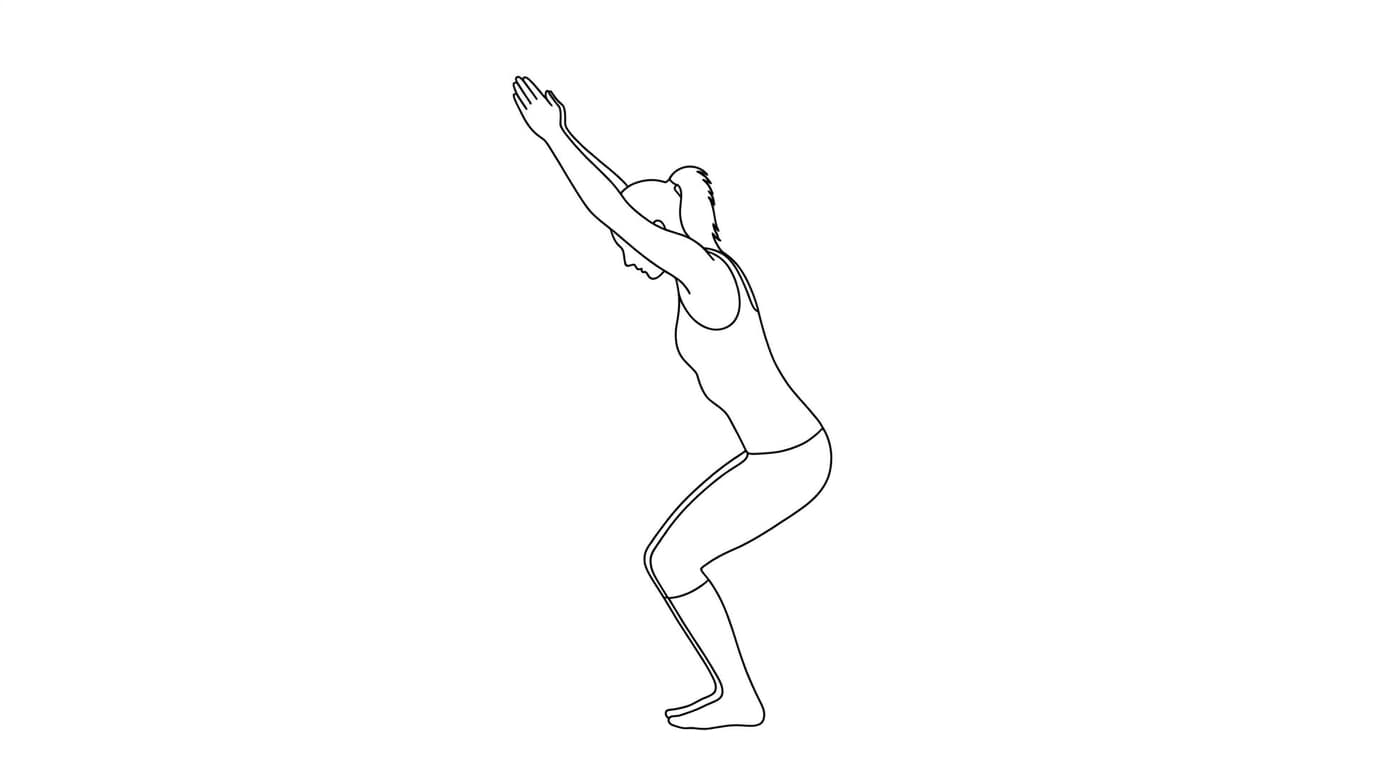
Chair Pose
Utkatasanaउत्कटासन
Chair Pose is a standing yoga posture with the hips moving back as if toward a chair. The depth is optional: a small bend in the knees with hands on the hips or a wall can be a complete version.
මඟපෙන්වීම විවෘත කරන්න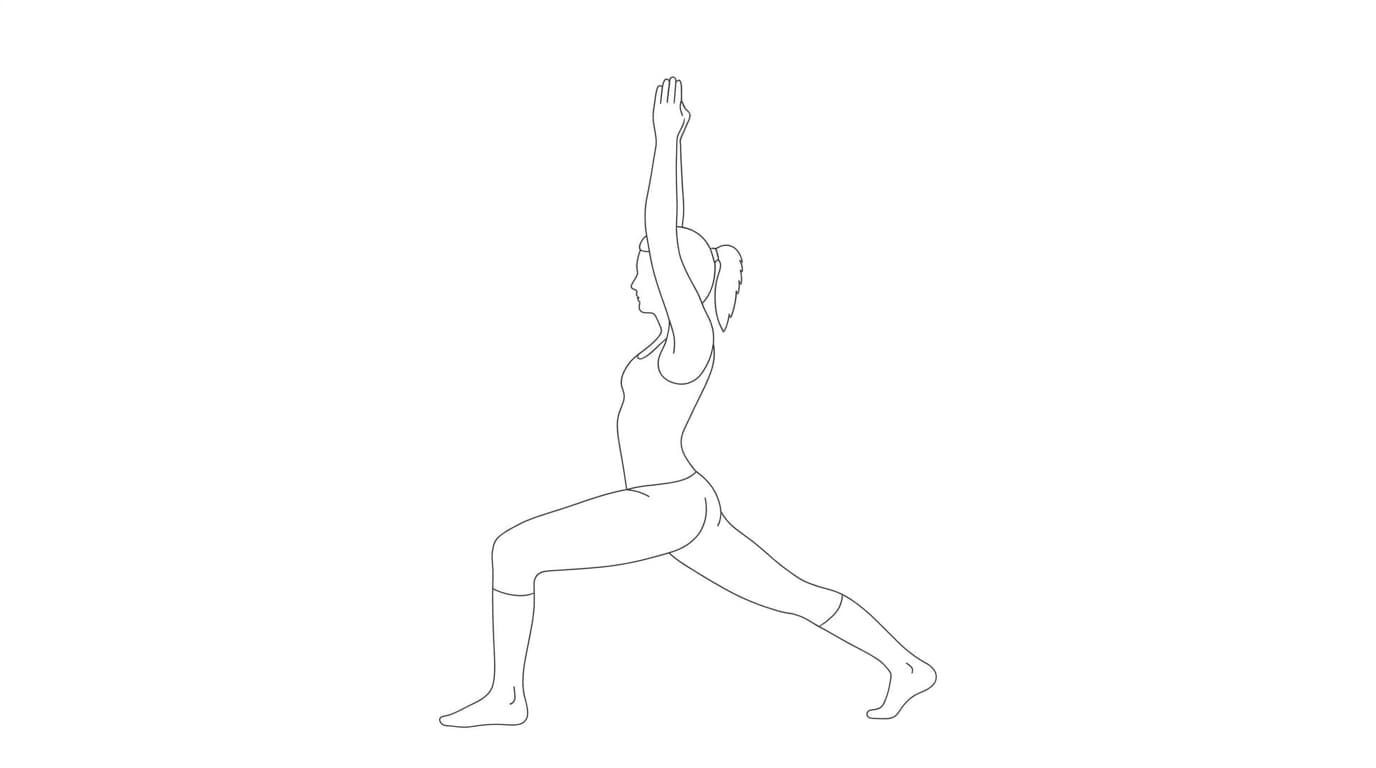
Crescent Lunge
Ashta Chandrasanaअष्टचन्द्रासन
Crescent Lunge is a standing lunge with the back heel lifted. Keep the stance short enough for balance, bend the front knee only within comfort, and use a wall or chair rather than forcing the hips forward.
මඟපෙන්වීම විවෘත කරන්න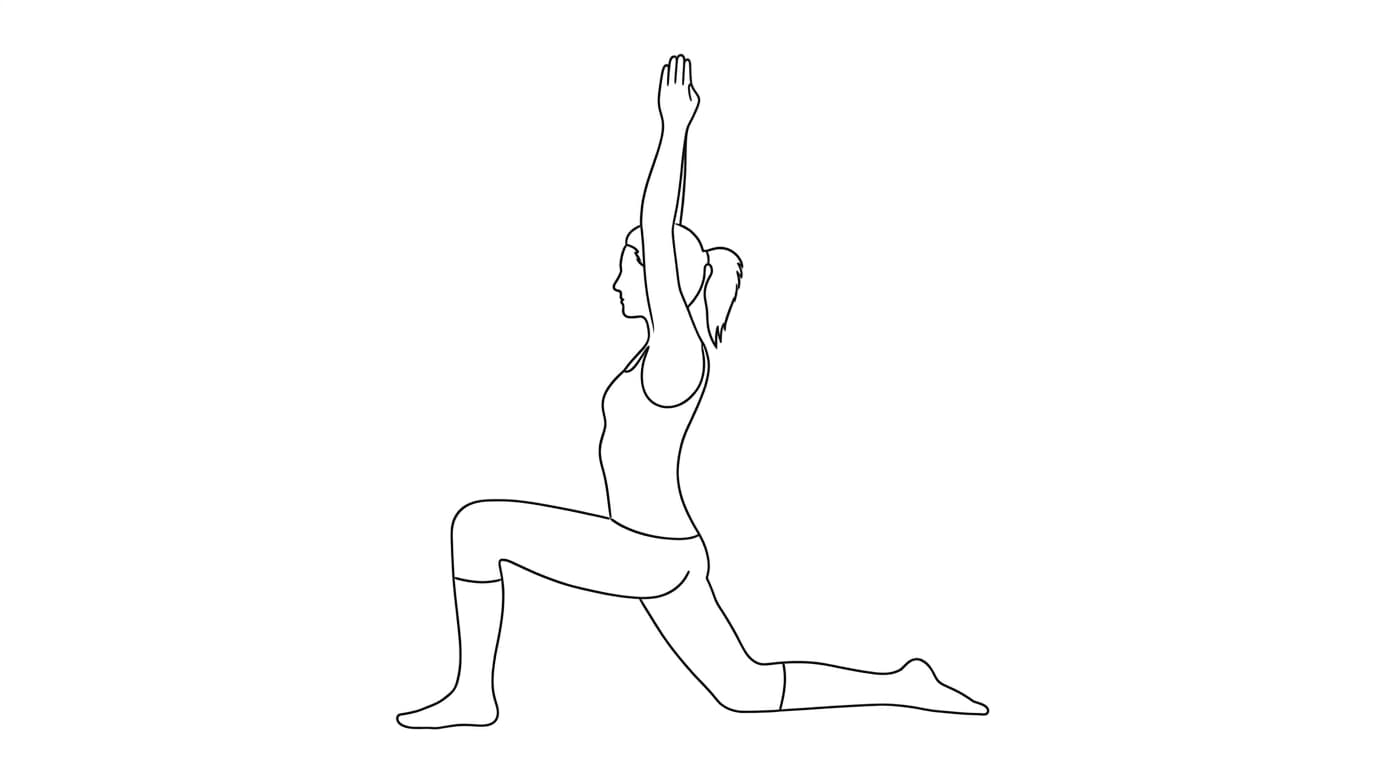
Crescent Lunge on the Knee
Anjaneyasanaअञ्जनेयासन
Anjaneyasana is commonly taught as a Crescent Lunge on the Knee, with the back knee resting on the floor. Pad the knee and keep the front foot stable. The torso can stay upright and the arms may remain down; reaching overhead is optional.
මඟපෙන්වීම විවෘත කරන්න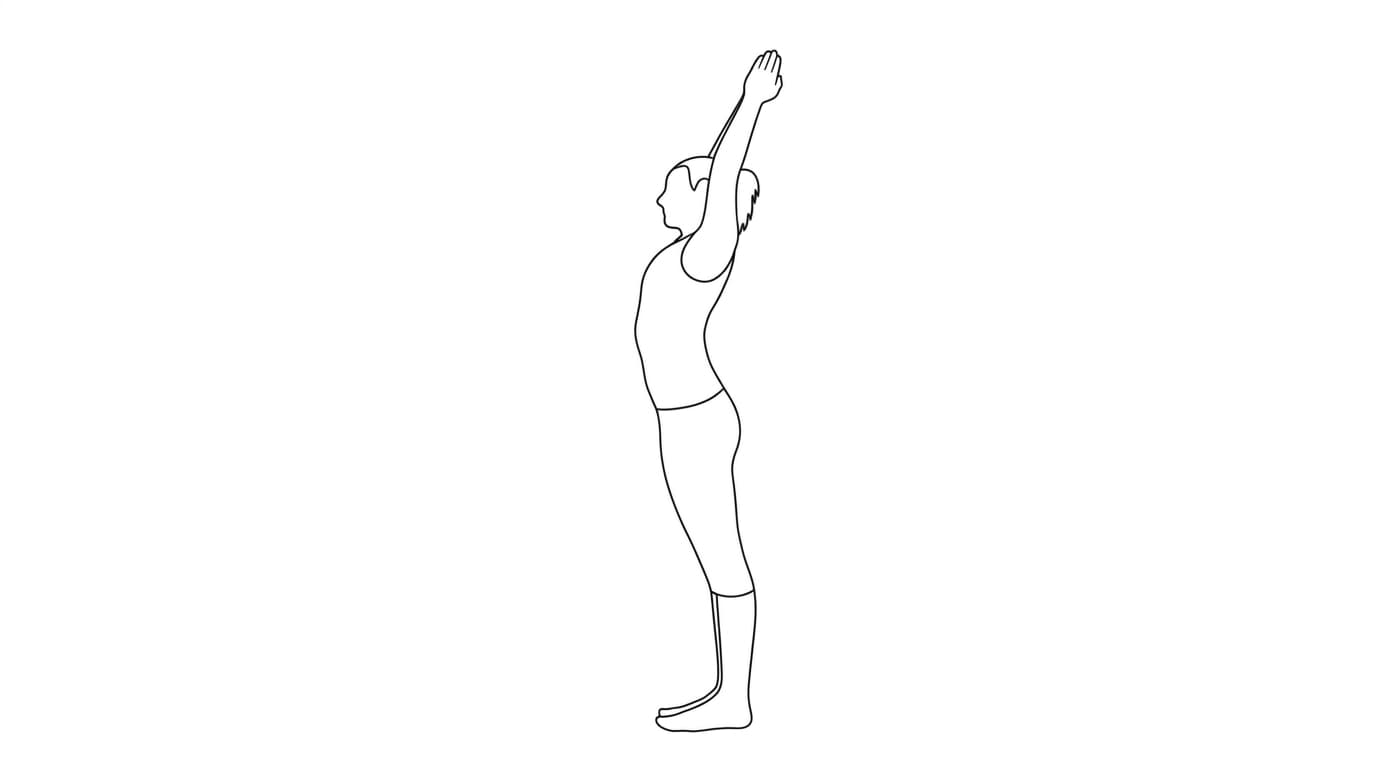
Crescent Moon
Crescent Moon is an ambiguous English pose label. Published references assign it different Sanskrit names and sometimes use it for a standing side bend; Ardha Chandrasana is also used for the distinct Half Moon balance. This page leaves Sanskrit and technique unassigned until the intended form is verified.
මඟපෙන්වීම විවෘත කරන්න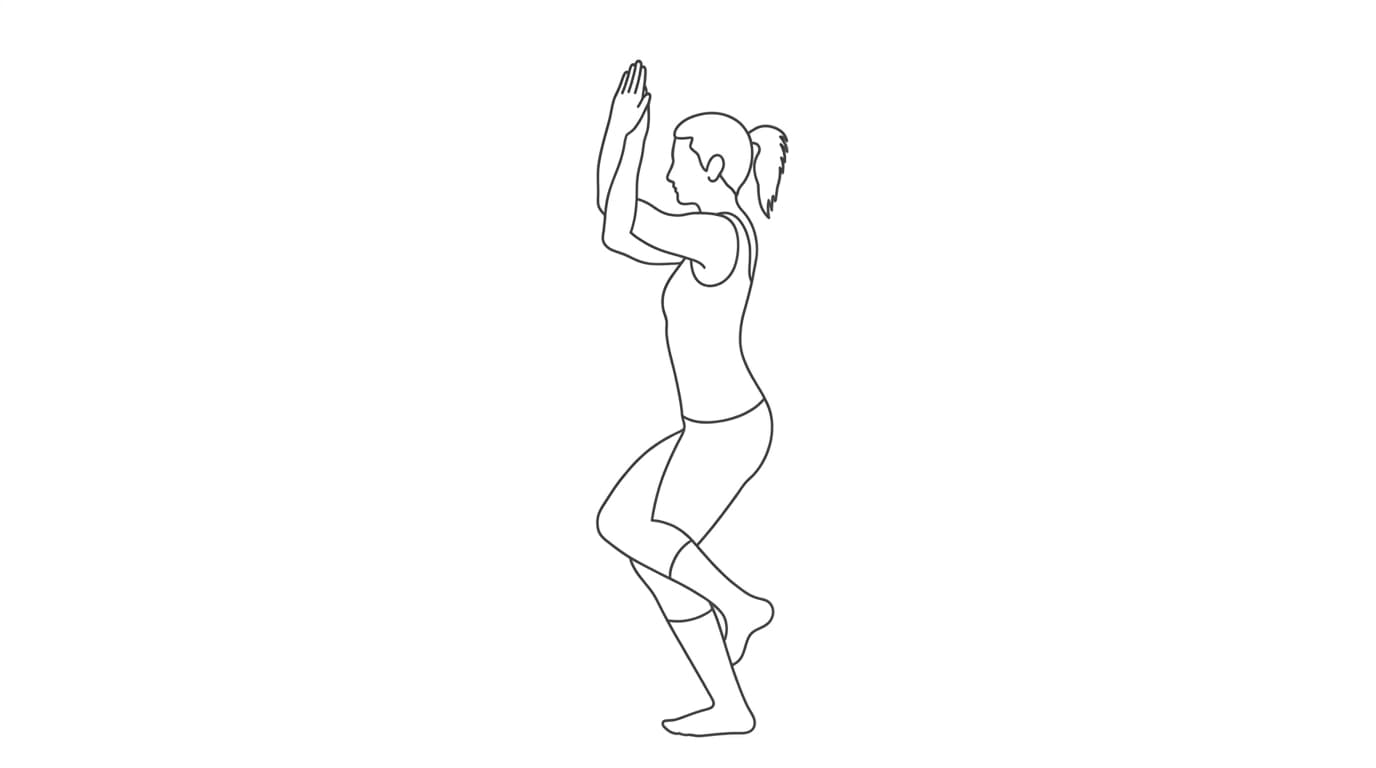
Eagle Pose
Garudasanaगरुडासन
Eagle Pose combines a standing balance with crossed legs and arms. The leg wrap and arm bind are optional; keep one foot on the floor and use a wall or chair if balance is uncertain.
මඟපෙන්වීම විවෘත කරන්න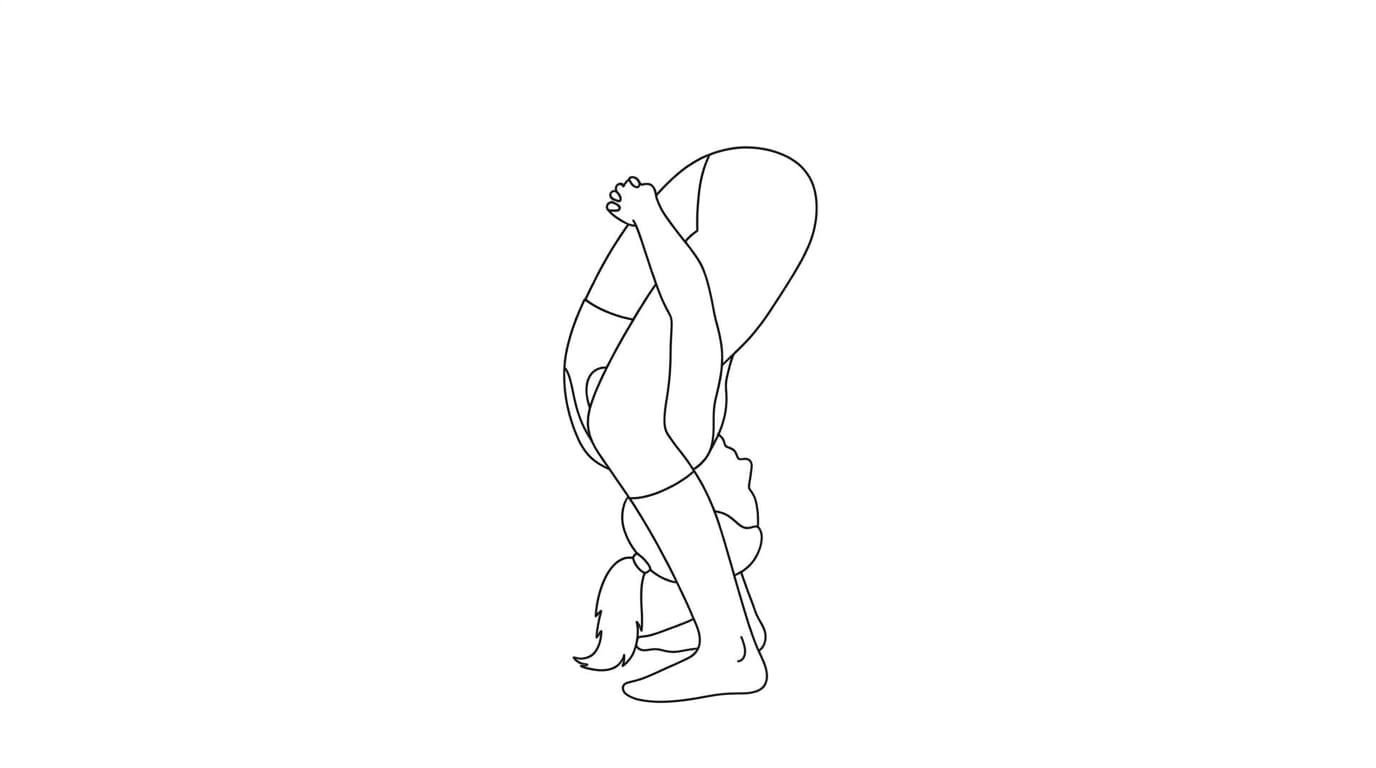
Firefly II
Tittibhasana Bतित्तिभासन
Firefly II is a lettered variation whose exact standing form is not established by this catalog entry. Verify the intended pose and source before practice; do not infer an arm balance or leg bind from the name alone.
මඟපෙන්වීම විවෘත කරන්න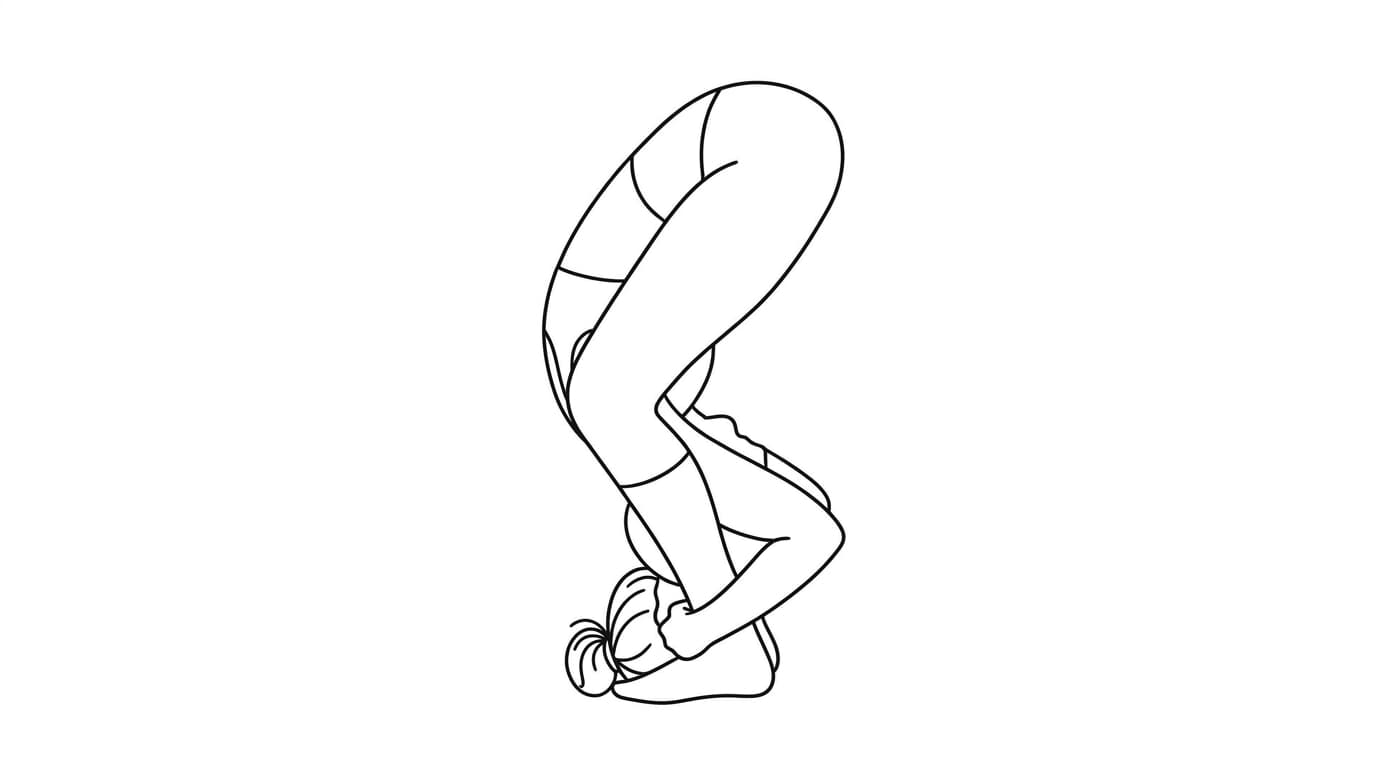
Firefly III
Tittibhasana Cतित्तिभासन
Firefly III is a lettered variation whose exact standing form is unclear from the catalog. Verify its source before assigning technique, and do not attempt an unsupported balance based on the name alone.
මඟපෙන්වීම විවෘත කරන්න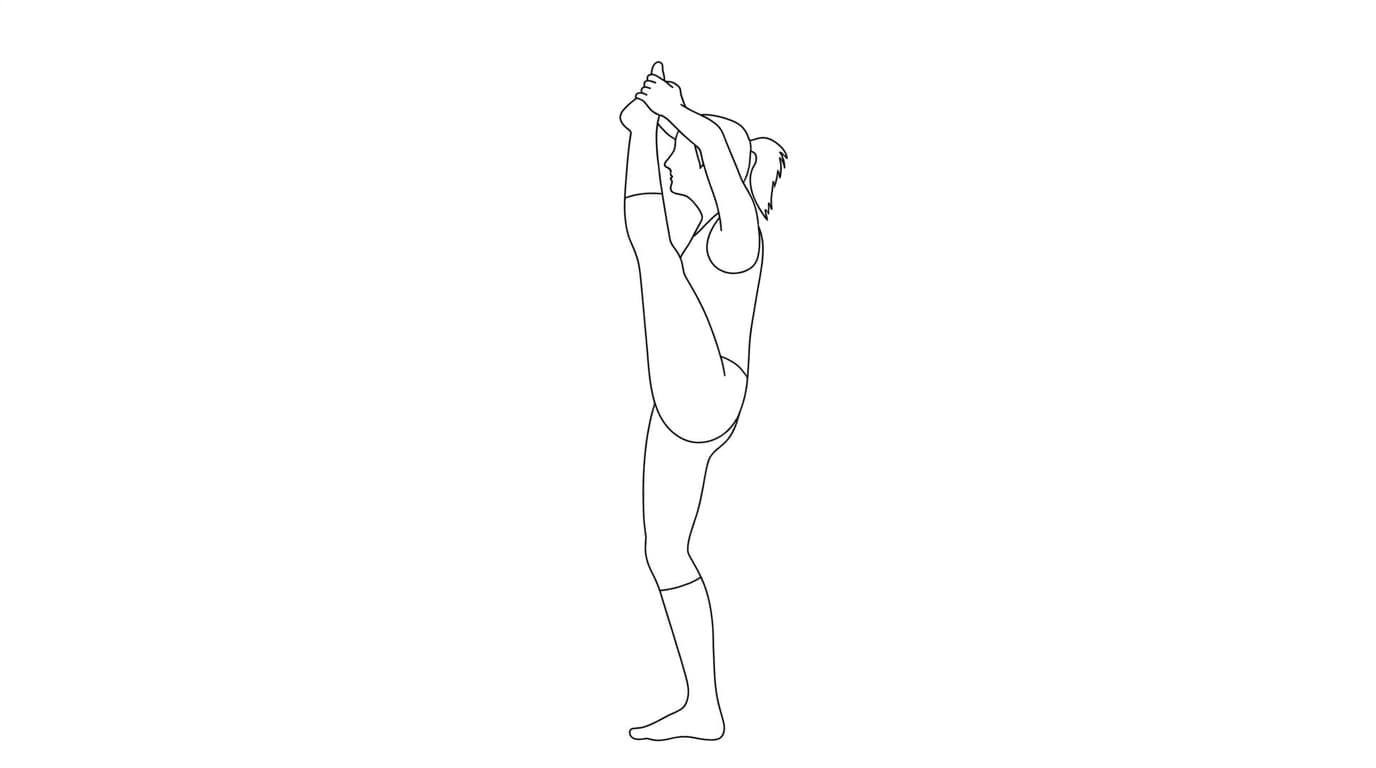
Standing Foot to Head
Trivikramasana Aत्रिविक्रमासन
Trivikramasana A is catalogued as a standing foot-to-head posture, but the label alone does not establish a safe or standardized technique. It requires exceptional range and balance; this page intentionally provides no self-teaching steps and recommends qualified in-person instruction.
මඟපෙන්වීම විවෘත කරන්න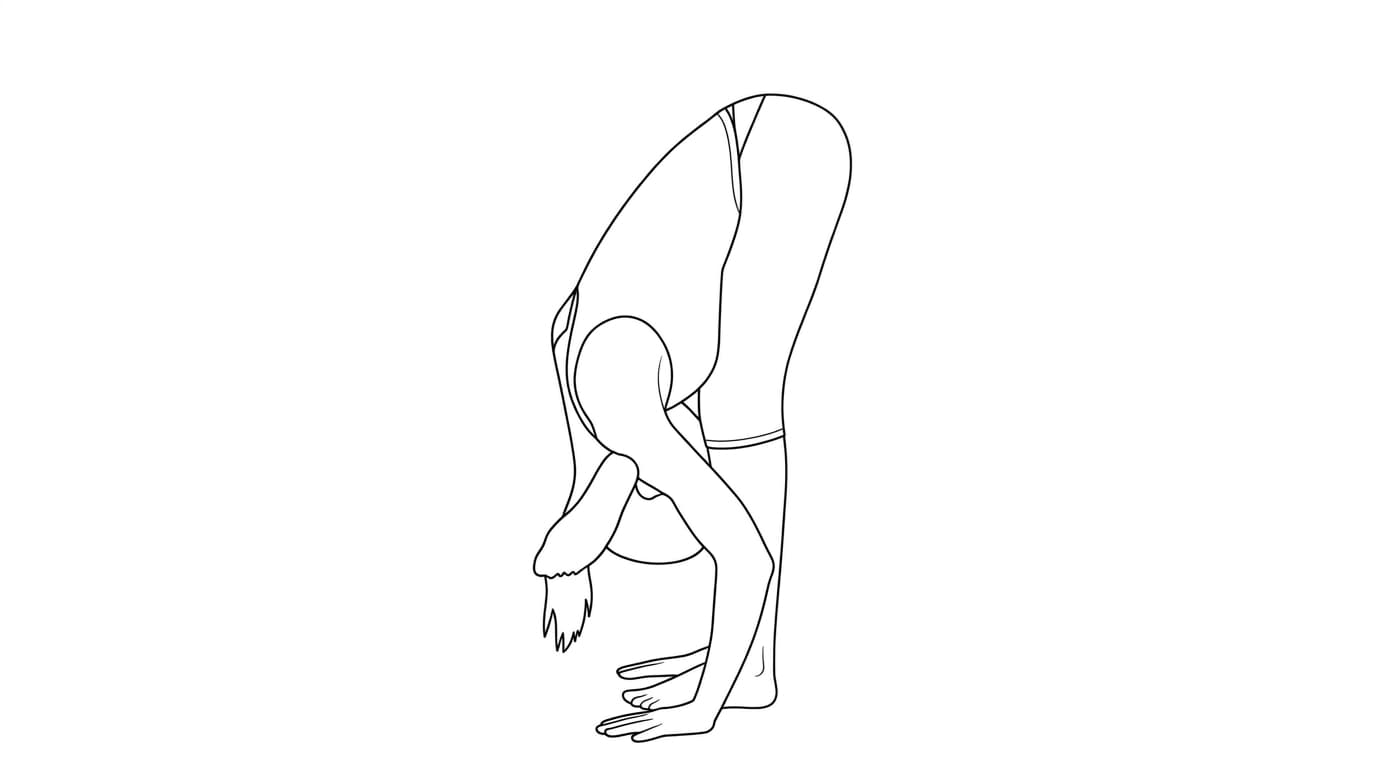
Standing Leg Behind the Head Forward Bend
Richikasanaऋचिकासन
Richikasana is catalogued as a standing forward fold with a leg-behind-head position. The combination is highly demanding and the name may describe lineage-specific forms; this draft does not provide entry steps and recommends qualified in-person instruction.
මඟපෙන්වීම විවෘත කරන්න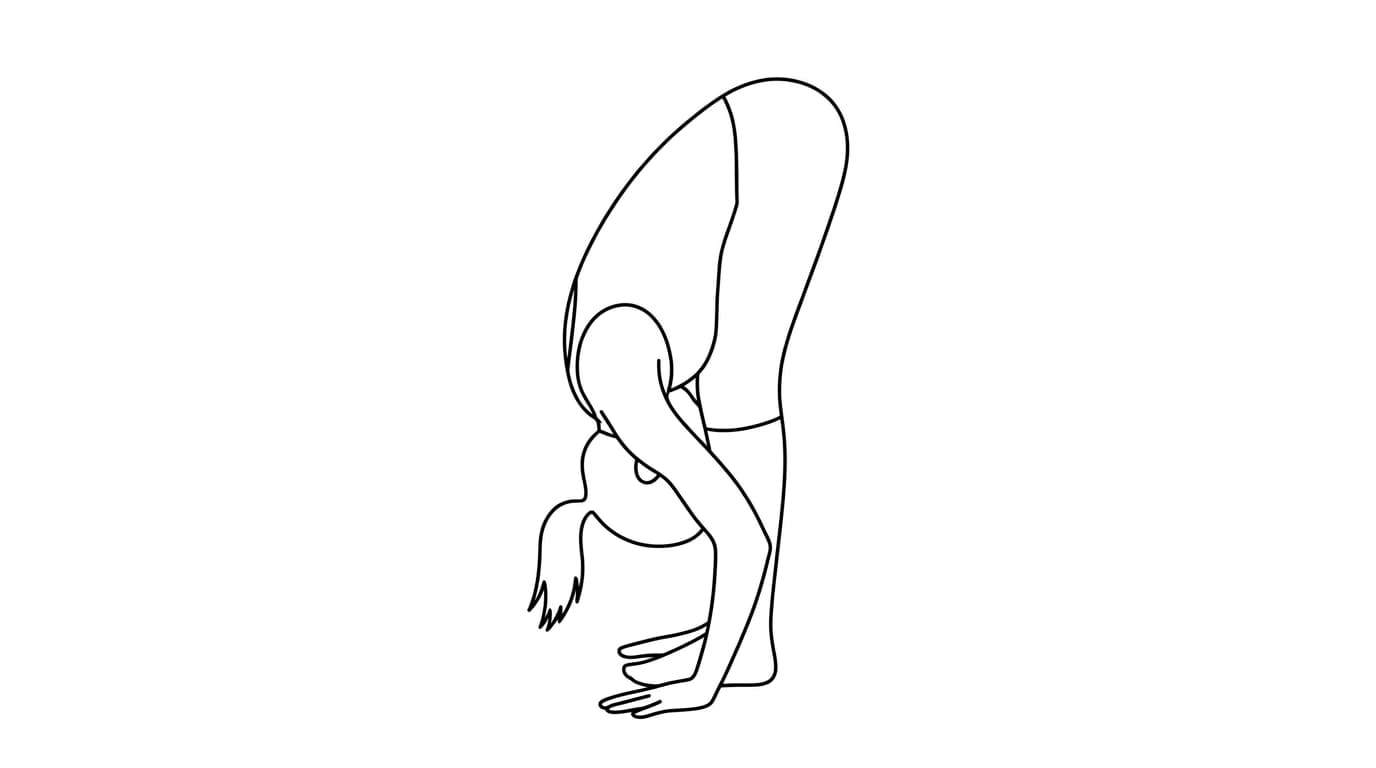
Standing Forward Bend
Uttanasanaउत्तानासन
Uttanasana is a standing forward fold with the torso inclining toward the legs. Bend the knees generously and let the head hang only if comfortable; touching the floor or straightening the legs is not required.
මඟපෙන්වීම විවෘත කරන්න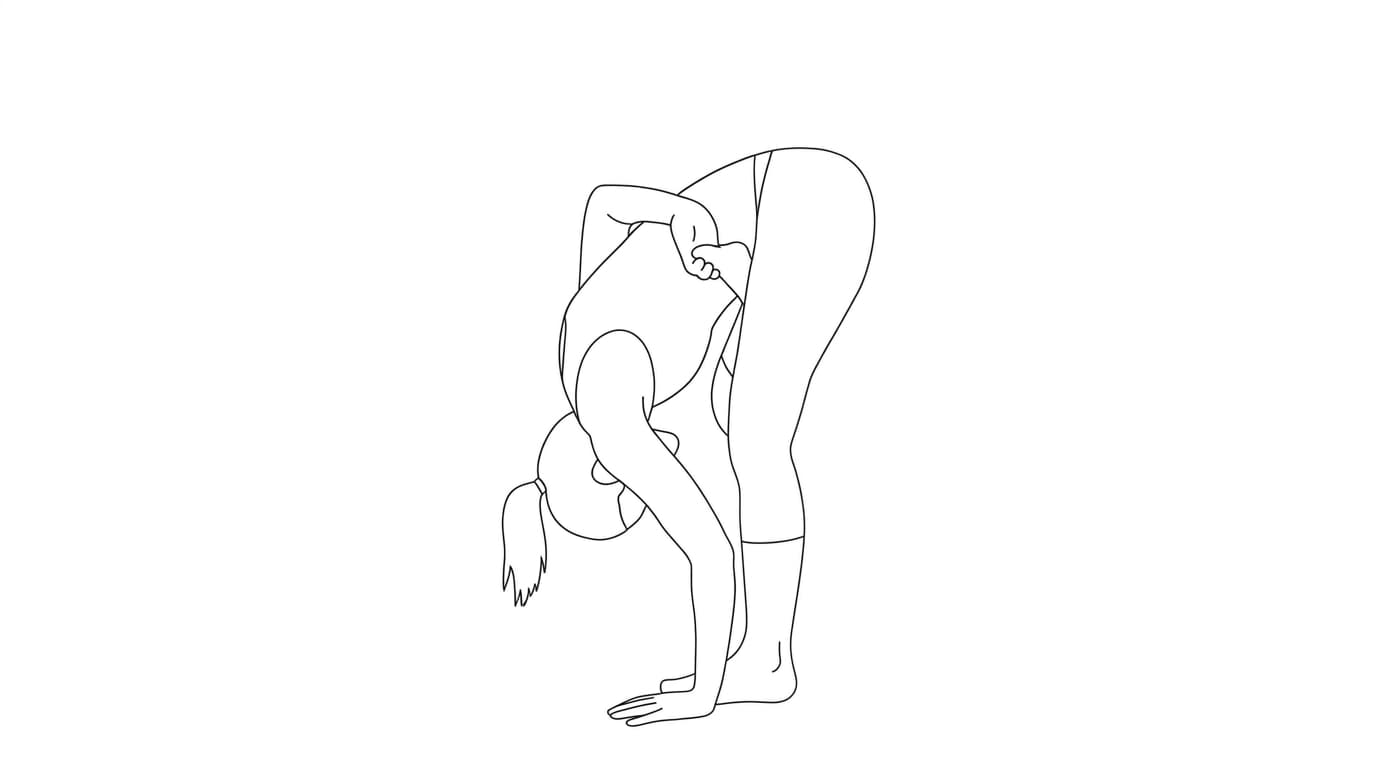
Standing Half Bound Lotus Forward Bend
Ardha Baddha Padmottanasanaअर्धबद्धपद्मोत्तानासन
Standing Half Bound Lotus Forward Bend combines a one-legged balance, a lotus-style leg position, a bind, and a forward fold. This is demanding on the knee and balance; do not force the lotus leg or learn the full entry from text alone.
මඟපෙන්වීම විවෘත කරන්න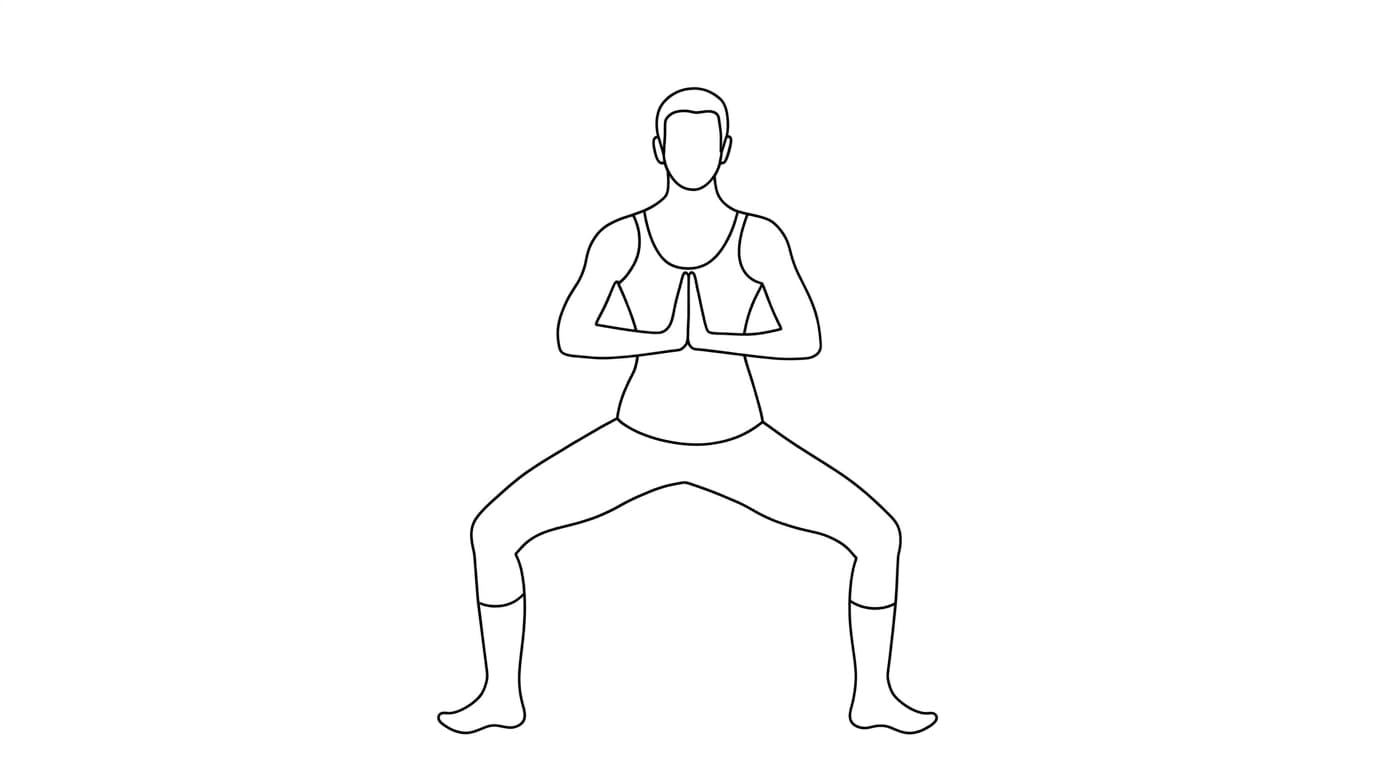
Goddess Pose
Utkata Konasanaउत्कटकोणासन
Goddess Pose is a wide-stance squat with the knees bending in the direction of the toes. Choose a shallow depth, keep a chair or wall nearby, and avoid forcing the feet or knees into a fixed angle.
මඟපෙන්වීම විවෘත කරන්න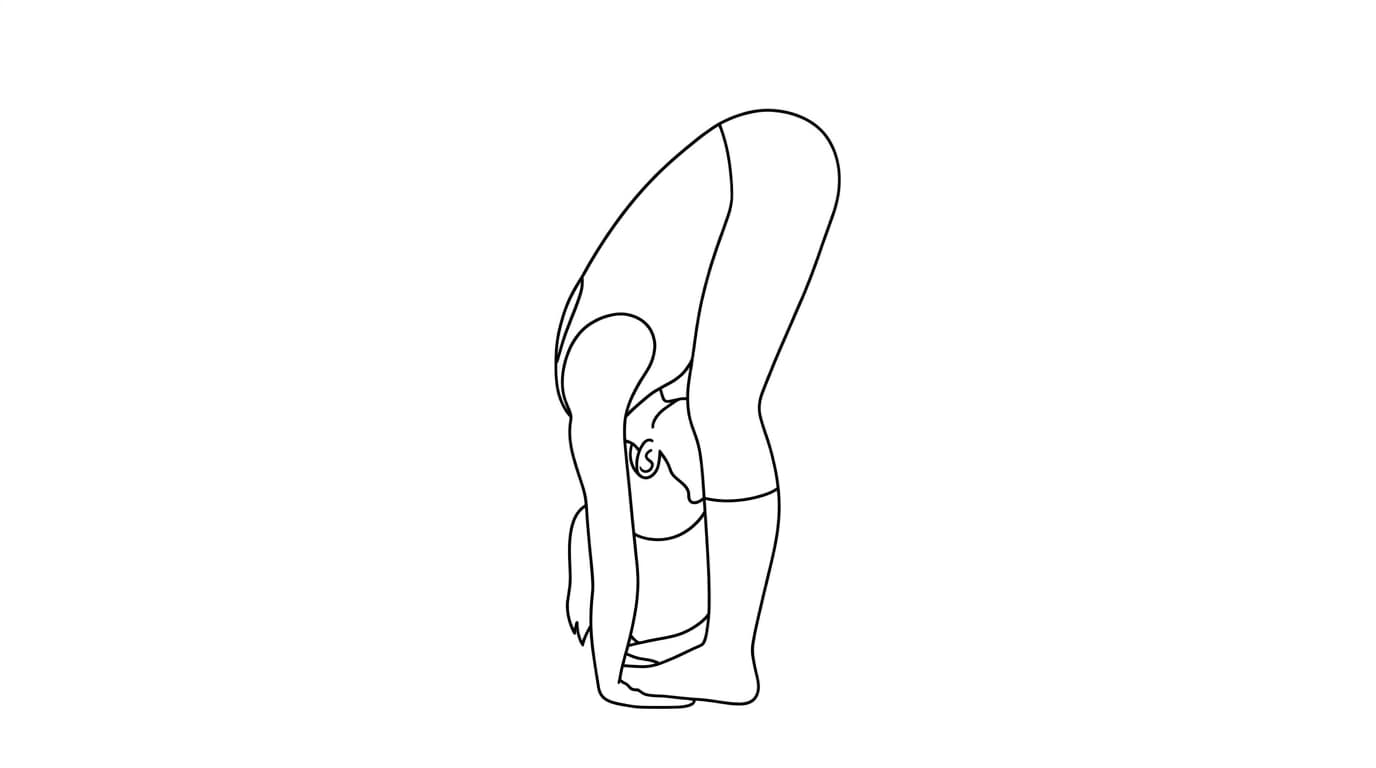
Gorilla Pose
Pada Hastasanaपादहस्तासन
Gorilla Pose is a standing forward-fold variation in which the hands may be placed under the feet. This hand position is optional; bend the knees, use blocks, and avoid pressing body weight onto the fingers or forcing the fold.
මඟපෙන්වීම විවෘත කරන්න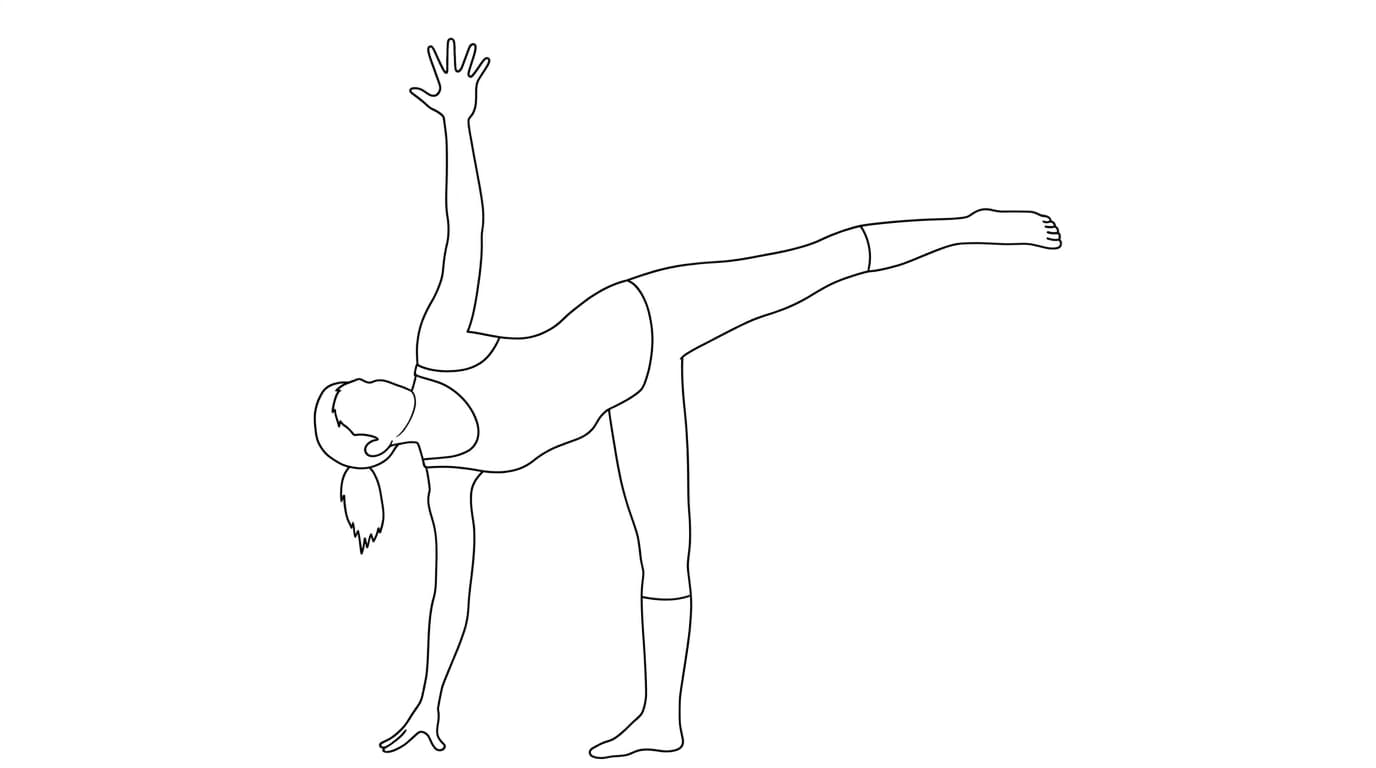
Half Moon Pose
Ardha Chandrasanaअर्धचन्द्रासन
Half Moon Pose is a standing balance with one hand supported and the other leg lifting to the side. Use a wall or block, keep the lifted leg low, and avoid treating the full-height balance as necessary.
මඟපෙන්වීම විවෘත කරන්න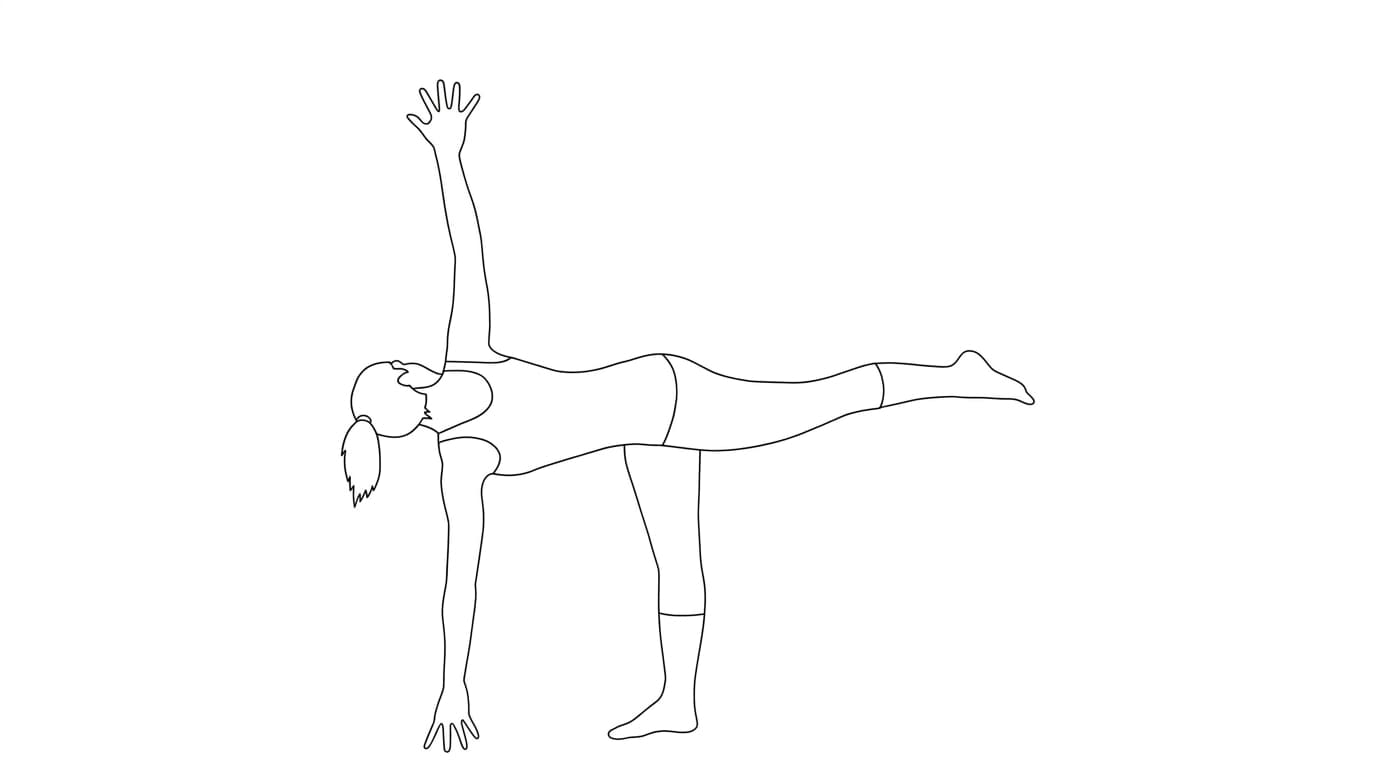
Revolved Half Moon
Parivritta Ardha Chandrasanaपरिवृत्तार्धचन्द्रासन
Revolved Half Moon combines a one-legged balance with torso rotation and is demanding for balance and coordination. Use a wall and high support, keep the lifted toes down if needed, and do not practice the unsupported full pose from text alone.
මඟපෙන්වීම විවෘත කරන්න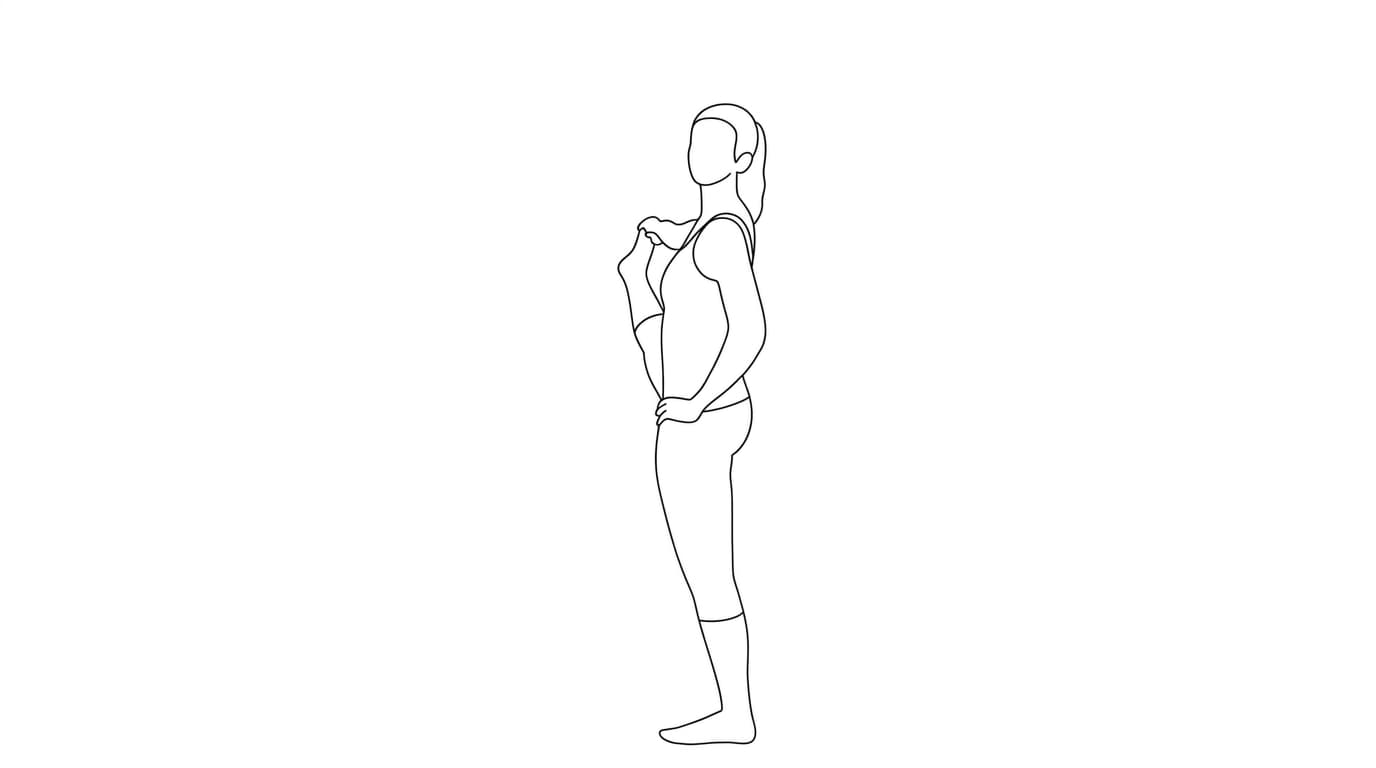
Extended Standing Hand to Big Toe
Utthita Hasta Padangushthasana Bउत्थितहस्तपादाङ्गुष्ठासन
Standing Hand to Big Toe B adds a sideward leg extension to a one-legged balance and can be demanding for the standing leg, hips, and balance. Use wall support and a bent knee; do not force the leg outward or self-teach the full bind from text.
මඟපෙන්වීම විවෘත කරන්න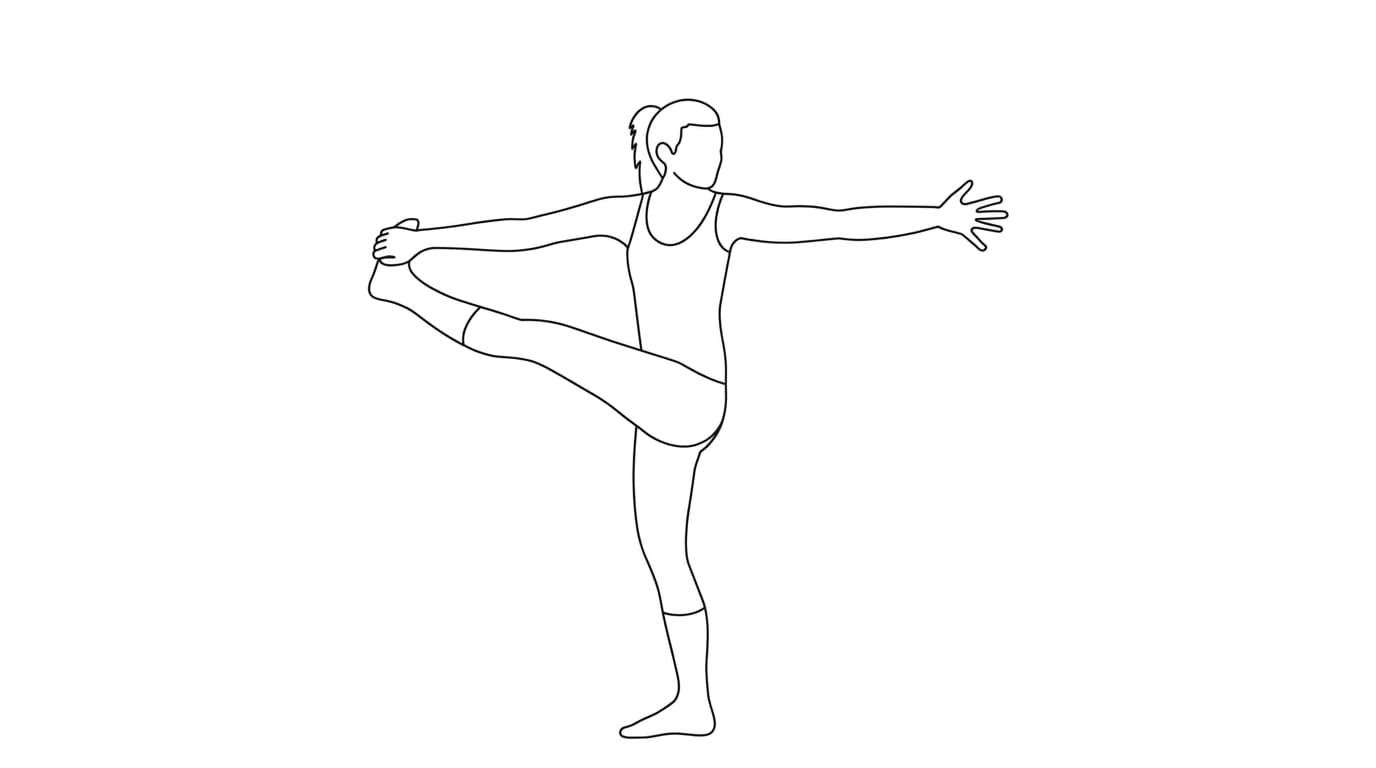
Revolved Standing Hand to Big Toe
Parivritta Hasta Padangushthasanaपरिवृत्तहस्तपादाङ्गुष्ठासन
Revolved Standing Hand to Big Toe combines a one-legged balance, leg extension, and torso rotation. Use a wall and strap only with suitable instruction; keep the standing foot supported and do not force the lifted leg or twist.
මඟපෙන්වීම විවෘත කරන්න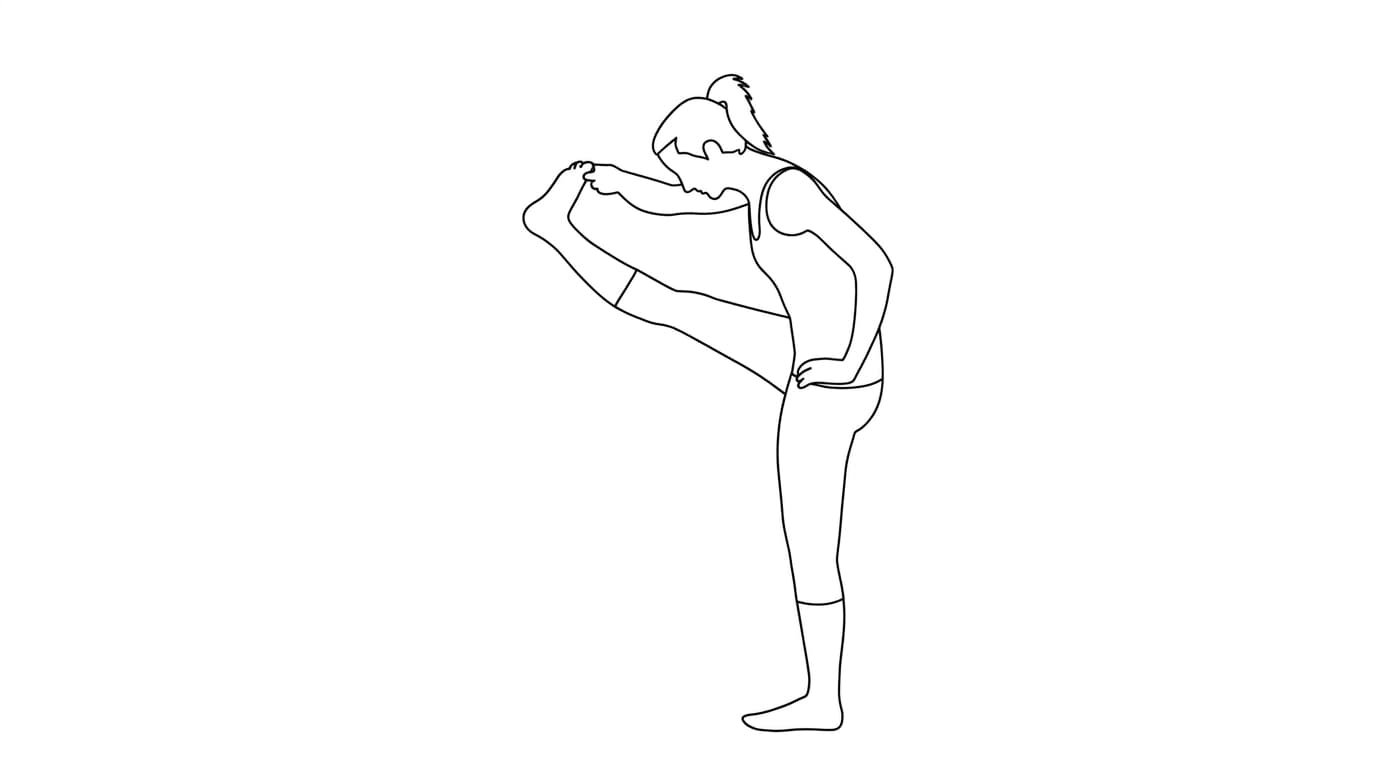
Standing Hand to Big Toe
Utthita Hasta Padangushthasana Aउत्थितहस्तपादाङ्गुष्ठासन
Standing Hand to Big Toe A combines a one-legged balance with a forward leg extension. Use a wall and strap, keep the lifted knee bent, and do not pull the leg higher than balance and comfort allow.
මඟපෙන්වීම විවෘත කරන්න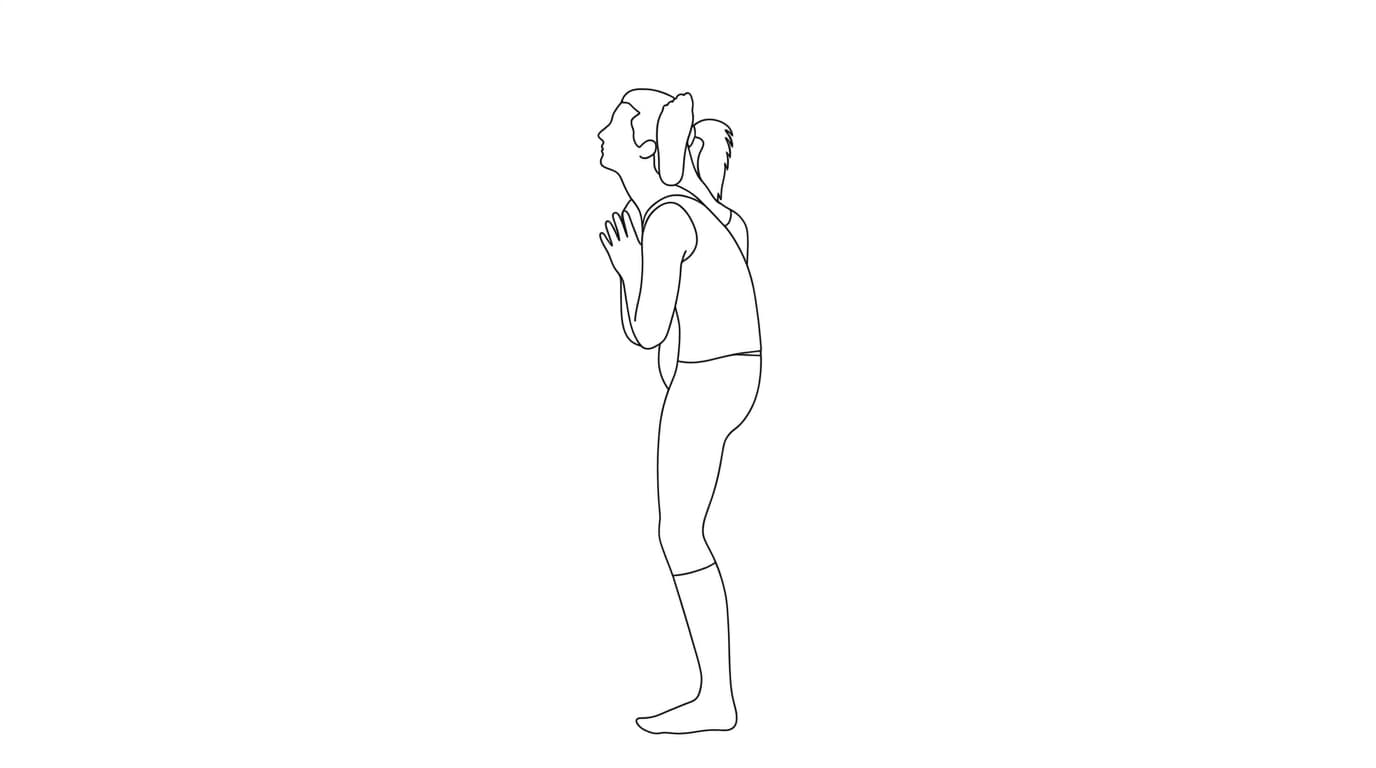
Standing Leg Behind the Head
Durvasasanaदुर्वासासन
Durvasasana is an advanced standing balance involving a leg-behind-head position. It can place substantial demand on the hips, knees, neck, and balance; this page provides no entry steps and recommends direct qualified instruction or a non-binding alternative.
මඟපෙන්වීම විවෘත කරන්න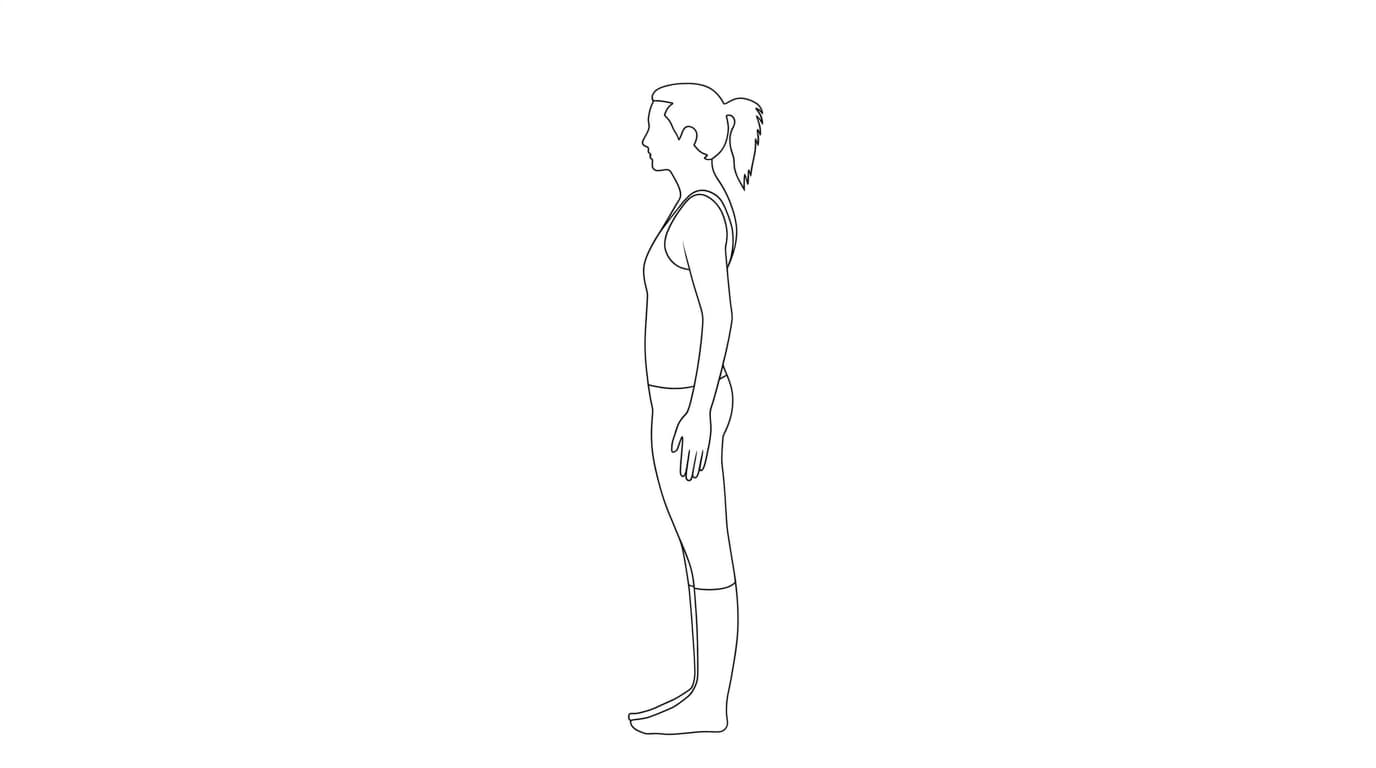
Tadasana (කඳු ඉරියව්ව)
Tadasanaताडासन
Tadasana, හෝ Mountain Pose, යනු සමබරතාවය, පාද ස්පර්ශය සහ අවංක ස්ථාවරය ගවේෂණය කිරීමට භාවිතා කරන ස්ථාවර යෝග ඉරියව්වකි. හැඩය දෘඩ වඩා නිශ්ශබ්ද වේ: දණහිස් පහසුව පවතී, හුස්ම ස්වභාවිකව පවතී, සහ බැල්ම ස්ථාවරව පවතී.
මඟපෙන්වීම විවෘත කරන්න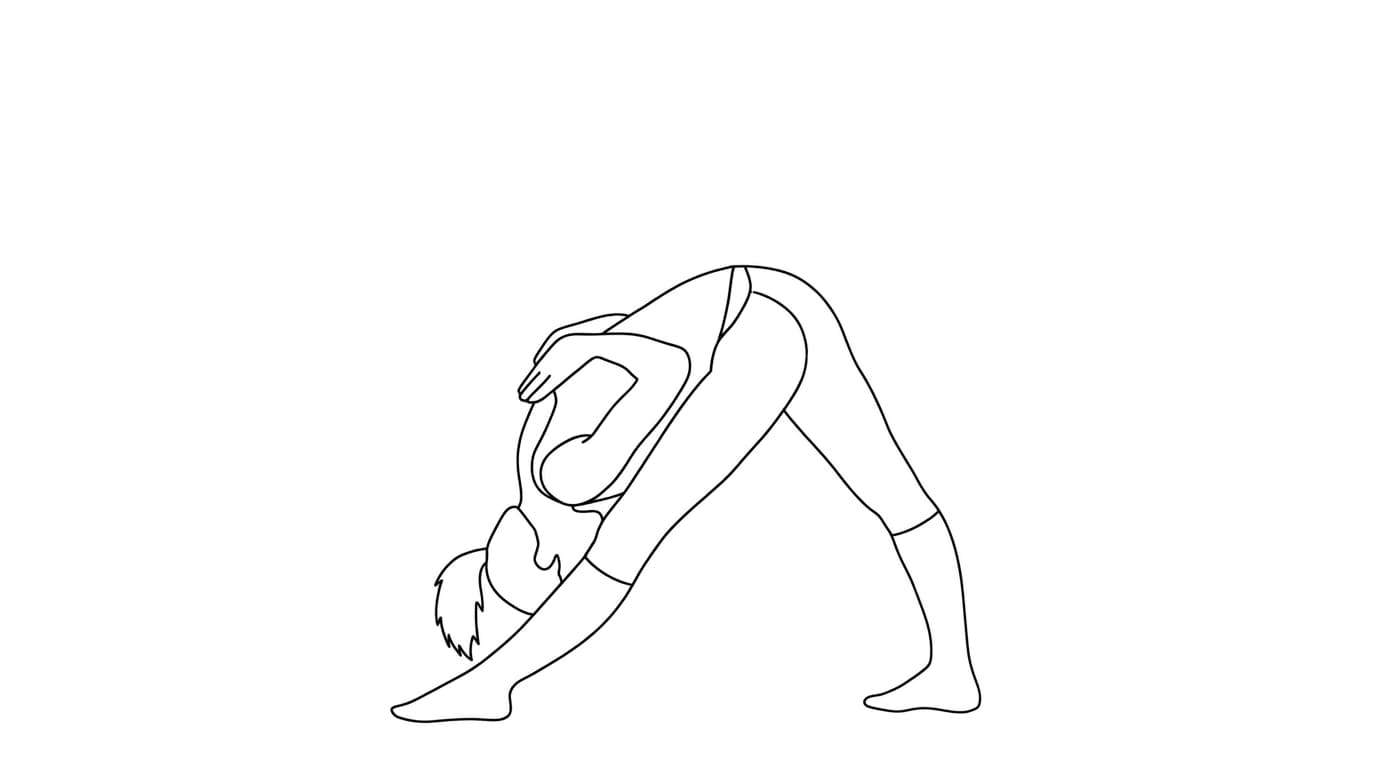
Pyramid Pose
Parshvottanasanaपार्श्वोत्तानासन
Pyramid Pose is an asymmetric standing forward fold with the feet set apart along a stable stance. Shorten the stance, bend the front knee, and use blocks or a chair rather than forcing the torso toward the leg.
මඟපෙන්වීම විවෘත කරන්න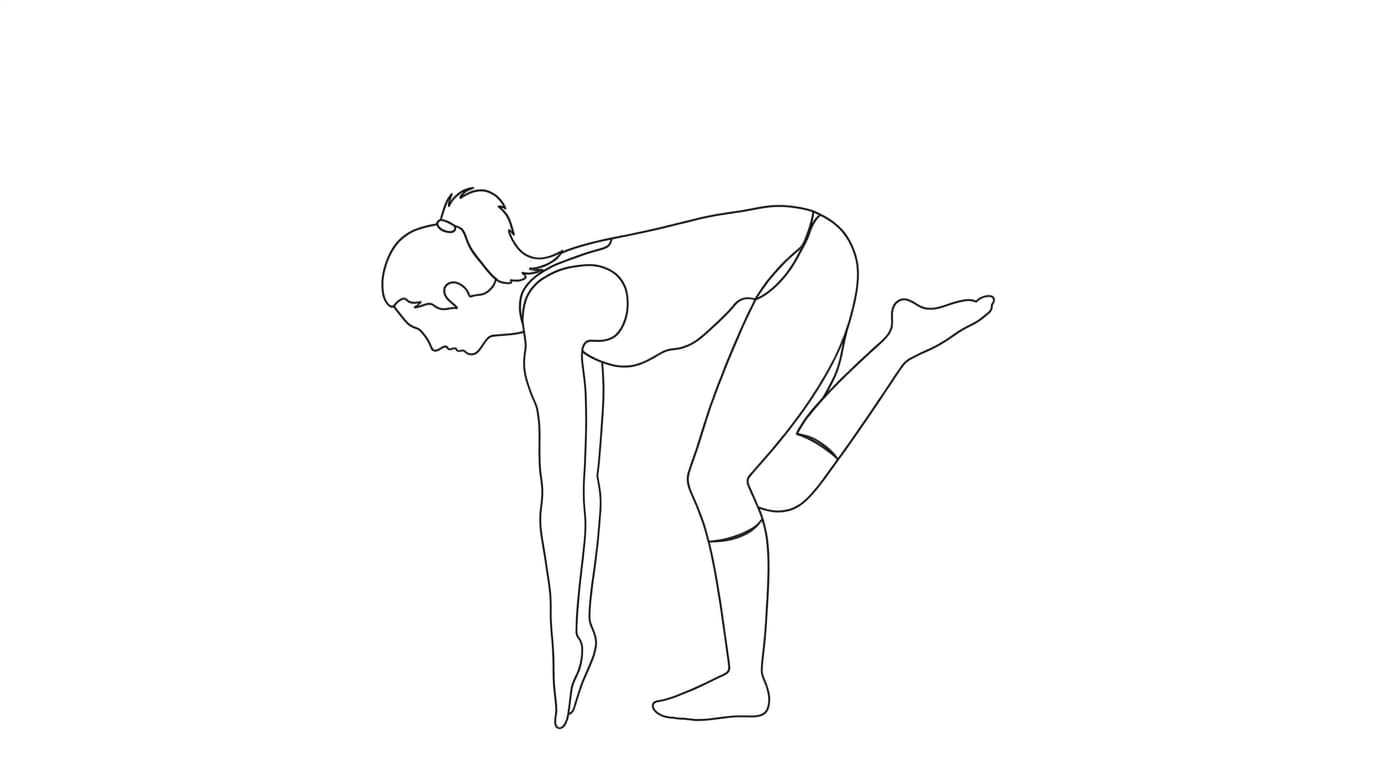
Shiva Squat
Shiva Squat is a contemporary name used for several dynamic single-leg squat patterns. Because the movement is not standardized, this page avoids prescribing a specific sequence; use a stable support and learn the intended version from a qualified teacher.
මඟපෙන්වීම විවෘත කරන්න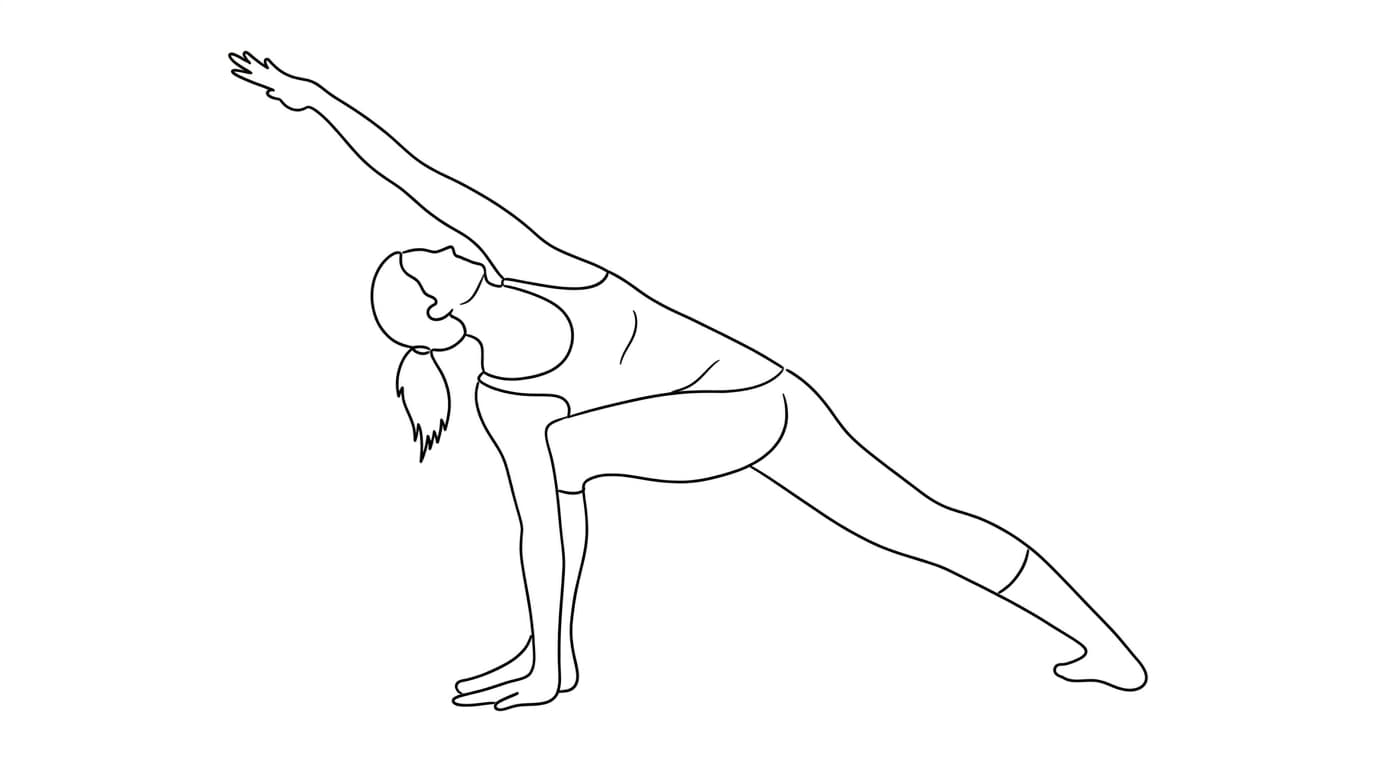
Extended Side Angle
Utthita Parshvakonasanaउत्थितपार्श्वकोणासन
Extended Side Angle is a standing lunge with the torso reaching over the bent front leg. Rest the lower hand on the thigh, a block, or a chair; keep the stance stable and avoid compressing the neck or lower back.
මඟපෙන්වීම විවෘත කරන්න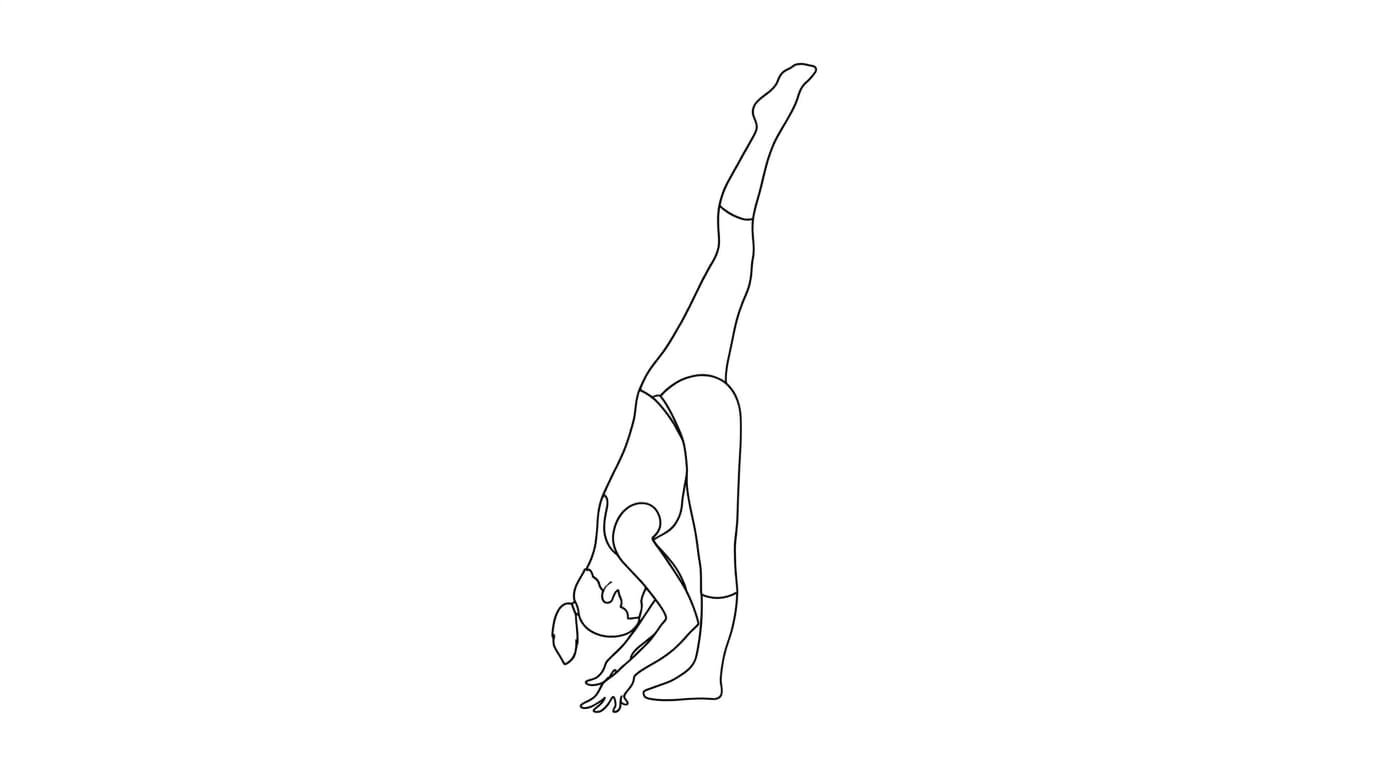
Standing Splits
Urdhva Prasarita Eka Padasanaऊर्ध्वप्रसारितैकपादासन
Standing Splits is a forward-fold balance in which one leg lifts behind the body. Keep both hands on blocks or a chair and the lifted leg low; hip height is optional, and the standing knee may bend.
මඟපෙන්වීම විවෘත කරන්න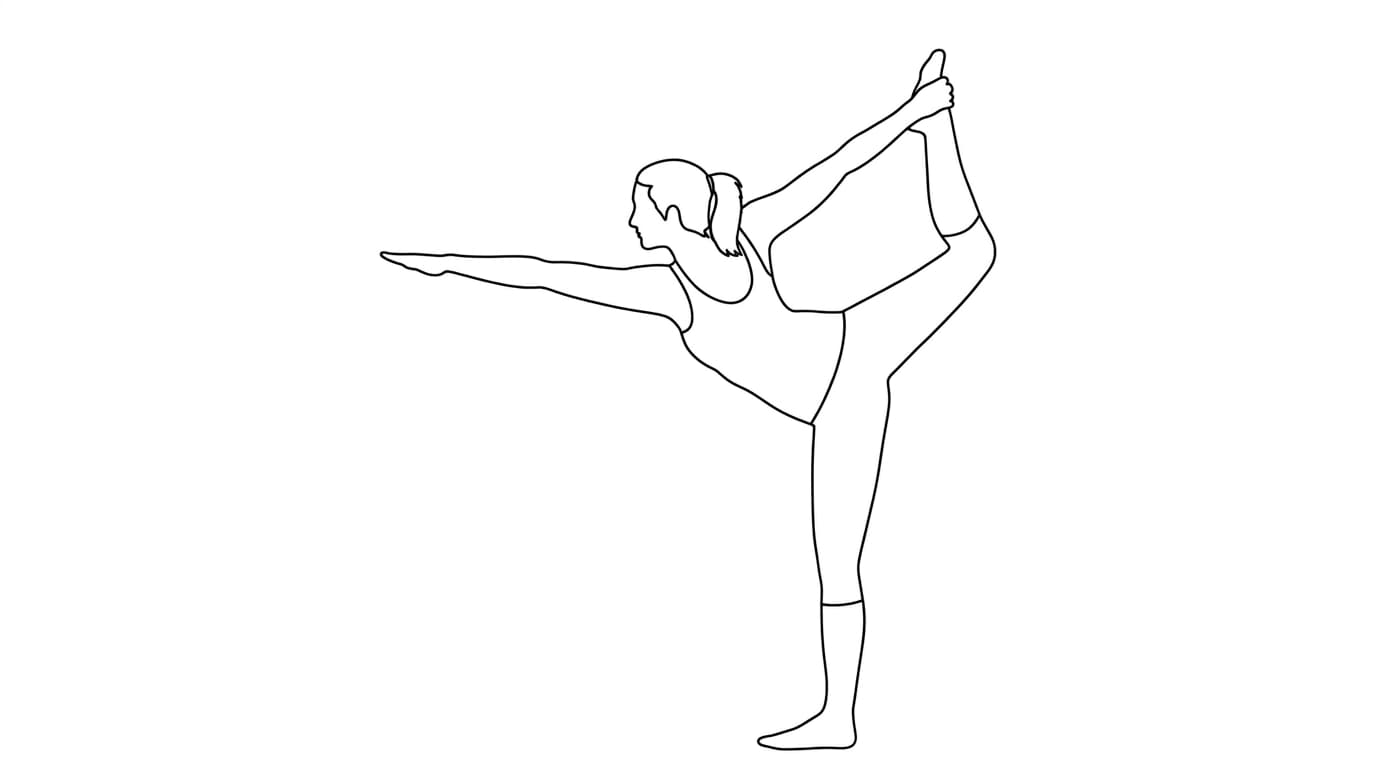
Standing Bow
Dandayamana Dhanurasanaदण्डायमानधनुरासन
Standing Bow is a one-legged balance with a backbend and a hand holding the lifted foot. It combines balance, shoulder range, and spinal extension; use direct qualified instruction and do not pull the foot higher or practice unsupported near hazards.
මඟපෙන්වීම විවෘත කරන්න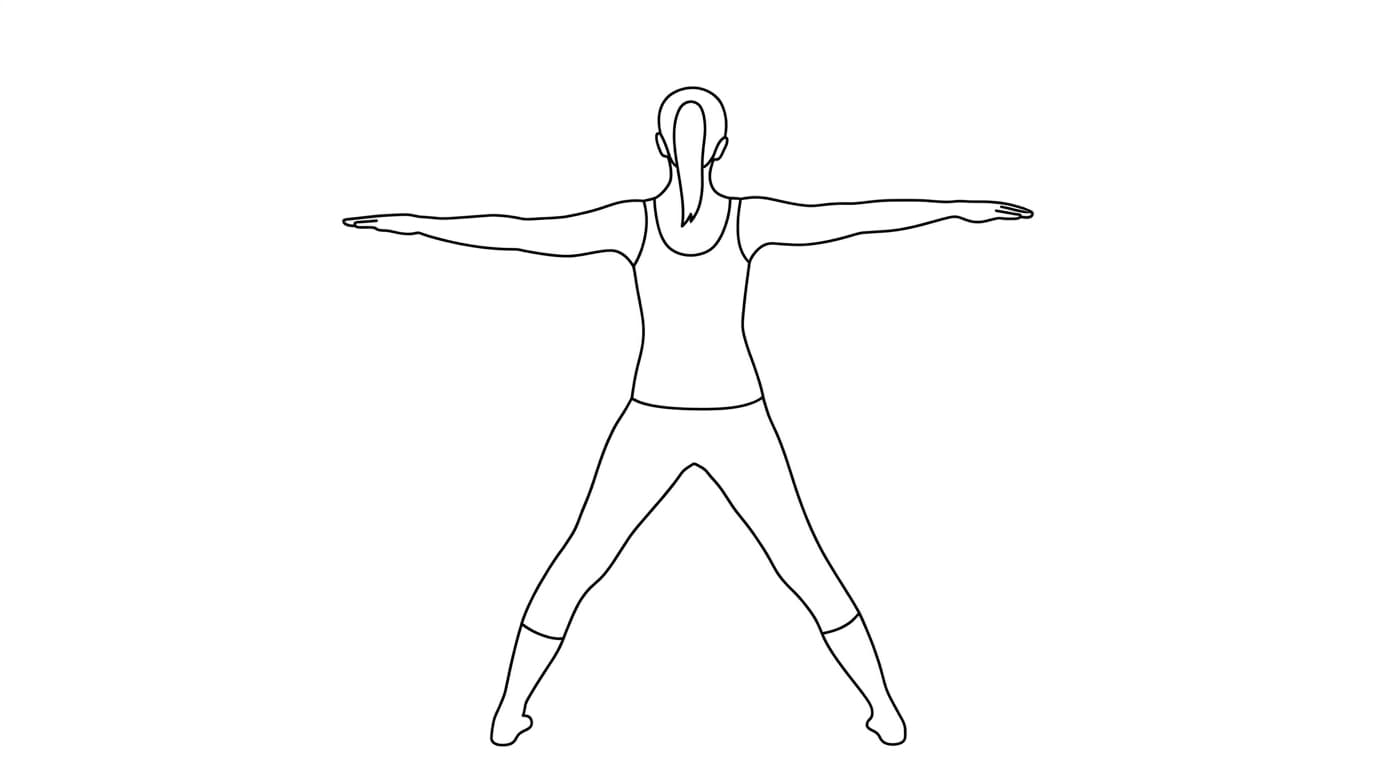
Star Pose
Utthita Tadasanaउत्थितताडासन
Star Pose is a wide standing position with the arms reaching outward or upward. Keep the feet stable and arms at a comfortable height; the pose can be practiced without jumping or locking the knees.
මඟපෙන්වීම විවෘත කරන්න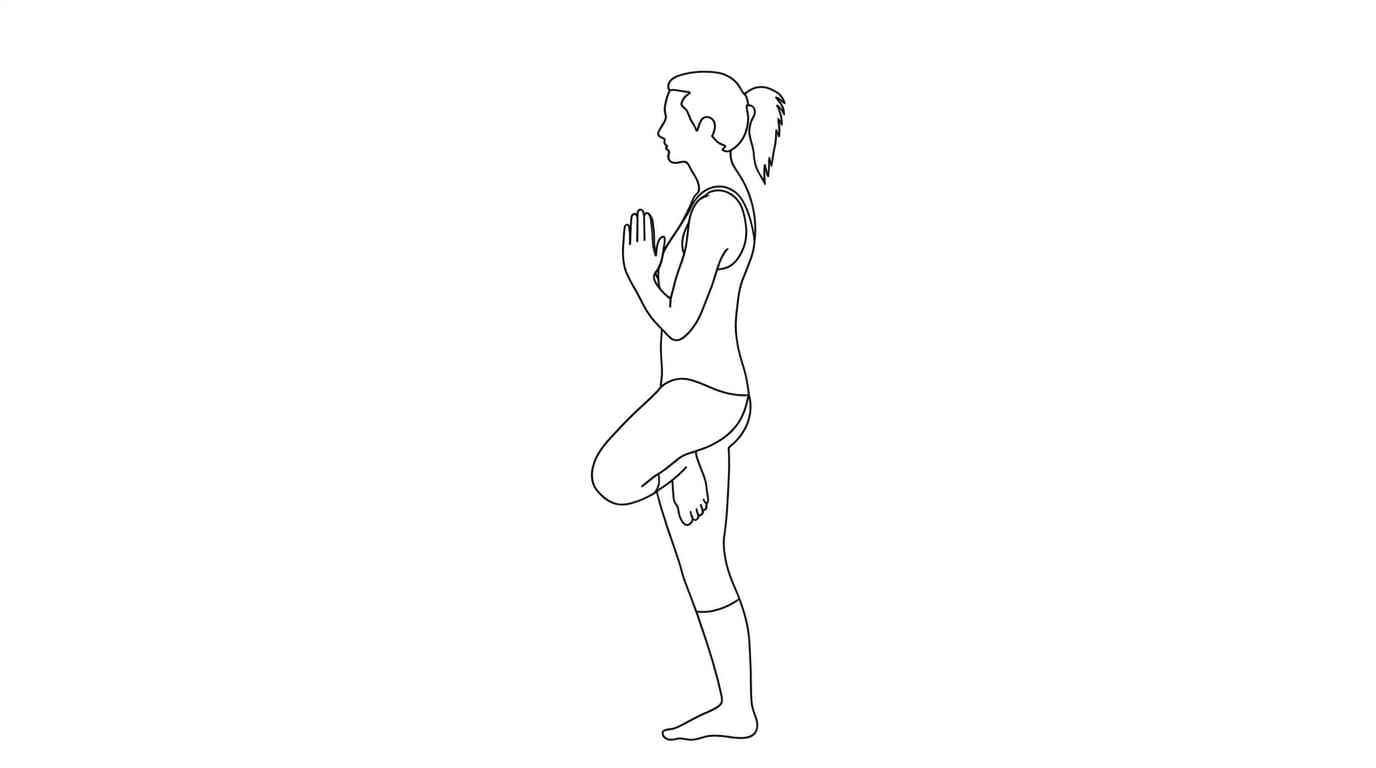
Tree Pose
Vrikshasanaवृक्षासन
Tree Pose is a standing balance in which one foot rests on the other leg at a comfortable height. Use a wall or chair for support, and keep the lifted foot away from the knee joint.
මඟපෙන්වීම විවෘත කරන්න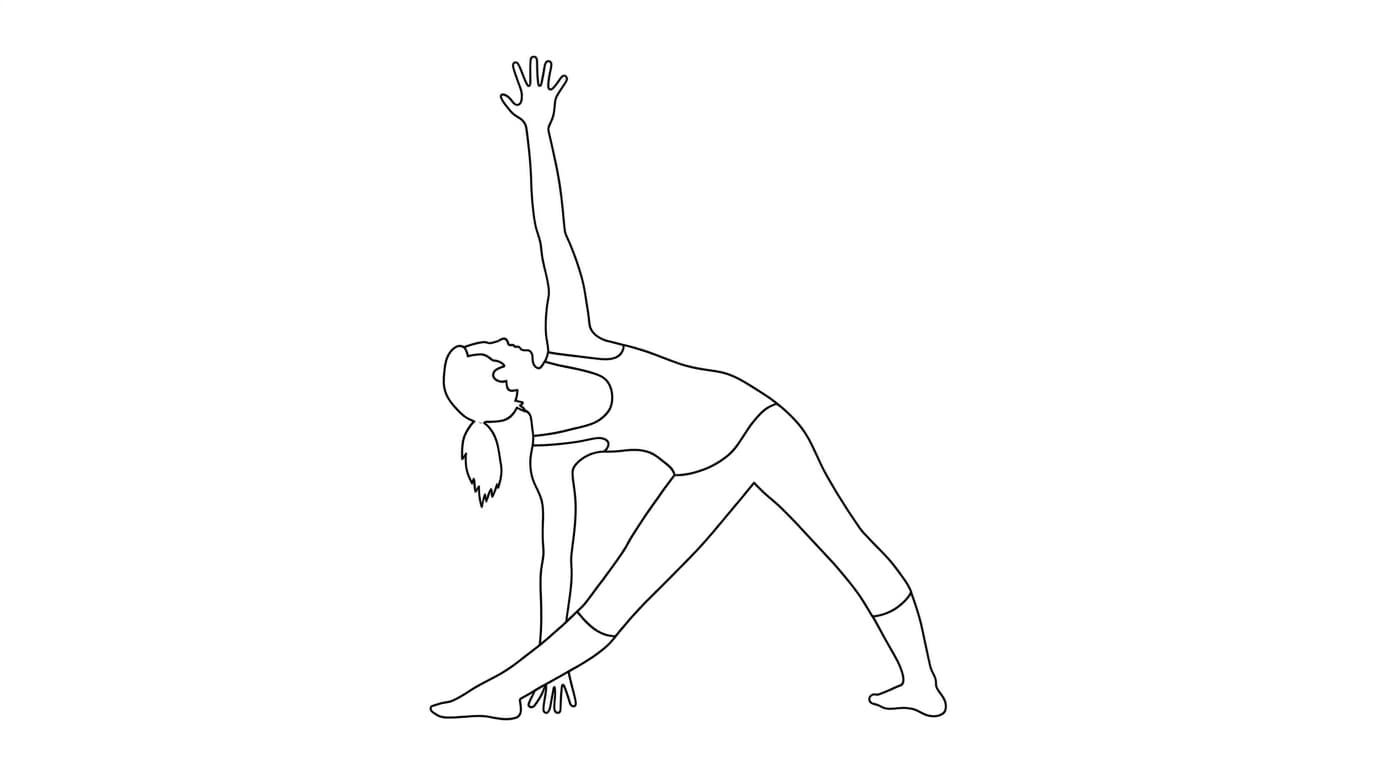
Trikonasana (ත්රිකෝණ ඉරියව්ව)
Trikonasanaत्रिकोणासन
ත්රිකෝණ ඉරියව්ව යනු කකුල් කෙළින් නමුත් අගුළු නොදැමූ සහ කඳ එක පාදයකට උඩින් දිගු කර ඇති පුළුල් ස්ථාවර ඉරියව්වකි. පහළ අත බ්ලොක් හෝ ෂින් මත රැඳී සිටිය හැක; එය බිමට ළඟා වීමට අවශ්ය නොවේ.
මඟපෙන්වීම විවෘත කරන්න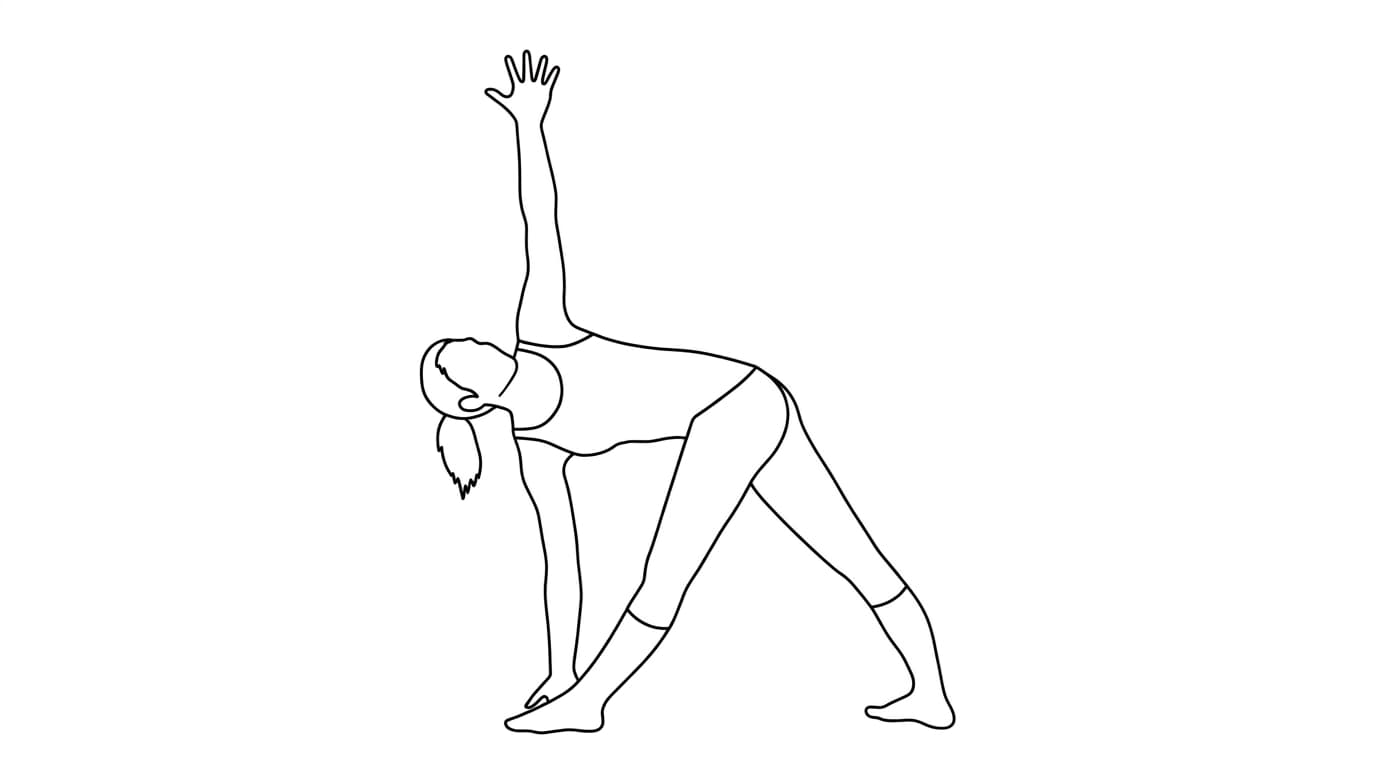
Revolved Triangle
Parivritta Trikonasanaपरिवृत्तत्रिकोणासन
Revolved Triangle is a standing pose with a forward hinge and gentle torso rotation. Use a wall or block, shorten the stance, and keep the rotation modest; the hand need not reach the floor and the neck need not turn upward.
මඟපෙන්වීම විවෘත කරන්න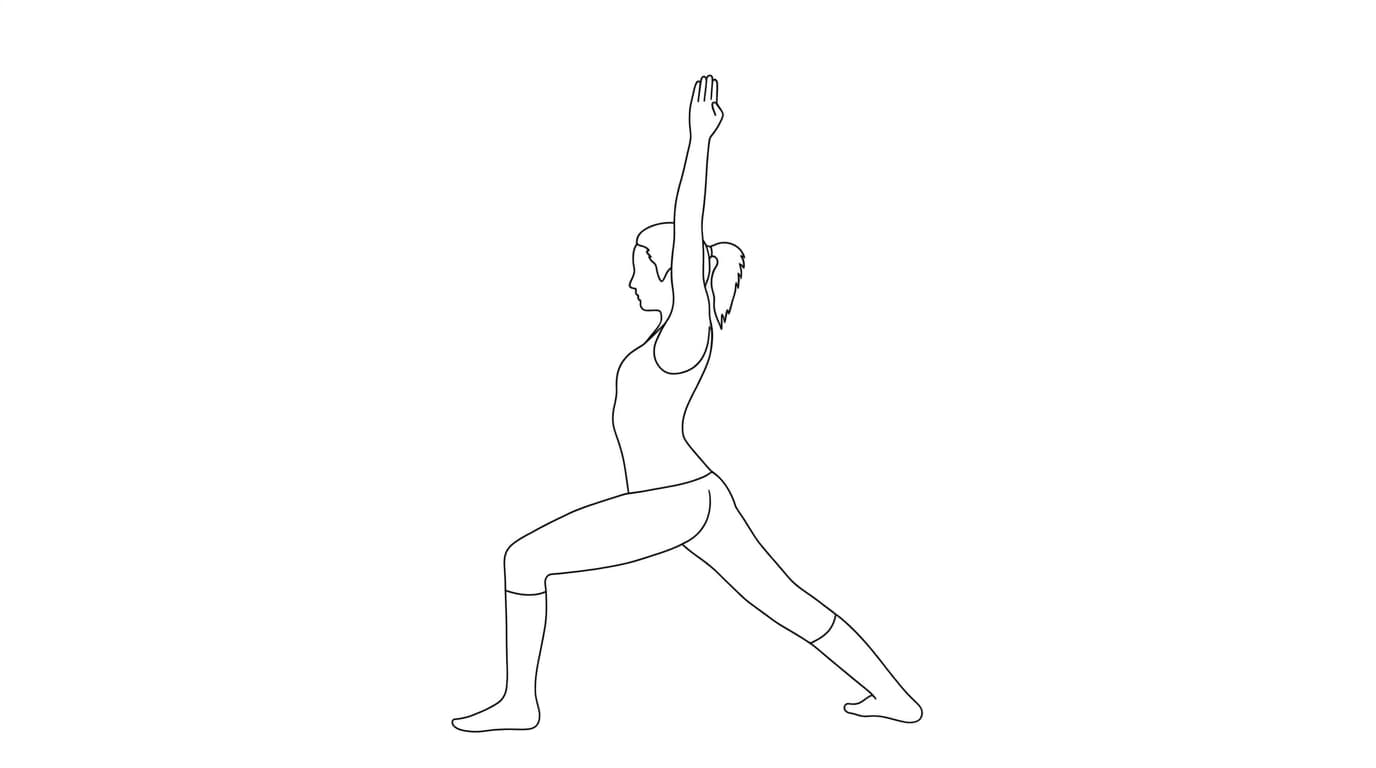
Warrior I
Virabhadrasana Aवीरभद्रासन
Warrior I is a standing lunge with the feet grounded and the torso facing generally forward. Stance length, back-foot angle, and knee bend can be adjusted; the arms may stay on the hips.
මඟපෙන්වීම විවෘත කරන්න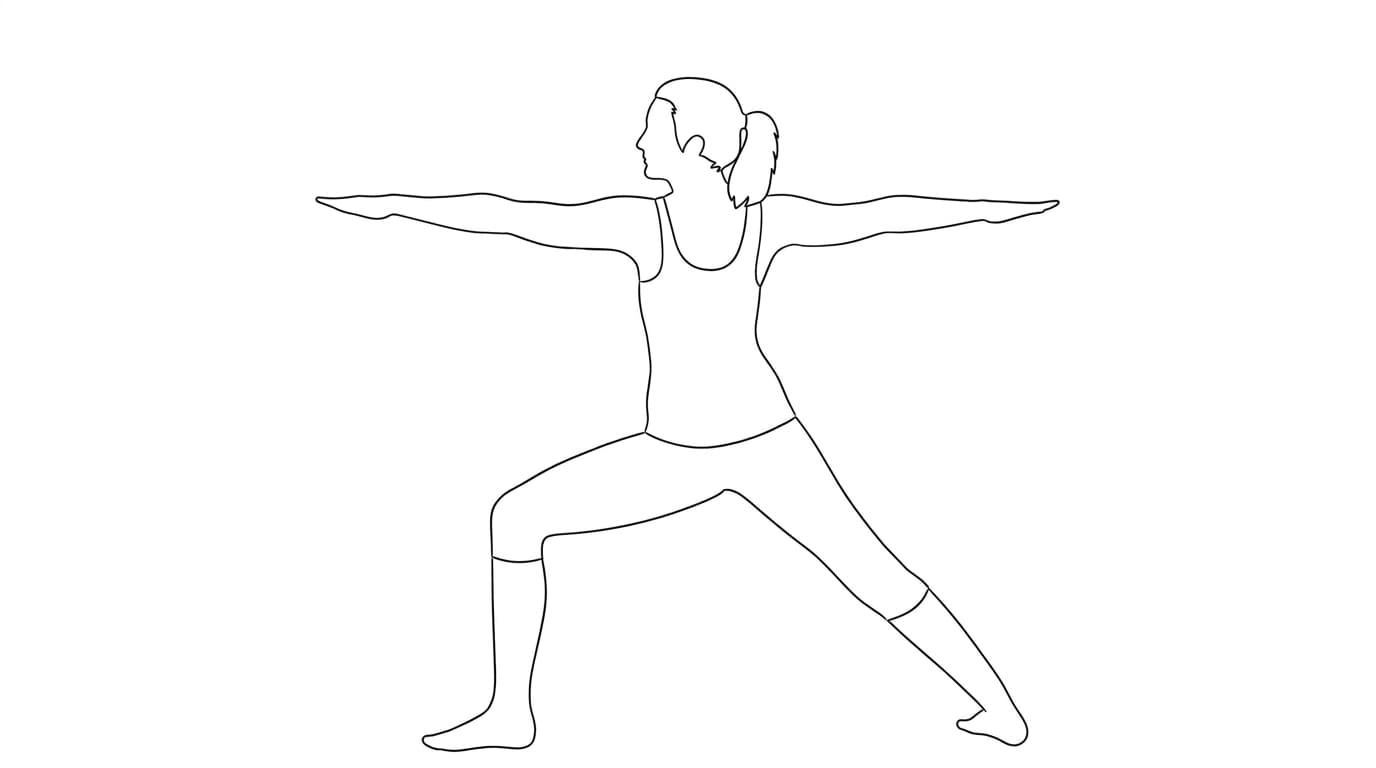
Virabhadrasana II (රණශූර II)
Virabhadrasana Bवीरभद्रासन
වොරියර් II යනු එක් දණහිසට නැමුණු, අනෙක් පාදය දිගු කර, සහ දෑත් ප්රතිවිරුද්ධ දිශාවට ළඟා වන පුළුල් ස්ථාවර පෙනහල්ලකි. ඉරියව්වේ පළල සහ දණහිස නැමීම සකසන්න එවිට පිහිටීම ස්ථාවර බවක් දැනෙන අතර සන්ධි වෙහෙසට පත් නොවේ.
මඟපෙන්වීම විවෘත කරන්න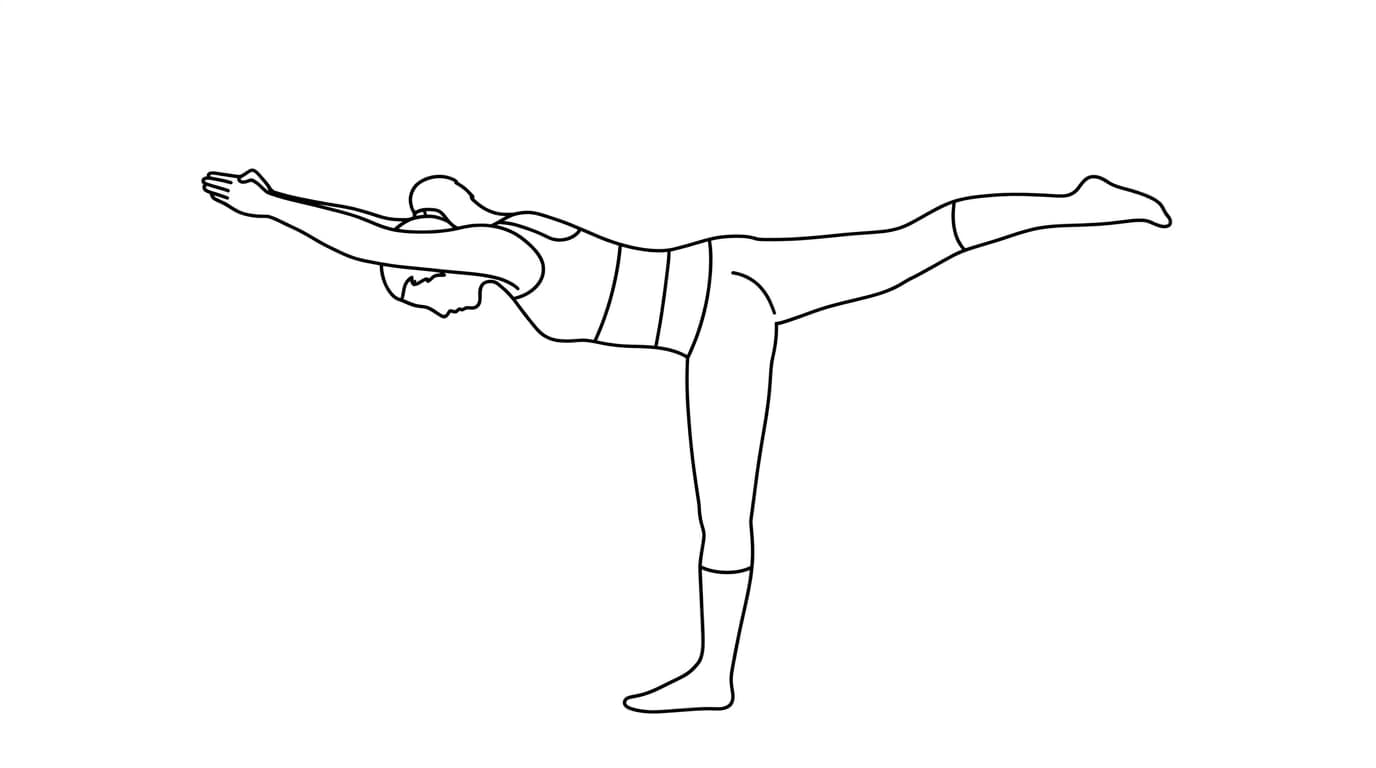
Warrior III
Virabhadrasana Cवीरभद्रासन
Warrior III is a standing balance in which the torso and one leg incline forward while the other leg supports the body. Use a wall or chair and keep the lifted leg low; balance and depth are optional.
මඟපෙන්වීම විවෘත කරන්න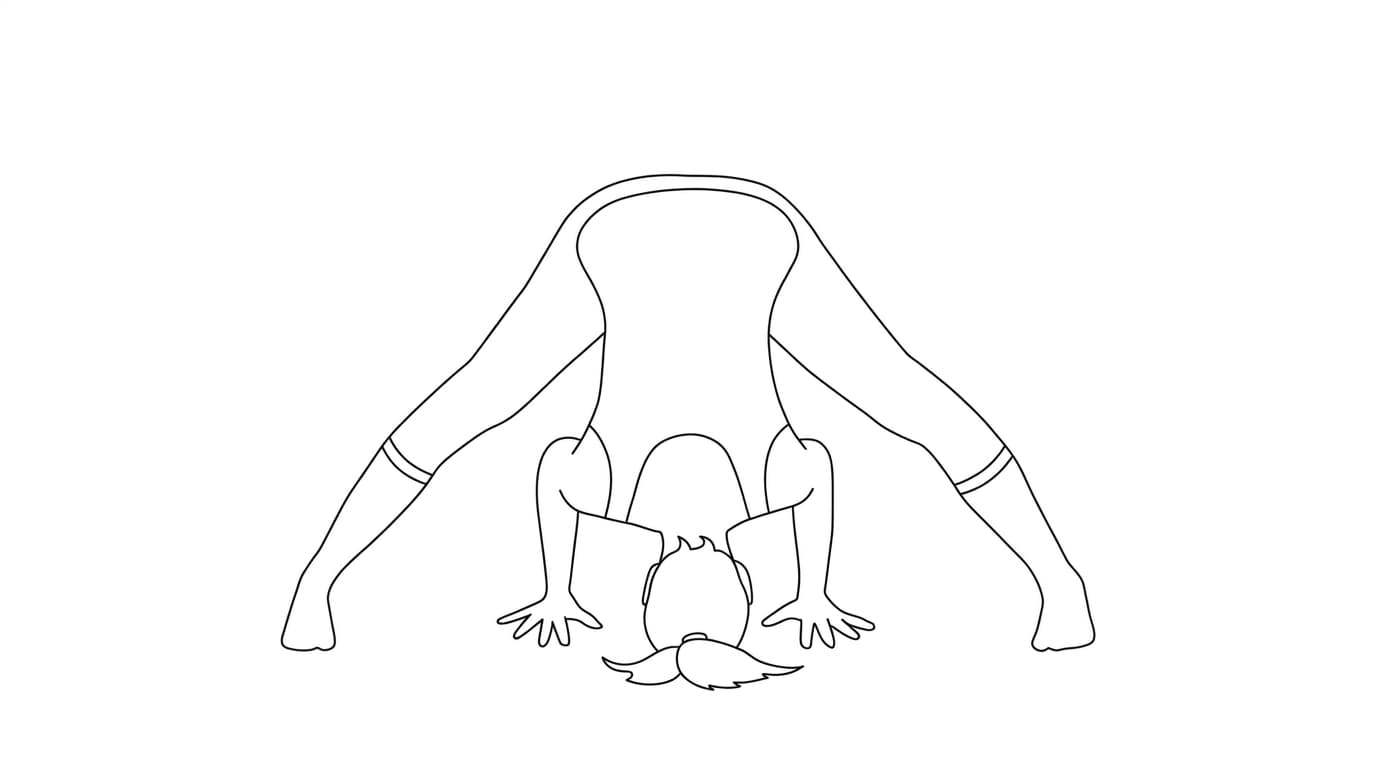
Wide-Legged Forward Bend I
Prasarita Padottanasana Aप्रसारितपादोत्तानासन
Wide-Legged Forward Bend I is a standing fold with the feet apart and hands supported on the floor, blocks, or a chair. Keep the knees soft and hinge only as far as comfortable; the head does not need to reach the floor.
මඟපෙන්වීම විවෘත කරන්න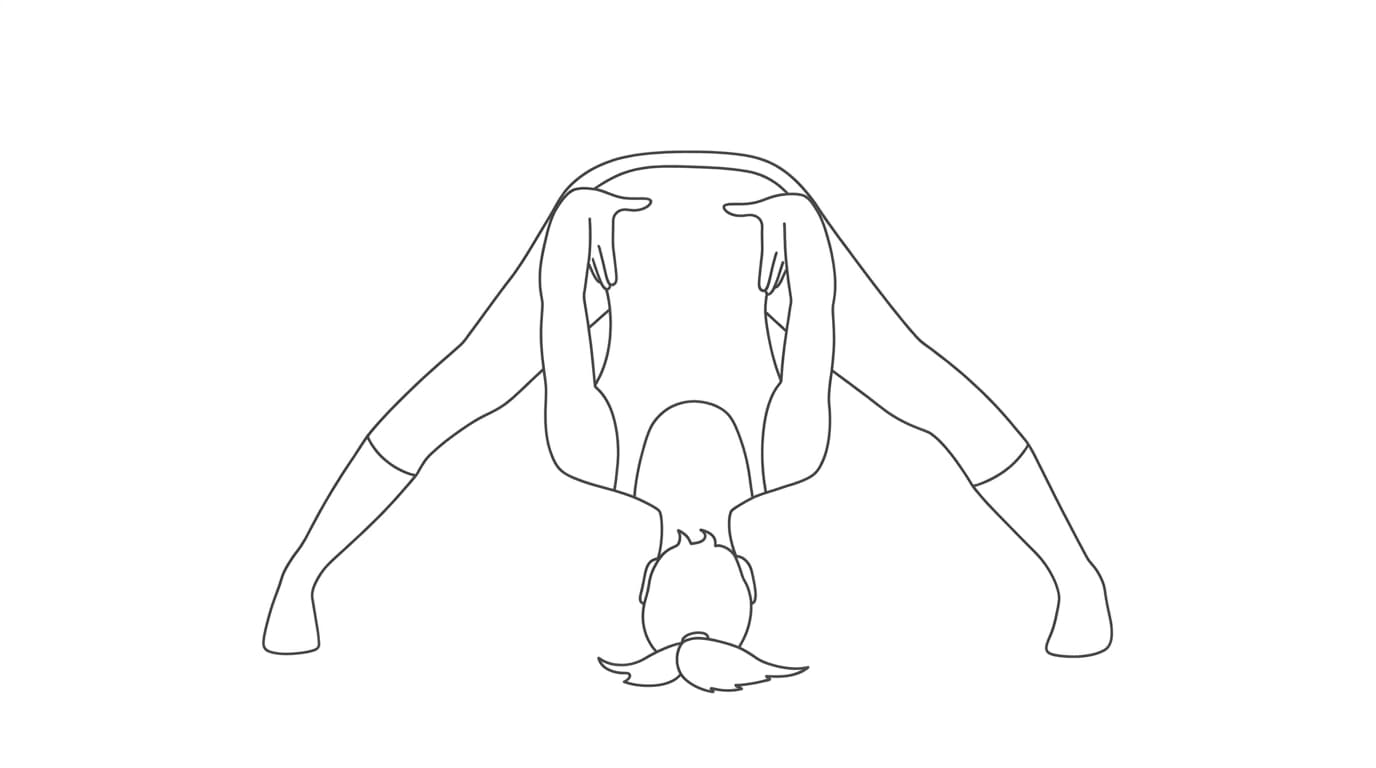
Wide-Legged Forward Bend II
Prasarita Padottanasana Bप्रसारितपादोत्तानासन
Wide-Legged Forward Bend II is a variation in the Prasarita Padottanasana family, often taught with the hands at the waist during a wide-stance fold. Keep the knees soft and use blocks or a chair if lowering the torso is uncomfortable.
මඟපෙන්වීම විවෘත කරන්න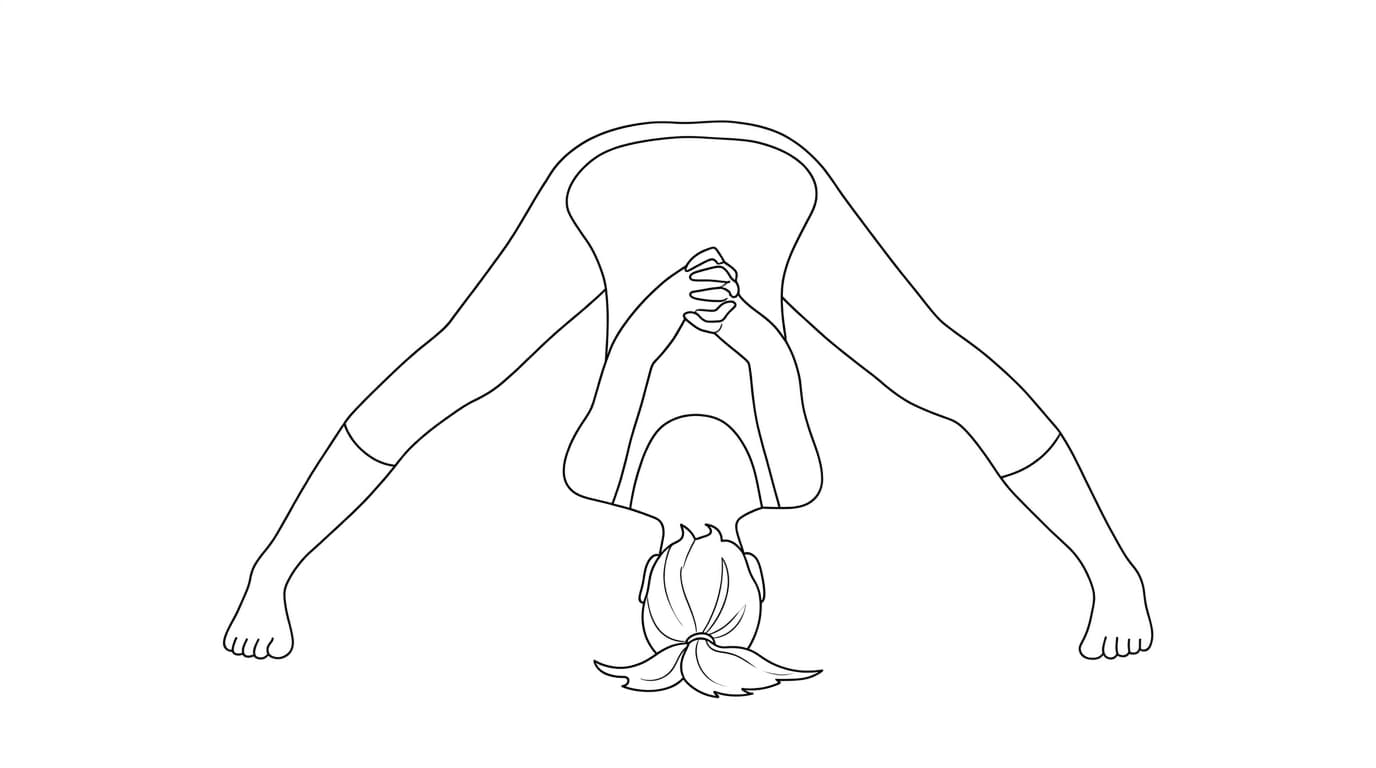
Wide-Legged Forward Bend III
Prasarita Padottanasana Cप्रसारितपादोत्तानासन
Wide-Legged Forward Bend III is a variation in a family of wide-stance folds. Arm placement differs between methods; prioritize a stable stance, soft knees, and a supported shallow hinge over matching a prescribed hand position.
මඟපෙන්වීම විවෘත කරන්න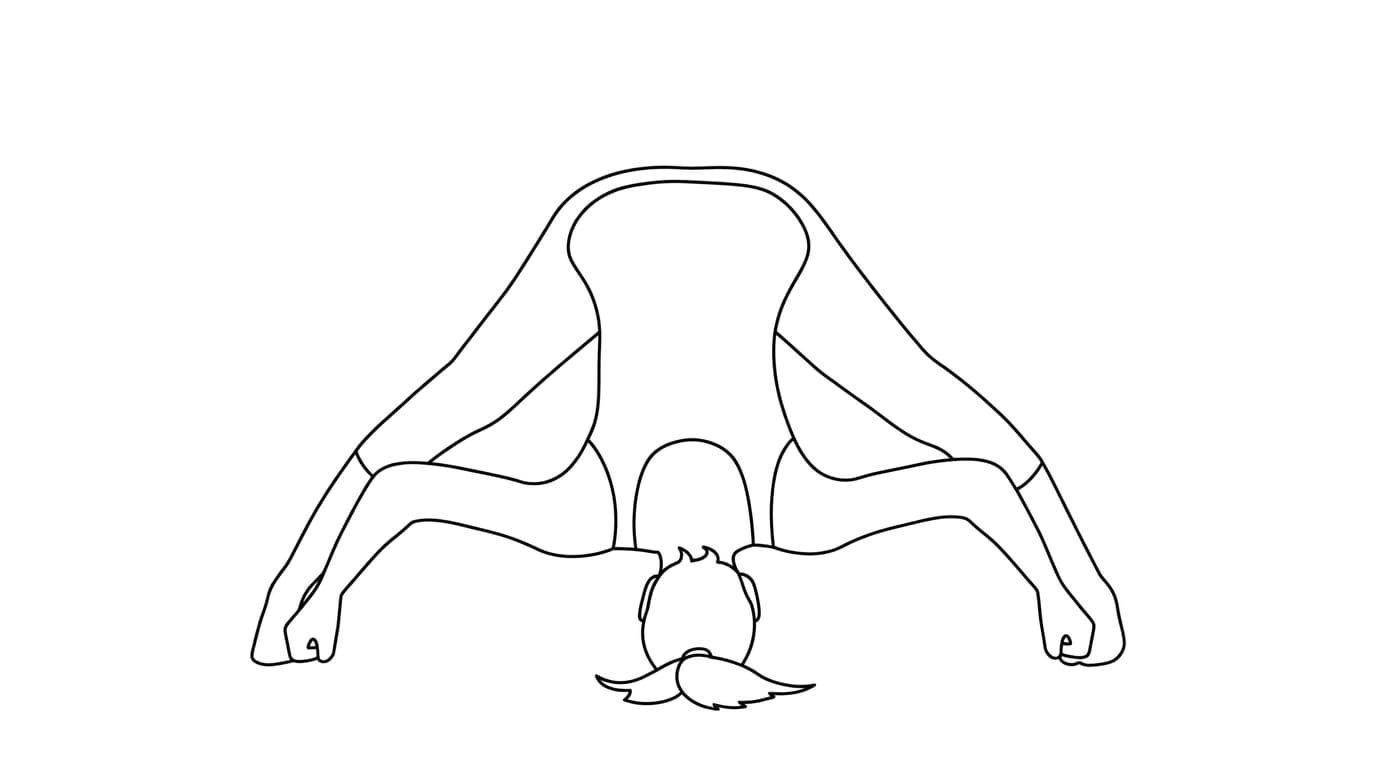
Wide-Legged Forward Bend IV
Prasarita Padottanasana Dप्रसारितपादोत्तानासन
Wide-Legged Forward Bend IV is a named form of Prasarita Padottanasana, with details that vary across teaching methods. Use a stable wide stance, soft knees, and raised supports; do not assume the head, hands, or elbows need to reach the floor.
මඟපෙන්වීම විවෘත කරන්නඋඩුබැලි
ඉරියව් 13 ක්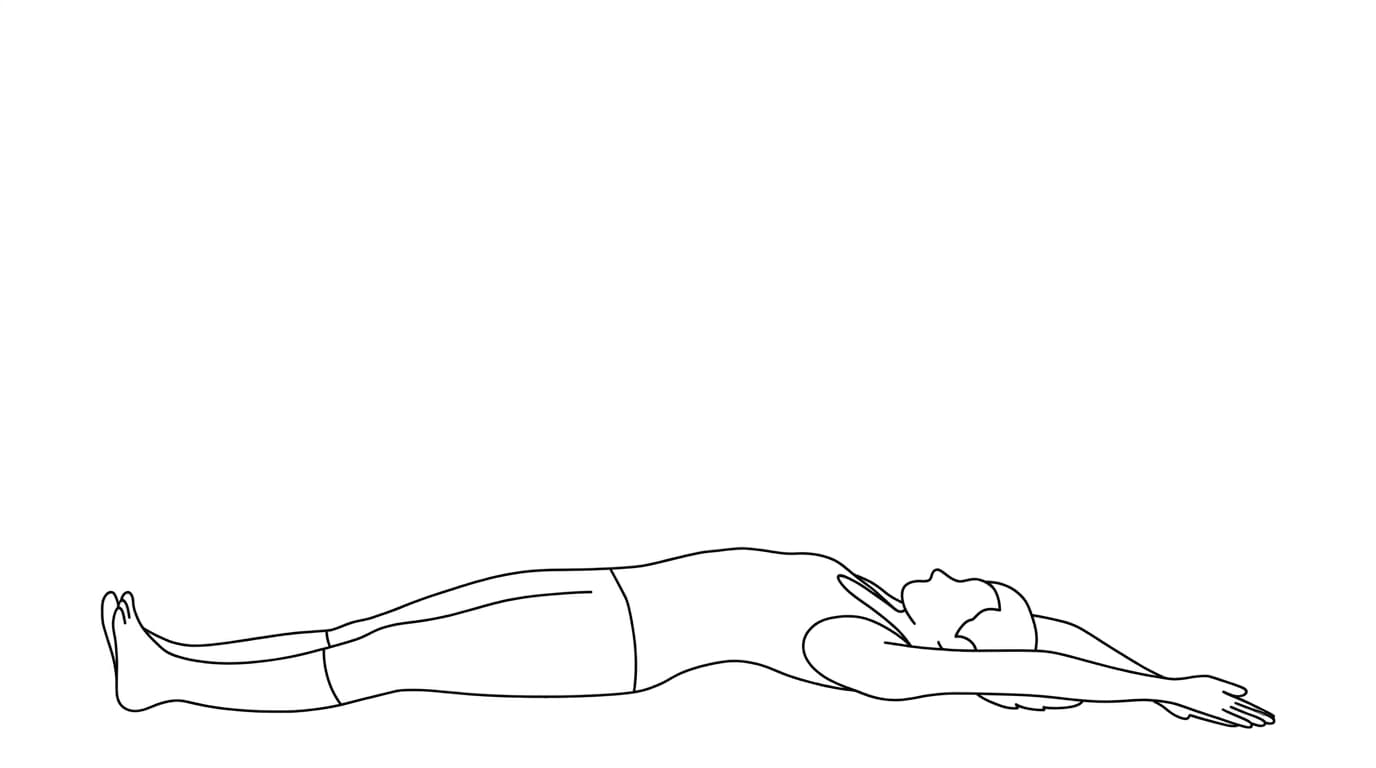
Banana Pose
Supta Nitambasanaसुप्तनितम्बासन
Banana Pose is a reclined side-body stretch with the legs and arms curving to one side. Keep both shoulders and hips supported, make the curve small, and use a cushion under the knees if the back or outer hip feels strained.
මඟපෙන්වීම විවෘත කරන්න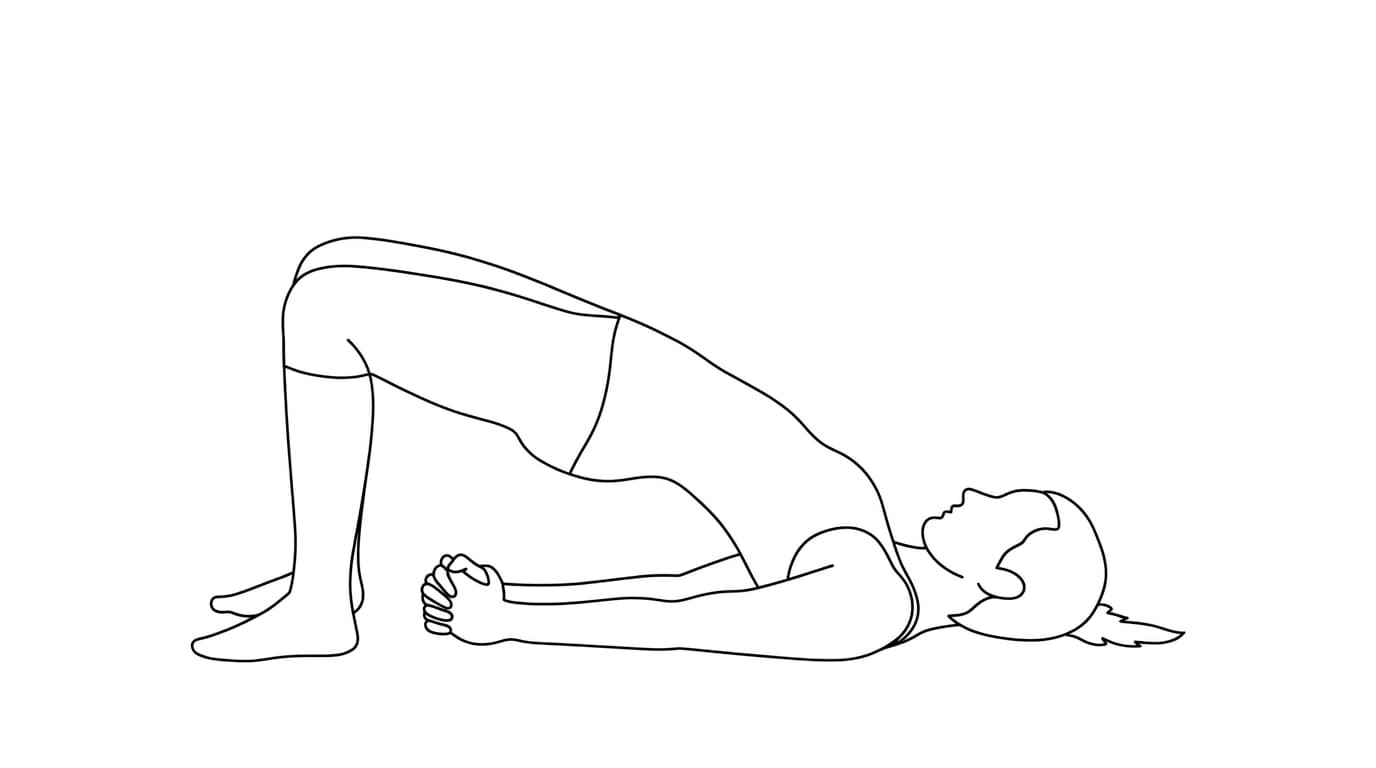
Setu Bandha Sarvangasana (පාලම් ඉරියව්ව)
Setu Bandha Sarvangasanaसेतुबन्धसर्वाङ्गासन
පාලම් ඉරියව්ව යනු පාද බිම තබා ඇති අතර ශ්රෝණිය සුව පහසු උසකට ඔසවන පිටුපසට නැමීමකි. සෝපානය වෛකල්පිත වන අතර බෙල්ල ලිහිල් කර හුස්ම නොගෙන පාලනය කළ යුතුය.
මඟපෙන්වීම විවෘත කරන්න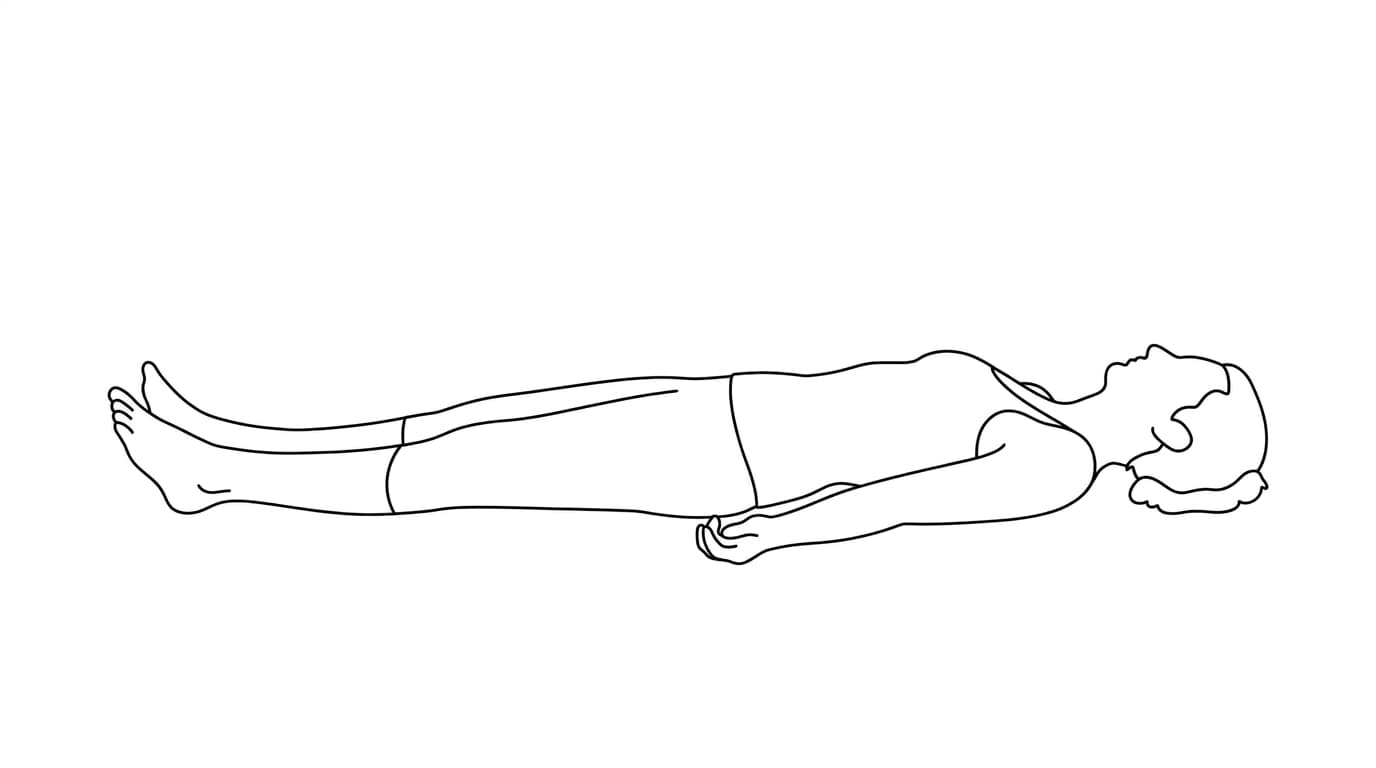
Savasana (මළ සිරුරේ ඉරියව්ව)
Shavasanaशवासन
සවසනය යනු යෝග අභ්යාසයක් අවසානයේ සාමාන්යයෙන් භාවිතා කරන උඩුකය විවේක ඉරියව්වකි. හුස්ම ස්වභාවිකව පවතින අතර ශරීරය බිම මත රඳා පවතී; නැමුණු දණහිස්, පැත්තක් වැතිර සිටින ස්ථානයක් හෝ වෙනත් ආධාරක වලංගු විකල්ප වේ.
මඟපෙන්වීම විවෘත කරන්න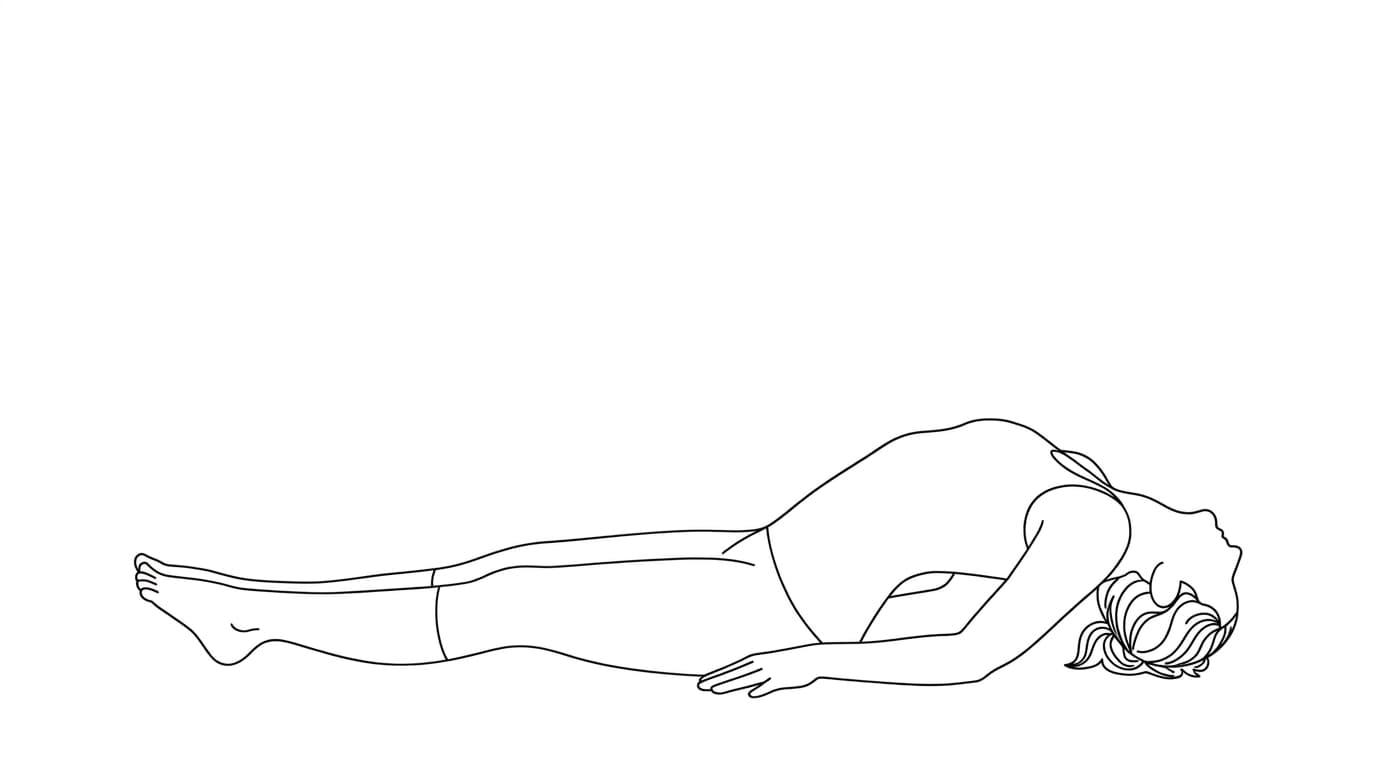
Matsyasana (මාළු ඉරියව්ව)
Matsyasanaमत्स्यासन
මත්ස්යසනය නොහොත් මත්ස්ය ඉරියව්ව යනු උඩු රැවුලට යටින් ආධාරකයක් ඇතිව ප්රගුණ කළ හැකි උඩුකුරු පිටුපසට නැමීමකි. බෙල්ලේ පිහිටීම සහ දිගු පරාසය වෙනස් වේ; උගුර සුවපහසුව තබා ගැනීමට සහ අවශ්ය නම් ආධාරක විකල්පයක් භාවිතා කරන්න.
මඟපෙන්වීම විවෘත කරන්න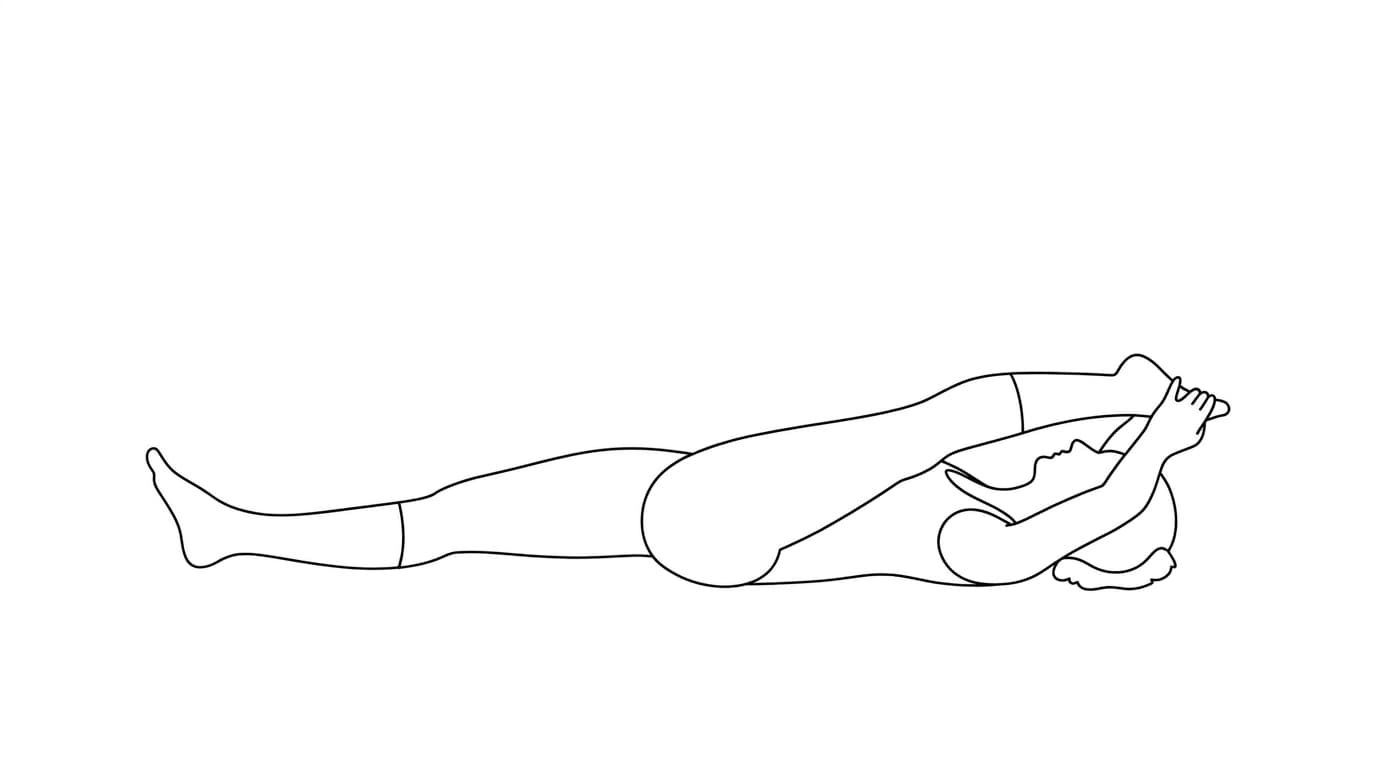
Supine Foot to Head
Supta Trivikramasanaसुप्तत्रिविक्रमासन
Supine Foot to Head is an advanced leg-extension posture whose exact form should be verified with a qualified teacher. Do not pull the foot toward the head or force the hamstring, hip, knee, or neck; this page offers no self-teaching entry steps.
මඟපෙන්වීම විවෘත කරන්න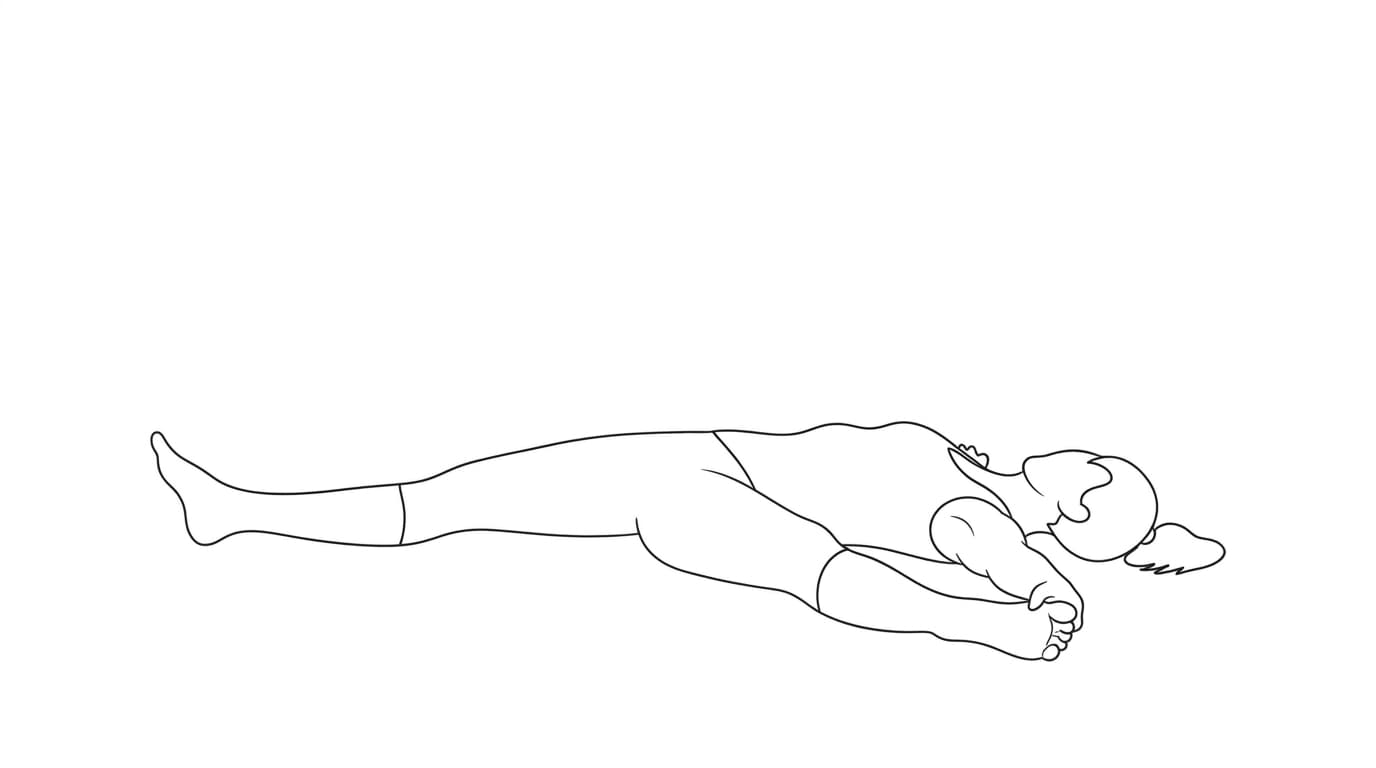
Extended Supine Hand to Big Toe
Supta Padangushthasana Bसुप्तपादाङ्गुष्ठासन
Extended Supine Hand to Big Toe B is a reclined leg-extension variation that may move the lifted leg to the side. Use a strap, keep the opposite hip grounded, and lower the leg only as far as the pelvis remains comfortable.
මඟපෙන්වීම විවෘත කරන්න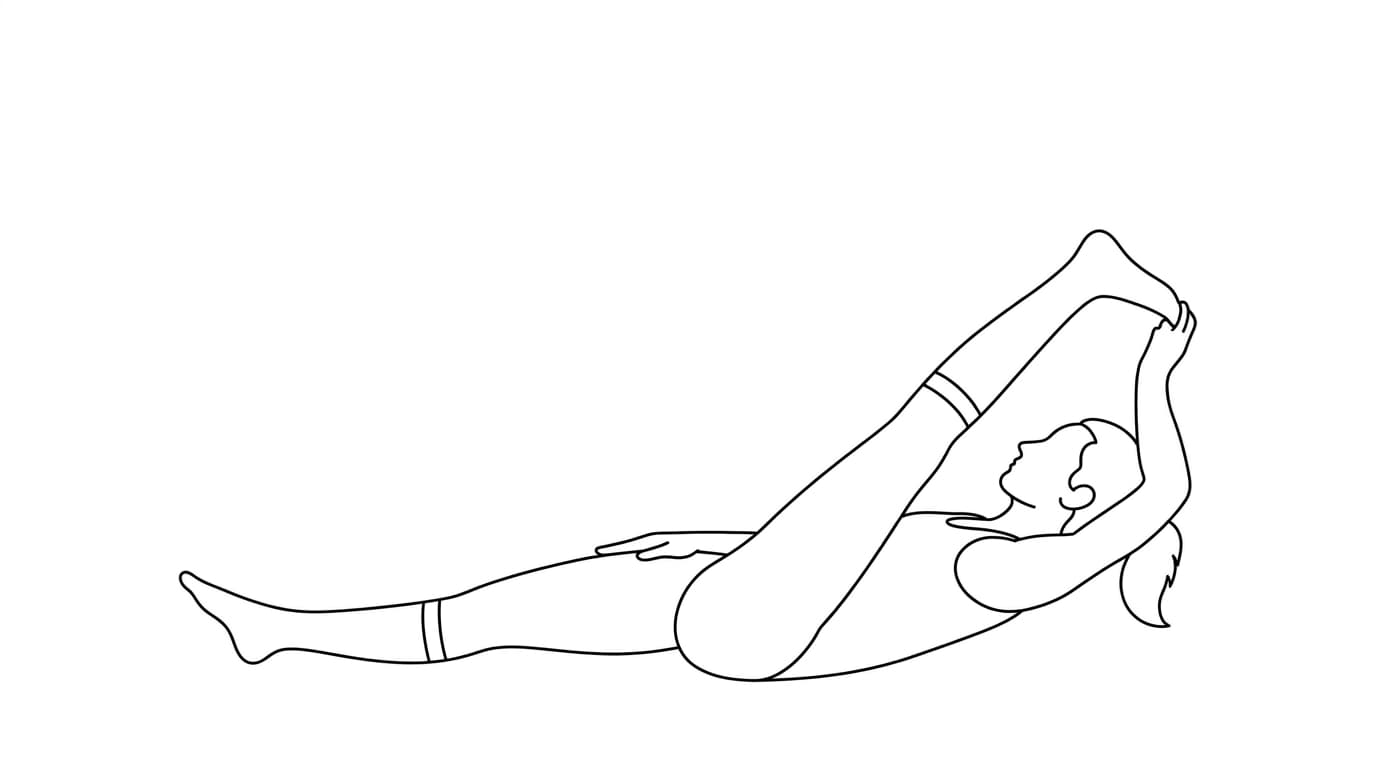
Supine Hand to Big Toe
Supta Padangushthasana Aसुप्तपादाङ्गुष्ठासन
Supine Hand to Big Toe is a reclined leg-extension posture, often practiced with a strap around the lifted foot. Keep the opposite leg comfortable and the lifted knee slightly bent if needed; the leg does not need to approach vertical.
මඟපෙන්වීම විවෘත කරන්න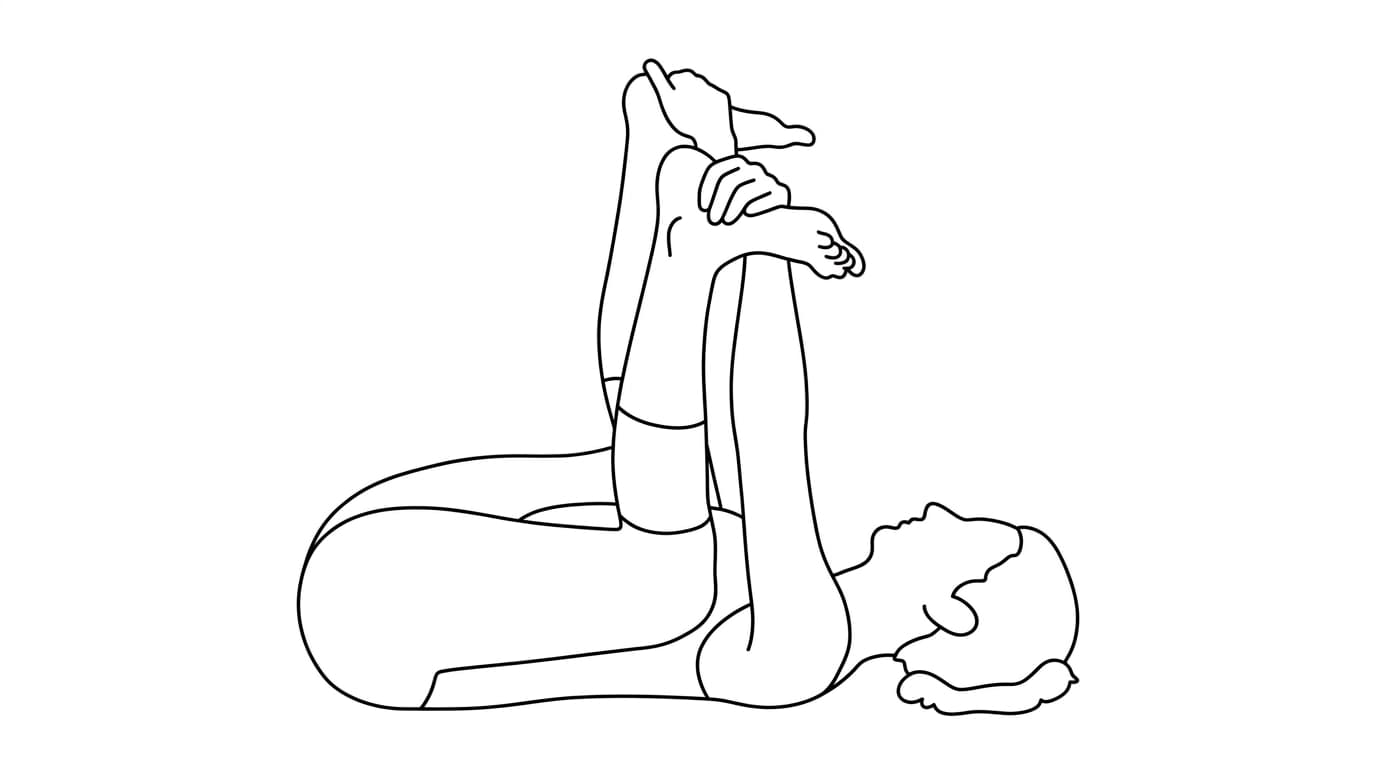
Happy Baby
Ananda Balasanaआनन्दबालासन
Happy Baby is a supine posture in which the knees bend toward the sides of the torso. Hold behind the thighs or shins if reaching the feet is uncomfortable, and keep the head and shoulders resting without pulling the knees down.
මඟපෙන්වීම විවෘත කරන්න
Sleeping Yogi
Yoga Nidrasanaयोगनिद्रासन
Yoga Nidrasana, also called Sleeping Yogi, is an advanced supine leg-behind-head posture and is distinct from guided Yoga Nidra relaxation. It can stress the hips, knees, and neck; this page provides no entry steps and recommends direct qualified instruction.
මඟපෙන්වීම විවෘත කරන්න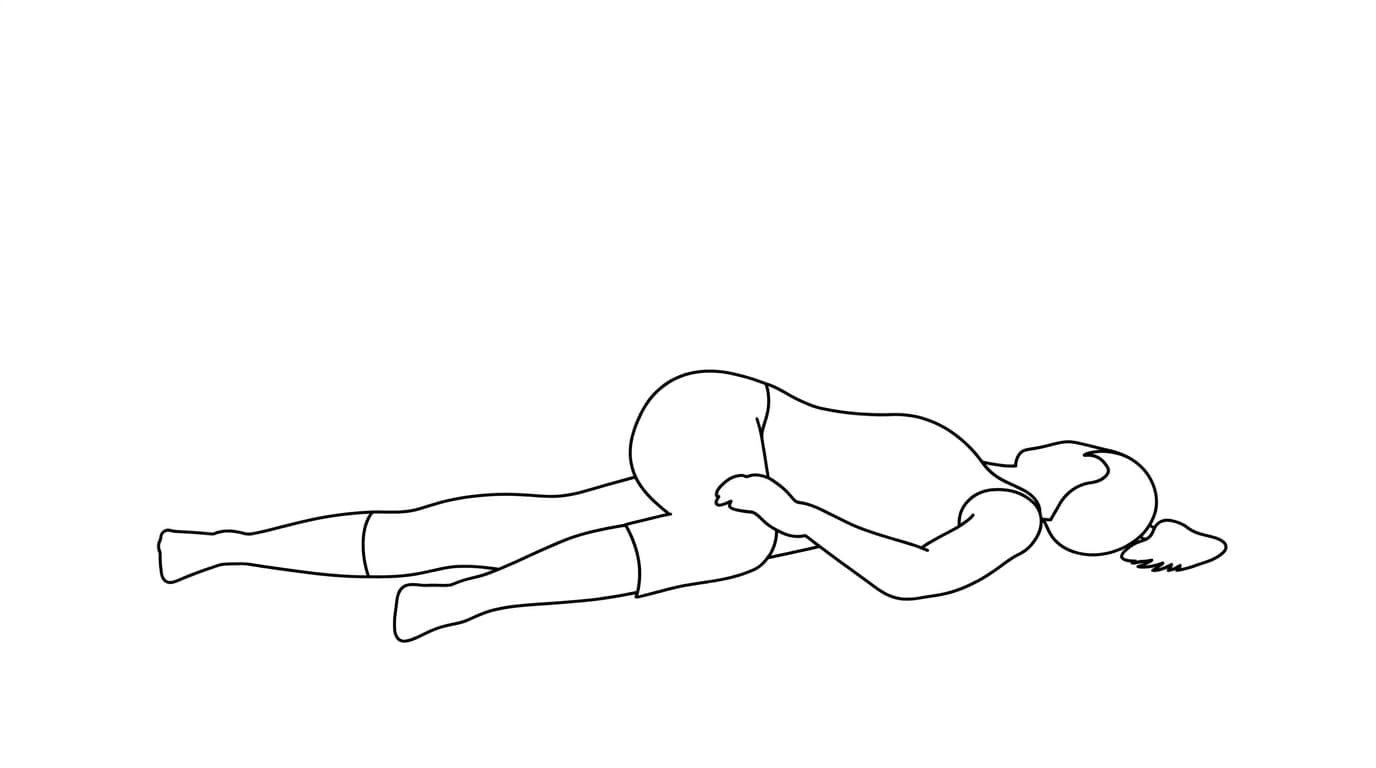
Supine Spinal Twist
Supta Matsyendrasanaसुप्तमत्स्येन्द्रासन
Supine Spinal Twist is a reclined rotation with the knees bent. Let the legs move only as far as the back remains comfortable; support the knees with a cushion and keep the shoulders relaxed rather than forcing them to the floor.
මඟපෙන්වීම විවෘත කරන්න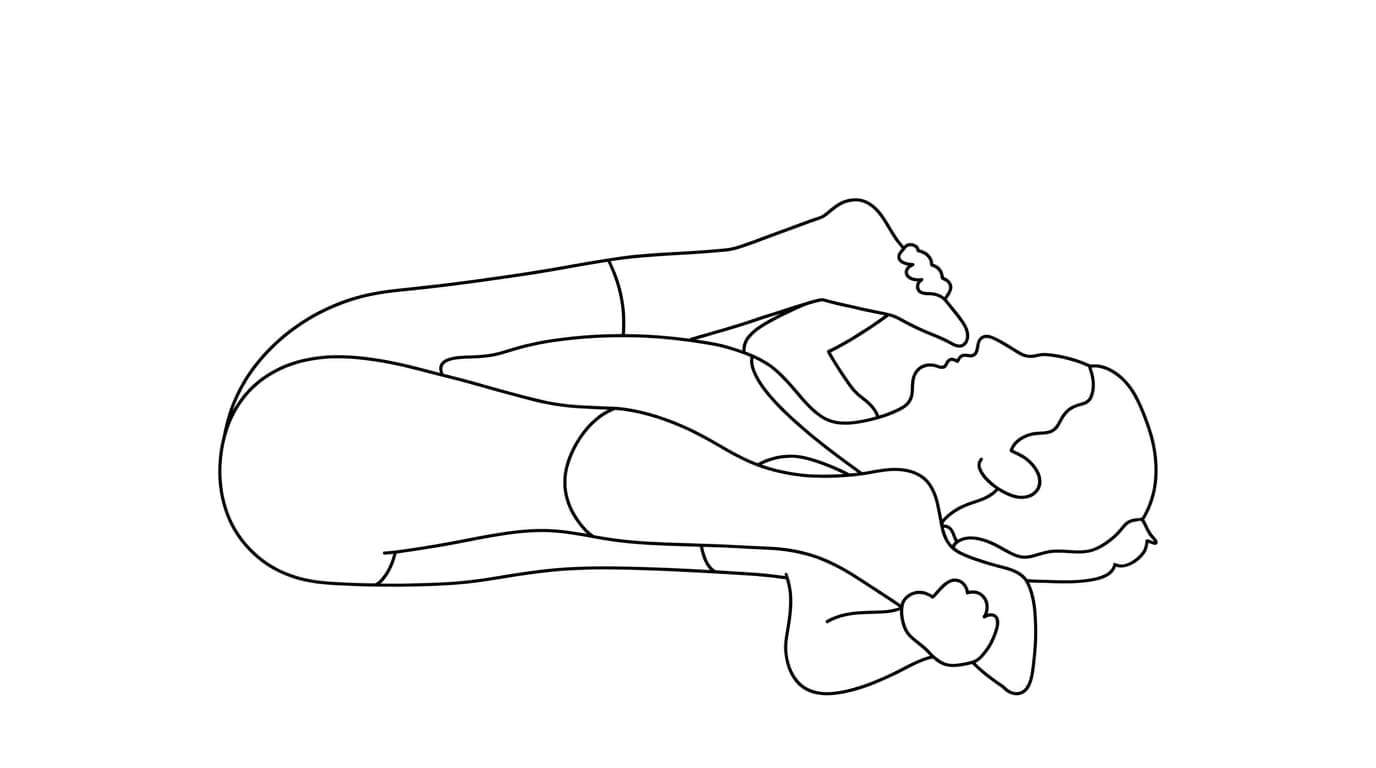
Supine Straddle
Supta Samakonasanaसुप्तसमकोणासन
Supine Straddle is a reclined leg-opening position with the legs moving apart. Support the legs with straps or a wall and keep the range small; do not use gravity or the hands to force a wide stretch.
මඟපෙන්වීම විවෘත කරන්න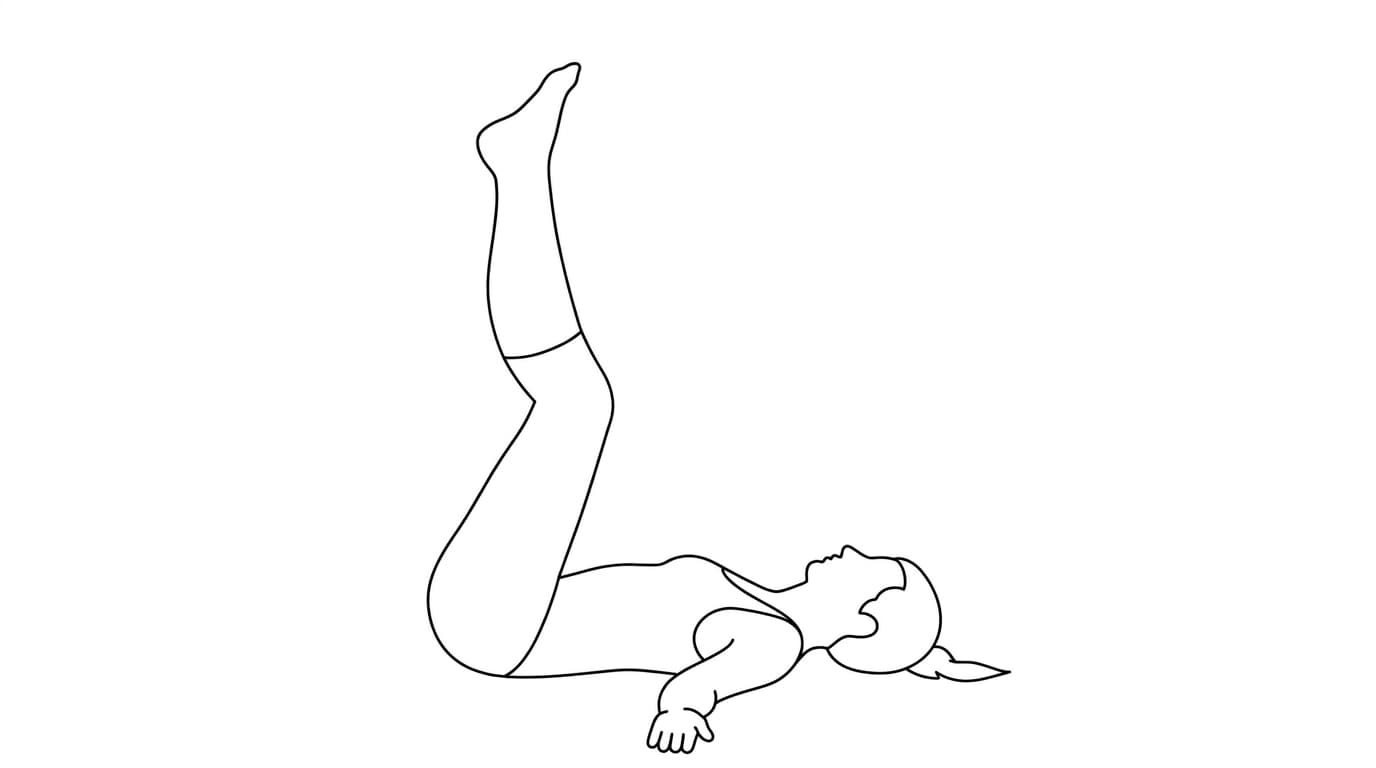
Waterfall Pose
Supta Dandasanaसुप्तदण्डासन
Waterfall Pose is commonly used for a reclined leg lift with the legs supported upward. Keep the head and back comfortable, bend the knees if needed, and use a wall or chair rather than holding the legs unsupported.
මඟපෙන්වීම විවෘත කරන්න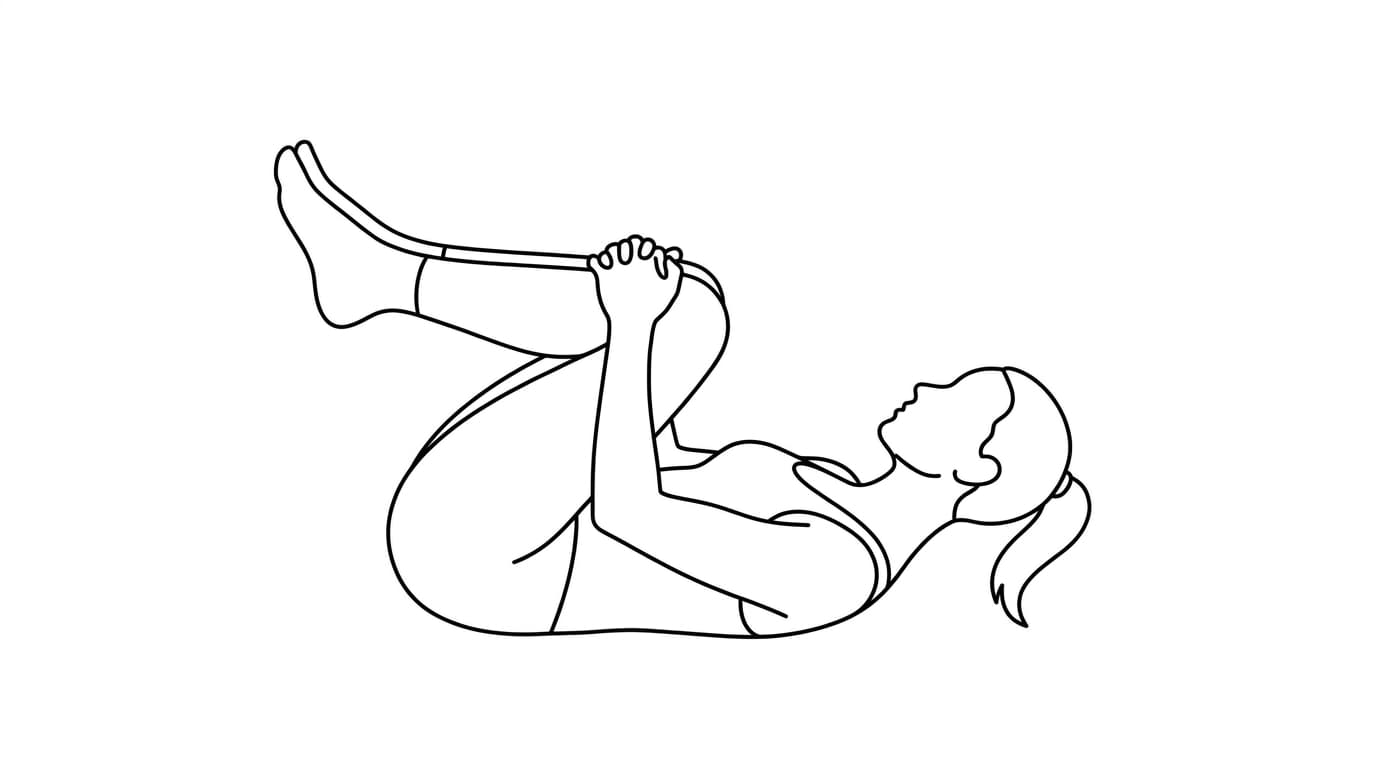
Wind-Removing Pose
Pavanamuktasanaपवनमुक्तासन
Wind-Removing Pose is a supine posture that brings one or both knees toward the torso. Keep the head resting on the floor and use only gentle arm support; there is no need to compress the abdomen or pull the knees tightly inward.
මඟපෙන්වීම විවෘත කරන්නමෙම උපදෙස් පිළිබඳව
යෝග සම්ප්රදායන් සහ ඉගැන්වීම් විලාසයන් එකිනෙකට වෙනස් වේ. මෙහි පෙන්වා ඇති අනුපිළිවෙල සාමාන්ය ආරම්භක ලක්ෂ්යයකි; ඔබේ අත්දැකීම් සහ තත්ත්වයන්ට අනුව චලනයන් සකස් කර ගැනීමට සුදුසුකම් ලත් ගුරුවරයෙකුට උපකාර කළ හැකිය.
NCCIH: යෝගයේ කාර්යක්ෂමතාව සහ ආරක්ෂාව