
Garland Pose is a low squat with the feet grounded and the torso upright or gently inclined. Use a support under the heels or sit on a block if the ankles, knees, or hips do not comfortably allow the full squat.
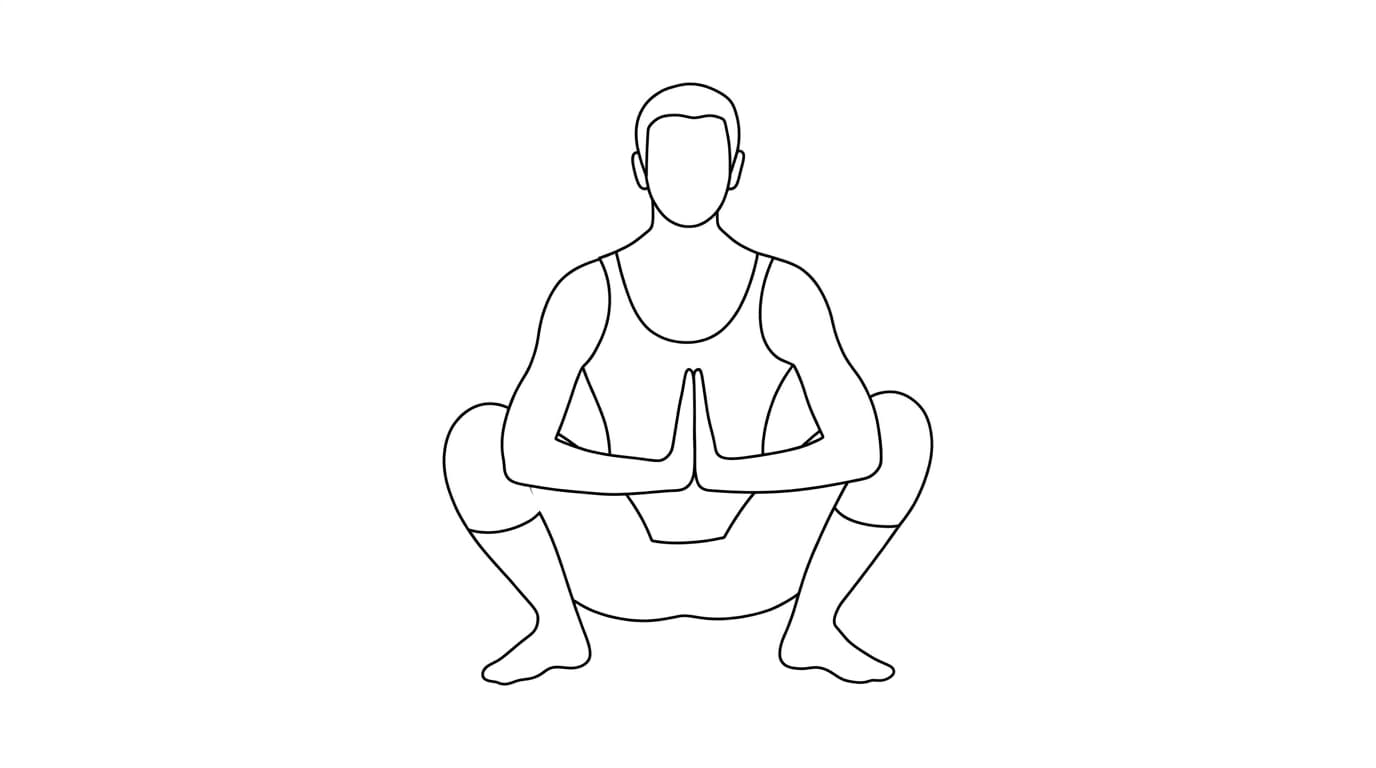
What is Garland Pose?
Malasana is commonly taught as a squat with the feet grounded and the arms resting inside or in front of the legs. The exact stance varies; depth is not a measure of success.
How do you explore a supported squat?
Place a stable chair or block within reach and use a non-slip surface.
- Stand with the feet a comfortable distance apart and turn the toes out only as much as feels natural.
- Bend the knees and lower the hips a small amount, keeping a chair or wall available for balance.
- If comfortable, continue lower while keeping the heels supported; otherwise sit on a block or chair.
- Rest the hands on the thighs or bring the palms together without forcing the knees outward.
- Rise slowly using the legs and support.
How can you modify Garland Pose?
Place a folded blanket under the heels, sit on a firm block, or practice a supported chair squat. Keep the stance narrow or wide according to comfort.
When should you stop or modify?
Avoid pushing through sharp knee, ankle, hip, or back pain. Stop if balance feels uncertain or sensation changes. This guide is general education and awaits named teacher review.
Common question: Do the heels need to touch the floor?
No. A folded blanket or wedge can support the heels, and a raised seat is a valid version.
මූලාශ්ර සහ වැඩිදුර කියවීම්
මෙම මූලාශ්ර සාමාන්ය පසුබිම සපයයි. ඒවා මෙම පිටුවේ ඇති සෑම උපදෙසක්ම තහවුරු කිරීමක් හෝ සුදුසුකම් ලත් ගුරුවරයෙකුගේ මඟපෙන්වීම වෙනුවට ආදේශකයක් නොවේ.
- Yoga: Effectiveness and Safety National Center for Complementary and Integrative Health (NCCIH). General context on yoga safety and adapting postures; not pose-specific instruction.