
Uttanasana is a standing forward fold with the torso inclining toward the legs. Bend the knees generously and let the head hang only if comfortable; touching the floor or straightening the legs is not required.
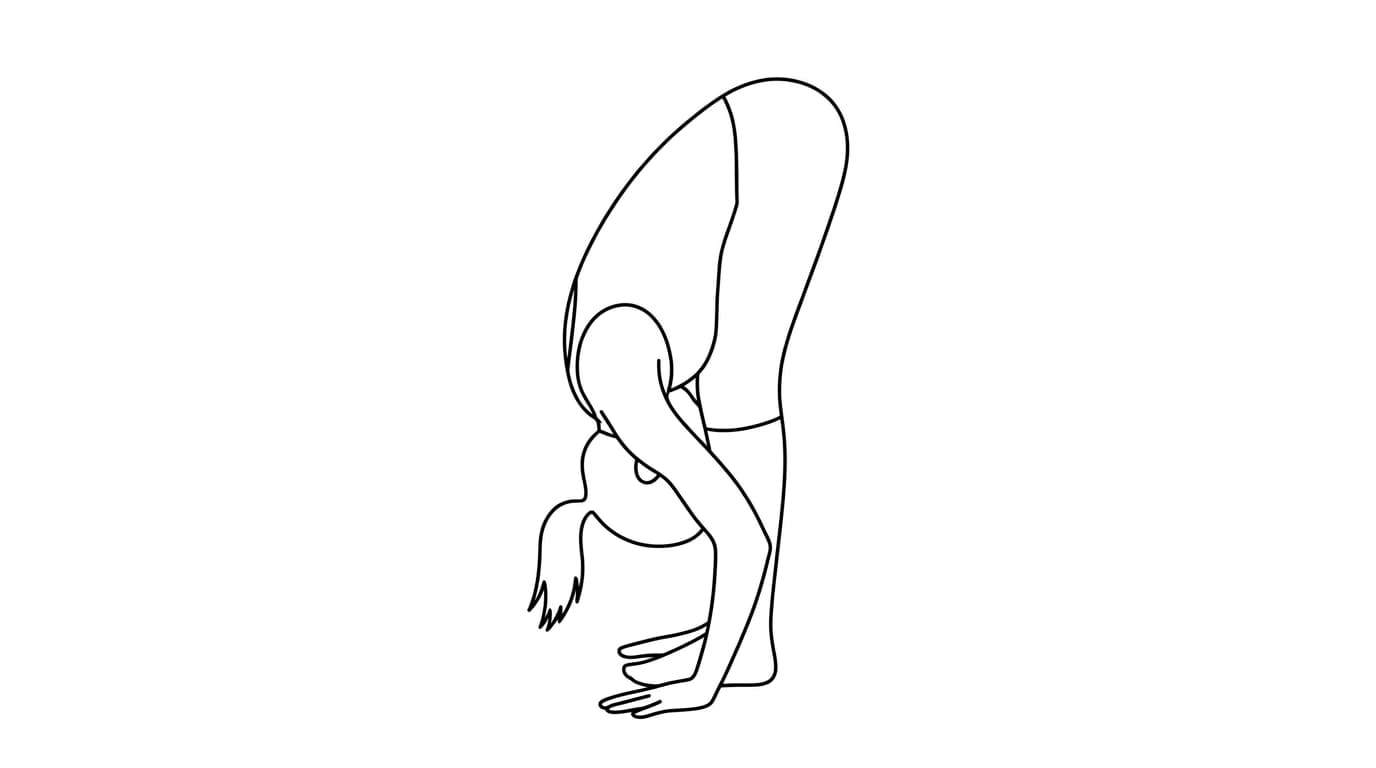
What is Standing Forward Bend?
Uttanasana is a standing forward fold. Modern classes use different arm and leg positions; the knees may bend and the hands can rest on blocks, shins, or a chair.
How do you practice a supported forward fold?
Stand with the feet comfortably apart and use blocks or a chair if useful.
- Soften both knees and hinge forward a small amount from the hips.
- Rest the hands on the thighs, shins, blocks, or chair seat.
- Allow the head and neck to stay relaxed only if that feels comfortable; the gaze may remain forward.
- Keep the breath easy and avoid pulling yourself lower.
- Bend the knees more before slowly returning upright.
How can you modify Uttanasana?
Bend the knees deeply, widen the stance, rest the hands on a chair, or practice with the back supported by a wall. A small hinge is a complete variation.
When should you stop or modify?
Stop for dizziness, sharp back or leg pain, numbness, or pressure that increases. People with balance concerns should use a stable support. This draft awaits teacher review.
Common question: Do my hands need to touch the floor?
No. Use a height that lets you fold without strain.
මූලාශ්ර සහ වැඩිදුර කියවීම්
මෙම මූලාශ්ර සාමාන්ය පසුබිම සපයයි. ඒවා මෙම පිටුවේ ඇති සෑම උපදෙසක්ම තහවුරු කිරීමක් හෝ සුදුසුකම් ලත් ගුරුවරයෙකුගේ මඟපෙන්වීම වෙනුවට ආදේශකයක් නොවේ.
- Yoga: Effectiveness and Safety National Center for Complementary and Integrative Health (NCCIH). General context on yoga safety and adapting postures; not pose-specific instruction.